Day 635: The Secret Life of William Shakespeare

Cover for The Secret Life of William ShakespeareAs I am interested in Shakespeare and recently enjoyed a Regency romance by Jude Morgan, I wanted to enjoy this novel a lot more than I did. There is of course a risk in making a historical figure a main character in a novel, and that is that no author truly knows the mind of the real person. The truly successful novel of this type bravely forges a persona. Morgan’s solution, however, is to make Shakespeare, about whom little is known, truly amorphous in character.

The novel centers mostly on the relationship between Shakespeare and his wife, Anne Hathaway, an interesting choice, since we know they lived apart for much of their marriage. Morgan explains the marriage between Shakespeare and his bride, almost ten years older, as a love match, which is perhaps more unlikely than many different explanations for it (although of course not impossible). He has Anne reluctantly agree to Will’s eventual decision to join a group of players only on the condition that he is never unfaithful to her. Anne does not understand Will’s fascination with the theatre and views it with jealousy.

To go along with the amorphous nature of Will’s character, the details of his London life are murky. Morgan hardly ever shows him at his work or refers to any of the events of his life. Instead, he has him in conversation with various players and writers, particularly Christopher Marlowe and Ben Jonson. The introduction of Jonson into the novel is particularly confusing, as often we side track to examine his life and career as a playwright. In fact, he is a much more definite character than Shakespeare is.

It felt to me as though, in being perhaps reluctant to misinterpret Shakespeare’s personality, Morgan just doesn’t interpret it at all. Wife and friends find him equally unknowable. I had a hard time reconciling my knowledge of the plays with this reticent character. In particular, it seemed as though a man who was so fascinated with language would play with it more in his speech, as he does in Anthony Burgess’s much more adventuresome book Nothing Like the Sun. I did not buy Morgan’s idea of Shakespeare’s personality at all.

Day 587: Harvest

Cover for HarvestBest Book of the Week!
Harvest seems to be concerned with exploring the dark side of human nature. Set in an unspecified time in the past, it focuses on unusual events in a small, remote village.

The villagers are celebrating the harvest. They are so busy drinking and eating that they forget to appoint their harvest queen. Groggily awakening the next morning, they spot two fires. One is green wood burning in the distance, a signal that some new family is establishing itself. The other is the master’s resented dovecote and the stables. Someone has set fire to the dovecote, and the fire has spread.

The novel’s narrator, Walter, noticed three young men return the night before with a load of hallucinogenic mushrooms and a dried puffball. He knows there is no use for the puffball except to spread a fire. Still, he decides to say nothing.

After the fire is out, Walter notices how the men he believes guilty behave over-helpfully to Master Kent and insist that the newcomers must have set it. So, the master and some of the villagers go off to see them.

Walter has injured his hand in the fire, so he stays home. But he soon hears how the villagers caved in the roof of the hovel so that it injured the young woman inside and how the master sentenced her two companions to a week in the stocks.

For some reason I felt dread from the onset of this novel, and this feeling was not wrong. Although the villagers have already started trouble by not confessing their actions, much worse is to come. For kind Master Kent has lost his property through an entailment to his wife’s cousin, a ruthless and cruel young man who is only interested in enclosing the common land and putting it to sheep. Now that he is master, it is up to him to mete out justice when the next incident happens.

Although Walt’s main fault is inaction, he soon finds himself being treated like a stranger again, for he came to the village long ago as a servant to Master Kent. Soon the village he loved is unrecognizable.

This novel is masterfully written, about how greed and ignorance can destroy a community. It is a dark and twisty tale.

Day 532: The Daylight Gate

Cover for The Daylight GatePurely by accident, I recently read two books based on historical fact that feature witches. In Corrag, women are falsely accused of witchcraft, and the only thing even approaching the paranormal is a woman with second sight. The Daylight Gate is about the Lancashire witch trials. It supposes that witchcraft exists and that some of the women were witches.

As in Corrag, some of the characters are based on actual people. The novel hinges on the inexplicable condemnation of one woman, Alice Nutter, who was a completely different type of person from the other accused. She is the novel’s principal character. While the Device family and the others are poor, degraded beings who practice witchcraft as well as incest and other abominations, Alice Nutter is a wealthy and apparently blameless older woman who lets them stay in a tower in the wilds of her property.

We soon find that most of the authorities’ attention toward Alice is politically motivated. Alice is known to be linked to Christopher Southworth, a Catholic priest who is implicated in the Gunpowder Plot and has fled to France. In the mind of King James, the Catholic mass and the Black Mass are indistinguishable. So too believes the repellent Thomas Potts, a lawyer who is driving the attempt to build a case against Alice. He is also writing a book about witchcraft in Lancashire. It behooves him, then, to find some actual witches.

Potts has Southworth’s sister Jane, a completely innocent Protestant, arrested with the Devices and their cohorts in an attempt to lure her brother back to England. It works, and Alice is at least guilty of harboring Southworth. As Alice skates closer and closer to danger, we learn that she will not turn back because of love, for two very different people.

This is an interesting novel rather than an affecting one. I sympathized with Alice, and even with the magistrate, Roger Nowell, who does not believe in witchcraft. Other characters, though, are despicable and some events distasteful. Details of the Devices’ lives are picaresque. Not all of the novel was to my taste.

Day 523: Corrag

Cover for CorragBest Book of the Week!

Corrag tells two tales, both based in history. One is the story of the witch Corrag, a woman about whom little is known except in lore. The other is the story of the infamous massacre at Glencoe, where at the orders of King William, British soldiers attempted to murder an entire clan after accepting hospitality from them.

The Reverend Charles Leslie arrives in the town of Inverary looking for information about Glencoe, because he thinks that public knowledge of the event will help the Jacobite cause. He hears that the witch Corrag, awaiting her trial by burning, was present at the event, so he goes to see her. He is repulsed by her, a tiny young woman with pale eyes who is filthy, with matted hair. As a religious man, he is horrified to be in the same room with a witch. But she agrees to speak to him about Glencoe if he will hear the story of her life.

So, Corrag begins telling her story. She is a gifted story teller who loves the beauties of the world, and we can see Leslie’s changing attitude toward her in the letters to his wife that begin each chapter. She is the daughter of Cora, a persecuted “witch” of northern England. Sensing the end, Cora sends Corrag off to ride north and west for safety. After much hardship and poor treatment, Corrag finally arrives in the valley of Glencoe, where she is left alone at first and eventually earns a place because of her healing skills.

This novel is haunting and at times almost poetic in style. I was in tears most of the time I read it. Corrag tells affectingly about her feelings for the world and particularly for one man. Glencoe is the only community that ever accepted her, and she loves it. She is finally able to repay the people of the glen by saving some of their lives.

The real Charles Leslie anonymously published a pamphlet about Glencoe that struck the world with horror. This reimagining of the circumstances around the event is fascinating, especially for those interested in Scottish history. The novel is also extremely touching.

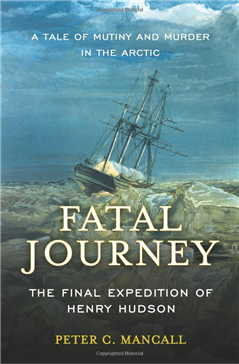
Day 513: Fatal Journey: The Final Expedition of Henry Hudson

Cover for Fatal JourneyGiven that little is known about the final voyage of Henry Hudson, Fatal Journey‘s tag line (A Tale of Mutiny and Murder in the Arctic) seems to promise more than it can deliver. In fact, I often felt that history and anthropology professor Mancall padded this short book’s content with whatever came to hand.

Hudson’s final voyage to try to find the fabled Northwest Passage ended in 1611 in James Bay. He and his men had been forced to spend a brutal winter there, and now that the ice was starting to melt, Hudson was trying to decide whether to press on or return to England. At that point, some of his men mutinied and set Hudson, his son, and other crew members adrift in a small boat. They were never seen again. The only evidence of their fate is from the testimony of the surviving mutineers, who claimed that the engineers of the mutiny all died on the way home.

Mancall’s book looks at Hudson’s other voyages in more detail and describes in a matter-of-fact, undramatic way the hardships of the final journey. He also fills in a lot of information about other voyages of exploration, maritime law, just about anything sea-related. This approach is sometimes interesting, sometimes frustrating, as when he starts out the chapter about the mutineers’ trial with ten pages on the history of the crown’s attitude toward piracy.

For the most part, I felt that the book could be replaced by a long, more interesting magazine article. Hudson hardly appears in this book and we hear nothing directly from him. So, I was especially bothered by the author’s conclusions that Hudson’s fate was due to his own hubris.

Day 489: Queen Anne: The Politics of Passion

Cover for Queen AnneHistorically, the legacy of the reign of the last Stuart monarch, Queen Anne, has been marred by allegations that Anne was a weak woman who was ruled by her favorites. The accomplishments of her reign have been attributed to men she entrusted with leadership roles, most notably John Churchill, Duke of Marlborough. Similarly, the wrongs perpetrated during her reign have been imputed to the misguidance of her favorites. Historian and biographer Anne Somerset’s new book exhaustively shows that Anne, to the contrary, was a sensible and conscientious ruler, most consistent in her views and often very stubborn, although private and reserved.

Much of what was popularly known about Queen Anne came from the writings of Sarah Churchill, the Duchess of Marlborough, who was Anne’s close friend and confidante for many years before becoming her bitter enemy. Even when they were close, the duchess seems to have been a demanding harridan, whose idea of her own power and desserts grew too rapacious and who treated the queen abominably for years. Having read a biography of the duchess several years ago, I approached this book believing Anne was a weak and silly woman, but it has made me change my mind.

Somerset makes an interesting point that Anne’s lack of charisma and physical appearance may have hurt her legacy. Although the portrait of the young Anne reveals a beautiful lady, by the time of her reign she was grossly overweight and plagued by serious physical ailments. These were diagnosed at the time as various disorders, including gout, but a modern look at her symptoms indicates that she may have suffered from lupus, a serious autoimmune disease. For the most part she soldiered on uncomplaining to do her duty for her country.

This book lucidly explains the complex issues that echoed throughout Anne’s reign, including the ouster of King James II, Anne’s father, and the refusal to acknowledge his son, Anne’s half brother James Francis Edward Stuart, as a legitimate heir to the throne because of his Catholicism; the bitter feuds between the Whigs and the Tories; and the War of the Spanish Succession. The book is thorough in its research and very well written. Although I tired at times of its dissection of a seemingly endless series of disputes among those vying for power, I think the book offers a considered and balanced look at Queen Anne’s life and reign.

I received a copy of this book free through a giveaway on Goodreads.

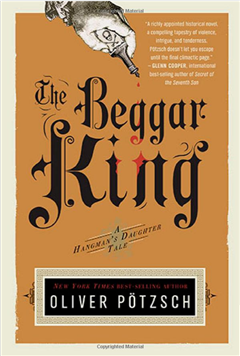
Day 475: The Beggar King

Cover for The Beggar KingBehavior is a problem in The Beggar King, the third of Oliver Pötzsch’s Hangman’s Daughter series, but the first I have read. Characters who are in peril of their lives stop running away from their pursuers to have arguments; characters who are fighting for their lives start flashing back to their pasts instead of concentrating on not being killed. To be very clear about this problem, the characters do what the plot requires. When the plot requires the three main characters to be apart, for example, Pötzsch has them begin arguing or just has someone walk off instead of finding a plausible reason for separating them.

The novel begins in 1662, when the Schongau hangman, Jakob Kuisl, gets a letter from his sister in Regensburg saying she is very ill. When he arrives at the bathhouse her husband owns, he finds her and her husband brutally slain. Immediately afterwards, the authorities rush in and arrest him. Now it is up to the Regensburg hangman to torture him into a confession.

In the meantime, back in Schongau Magdalena Kuisl and her lover Simon Fronwieser have run into trouble. As the hangman’s daughter, Magdalena is considered to be among the lowest rungs of society, and she is not allowed to marry Simon, a member of the middle class. A series of encounters with a group of bullies finally ends in the Kuisls’ house being set on fire. Instead of helping her mother and her eight-year-old twin siblings (who by the way behave more like four or five than eight) as might be expected, Magdalena and Simon decide to run off to Regensburg to start a new life.

I have been to Regensburg, which is a beautiful medieval city with an interesting history. We learn a bit about this history, and that is probably the most interesting part of this novel. The city is mostly described to us in terms of its mud and filth, however, not in terms of its lovely pastel stucco buildings decorated with beautiful medieval-era murals or winding cobblestone streets.

However unlikely, our three main characters have stumbled into two plots, one of revenge against Jakob for events during the Thirty Years’ War, the other involving an imminent threat to the Reichstag. Soon, all three protagonists are wanted by the authorities, Magdalena and Simon for arson after someone burns down the bathhouse with them in it, Jakob because he has escaped. Nevertheless, they chase all over the city without anyone noticing them unless Pötzsch needs them to be noticed. In the meantime, they unfailingly trust the wrong people and assault the ones who are trying to help them.

This novel is certainly full of frantic activity. Whether it is plausible at all is the question. I was particularly irked by the last 50 to 75 pages, in which all three characters are in peril in separate locations. Just as one scene reaches a climax, Pötzsch switches the action to another location. This tactic might foster suspense if done once, but Pötzsch uses this technique repeatedly over 50 pages simply to spin things out. I found this tactic so irritating that I almost quit reading at the end of the book!

Although the novel is written moderately well, the characters are one-dimensional and their behavior is driven by plot. The plot itself is ridiculous.

Day 395: Macbeth

Cover for MacbethAs with Hamlet and King Lear, the succession is a theme in Macbeth, even more so as the play was written in response to the Gunpowder Plot, in which Guy Fawkes and others attempted to blow up Parliament with King James I in it. This event was extremely traumatic for the British, as we can clearly imagine. Macbeth is, of course, Shakespeare’s famous tragedy about Macbeth’s attempt to usurp the throne of Scotland.

One theme of the play that harks back to the Gunpowder Plot is equivocation. Many of the statements in the play seem as if they mean one thing when they actually mean something else, from the witches’ predictions to Macbeth’s assurances. Equivocation was a Jesuitical doctrine that said that under examination, the truth could be substituted with “mental reservation,” in which one makes deceptive utterances but thinks the truth. It was used by Henry Garnet, the Jesuit Provincial, who learned of the plot as part of a confession. Edward Coke, a member of the Privy Council, which interrogated Garnet, called it “open and broad lying and forswearing.”

In fact, there are other references within the play that refer to James and demonstrate that the play was written in his support. Most obvious is James’s interest in witchcraft. He attended witch trials and in 1597 wrote Daemonologie, which Shakespeare used as source material for his scenes with the witches.

Banquo, Macbeth’s friend, whom Macbeth has murdered because of the witches’ prediction that Banquo will be the father of kings, was purportedly an ancestor of James I. Finally, there is the reference in the play to the healing of the king’s evil, a practice James observed that was followed after him by the British monarchy up to the Hanovers.

So, the play was written in honor of James I, to demonstrate the havoc wrought by breaking the succession. In the service of what is essentially historical propaganda, Duncan is made purer than he actually was and Macbeth more evil. The facts that Macbeth had a claim to the throne of Scotland and that the Scottish succession was not hereditary at the time are ignored. For an alternate interpretation of the story, see the wonderful King Hereafter by Dorothy Dunnett, one of the best historical novelists of all time, in my opinion.

But these facts don’t really spoil our appreciation of the play, which is one of Shakespeare’s most atmospheric, with its ghosts, witches, sleepwalking, murders, and walking wood. I think I prefer the directness of Macbeth to the convoluted plots of some of Shakespeare’s other tragedies. It is certainly a powerful play.

Day 374: A Plague of Lies

Cover for A Plague of LiesA Plague of Lies is the third in the mystery series set in 17th century France and featuring Charles du Luc, a master of rhetoric at the Louis le Grand school in Paris.

Charles is dismayed when he is summoned to escort Père Jouvancy to the court at Versailles to present Madame de Maintenon with the gift of a holy relic. Madame is angry with the Jesuits because the King’s confessor, Père la Chaise, convinced the King not to give her the title of Queen, so the gift is an attempt to regain favor. Although Charles disapproves of what he sees as the Sun King’s constant self-glorification, he must escort Père Jouvancy, an old man who is just recovering from an illness that is raging through Paris.

On their way to Versailles, Charles and Jouvancy encounter Lieutenant-Général de la Reynie, head of the Paris police, whom Charles has assisted on occasion. La Reynie asks Charles to keep an eye on the Prince of Conti while he is there and to listen to what is said about him.

Once at court, though, Père Jouvancy has a relapse, and Charles comes close to witnessing the death of a much-disliked man, the Comte de Fleury. Apparently, he too was ill and running for the latrine when he slipped on the wet floor and fell down the stairs. The rumor is that he was writing a scandalous memoir, and poison is immediately mentioned. When the other members of Charles’ party fall ill, there are more rumors of poison, but all the men seem to just have food poisoning.

De Fleury does appear to have been poisoned, however, and Charles observes several people going in and out of his room, including the Duc du Maine, son of the King. Charles finds himself getting embroiled in the problems of the Duc’s sister, Mademoiselle de Rouen, who is soon to be engaged to the son of the King of Poland and is not happy about it. Charles also observes Conti behaving suspiciously. Next, a gardener is found drowned.

The novel presents us with a convoluted plot but also with a fascinating portrait of the court at Versailles. Rock’s knowledge of the period, even of how the places she describes would have appeared at that time, seems convincingly complete. Her novels are always absorbing.

Day 365: Othello

Poster for OthelloI have been reading and viewing a few of Shakespeare’s tragedies lately. Othello, in contrast to Hamlet, seems to be about very little in terms of overarching themes. Whereas Hamlet makes observations about death, revenge, the place of women in society, the relationships between fathers and their children, Othello is about what? Perhaps trusting too easily? Perhaps trusting not enough? Of course, it is about racism, jealousy, and betrayal, but what does it say about them?

The plot, of course, is that Desdemona elopes to marry the Moor, Othello, having fallen in love with him as he told the tales of all his adventures. Iago sees this marriage as an opportunity to have his revenge on both Othello, who has given the position he expected to Cassio, and on Cassio himself. He does this by making Othello think that Desdemona has betrayed him with Cassio.

To me the play is mostly about trust. Desdemona is a fool, it seems, to entrust her life to a man who would doubt her on so little evidence, actually before there is any evidence. Why is Othello so quick to trust Iago, a man he has overlooked for promotion, who has reason to hate him, and yet so quick to distrust his wife, who has never given him reason to doubt? Of course, this contrast says something about society’s view of women at the time.

Perhaps also Othello is a good excuse to write the part of a truly evil villain, Iago. For certainly Iago’s is the most important part.

Why is this a tragedy? Is Othello a great man brought down? I suppose he is great by virtue of his military adventures, but he is brought down by his own stupidity and gullibility. Desdemona is nothing but a victim, completely helpless to control her fate. This is not my favorite Shakespeare play, filling us with dread as it does from almost the beginning.