Day 394: The Fountain of St. James Court or, Portrait of the Artist as an Old Woman

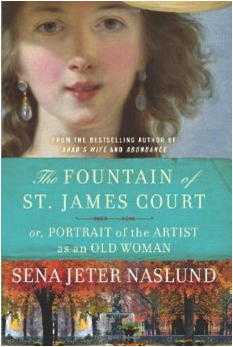
Cover for The Fountain of St. James CourtI received this book in a First Reads giveaway from Goodreads. I haven’t read Naslund before, so I am not sure whether she adapted her writing style for this novel, but it took me awhile to accustom myself to it. She follows the activities of two artists, one Kathryn Callaghan, a fictional older writer in the current time, and the other a once-living person, Élisabeth Vigée-Le Brun, a painter known especially for her portraits of Marie Antoinette.

The modern-day story begins at midnight next to a fountain of Venus in a neighborhood of Louisville, Kentucky. Kathryn, or Ryn, is taking her newly finished manuscript to her friend Leslie’s door because she can’t wait to deliver it.

The novel’s structure is a book within a book. Chapters following one day in Ryn’s life are interleaved with chapters covering the whole of Vigée-Le Brun’s life, which are from Ryn’s book. Both stories are about the theme of what it means to be an artist and what you must give up of your personal life to pursue your profession. The novel is said to be a deliberate variation on Joyce’s Portrait of an Artist as a Young Man, but it has been so long since I’ve read it that I cannot comment on that.

This novel is contemplative, especially in the modern-day narrative, but the interleaving of stories in such short chapters slows down the pace too much. It literally takes until page 34 for Ryn to walk across the street and deliver the manuscript. Even with some chapters from the 18th century interleaved, the pace is frustrating. I found myself thinking, when is this woman going to make it across the street?

I found the story of Vigée-Le Brun’s life more compelling than the modern-day story, during which we follow Ryn’s every thought. She is an excitable, emotional woman who contemplates everything she looks at and repeatedly broods over the same things. We read about the russet and yellow fall colors or the appearance of the fountain many times. Nothing much happens all day until a late-night confrontation that seems artificially created to provide some tension.

I did not feel, however, that the two women, Ryn and Vigée-Le Brun, were two different people–they seemed to be the same person in different time periods. Vigée-Le Brun is slightly less emotionally excitable than Ryn, but their observations of the world around them, their attention to color and the details of design and structure, are very similar. Vigée-Le Brun’s narrative style, in first person where Ryn’s is in third person, is a little more formal as befitting an earlier age, but conversations in this story often sound stilted, and her first conversation with Marie Antoinette is positively sycophantic.

Naslund’s writing style, although sometimes vibrant and lyrical, often seems affected, particularly in the modern-day story. The copy I read was an advanced reader’s edition and it had quite a few typos, which I assume will be corrected. I was not quite as sure of some self-consciously unusual phrases, whether they were stylistic choices rather than errors. Naslund’s writing style tends to the unusual, to be sure, but I stumbled over some of these phrases. The only one I wrote down was an instance where some characters “made quick chat.”

I wanted to like this novel more than I did. I think the theme of women and art is worth exploring, although I’m not sure how much this novel actually explored this issue, despite its obvious intentions. I am actually curious about the alleged feminist leanings of Naslund and their effect on this book. Vigée-Le Brun has to put up with her father and then husband appropriating all her money and, in her husband’s case, only giving her a bit of it back as an allowance. When they divorce, he gets almost everything. Yet, she is determined not to let it bother her. I am not sure whether that is a feminist viewpoint or not.

However, the characters in this novel certainly reflect the “gift for pleasure” noted in reviews of Ahab’s Wife (which I am currently reading). The women go on pursuing their lives and dreams without much heed to their menfolk, they have cordial relations with those around them, they delight in color and the fineness of life. Their regrets and sorrows mostly focus on their children.

One thing that surprised me about the historical story was that Vigée-Le Brun hardly seemed to notice the causes of the French revolution or the revolution itself. There is one scene where a woman confronts her on the street and another where she grieves for the fate of so many. That’s about it.

Conversely, it is hard to believe that she would be shocked to the core by seeing a model of internal organs, as artists had been studying the body for hundreds of years. I do not know how much of this novel actually reflects Vigée-Le Brun’s true thinking and feeling. The danger when portraying a historical person is that you are imagining who the person really is–you don’t know–and you have no idea if you are doing them justice or injustice.

Day 194: Burning Bright

Cover for Burning BrightI’m afraid I cannot read any book by Tracy Chevalier without thinking of the purity of the character she created in Girl with a Pearl Earring. Unfortunately, I haven’t read a book by her that was as good, but I keep hoping for one.

In Burning Bright, set in 18th century London, Jem Kellaway, a young lad from the country, moves with his family into Lambeth. They settle into a row house owned by Kellaway’s new employer, next door to the poet and artist William Blake and his wife.

Jem befriends a London street urchin named Maggie Butterfield, and they spend some time with the Blakes. These two children are meant to represent Blake’s ideas of innocence and experience.

Jem’s father has taken a carpentry job with Astley’s Circus. Unfortunately, Jem’s sister Maisie soon attracts the eye of John Astley, the rapscallion son of the circus owner.

Most of the action of the novel centers around the unease generated in England by the French Revolution. Blake’s unusual publications have made him appear to be seditious, and he and his family are threatened as the hysteria rises.

Unfortunately, the characters and story are not very interesting, and William Blake is almost incidental to the novel. The novel does nothing to make the mysterious Blake more understandable to us.

Day 174: Pauline Bonaparte: Venus of Empire

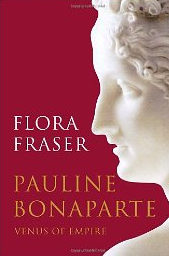
Cover for Pauline BonaparteI didn’t know anything about Pauline Bonaparte before I read Pauline Bonaparte: Venus of Empire. I picked it up because it was by Flora Fraser, a noted biographer who specializes in 19th century women. (She is also the daughter of Antonia Fraser, the famous biographer.)

Pauline Bonaparte was Napoleon Bonaparte’s youngest sister, renowned for her beauty. She lived a colorful life and is immortalized by a life-sized, nude statue by Antonio Canova that resides in the Villa Borghese in Rome.

The connection with the Borghese family is not one that they cherish. Pauline’s second husband was Prince Camillo Borghese. During their long marriage, they lived mostly apart, and Pauline entertained herself with numerous flagrant affairs.

In fact, Pauline’s reputation was dreadful. Napoleon’s enemies spread numerous rumors about her, even stooping to claim that her relations with her brother were incestuous. Not only did she not care, she encouraged that particular rumor to show how powerful she was.

Although she could be very charming, she spent most of her career manipulating infatuated men and intimidated women. Stories abound of her using generals as footstools, turning people our of their own houses, and so on. A particularly odd one was that when she was visiting an officer of the church, she made him cut a hole in the ceiling of his bathroom over the tub so that someone could stand on the floor above her and shower her with milk.

Although extremely jealous of the prerogatives granted her sisters (as they were of hers) and generally hateful to the Empress Josephine (she and her sisters held onto Josephine’s train during her coronation so that she could not move forward), Pauline’s most positive trait was her loyalty to her family. She was devoted, although not faithful, to her first husband, General Victor Emmanual Leclerc. When Napoleon fell out of power, she was persistent in trying to improve his living conditions and tried to get permission from the British to share his exile.

Fraser’s biography is interesting and well written. I found Pauline to be a fascinating subject, although not an admirable person.

Day 151: Moonfleet

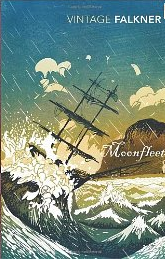
Cover for MoonfleetMoonfleet is a boy’s adventure story similar to Kidnapped or Treasure Island. Written by J. Meade Falkner in 1898, it was very popular for many years. I had actually never heard of it but picked it up out of curiosity a couple of years ago.

John Trenchard is an orphan boy who lives with his aunt in the small village of Moonfleet in the south of England in 1757. The village has been dominated by the Mohune family for centuries. There is a legend that Colonel John “Blackbeard” Mohune stole a diamond from King Charles I and that his ghost roams the crypts looking for it.

One day John hears noises from Mohune’s crypt, and when he goes to investigate, finds the landlord of the local inn, Elzevir Block, and Mr. Ratsey, the sexton, who say they are looking for damage from a storm. John assumes they are looking for Blackbeard’s ghost. He finds his way into the crypt through a large sinkhole and gets inadvertantly trapped there overnight. While he is trapped there, he overhears enough to realize that Block and Ratsey are actually smugglers.

John’s aunt assumes he has been up to no good when he doesn’t come back for the night, so she throws him out of the house. Fortunately, Block takes him in. But when Block’s lease expires, the lease goes up for auction and is purchased by Maskew, the unpopular local magistrate. Before Block leaves the area, John accompanies him on one last smuggling venture, during which Maskew, who has lain in wait for the smugglers with the excisemen, is accidentally shot by the excisemen. John is wounded and is falsely accused in absentia of murdering Maskew, so he must flee to the continent.

The rest of John’s adventures include diamond hunting, being imprisoned for theft when he is cheated by an avaricious diamond merchant, working as a galley slave, and shipwreck. Moonfleet is an exciting book with a gripping story line that is still popular with children.

Day 139: Abigail Adams

Cover for Abigail AdamsI think Abigail Adams suffered from the fact that I had recently read David McCullough’s biography of John Adams, and Woody Holton’s book covers a lot of the same ground. This fact made me ponder a bit about how much a woman’s history is often treated as an echo of her famous husband’s. I am sure that not as much information is available about Abigail as there is about John, especially before they married, but I felt like these two books didn’t need to cover so much of the same territory.

The picture that emerges of Abigail Adams is of a well-meaning but bossy woman of strong views. Her feistiness had two sides. I know that people are captivated by the thought that she spoke her mind during a time when many women didn’t and behaved as if she had rights that she did not, but I had the distinct impression that on numerous occasions she would have driven a lot of people crazy, particularly in her attempts to manage her relatives. When, for example, Abigail interfered in John Quincy’s posting to Russia, he must have been very patient, or very angry.

On the other hand, Holton shows that Abigail was an expert manager of the couple’s property and fortune, actually more astute than John. She took upon herself rights that were not hers legally, from principle, and she stood up for what she believed.

I am not sure I understand the expectation at the time, but I was also struck by the fact that she made very little effort to move into or even visit the White House. I know that it was only partially built at the time and was more like a rustic men’s boarding house than the building we know today, but it seemed that John Adams spent a lot more time without his wife than was necessary, as Abigail also did not accompany him on all of his diplomatic trips. Perhaps this arrangement suited the two of them, but I had the impression that it suited her much more than it did him.

These comments are not a criticism of the biography as such, but here is one. Like many biographers do, I feel that Holton occasionally draws conclusions and makes generalizations based on too little evidence. Perhaps he is trying to avoid the problem of scholarly presentations that provide too much evidence to keep the material interesting, but if so, he goes too far the other way at times. I found myself thinking several times that he had not proven his point of view. At other times, he buries his themes in too much biographical detail. I think he was having difficulty keeping that vital balance between too much information and too little. However, Holton does usually manage to preserve a tone that is light and interesting, and Abigail Adams is certainly a compelling figure in history.

Day 135: The Sun King

Cover for The Sun KingThe Sun King is an interesting biography of Louis XIV and a history of his court, although it occasionally assumes a level of knowledge about French history that I do not have. It is also not terribly revealing of the personality of Louis XIV, who was apparently a very guarded person. For example, the book contains no revealing quotes from personal letters or anything similar.

I was interested to read that Nancy Mitford originally envisaged the book as a description and discussion of the architecture and gardens of Versailles rather than a biography, which perhaps partially explains the focus.

The book starts with the beginning of Louis’s reign, so there is no information about his early life. Chapters are organized around incidents during his reign rather than periods of history. The book describes the opulent court and details intrigues and power struggles within it. The chapter about poisoning was shocking. It is easy to see why the French court of the time had such a reputation for decadence.

The edition that I read (not the one pictured) is full of beautiful pictures of Versailles as well as sketches of the architects, artists, and gardeners responsible for creating the palace. However, there are no good pictures of Louis, presumably because none exist. He is always depicted as a tiny figure in large historical paintings of some event, so it was hard to see what he actually looked like.

Of course, the book is well written and witty. Although Mitford is best known for her humorous novels of sharp social commentary, she also wrote several well-received and thoroughly researched biographies.

Day 39: Away Off Shore: Nantucket Island and Its People, 1602-1890

Cover for Away Off ShoreIn Away Off Shore, Nathaniel Philbrick explores the history of Nantucket Island, from the first boat of British people leaving the restrictions of the mainland to the final death throes of the whaling industry.

This book could probably be called a microhistory because it is the history of one small island. I had a feeling when reading it that it might be one of Philbrick’s earlier books, and sure enough it was written in 1994, well before his other books. It was apparently reprinted on the shirttails of his more recent, very successful histories.

Philbrick explains how different Nantucket was from mainland New England even from its beginnings. It was occupied by Wampanoag Indians when the Pilgrims arrived to find the rest of the coast almost empty of Native Americans. These people were first treated well by the new settlers, who even purchased their land from one of the two groups (the wrong one, however), but this relationship slowly changed. The Indians were eventually enslaved to some of the other islanders by incurring debts they could not pay, for which an exorbitant amount of work was demanded in return. The islanders’ isolation from the mainland, their strong Quaker roots, and their eventual success in the whaling industry as the first men to go after sperm whales singled them out from other New Englanders.

Philbrick relates the history of the island largely by focusing on a few colorful individuals and families, and principally on two antagonistic factions. Although that strategy makes the book interesting, I’m not sure it provides a true reflection of the island through time.

I felt that the book makes assumptions about the readers’ knowledge of Nantucket, as if it was written for the inhabitants or at least those who are frequent visitors. He often makes comments like “the house was located where the post office is now.”

This last comment is a minor criticism, but it relates to a more major one, which is the lack of good maps and pictures. The book has two reproductions of old maps, but they are so small and fuzzy as to be unreadable. I am a  map person, so when Philbrick is describing where things are, I want to see them on the map. That was almost always impossible. In addition, most histories of this type contain reproductions of paintings or old photographs so that we can see what some of the people or the old town looked like, but this book has none. Indeed, Philbrick actually compares photographs of two men, but the photos do not appear in the book. It would have been nice if the book contained pictures of some of the people and places.

Philbrick is known as an expert on Nantucket, and the book certainly shows meticulous research. It is very interesting, but also frustrating at times.

Day 38: The Winter Palace

Cover for The Winter PalaceBest Book of Week 8!

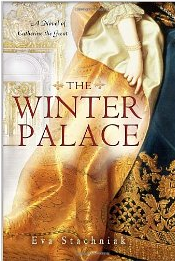
The Winter Palace by Eva Stachniak is an excellent, absorbing historical novel that captures the rise of Catherine the Great.

Barbara (Varvara) Nikoleyeva is the daughter of a Polish bookbinder who takes his family to St. Petersburg hoping for opportunity. It is the years of the reign of Empress Elizabeth, the daugher of Peter the Great, who has wrested the empire from her nephew, the rightful heir, Ivan, and placed him in prison. Years ago, Varvara’s father had bound a badly damaged book owned by Elizabeth, and Varvara’s mother, an artistocrat who has married beneath her, urges him to draw himself to the Empress’s attention. The family’s move is a success until both Varvara’s parents die, and as a young woman she begs a place at court from Elizabeth.

The court is full of secret passages and peepholes. Nothing is private, and many people are paid to listen, poke through others’ belongings, and inform. Varvara finds herself employed as a spy, or nose, for the Chancellor Bestuchev. She does not wish for this position but finds it a way to keep favor, as in the volatile atmosphere of the court, one needs to keep in with the right people. Even the position of princes and princesses can be precarious, and Varvara has no social status.

Varvara is new to court when the Empress imports Sophia Anhalt-Zerst to consider her as a possible bride for her heir, the childish Peter Fyodorovich. Varvara’s sympathies are caught immediately as she watches Sophia navigate the treacherous shoals of the temperamental Empress, Sophia’s own selfish and conniving mother, and the foolish Peter. Despite her mother’s plotting, which almost gets her thrown out of the country, Sophia converts to Russian orthodoxy, taking the name of Catherine, and eventually marries Peter.

Varbara becomes close to Catherine and supports her even as she is ignored and then cruelly treated by her husband and loses her status with the Empress and the court when, because of Peter’s impotence, she fails to conceive.

The life of the Russian court is vividly depicted in this enthralling novel, where Catherine’s rise to power is paralleled by the building of the magnificent Winter Palace.

Day 29: The Winter Sea

Cover for The Winter SeaLet me start out by saying that this is not my kind of book. There are carefully researched and plausible historical novels that make you feel like you understand the time and place and that may or may not include a romance. Then there are romance novels that just happen to be placed in a historical time but otherwise read as if the writer did not bother looking up a single fact. And there are all ranges in between. Despite the notes from Susanna Kearsley about her research, I would locate The Winter Sea closer to the latter end of this range.

Carrie is a writer working on a novel about one of the Jacobite rebellions. She has been living in France where all the intrigue went on, but she isn’t getting into her novel. On a visit to her agent in Scotland, she is attracted to a ruined castle. When she hears that part of the rebellion was based there, she decides to move to the nearby village, and on a suggestion by her agent, make her main character a woman. She arbitrarily picks Sophia Paterson, her own ancestor.

She begins to imagine vivid scenes, which interleave the modern story. But when she checks the facts surrounding these scenes, she finds the details are actually correct. After awhile she decides the explanation must be that she carries her ancestor’s genetic memory in her DNA, an explanation so absurd that it dumbfounded me.

The modern author’s romance with her landlord’s son is interspersed with the story she is writing about Sophia’s romance with a young Jacobite. Although the story reflects some historical research, the focus is on the romance. The dialogue in the historical section is awful, as if the writer thought all she had to do to make it authentic was stick the word “did” in constantly. (“I did arrive from Edinburgh last month.”) I almost quit reading because I could barely stand to read the dialogue. I would rather have the writer use modern English than patently fake and unconvincing archaic English.

Had the author based the writer’s insights on some form of second sight–they are in Scotland after all–I would have found that explanation more acceptable than the pseudo-scientific claptrap. Avoid this one unless you absolutely don’t care about any historical or scientific authenticity.

Day Six: Waverley

Cover for WaverlyI have been trying to offer a mix here, not just mystery mystery mystery, and so far I have just reviewed books I’ve liked. But I plan to also review books I didn’t like. This book isn’t one of them; I’m just warning you.

I had a hard time even getting interested in reading anything by Sir Walter Scott after having been forced to plow through the dreaded and deadly dull Ivanhoe in high school. I tried rereading it again some years ago because sometimes things you find dull in high school are more interesting when you’re older, but it wasn’t. I have often wondered what criteria high schools use when picking the English curriculum, when there are much more vibrant classics available. I can only suppose that they thought a tale of knights, derring-do (whatever that is), and Richard the Lionheart would interest high school students. When you read Ivanhoe, it’s hard to imagine that at one time Scott’s books were waited for with bated breath by the whole family.

But most of us probably haven’t tried to read his Scottish novels, or the Waverley novels, as they are called. This review is about the novel called Waverley, presumably the one the others are named after. It was written in 1814 but is set in 1745. Scott’s Scots dialects are a little difficult—a glossary would be nice—and he can occasionally be a bit long-winded, but his Scottish novels are much more interesting and amusing than Ivanhoe.

Waverley is a dreamy, wealthy youth brought up in England who has been neglected by his father and raised by his uncle, a man of Jacobite sympathies. A romantic man of undetermined principles, he cannot decide what to do with himself, so he is sent off by his uncle to join the army.

On leave from a regiment stationed in Lowland Scotland, he goes to visit an old friend of his uncle. He makes a visit to the Highlands out of curiosity and ends up embroiled in the Jacobite conspiracy. He is charged with desertion and treason, mostly because he’s in the wrong place at the wrong time.

Part of Scott’s intent, I believe, was to show the British of the times that the Highland Scots were not just a bunch of savages and to depict them realistically.

The book is entertaining and humorous at times, and also occasionally a little ponderous. Waverley is a hapless hero who finds himself drawn into one fix after another, which perhaps makes him a more modern protagonist than you would expect.