Review 2227: The Silver Swan

In this second Quirke novel set in 1950s Dublin, Quirke doesn’t do that much investigating, the results of the last case having been hushed up. However, his poking around does stir things up.

Quirke, a pathologist, is contacted by a distraught Billy Hunt, a man he can barely remember from school days. The body of Billy’s wife Deirdre has been discovered naked in the water, assumed drowned. Billy begs Quirke not to perform an autopsy, because he can’t bear the idea of it. Quirke says he’ll do what he can, but he does do an autopsy and finds an injection site in her neck. However, he hides this information, and the coroner brings in a verdict of suicide. Quirke has assumed she took an accidental overdose, but he would like to know more about her, so he lets Detective Inspector Hackett in on enough to know everything is not straightforward.

The novel returns a bit in time to tell the story of Deirdre Hunt, who has been calling herself Laura Swan since she opened a beauty salon called The Silver Swan. Alternately, it follows several characters in the novel’s current time. One of the first things Quirke discovers is that Deirdre was having an affair with her partner, Leslie White, a silver-haired, languid man who affects a style that emphasizes his hair color and paleness. Quirke thinks he is dangerous and is disturbed to find that his daughter, Phoebe, knows him through her slight acquaintance with Deirdre. In fact, she is also drawn to him (although he seems singularly repulsive).

Deirdre has met White through her acquaintance with the mysterious Hakeem Kreutz, who offers “spiritual healing” to women clients and has been instructing Deirdre in Sufism. But she is just visiting him because she’s attracted to the exotic, as she is with White. The connection between the two men is much more complicated.

This novel is dark, with a slow-growing suspense as it reveals more information. It is not really a traditional mystery, but it makes compulsive reading.

Related Posts

Christine Falls

The Secret Guests

The Good Turn

Review 2150: The Bogman

When The Bogman was published in 1952, it was banned in Ireland for indecency. These days, we find little to label it indecent, even if it is partially about a forbidden love.

The novel begins with Cahal Kinsella coming home to a very small village with less than a dozen houses, most of them occupied by older people. Cahal is illegitimate. His grandfather threw his mother out when he was born, and he was raised in an industrial school. Now 16, he has been released from the school and goes to live with his grandfather, Barney.

Barney is a hard man. He is sometimes brutal to Cahal, but Cahal doesn’t mind. He is used to obeying and is happy to belong somewhere. However, this attitude earns him the disdain of Máire Brodel, which will have far-reaching consequences.

Cahal also has the problem that no matter how good his intentions, he is often misunderstood. As he gets older, a series of incidents leads to him losing most of his friends. But his worst misfortune comes when, to get money, Barney arranges a marriage for him at nineteen with a woman in her 40’s.

This is a powerful novel about the hardships of Irish rural life at the time, about the insularity and lack of privacy in a small village, about rumor and gossip, treated as truth even if it’s a lie. According to the introduction by Nuala O’Connor, it is based at least partially on Macken’s own life and experiences.

Related Posts

Christine Falls

Small Things Like These

The Burning of Bridget Cleary

Review 2117: Smoke and Mirrors

Best friends Annie Francis and Mark Webster, aged 13, disappear on the way to the candy store. The search for them is disrupted by a snowstorm, so they’re not found for several days, in a shallow ditch with a trail of candy leading to it. DI Edgar Stephens thinks they were meant to be discovered earlier, but the snow prevented it.

The police find that Annie had written plays performed by younger children on a stage at the home of neighbor Brian Baxter. The early plays were innocuous, but by all accounts the latest is darker. Annie has shown an interest in the real German fairy tales with dark plot lines. Her newest play is called The Stolen Children.

Edgar’s friend Max Mephisto is performing in a pantomime in town, and through him, Edgar hears of a similar murder that took place in 1917. It seems an odd coincidence that some of the older pantomime performers were in town at the time. The murderer was caught and is dead, but could there be a connection?

Edgar gets a call from Daphne Young, a teacher who was helping Annie with her play, saying she’s discovered something. But she is also found murdered before he can talk to her.

I don’t seem to be getting as involved with the Brighton series, set in the 1950’s, as I have with Griffith’s Ruth Galloway or Harbinder Kauer books. However, I like the vaudeville theme and am willing to stick with it for a bit.

Related Posts

The Zig Zag Girl

The Stranger Diaries

The Postscript Murders

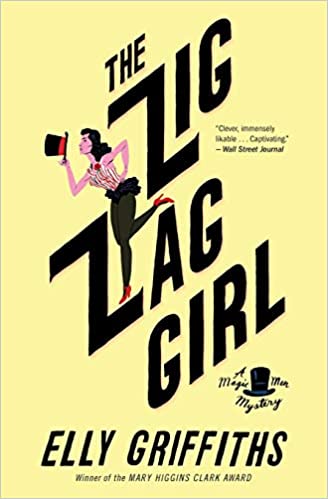
Review 2040: The Zig Zag Girl

I’ve been enjoying Elly Griffiths’ Ruth Galloway series, so I thought I’d give her Brighton series a try. This first novel takes place in 1950.

Detective Inspector Edgar Stephens has always felt a little self-conscious about part of his war work. After helping the Finnish army, he was part of a group of illusionists called the Magic Men, whose job was to fool the Germans that Scotland was well defended. After a disastrous accident in which their commanding officer, Charis, was killed, they were disbanded. Edgar had been in love with Charis.

Edgar’s best friend in the service was Max Mephisto, a well-known magician. Although Edgar hasn’t seen Max since the Magic Men were disbanded, the murder of a young woman reminds him of Max. She has been cut in three, like the illusion of the Zig Zag Girl, which Max created. Edgar consults with Max, who is still working the magic circuit, and his old army group members begin showing up. There is Diablo, an old magician who spends most of his time drinking; Bill, the carpenter who constructed the illusions; and Tony Mullholland, a magician whom no one much liked.

But before the rest of these characters reappear, Max recognizes the murder victim as Ethel, his assistant who left the act to get married. When Tony Mullholland is also killed, Edgar begins to believe that the crimes are connected somehow to the Magic Men.

Although I feel I need to get to know Edgar better and he didn’t really figure out much in this case, the series promises to provide more entertainment. Max is an interesting character, and I’m curious how he’ll be brought into the upcoming mysteries.

Related Posts

The Stranger Diaries

The Postscript Murders

The Night Hawks

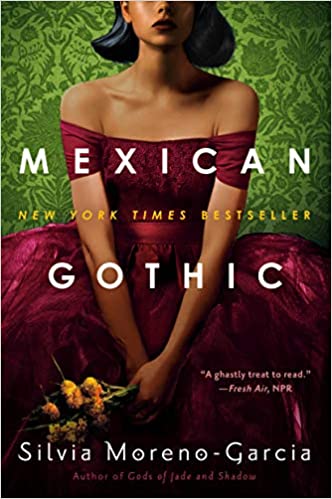
Review 2025: Mexican Gothic

It’s 1950 Mexico City. Noemí Taboada is a university student, but mostly she’s a socialite from a wealthy family aiming to have as much fun as possible.

Noemí’s father has received a disturbing letter from her cousin Catalina, who recently married a man no one knows very well. It sounds like Catalina is mentally disturbed. So, he asks Noemí to visit Catalina to find out what’s going on.

Catalina has married Virgil Doyle, the son of silver mine owners originally from England. But the silver has run out, and Noemí finds High Place a crumbling Victorian mansion. The family is not welcoming, and they impose a lot of rules, including only infrequent visits to Catalina. Catalina herself seems at first simply ill—she has tuberculosis—but later babbles about something listening, something in the walls.

Although the youngest son of the family, Francis, is friendly and helps her out, the rest of the family remains cold. Noemí herself begins having bizarre dreams.

Some readers may have a problem with how slowly this novel gets going, because the only thing that happens for quite a while is these dreams, but eventually the action picks up. Other readers have complained at the unlikelihood of the secrets revealed. That bothered me at first, but then I thought it was in the spirit of the original gothic novels. I decided it wasn’t any less likely than the notion of vampires or zombies and in these days a lot more original.

The novel is atmospheric, the heroine feisty, the ending quite suspenseful. It delivers what it promises.

Related Posts

Luckenbooth

Dark Enchantment

The Castle of Otranto

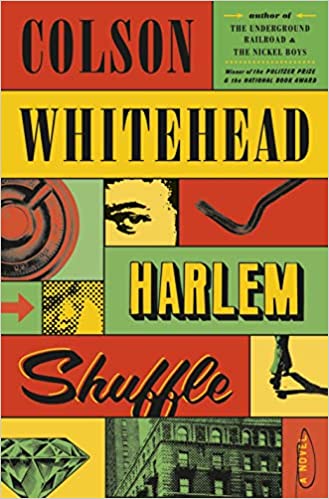
Review 1890: Harlem Shuffle

Colson Whitehead is certainly a story teller. In Harlem Shuffle, he tells the story of Ray Carney, whom he describes as “only slightly bent when it comes to being crooked.” Carney’s father broke knees for a living, and Carney hated him, so Carney has earned a degree in business and has worked hard to keep his furniture store going. He only occasionally deals in suspect merchandise.

However, Carney’s cousin Freddie, who grew up like a brother, is the type of guy who is always up to something and it never turns out well. In the first section of the book, Freddie is planning a heist with some guys, and when they need a fence, he suggests Carney. Carney knows this is way above his head, so he says no. He is tipped off that Freddie is in trouble when he gets a call from some men working for Chink Montague, a notorious criminal, looking for something that belongs to Chink. It turns out Freddie has not conveyed Carney’s refusal to the gang, and soon Carney finds himself in possession of a large emerald necklace that is part of the robbery of a hotel vault.

This novel is set in late 50’s and 60’s Harlem, and vividly depicts the events of this period at the beginning of the Civil Rights movement. Whitehead is clever about earning the readers’ sympathy for Carney despite his misdeeds. He makes it clear how difficult it was during this time for an African-American who starts with nothing to make a success of himself. Aside from Freddie’s plots, Carney has to deal with the slights of his in-laws, who think their daughter married beneath herself, as well as paying off both the thugs and the police, being cheated by supposedly respectable businessmen, and so on. Another absorbing novel by Whitehead.

Related Posts

The Nickel Boys

Jack

Meridian

Review 1713: The Narrow Land

As a young child, Michael Novak was rescued during World War II and sent to the States as part of a program for orphaned children. There, he was adopted by the Novaks. At 10, he is still extremely fearful and full of routines he follows to calm himself. So, he is resistant when Mrs. Novak tries to put him on a train, the first step in a journey to spend the summer on Cape Cod with the Kaplans. Finally, he decides to go.

On the island in 1950 live the artist Edward Hopper and his wife Jo. Although they tend to be standoffish with the vacationers, Michael forms a friendship of sorts with Jo. And it’s really the relationship between Edward and Jo that this book is about.

Edward has been having a dry spell, and he seems preoccupied with trying to find a woman he painted a few years before. She is right under his nose in the person of Katherine Kaplan, Mrs. Kaplan’s daughter, who is dying of cancer. He has seen her and noted the resemblance, but she is no longer dyeing her hair blond. He is an introvert who spends most of his time in his own head.

Jo is extremely jealous of him and thinks he pays too much attention to Olivia, Mrs. Kaplan’s daughter-in-law, when it is really Olivia paying attention to him. Jo is in fact irrationally and violently angry at times, particularly when she feels she had to abandon her career when she became his wife. Although Jo has some moments of self-awareness, I really think Hickey treats her harshly as a character. Granted, I know nothing about the couple’s life, but Hickey shows her making a fool of herself at a party with her airs and graces and spiteful remarks about other people.

Hopper is not very nice to Jo and belittles her art, although I read about that and found she had some standing as an artist.

This novel, which I read for my Walter Scott project, was slow moving, and for a long time I couldn’t tell whether it was going anywhere. Sometimes that doesn’t bother me, but in this case I had a hard time staying interested. The novel does have a payoff in the end, but it is more character study than plot-based.

Related Posts

That Old Cape Magic

The Blazing World

Suzanne

Day 1277: Fool’s Gold

Women Crime Writers coverHere is another book  for the R.I.P. Challenge.

* * *

Fool’s Gold by Dolores Hitchens is the last novel of my Women Crime Writers collection and my least favorite. Although several of the novels were noirish, this one is definitely in the noir style.

Skip and Eddie are two young men who have already served time in prison. Both are attending night school but have little hope of finding a job. In fact, Skip is already planning a robbery based on information he has received from Karen, a girl in his class. She has told him about a stack of money hidden in the room that Mr. Stolz, a frequent visitor to her aunt’s house, keeps in his room.

This crime is poorly planned, but things begin to go wrong before its execution, when Skip’s uncle turns it over to some professionals in exchange for a cut in the proceeds. Skip is determined that no one will deprive him of his big haul.

We are supposed to feel some sympathy for Eddie, who would like to go straight. Skip is the one with the big ideas, who moreover is inclined to abuse Karen. But Eddie is too easily led to feel much sympathy for, and Karen is an outright idiot.

Most of the rest of the characters are despicable, and we watch as everything goes badly wrong.

Related Posts

The Blunderer

Mischief

The Blank Wall

Day 1261: The Last Painting of Sara de Vos

Cover for The Last Painting of Sara de VosBest of Five!
In 1957 New York, Ellie Shipley is a graduate student in art history who also does restorations. A contract for restoration work asks her to make a copy of a 17th century painting, “At the Edge of a Wood” by Sara de Vos, her only known work, for the owner. Soon, however, Ellie understands that she is creating a forgery, but she is too interested in the work to stop.

Marty de Groot, the painting’s owner, notices that his painting has been stolen. He determines he will find out who took it.

In 1631 Amsterdam, Sara de Vos and her husband are poverty stricken after the death of their young daughter. Because they have sold paintings without the permission of the guild, they have temporarily lost their membership. Sara has been painting flowers for a catalog and her husband has been working for a bookbinder. But secretly, Sara has been painting a symbolic memorial for her daughter, “At the Edge of a Wood.”

In 2000 Sydney, Ellie is now a respected academician and museum curator. She has discovered that both of the de Vos paintings, the original and the copy, are being sent to her museum for an exhibit on 17th century Dutch women painters. Now, after 40 years of strict integrity, she is afraid her past is catching up with her.

Although I found the story interesting, I was not at first that involved with this novel. Soon, however, I was totally captivated by all three stories. At first seemingly a crime novel, it goes much deeper. I really enjoyed it.

Related Posts

How to Be Both

Let Me Tell You About a Man I Knew

Burning Bright

Day 1216: The Broken Girls

Cover for The Broken GirlsMost of Simone St. James’s spooky novels have been set in the early 20th century, so The Broken Girls is a bit of a departure. Some of it is set in 1950, but the bulk is set in 2014.

Fiona Sheridan’s sister, Deb, was murdered 20 years ago and her body found on the grounds of what had been Idlewild Hall, a school for girls. Although Deb’s boyfriend, Tim Christopher, has long been in prison for the murder and Fiona believes he is guilty, something about the case still bothers her. This issue tends to raise tension between her and her boyfriend, Jamie Creel, a cop whose father investigated the murder.

When Fiona drives by Idlewild Hall near the anniversary of her sister’s death, she sees that development work is going on. A reporter, she pitches an idea to cover the local story, including rumors of a ghost on the property. But the body of a girl dressed in the uniform of the old school turns up in an old well, and Fiona begins trying to identify her.

In 1950, four girls are roommates at Idlewild Hall, a school for throw-away girls. Katie was sent away when she was raped by a neighbor boy. Cece is the bastard daughter of a wealthy man. Roberta witnessed her uncle’s attempted suicide and temporarily stopped speaking. Sonia is a refugee from post-war France.

All the girls in the school have periodic glimpses of the ghost of Mary Hand, and there are stories about her written inside the school textbooks. Everyone at the school, including the teachers, is afraid.

link to NetgalleyThe novel begins in the 1950’s with a girl fleeing someone on the school grounds. It takes us a while to figure out who and what from, and that’s a secret of the book.

The Broken Girls is another excellent spookfest from Simone St. James. She and Catriona McPherson are beginning to be my favorite authors for light, scary reading.

Related Posts

Silence for the Dead

An Inquiry into Love and Death

Lost Among the Living