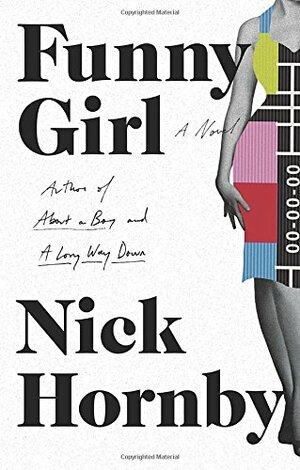
Review 2625: Funny Girl

I have enjoyed some of Nick Hornby’s books very much, particularly some of his early ones, and others not so much. I have been watching the series Funny Woman, though, and when I learned it was based on this book, I thought I’d read it.

It’s the Swinging 60s, and Barbara Parker wants to make people laugh. Her relatives encourage her to enter the Miss Blackpool competition in hopes it will keep her in Blackpool instead of leaving for London. She wins, but when she realizes she’s supposed to participate in activities for a year, she decides not to accept. Soon, she is in London.

The novel follows her as she looks for work and a roommate, and finally an agent. The agent is more interested in sending her for modeling gigs, but she wants to act, so she gets him to send her for auditions. After some failures, she is lucky enough to come upon the writing team of Tony Holmes and Bill Gardiner, their producer Dennis Maxwell Bishop, and actor Clive Richardson. They are working on a different project that they’re not happy with, but they are so charmed by Barbara (now calling herself Sophie Straw) that they decide to write a show for her. Sophie’s offbeat humor makes her a sensation and the show Barbara (and Jim) a success. (Ironically, her character has her true name.)

I didn’t think this book was particularly funny, but it’s still a fun read that is full of detail about early British TV comedies (much of which I wasn’t familiar with), the craziness of London in the 60s, and the progress of our ambitious but likable heroine. Toward the end, it takes a turn toward conventional romance, but the ending lends perspective to everything. Although Sophie is engaging, a lot of this novel hangs on the existing synergy between the members of that original team and what happens when it inevitably cools off. And, of course, the difficulties of a young woman trying to make it in show business.

Related Posts

State of the Union

Miss Iceland

Sweet Caress

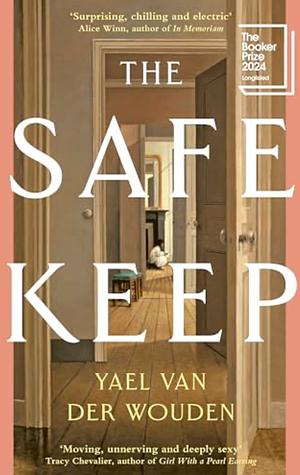
Review 2604: The Safekeep

In 1961 Utrecht, Isabel lives in the house her uncle bought for her mother during the war. Her mother died, and Isabel is very protective of the house’s contents, although she doesn’t own them. Her uncle intends to leave the house to her oldest brother Louis.

Isabel is in her thirties—particular, with a dislike of things that are different, stiff, unfriendly, and solitary. She has no sexual experience. She doesn’t like people to touch the things in the house, and she frequently thinks the help is stealing.

Isabel, Louis, and her other brother Hendrik have periodic dinners in the house, although both men now live in The Hague. Louis often misses the dinner, though, or if he comes, he brings his latest in a long string of girls he’s been in love with. These relationships only last a short while, however, so Isabel and Hendrik resent the inclusion of the women. Isabel, though, refuses to invite Hendrik’s partner, Sebastian.

Louis comes to dinner with a new girlfriend, Eva, whom Isabel thinks is low-class and treats with hostility. To her dismay, Louis tells her he must travel for business and wants Isabel to have Eva for a guest while he is away. He points out that the house isn’t really Isabel’s but is intended for him.

So, Isabel reluctantly takes Eva in, but she is not nice about it even though Eva tries to be friendly. The atmosphere is charged.

I found a lot of this novel very interesting, especially in its revelation of how The Netherlands treated Jews returning from the concentration camps after the war. Yes, mild spoiler, this novel does have to do with the aftermath of the war. I am not a fan of explicit sex, however, no matter who it involves, and there was a lot of that going on for about 100 pages.

The novel takes an unexpected turn at the end, and I think, besides the character study of Isabel, I found that part the most interesting.

I read this book for my Walter Scott Prize Project.

Related Posts

Sarah’s Key

The Postcard

A Town Like Alice

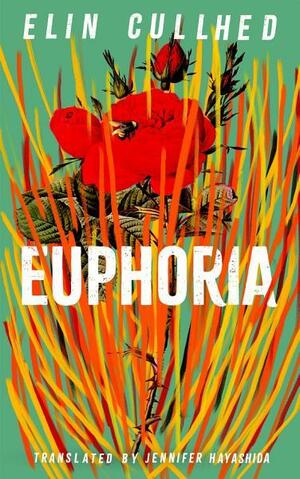
Review 2507: Literary Wives! Euphoria

Today is another review for the Literary Wives blogging club, in which we discuss the depiction of wives in fiction. If you have read the book, please participate by leaving comments on any of our blogs.

Be sure to read the reviews and comments of the other wives!

My Review

Oh, dear, Elin Cullhed and editors, morels come out in the spring. By October, it’s unlikely that any could be found, worm-eaten or not. Chanterelles are what you pick in the fall, among others.

Euphoria is about Sylvia Plath, set in the last year or so of her life. It begins when her daughter is one year old and she is pregnant with her son. It ends a few months before her death.

Before I get into my review, I want to comment on something. When I began reading this novel, I knew very little about Plath except she was a poet, she was married to Ted Hughes, and she committed suicide. Very recently, I read her novel, The Bell Jar, just by coincidence because it filled a hole in my Century of Books project. While I was reading Euphoria, I got the sense that there was a big controversy when Plath died. Some blamed her death on Hughes, who left her a few months before for another women. Certainly, there was a lot of anger against him for burning her diaries. Perhaps I’m seeing some reflection of the opposite side, but I ran across a post by All That’s Interesting, a blog produced by material collected from other sources, that states that Plath was at the nadir of her career when she died. Actually, her novel was recently published (one month before), she had been on BBC reading her poetry, and had recently finished her most famous poem, “Daddy.” So, where did this “nadir” idea come from? Maybe from Ted Hughes’s supporters?

That novel starts with the couple having moved to Devon at Hughes’s insistence. Plath liked living in London and feels lonely in the country, pregnant and left alone with her one-year-old Frieda while Ted goes up to London. Frieda wants attention all the time, and Sylvia has difficulty finding time to work or get anything done. Her marriage already seems rocky to me, alternating sometimes vicious verbal battles with voracious sex. Sylvia admits to liking being mistreated and having a fascination with death. She is extremely needy and jealous. He is always walking away.

The novel is written from Sylvia’s point of view. She is almost always either ecstatic or depressed. With her, as depicted by Cullhead, it is I, I, I. There isn’t so much a plot here as a detailed examination of her feelings as her children grow and her marriage breaks down. Jealous or not, she immediately recognizes that Aissa Wevill is after Ted.

This novel is sometimes difficult to read. Sylvia’s shifts in mood or reactions are sometimes hard to understand, and occasionally her thought processes were hard for me to follow.

What does this book say about wives or about the experience of being a wife?

Literary Wives logo

Well. Certainly Sylvia would be a difficult woman to be married to. First, she’s possibly bipolar, unsure of herself, and obsessed with Ted. But Ted, I think, is not exactly a model husband, even for his time. He helps out sometimes (which is actually unusual for his time) but he withdraws a lot because he has to write. Sylvia has to ask for time to write even though it is her fellowship that is supporting them at the beginning of the book. There are a few signs that he may be threatened by her as a writer, although other times he celebrates with her.

I know this is a time when men generally weren’t involved much with family life and childcare—and sometimes he cooks, does dishes, or takes care of the kids—but I was shocked when he left Sylvia, sick with puerperal fever but with an infant and toddler to care for, to go fishing, in winter no less.

I don’t think this book says anything about marriage in general, just something about this particular, very volatile marriage. It seems like the volatility that made it exciting at first was what did it in finally.

As so often happens when one person in a couple is attracted to someone else and wants to leave, that person begins finding fault with the person he wants to leave in order to make himself feel better about this betrayal. Often, the very things that attracted him in the first place are the things that irritate him later. You may find fault with my pronouns, but it is often these pronouns that this applies to.

Related Posts

Mrs. Hemingway

Passion

Owls Do Cry

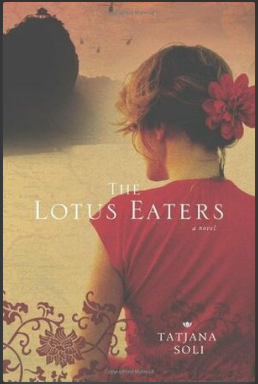
Review 2450: The Lotus Eaters

I’ve had The Lotus Eaters on my TBR list for a long time, so I finally decided to get a copy. Unfortunately, it turned out to be a DNF for me the first time. (But read on, because I eventually finished it. My review is in two parts.)

The novel begins with the fall of Saigon in 1975. War photojournalist Helen has left it late to try to get herself and her wounded husband, Linh, out of the country. Torn between trying to get photos of the fall and getting out safely, after a long, dangerous struggle to get to the American embassy, Helen gets Linh into a helicopter and then returns to the city.

The novel then moves back in time to 1965, when Linh has just been forced to rejoin the South Vietnamese army. On his first day back, he meets photographer Sam Darrow, who gets him appointed as his assistant. But on the same day, friendly fire destroys his village, including his parents and his pregnant wife. Linh deserts.

After months in Saigon, Linh gets a job with Life magazine by claiming to be Darrow’s friend. He ends up being Darrow’s assistant again. Then the focus of the novel shifts back to Helen and her arrival in Saigon as an inexperienced photographer.

First Review

I gave this novel 100 pages, but although I was interested in the setting, I just didn’t care about these characters. And although Soli does a good job of describing some things, I just wasn’t feeling the setting or getting engaged in the story. This seemed like a mediocre attempt at historical fiction. Things didn’t come to life.

I realized later that this book was part of my James Tait Black project, so I should have tried to finish it, but I didn’t.

Second Review

I gave The Lotus Eaters another try after I realized it was not only part of my James Tait Black project, but it had won the award that year. When I quit reading, it was because I assumed that the novel was mostly going to be about Helen’s romantic relationships with married photographer Sam Darrow and then with Vietnamese photographer Linh, and I wasn’t at that point that interested in them. However, it turned out to be more about Helen’s growing love for the country and whatever it is that makes people risk their lives to get photos of dangerous events.

Soli is good at evoking the landscapes and scents of Vietnam, as well as the dangers. Although I became interested enough in the story to finish it, I still felt a considerable distance from the characters. I was most interested in Linh, but we only see from his point of view briefly at the beginning and end of the novel, and after all he goes through, his most defining characteristics are loyalty and love for Helen.

So, I still only liked this novel somewhat. I couldn’t help contrasting it with the recent movie Civil War, also about photojournalists and much more gut-wrenching.

Related Posts

Lyndon Johnson and the American Dream

In the Lake of the Woods

Perfume River

Review 2232: Sing Me Who You Are

Harriet Cooper’s mother has died, and she is moving to a bus made into a caravan that she inherited from her aunt. She does not own the land it is on but is certain her cousin Magda won’t sell it.

Harriet is welcomed exuberantly by Magda’s husband Gregg and more reservedly by Magda, with whom she has a complex but caring relationship. As Harriet settles in, she and Gregg exchange memories of Scrubbs, a friend with whom she is still in love although he has been dead for years and preferred Magda, Harriet being younger and plain.

Although this novel was written in the 1960s, it still deals with issues from the war. Aside from Gregg and Scrubbs having been captives of the Japanese, the town council, which Magda is on, is dealing with issues of agriculture versus home development for a growing population.

I very much enjoyed this novel about a middle-aged woman trying to start a new life at the same time as trying to sort through old injuries. I found it interesting and touching.

I received this novel from the publishers in exchange for a free and fair review.

Related Posts

The Woods in Winter

Miss Mole

The Snow-Woman

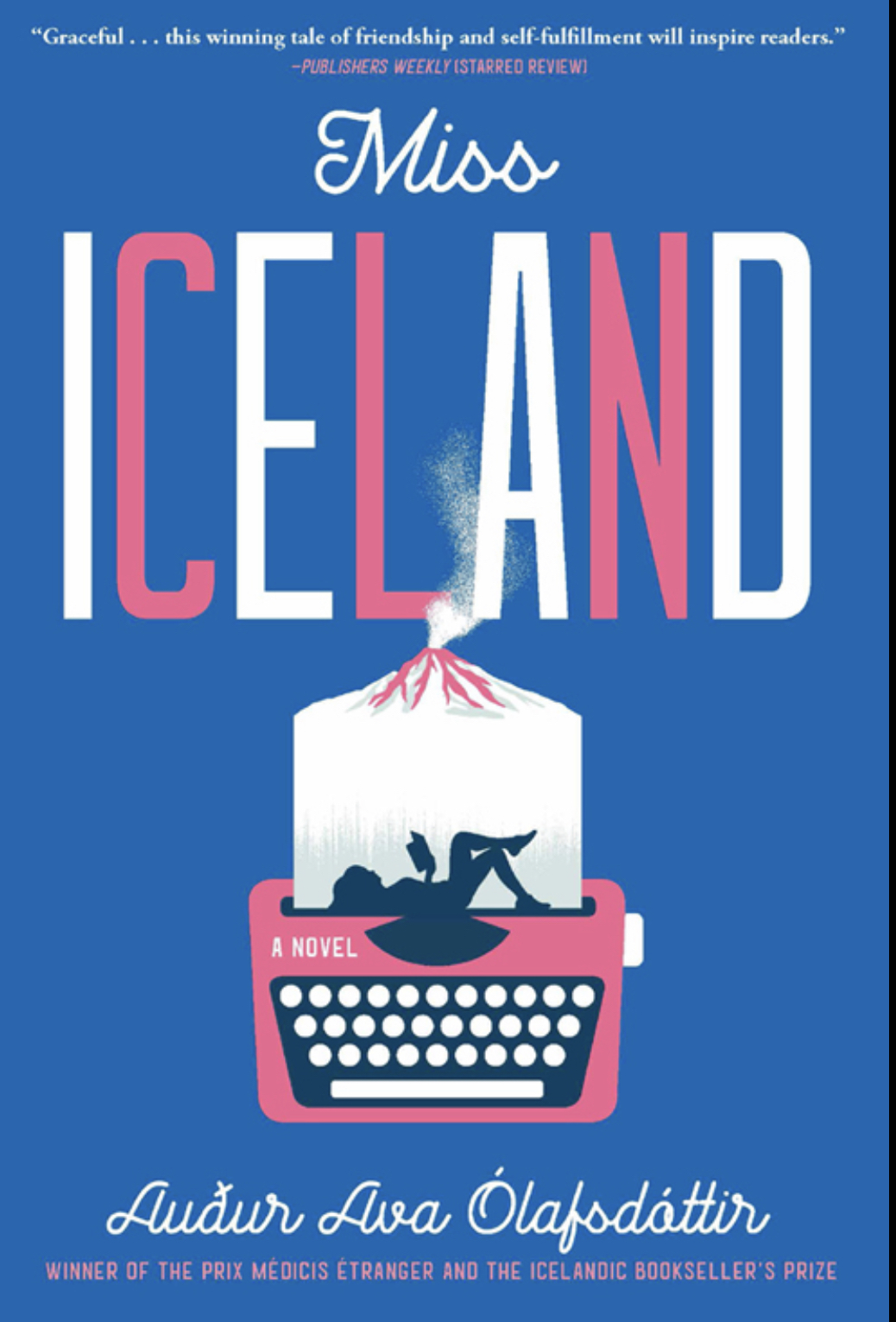
Review 2159: Miss Iceland

I was so entranced by Miss Iceland that I ended up reading it all in one day.

It’s 1963, and Hekla is leaving home at 21 to go live in Reykjavik and become a writer. She has plans to stay with her best friend Jón John Johnsson, while he is at sea, and she also has another friend there, Ísey, a young mother.

Hekla gets a job waitressing in a hotel restaurant, but when middle-aged men try to grope her, she is told to put up with it. One man repeatedly tries to get her to enter a Miss Iceland competition. She is not interested but later learns that another girl who entered was raped by one of the presenters. She really only wants to write, read, and visit her friends.

She loves Jón John, but he is gay, and apparently 1960s Iceland is no place for a gay man. He brings her clothes from Hull and dreams of escape.

Ísey also has ambitions to be a writer and fears that she will only have more children. Soon, she is pregnant again.

Hekla finds that in Iceland, poets are men. She gets a boyfriend, Starkadur, who is a poet and works in a library. She hides from him that she is a published poet, and when she asks about Mokka, the café where the poets hang out, she is told they don’t welcome girlfriends. When Starkadur finds out she is not only a poet but more gifted than he is, he begins obsessing and can no longer write. Still, he wants to marry her and buys her a cookbook for Christmas.

I can’t really describe what was so fascinating about this book. Hekla herself is quite detached, although not from her friends. I think it was because the story seemed real, not at all contrived. The ending is a little abrupt and unexpected, but I liked the story and wanted there to be more. The novel explores friendship, the urge to create, and the search for self-expression. It’s both delicate and powerful.

Related Posts

The Blazing World

Z: A Novel of Zelda Fitzgerald

Brooklyn

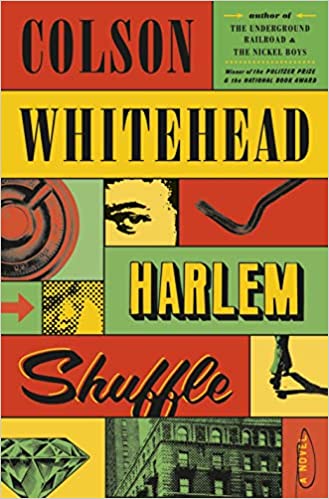
Review 1890: Harlem Shuffle

Colson Whitehead is certainly a story teller. In Harlem Shuffle, he tells the story of Ray Carney, whom he describes as “only slightly bent when it comes to being crooked.” Carney’s father broke knees for a living, and Carney hated him, so Carney has earned a degree in business and has worked hard to keep his furniture store going. He only occasionally deals in suspect merchandise.

However, Carney’s cousin Freddie, who grew up like a brother, is the type of guy who is always up to something and it never turns out well. In the first section of the book, Freddie is planning a heist with some guys, and when they need a fence, he suggests Carney. Carney knows this is way above his head, so he says no. He is tipped off that Freddie is in trouble when he gets a call from some men working for Chink Montague, a notorious criminal, looking for something that belongs to Chink. It turns out Freddie has not conveyed Carney’s refusal to the gang, and soon Carney finds himself in possession of a large emerald necklace that is part of the robbery of a hotel vault.

This novel is set in late 50’s and 60’s Harlem, and vividly depicts the events of this period at the beginning of the Civil Rights movement. Whitehead is clever about earning the readers’ sympathy for Carney despite his misdeeds. He makes it clear how difficult it was during this time for an African-American who starts with nothing to make a success of himself. Aside from Freddie’s plots, Carney has to deal with the slights of his in-laws, who think their daughter married beneath herself, as well as paying off both the thugs and the police, being cheated by supposedly respectable businessmen, and so on. Another absorbing novel by Whitehead.

Related Posts

The Nickel Boys

Jack

Meridian

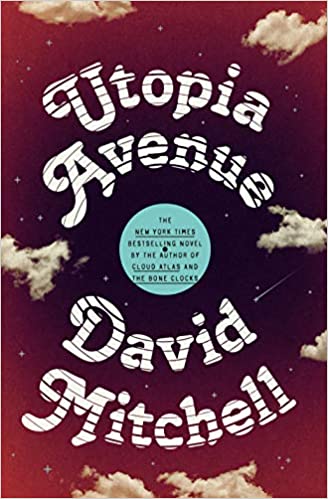
Review 1638: Utopia Avenue

I always look forward to a new book by David Mitchell. So, I read Utopia Avenue almost as soon as it arrived at my house.

Dean Moss has had a bad day. First, he is robbed of his rent and the money to reclaim his pawned guitar almost as soon as he leaves the bank. Then, his landlady threatens to throw him out. When he asks for his pay a few days early, his boss fires him. He is out on the street wondering where to go when Levon Frankland introduces himself. Levon is a manager who has heard him perform. He wants to build a band from scratch and takes him to hear a guitarist and drummer perform at a nearby club. The two are the only good things in an act headed by a washed-up performer. They are Jasper de Zoet (Mitchell fans will know that last name) and Griff, a drummer.

Elf Halloway has a popular folk EP out, but the EP she recorded as a duo with her boyfriend Bruce has not done so well. Then Bruce dumps her, a fact she’s so ashamed of that she lies to her family about it. The three musicians invite her to join their group, which will have an eclectic sound.

This novel follows the band’s adventures as it attempts to gain enough recognition to cut an album. It reflects the love of music that is apparent from most of Mitchell’s novels and also features the reappearance of some of his recurring characters.

Utopia Avenue vividly evokes the heady days of the rock scene in mid-1960’s England and the United States. It features encounters with numerous pop culture figures such as David Bowie, John Lennon, Leonard Cohen, Mama Cass, Brian Jones, and many others.

If I fault the novel at all, I feel it salts these famous characters in a little too freely. Also, there are a few too many scenes where friends or complete strangers say exactly the right thing to a troubled band member.

However, the novel has a gripping subplot involving an invader into one character’s consciousness and overall, I enjoyed it.

Related Posts

Beatlebone

Daisy Jones and The Six

A Visit from the Goon Squad

Day 1094: The Girls

Cover for The GirlsBest Book of the Week!
Sometimes a novel is imaginative in its approach or subject matter, but The Girls is an imaginative act of empathy. For Emma Cline has drawn a convincing portrait, in her main character Evie Boyd, of the kind of girl who could be attracted to a cult, inspired by the Manson Family.

In the summer of 1969, 14-year-old Evie is insecure and dying to fit in somewhere. Her parents are newly divorced, and she blames her mother for failing to hold her philandering father’s attention. She has just been abandoned by her childhood friend, Connie, as teenage girls will do.

She spots Suzanne at the park. She and her friends are different, dirty and sort of feral, but free. When Evie gets picked up by Suzanne and her friends after her bike breaks down, she goes with them to the ranch.

The ranch is centered around Russell, an older man whom his followers consider a genius. He uses various techniques to manipulate the girls surrounding him, and he befriends famous people in hopes of using them to become famous himself. He organizes the activities at the ranch around some half-baked philosophy.

Evie can actually see through some of this, but she willfully blinds herself to what is wrong at the ranch through a love for Suzanne. When things at home get worse, she ends up with only one place to go.

The novel is brilliantly written, and I was completely enthralled by the description of Evie’s journey. I found the story believable and watched in dread as Evie got pulled ever deeper into the dangerous group.

Related Posts

Arcadia

Wylding Hall

The Interestings

Day 1016: Orfeo

Cover for OrfeoBest Book of the Week!
Richard Powers is clearly a lot smarter than I am, for I did not always understand him. But I enjoyed his novel Orfeo immensely. It is by coincidence the second reworking of a Greek myth that I’ve read recently.

Peter Els had a career as an avante-garde composer, although with one exception most of his works were only heard by a few hundred people. Now retired, he has taken up a hobby in chemistry, the field he originally intended to work in. Although he has broken no laws, he is trying an experiment to compose music that will last forever, in the genetic code of bacteria.

When his dog unexpectedly dies, an unfortunate series of incidents brings the police to his door. They are alarmed by his chemical periphernalia. He thinks all he will have to do is explain himself, but when he arrives home to find Homeland Security raiding his house, he flees in alarm.

During his flight, he revisits the memories from his past. Most of these have to do with music, and Powers’ use of prose is lyrical as it describes what Peter hears and imagines. The world for Peter is full of music, from bird song or a penny whistle to the most formidably intellectual modern composition. I wasn’t familiar with many of the pieces Powers describes, but his descriptions make me want to hear them.

Although Powers’ writing can be so cerebral that it is thought by some to limit its emotional power, I did not find that to be the case with this novel, even though I did not grasp every idea. Ils decides to visit the important people from his past to make amends for any wrongs he’s done them. As he travels, we continue to revisit his memories. A strong theme of paranoia in the post-9/11 world also prevails.

I found this a touching and powerful novel, full of the joy of music. It probably also includes the best evocation of the creative scene from the 60’s that I’ve ever read.

Related Posts

Half-Blood Blues

The Blazing World

The Hour I First Believed