Review 2716: #1961Club! Revolutionary Road

Nineteen sixty-one must have seemed like a year of great let-down across the world. At least it would seem so based on the books I chose for the 1961 Club, which were uniformly depressing—except for The Prime of Miss Jean Brodie, which has its own sting.

Frank and April are a young couple who have moved out to the suburbs in Connecticut for the sake of their two young children. There, they speak almost unceasingly about the dreary lives and people around them, implying their superiority as cultured ex-New Yorkers.

We meet them at the performance of an amateur play—clearly an attempt to bring a little culture to the drab lives of their neighbors. April has the lead, and at first everything goes well even though the leading man called in sick. But the pathetic attempts of his substitute throw her off. The play is a disaster. What was striking to me was that April doesn’t want to talk about it, but Frank talks and talks.

Frank is a talker. He’s developed a reputation as a thinker because of his talking. But as the book progresses, he continually uses this type of badgering to get his way.
April seems to be trying to find her way back to something more than being a wife and mother. At one point, she suggests that they all move to France in the fall. She can take secretarial work at an embassy, and he can use the time to discover what he really wants to do, because it’s certainly not the job he has.

Frank has taken a position in the most boring job he can think of as a sort of elaborate joke and assurance that he won’t want to stay there more than a few years. He spends his days shoveling paperwork around and pretending to be working. But it’s a little brochure he throws together to get someone off his back that changes the possibilities of work.

I felt as if Frank was never really serious about going to France while April is steadily working toward that goal, but then a hitch appears.

I really disliked these characters and their superior attitudes until I began to feel a little sorry for April. Certainly, the novel evokes the sterility of suburban living, but it made me dislike Frank especially, as he turns his arguments against even April’s mental well-being.
Related Posts

Mrs. Bridge

Recipe for a Perfect Wife

The Amateur Marriage

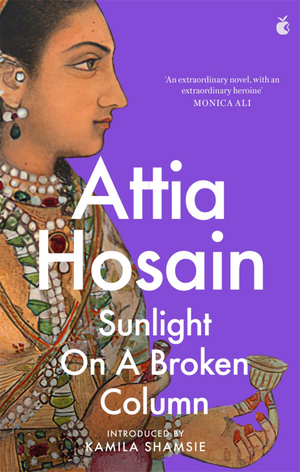
Review 2715: #1961 Club! Sunlight on a Broken Column

Here’s another book for the 1961 Club!

When this novel begins, Laila is a 15-year-old orphaned girl from a Muslim family that is part of the elite Taluqdars, equivalent to England’s landed gentry, in Lucknow during the 1930s. She has grown up in the house of her grandfather, a large household of aunts, cousins, and servants. In the beginning of the novel, though, her grandfather is dying, and it’s not difficult to guess that changes are in store.

The changes in this household are not the only ones coming, as evidenced by the arguments between Laila’s two teenage cousins. One of them sees his future as a government employee while the other wants independence from the British.

After her grandfather’s death, the head-of-household becomes her Uncle Hamid, who prefers a more English lifestyle than the traditional one her grandfather followed. Laila had been allowed an education with a governess in deference to her own father’s ideas, but this had ended before her grandfather’s death. Now her home is totally different, her aunts gone to be married or live elsewhere, the familiar servants replaced or sent to the country estate, the visitors most often Hamid’s political friends and acquaintances. Laila is allowed to go to university, but she knows her aunt dislikes her, and her home life is cold and isolated.

Uncle Hamid believes that the move toward democracy is a threat to the entire class of Taluqdars, so he is working politically to protect it. But some of his younger relatives feel that the dissolution of the system would be better for ordinary people. Laila tends to observe and have sympathies but no impulse to action.

This novel is a compelling record of a way of life that is completely gone less than 20 years after the beginning of the story—the family broken apart by the partition of India. It is interesting to see Laila move from the life in purdah to the more social existence required by her uncle’s lifestyle. The novel is very much also about how class distinctions affect people’s lives.

Related Posts

The Covenant of Water

The Widows of Malabar Hill

Nectar in a Sieve

Review 2714: #1961Club! The Prime of Miss Jean Brodie

When I was looking at lists of books for the 1961 Club, I was shocked to find that I had never reviewed The Prime of Miss Jean Brodie for my blog. This seemed like the perfect excuse to reread it.

Miss Brodie is a teacher in a girls’ school in Edinburgh who picks out a group of girls in their 10th year to be her favorites. This story is told from the point of view of the girls, particularly Sandy.

To ten-year-old girls, Miss Brodie is a romantic figure who tends to favor subjects like Tennyson or the Italian Renaissance or her admiration for Mussolini rather than what she’s supposed to be covering. And it’s an open secret that she has relationships with two of the male staff members, one of whom is married. These points put her into conflict with Miss MacKay, the headmistress, who is always trying to find an excuse to force her to retire.

I had forgotten how centered on the girls this novel is. (I remember the movie better.) The passages where the girls speculate about sex or write their imaginary stories about Miss Brodie’s love life are touching and funny.

Over the course of seven or eight years, Sandy eventually decides that Miss Brodie’s influence is not benign, but it is clear even from the end of the novel that she feels ambivalent about her.

Although Miss Brodie is portrayed at one point as a feminist—and for the 1930s when the book is set, she might be—there is no plan of independence in her mind for her girls. She has described what will become of them, and if they don’t follow her plan, she begins to lose interest—says they haven’t lived up to their potential. But her plans seem to be for her own gratification rather than theirs.

This is an insightful look into a certain kind of character, and I think it seems deeper every time I read it.

Related Posts

The Fountain Overflows

Young Anne

Abigail

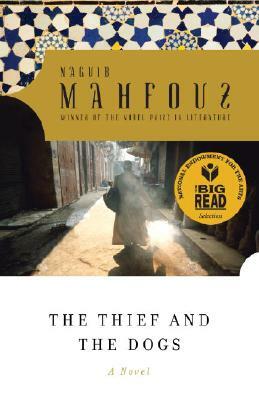
Review 2713: #1961Club! The Thief and the Dogs

This is my first book for the 1961 Club, and as I usually do, I’ll start out by listing the other books I’ve already reviewed for 1961 before I launch into my review. They are

Since I read Mahfouz’s Cairo Trilogy, I was interested to see this novel in a list of books published in 1961. Boy, is it depressing.

Said Mahran has just been released from prison, vowing revenge. As a teenager working in a student hostel, he was influenced by Rauf Ilwan, a fiery revolutionary, to believe that there was no sin in robbing the rich—Rauf even picked out targets for him. But Said was caught and served four years. He believes his former follower, Ilish, betrayed him along with his wife, Nabawiyya, because she divorced him while he was in jail and married Ilish. He is so full of vengeance and self-justification that it’s difficult to know what actually happened.

The first thing he does is go to Ilish’s house to see Sana, his six-year-old daughter. Of course, she doesn’t remember him and is afraid of him, so thereafter he says his daughter disowned him. All his thought processes seem to work that way.

He is thwarted when Ilish, Nabawiyya, and Sana disappear, so he goes to see Rauf Ilwan. But while he was in jail, the Egyptian revolution occurred, and Rauf is now a successful and wealthy mainstream journalist, who patronizes him and tells him to get a job. Said decides to kill him.

This guy is a human train wreck. His poorly planned attacks go wrong, and innocent people are killed. But the values of some of the characters are so skewed that he becomes a sort of folk hero. Or so they tell him. The almost unrelenting fury of the main character is only somewhat balanced by the cryptic utterances of the Sufi Sheikh that Said’s father used to study with.

I really hated this character. The atmosphere of this book reminded me a lot of The Informer, which I read for last year’s 1925 Club.

Related Posts

Palace Walk

Sugar Street

The Informer