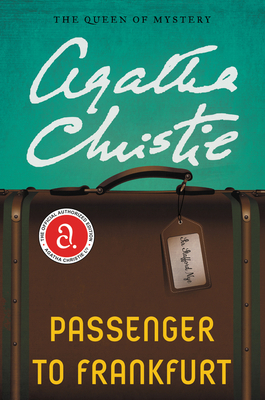
Review 2490: #1970Club AND RIPXIX! Passenger to Frankfurt

Usually, when an Agatha Christie books pops up as a possibility for the biyearly club reads, I am happy to choose it, especially if I haven’t read it before. This year, in looking for books for the 1970 Club (and also for #RIPXIX), I saw Passenger to Frankfurt, one of Christie’s stand-alone espionage novels. Unfortunately, it was not one of her best.

Sir Stafford Nye is a young mid-level diplomat often distrusted by his peers because of eccentric dress and a certain sarcastic sense of humor. He is returning from a trip to Malaya when his plane, bound for Geneva, is rerouted to Frankfurt and thence to London.

In the Frankfurt airport lounge, he is approached by a young woman asking him for help. She tells him that if the plane had landed in Geneva, she would be safe, but since it is going to London, she’ll be killed. She bears a certain resemblance to him. She asks if he will leave the burnoose he’s been wearing with his passport in it and allow himself to be drugged. She will cut her hair and use his passport, and he will wake up long after the plane has landed in London and claim he was robbed. And he agrees.

Back in London, he places an ad hoping to meet her and she ends up sitting next to him during a concert. He is carefully brought into a mission—one that she is already working—by some government officials who are alarmed about a plot that is rousing the youth worldwide to violence and anarchy. Nye travels with the girl, who has many names but might be Countess Renata Zerkowski, to view a Hitler-like rally headed by a young man referred to as the Young Siegfried. He is just a figurehead, but the officials want to find out who is in charge.

The plot of this novel is so ridiculous that I barely had any patience with it. But worse, there is hardly any action, just a bunch of meetings. Once Nye is recruited, we see him traveling with Renata and then he disappears about 2/3 of the way through, only to reappear at the end. The only real action takes place in one page at the end of the novel. This one is pretty much a stinker. The only interesting character is Nye’s elderly aunt, Lady Matilda Cleckheaton.
Related Posts

Destination Unknown

The Man in the Brown Suit

N or M?

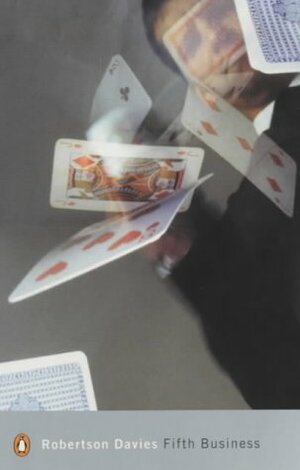
Review 2489: #1970Club! Fifth Business

I have long meant to read something by Robertson Davies, so when I saw that Fifth Business qualified for the 1970 Club, I got hold of a copy. This novel is Davies’ fourth book and the first in his Deptford Trilogy.

In the 1910s, Dunstable (later called Dunstan or Dunny) Ramsey is ten years old when a snowball thrown by Percy Boyd Staunton locks his fate with that of Staunton and two other people. Dunny knows that Staunton, who is rich and a bit of a bully, is planning to hit him with the snowball, so he gets behind Reverend Amasa Dempster and his young, pregnant wife for protection. Staunton throws the snowball anyway and hits Mrs. Dempster in the head. She has a kind of hysterical fit, goes into premature labor, and gives birth to Paul, who has to be tended carefully to keep him from dying. This work is done by Dunny’s mother. Mrs. Dempster is not quite all there after this experience. Dunny’s guilt at having tried to use the Dempsters as a shield leads him to a lifelong connection with Mrs. Dempster and a more sporadic one with Paul.

Dunstan begins with this story in telling his headmaster about his life, because he feels diminished by the speech about him made at his retirement party. He claims to be fifth business, a theater and opera term used of a character who does not seem important but is required for the plot to work.

I found this novel fascinating, because it goes on, telling the events in Dunstan’s life in an interesting and entertaining way, but you wonder where it’s going. Then, in a breathtaking last few pages, Davies ties together all the major events and principal characters. Warning to everyone: the book reflects misogynistic tendencies, not a surprise for the earlier time setting of the book, beginning before World War I and continuing after World War II (or for 1970, for that matter). But what a book!

Related Posts

The Northern Lights

The Bird Artist

Road Ends

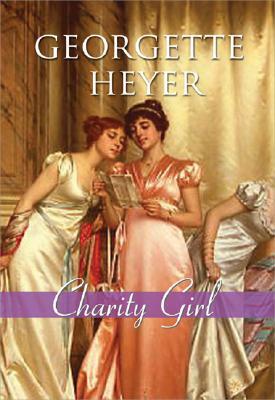
Review 2488: #1970Club! Charity Girl

Georgette Heyer is always a pleasure, and I was delighted to reread this one for the 1970 Club. As usual, on my first post for the club, here is a list of some other books from 1970 that I have reviewed:

Now for my review.

While visiting friends in the country, Viscount Desford goes to a party to see the latest beauty. He notices someone watching the party from upstairs. Thinking that she’s a child, he speaks to her, only to find she is older, a naïve relative who has been taken in out of charity.

The next day on his way to London, he finds the girl, Cherry Steane, on the road, running away from her aunt. Desford tries to talk her into returning, but she has been treated as a drudge and accused of trying to attract Desford to herself away from her beautiful cousin. He finally agrees to take her to her grandfather’s house in London, but upon arriving there, finds the house shut up.

Desford tries to think where he can take Cherry without ruining her reputation. His parents’ house is out of the question, not only because his father is suffering from a gout attack but also because Lord Desford despises both Wilfred Steane, Cherry’s father, who disappeared without paying her school fees, and Steane’s father.

Desford decides to take her to his best friend, Henrietta Silverdale. At one point, Lord Desford tried to arrange a marriage between Desford and Henrietta, but both refused. However, when Desford brings Cherry in, Henrietta feels pangs, fearing he may be attracted to her.

This novel features one of Heyer’s romping plots, with Desford encountering a slew of memorable characters while he tries to find a place for Cherry.

Related Posts

Arabella

Sprig Muslin

Cotillion