
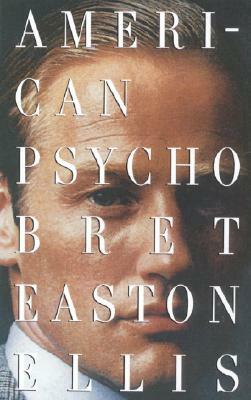
Is American Psycho a satire? a commentary about the manners and morals of young, wealthy Wall Street workers? a faithful depiction of New York City in its seedy 1980s days? a horror story? Or is it all of these things? Whatever it is, it was a DNF for me, although I made it almost halfway through.
I avoided this novel when it first came out, because it caused so much buzz that I knew what it was about. However, when I saw it filled a hole in my A Century of Books project, I was curious enough to get it from the library.
Patrick Bateman is a twenty-six-year-old Wall Street executive who is obsessed by the condition of his body, what everyone around him is wearing, what he eats and drinks, and how wealthy he is. (In a scene halfway through the book, he is angry because two prostitutes he has hired don’t care what he does for a living or how much he makes.) He is exactly like all his friends and coworkers. In fact, a running joke is that they all look so alike that they keep mistaking one guy for another. There is one difference for Patrick. He is a serial killer.
As far as I could tell, there’s no plot to this novel, just one scene after another of he and his friends at dinner or in a club trying to impress each other, and then going out to score drugs or sex. Every outfit he and his friends wear is described, especially including brand names. (In the first scene with two girls in it, they are wearing clothes by the same designers in the same colors.)
There is nothing to like in any of these people. They are racist, sexist, homophobic monsters who think it’s funny to hold money out to a homeless person and then snatch it back. The only seeming difference between Patrick and his friends at first is that he occasionally says something extremely hateful and violent, sometimes to his friends, that they don’t seem to hear (possibly because they’re almost always in loud places or they are so self-absorbed that they’re not listening). At first, these utterances and similar thoughts seem to be just very strange fantasies, but anyone who has heard anything about the book knows they are not.
The novel faithfully depicts late 1980s New York, in all its glitter and grit. It also includes conversations that, unless the men are being crass, hateful, or rude, read as if they’re taken verbatim from stereo brochures, etiquette and travel books. One chapter, thankfully short, is about the musical artistry of Genesis, and two pages are devoted to describing Patrick’s stereo system. The technology passages, meant to show how up-to-date and expensive his equipment is, now just seem dated.
The serial killer part doesn’t come out right away, but I don’t feel like I’m writing spoilers because this book is so famous. There are hints that something else is up besides partying, especially when he describes his expensive overcoat streaked in something dark or is furious because he can’t communicate with his Chinese laundry about getting the blood off his clothes. Finally, after about a hundred pages, he brutally murders a homeless man and cripples his dog. That’s just the first one he describes (although apparently not the first one he commits) and I read another 50 pages but ultimately couldn’t face the nail gun (which I only know about from seeing a picture from the movie).
I hated, hated, hated, this book.
Related Posts
The Midnight Assassin: Panic, Scandal, and the Hunt for America’s First Serial Killer


 What? Me Read?