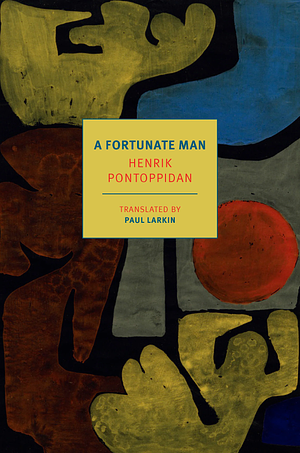
In November, maybe you saw FictionFan’s announcement of the Henrik Pontoppidan Review-Along, and maybe you didn’t, but it’s not too late to plunge in! Although the impetus has mostly been hers, we are co-hosting the review-along to take place beginning in January and ending March 16, 2026.
The novel we picked is A Fortunate Man, which is also published as Lucky Per. It’s a real doorstopper, though, and also may not be easily available, so if you want to participate, any work of Pontopiddan’s will do. FictionFan has listed in her announcement the works that are available. You can see my review of The White Bear here, and it is novella length for those who don’t want to read as much.
We hope you’ll pop in and read with us! Pontoppidan was an important Danish writer, a winner of the Nobel Prize for Literature, and before I found The White Bear I had never heard of him. Maybe our review-along will acquaint a few more people with him.
Persuasion is a reread and re-review for me, and I see that my original post works just as well as it did before for a general review. So, I was trying to think of a topic I could discuss, and I decided to focus on its villains.
Maybe “villains” is too strong a word for this novel. The only outright villain in Austen that I can think of now is Mr. Wickham in Pride and Prejudice. But certainly Austen’s work features selfish people, people who wish ill to others, and even people who actively work against others. It strikes me that, although many of these characters are comic, they are less comic as she goes on. Is it my imagination, or are there also more of them?
First, there’s Anne Elliot’s entire family. Her father and sister Elizabeth are cold and snobbish and care only for appearances. Neither of them thinks Anne is of any account. And Sir Walter Elliot holds this high opinion of himself despite his having recklessly outspent his income, he and his daughter refusing to retrench where it might lessen their consequence. Above all, Sir Walter felt that Frederick Wentworth was beneath Anne when she fell in love with him seven years ago.
Anne’s sister, Mary Musgrove, is a little more bearable, but she is also self-consequential, as evidenced by her disdain of the Hayters, her husband’s cousins. However, she finds Mary useful (selfishly so, but Anne wants to be useful) and although she never considers Anne’s comfort, the contrast between Anne’s life in her father’s house and the one in Mary’s, with her nearby warm and welcoming in-laws and the visits with the neighbors, is striking. Of course, Anne has to bear Mary’s whining.
Then there is Mrs. Cox, Elizabeth’s friend, a poor widow and daughter to Sir Walter’s lawyer, so of inferior station. Pretty much everyone except Sir Walter and Elizabeth understands that Mrs. Cox means to marry Sir Walter if she can. However, she isn’t actively malevolent, and the only aspect we see of her is excessive agreeableness (sycophancy?). As she is living with two such people and probably endures many humiliations, I sort of feel sorry for her.
Now, if you don’t want spoilers, skip this part, because it’s about Mr. William Elliot, the young, handsome, well-mannered relative, Sir Walter’s heir, whom Anne encounters briefly in Lyme and meets later in Bath. Everyone thinks he and Anne will make a match (except Elizabeth and Sir Walter, who think he’s after Elizabeth), but Anne has one safeguard—she has been in love with Captain Wentworth since she was 19. Also, she instinctively feels that there is something about Elliot she doesn’t understand. He turns out to be the moral equivalent of Mr. Wickham, although he doesn’t do anything as dastardly. Still, his attentions to Anne get in the way for a while of her gaining an understanding with Frederick Wentworth.
These negative characters are maybe a bit more nuanced but also more seriously depicted than equivalent characters in her other books, where they are often comic. They’re not at all funny in this book, and notice how almost all of them are related to Anne.
Austen is certainly a master at showing us people’s foibles in a way that is absolutely believable.
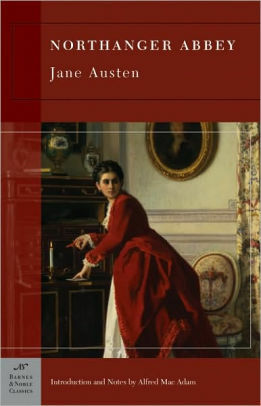
Northanger Abbey is, of course, partially Jane Austen’s spoof of Gothic novels, and her heroine, Catherine Morland, is definitely a fan of them. But before that story line kicks in, Catherine gets to visit Bath in the company of family friends, Mr. and Mrs. Allen.
Catherine is not a well-informed girl and tends to be naïve and to take people as they present themselves. The first few days at Bath go slowly, because the Allens don’t know anyone. Catherine, however, has a dance with Henry Tilney and is inclined to like him. Then Mrs. Allen meets an old school friend, Mrs. Thorpe, and Catherine immediately becomes bosom pals with Isabella Thorpe.
It seems that Catherine’s brother James is friends with Isabella’s brother John, and Isabella has set her sights on James. Despite the vaunted friendship, Isabella and John (who is obnoxious enough that even Catherine notices it) do a great deal to disrupt Catherine’s growing acquaintance with Henry Tilney and his sister Eleanor in favor of foursomes with them.
Finally, Catherine is invited to stay with Eleanor and delighted to learn the Tilneys own an old abbey. Unfortunately, Catherine lets her taste for Gothic literature carry her away.
Catherine is one of Austen’s most serious heroines, trying to navigate society and do what is right but fallen in with people whose intentions aren’t as honorable. But she is adorable, and her naïve reactions are amusing. Henry is genuinely witty and just the man to teach her to examine her assumptions a little more thoroughly. All in all, this is one of the lightest and most fun of Austen’s works.
The newly released (today, I think) reprint of The White Bear by NYRB is actually two novellas, The White Bear and The Rearguard. I wasn’t familiar with Pontoppidan but find he was an early 20th century Danish Nobel laureate. Both of these novellas were published in the late 19th century.
In The White Bear, we meet Thorkild Müller, who as a young misfit was directed into the ministry because of a grant that offered a generous university stipend for a theological degree if the recipient was willing to minister in the frozen north for an unspecified period. Thorkild takes the stipend but fritters away his time at university, barely setting foot in the classroom.
But then because of the deaths of two ministers, he receives his summons, which he tries to avoid by flunking his exams. That doesn’t work, and he ends up in Greenland ministering to the Inuit.
There he is miserable until one summer when, instead of returning to a trading post as expected while the Inuit were leading their nomadic summer lives, he goes with them.
Much of the story is about what happens when, as an old man, he decides to return to Denmark.
I really loved this story. I have a fascination for books about cold and desolate climates, but what’s more important is that Thorkild is an unforgettable character—huge and covered with an unkempt white beard, boisterous, simple, yet not as simple as he seems.
The Rearguard is about Jørgen Hallager, in some ways a bit like Thorkild but in others, not. He is also a big boisterous man, a social realist painter who considers that artists who turn away from realism are traitors, who is loud in his condemnation of almost everyone that doesn’t believe what he does.
He has recently become engaged to Ursula Branth, the frail, gently reared daughter of a state counselor. He has become engaged to her in Rome, where they make a lengthy stay and eventually marry. Her father and Hallager dislike each other. He is trying to separate her from her friends and family because of his socialist principles, and her father is worried about her.
I found Hallager to be insufferable—so full of himself and sure of his ideas, belligerent with anyone who disagrees, and verbally abusive to his wife, trying to bring her to a mental place where he wants her. I didn’t understand some of the basis for his rants (not being up on 19th century Danish politics and art).
I liked Thorkild a lot better. Both of the novellas are wonderful character sketches, though.
I received this book from the publishers in exchange for a free and fair review.
I haven’t felt as if I had the time to fully participate in Russophile Reads’ Dostoevsky Read-a-Thon, but my original plan was to read some of the shorter works. (That’s boiling down to The Gambler.) I have already read all the long ones and reviewed a couple of them already, and I didn’t think I had time to read any more. Well, that was the plan.
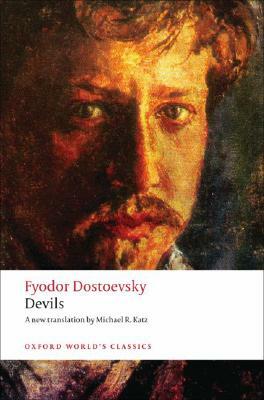
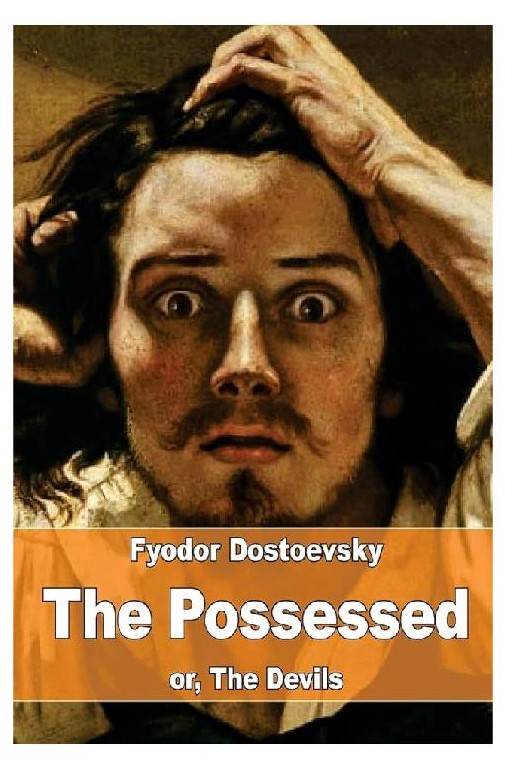
I could not remember Devils at all. For some reason, I got it into my head that it was about the same length as Notes from Underground, a relatively short work. So, I put a hold on it at the library. It already had four holds on it, which is unusual for my local library, and surprising. After a while, when only one hold had been released, I realized I wasn’t going to get it in time to read it for the project, so I began looking for a copy of it. That was when I discovered that Devils was once known as The Possessed, which I had in my own library (which means I have actually read it. I don’t put books on the shelves until I’ve read them). The newer editions of this book are all called Devils or Demons, apparently a preferred version of Dostoevsky’s title. And I have a Modern Library edition of the old Constance Garnett translation, which was all that was available years ago for most of the classic Russian translations (now considered inferior). And, of course, it’s more than 700 pages long with very small type. But I plunged in.
So, finally I get to my review. Let me say first that my spelling of names might seem eccentric now (especially Nikolay instead of Nikolai, which is much closer to the correct pronunciation), but since I reread the Constance Garnett translation, I am using her spelling.
The Introduction to my Modern Library edition of The Possessed says that although Dostoevsky thought he was a progressive, he wrote the book out of fear of nihilism and revolution. Until some events toward the end of the book, though, it’s hard to take the activities of the radical characters seriously.
The novel starts with two respected members of a provincial town. Stepan Trofimovich Verhovensky is a highly regarded scholar. However, for 20 years he’s been living under the patronage of wealthy and forceful Varvara Petrovna Stavrogin, supposedly writing a book but accomplishing nothing. He’s not exactly a parasite but rather an impractical, unworldly intellectual who has never had to take care of himself. He does manage to spend a lot of her money, but lately she’s been drawing in the expenses.
The action gets started (sort of) by the not quite simultaneous arrival of these two characters’ respective sons, Nikolay Vsyevolodovich Stavrogin (usually referred to just as Stavrogin) and Pyotr Stepanovich Verhovensky. Stavrogin is a sulky, charismatic young man who left years ago as a student and may be involved with a group of nihilists in town. He is also quite the womanizer, for we learn that both of Varvara Petrovna’s young friends, Liziveta Nikolaevna and the more dependent Darya Pavlovna, were involved with him during a visit to Switzerland. Pyotr Stepanovich has been gone even longer, as his father took no interest in him when he was a child and sent him away to be raised. He doesn’t seem important at first but turns out to be the catalyst for most of the action. He seems frivolous but is madly lying to and manipulating people for his own ends.
Both Stavrogin and another character named Shatov have become disillusioned with the revolutionary group that a group of the characters belong to, but Shatov, who has been running an illegal printing press, has asked to quit. Pytor Stepanovich has as one his goals, aside from sowing general confusion, to convince his group of five cell members that Shatov means to betray them, because he wants them to kill him. Pyotr Stepanovich, we learn, is an informer himself but also wants to avenge an insult by Shatov, who spat in his face back in Switzerland. Stavrogin doesn’t seem any more devoted to the cause, but Pyotr Stepanovich has secret plans for him. (There’s another character Pyotr Stepanovich wants vengeance against, and that’s his foolish father, Stepan Trofimovich.)
For quite a while, Dostoevsky seems to be setting us a farce, Stepan Trofimovich’s behavior is so clueless and absurd, the social machinations and gossip in the town are so ridiculous, and the radicals’ attempts to sow confusion are so silly. But violence kicks off thanks to the activities of Pytor Stepanovich.
Frankly, although I believe that Dostoevsky had a radical youth, his depictions of their meetings and their statements of belief seemed absurd. But I am no expert on on 19th century radicalism.
Everyone is in a frenzy at usual with Dostoevsky, and frankly, I had a hard time tolerating the many long, rambling speeches, whether of a religious or nihilistic subject. (And the nihilists, as well as others, sure seem to spend a lot of time talking about God.) This book was so long that by the end, when Dostoevsky has knocked off half the main characters, I was just skimming. Not my favorite of his works.
However, I was lucky enough, while poking around on the web, to find a multi-part article by Elif Batuman (author of The Possessed: Adventures with Russian Books and the People Who Read Them) about attending a 12-hour-long production of The Possessed in Italian on Governor’s Island. The first part is called “My 12-Hour Blind Date, with Dostoevsky,” and if you want to read all the parts, there are links to them, published by The Paris Review. It’s hilarious.
In The New Magdalen, Wilkie Collins has written a sensation novel that is by definition quite melodramatic. The subject, as you might guess from the title, is the reformed prostitute.
That’s what Mercy Merrick is, although she first appears as a nurse on the battlefield of the French/German war. An Englishwoman, Grace Roseberry, is stranded there on the way to England to live with her father’s friend, Lady Janet Roy, after her father’s death. Unfortunately, she was robbed on the way and has only her letter of introduction.
Grace confides in Mercy and then pressures her to confide in her, but she is not at all sympathetic to Mercy’s story of being forced by starvation into prostitution. Mercy reformed after hearing a sermon by Julian Gray, but every time she took a respectable position with the full knowledge of her past by her employers, she lost it once the servants or neighbors found out.
Mercy has loaned Grace some clothing. When after an attack, Grace is pronounced dead by the French doctor, Mercy takes her clothes and letters of introduction and assumes her identity, trying to get a better future.
Several months later, Mercy (now called Grace, confusingly) is Lady Janet’s adopted daughter and is betrothed to Horace Holmcroft. However, she can’t find it within herself to set a date without telling Horace the truth.
Then Julian Gray arrives. It turns out he is Lady Janet’s nephew. He has taken an interest in the case of a woman who has been hospitalized in Germany and claims to have been on her way to live with Lady Janet. Of course, this is the real Grace.
In Mercy’s absense, Grace appears and accuses her of stealing her identity. But Lady Janet doesn’t believe her and finds her offensive. And in fact, Collins depicts her as a horrible person.
That’s the message, really—the despicable virtuous woman versus the saintly ex-prostitute—for Mercy eventually decides to make things right.
Some of the Victorian values in this one are hard to stomach, but Collins knows how to keep readers interested in his story.
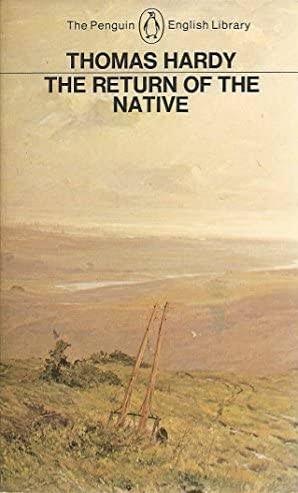
A love triangle—or rather a love pentagon—is at the heart of The Return of the Native. I put this novel on my Classics Club list because, although I read it years ago, I could remember nothing about it.
The Return of the Native is Hardy’s most contained novel, all of it taking place on Egdon Heath. The action begins on Guy Fawkes night with the lighting of bonfires. The occupants of one barrow are discussing the supposed marriage that day of Damon Wildeve and Tamsin Yeobright. But Tamsin returns home in distress and unmarried, saying Wildeve made a mistake with the license.
Wildeve has told Tamsin they can marry on Monday, but on that very night he goes to see Eustacia Vye, the girl he dropped for Tamsin. Eustacia is a vibrant, proud woman, and there is no doubt that she is tempted to get revenge on Tamsin.
Tamsin and her aunt view themselves disgraced if the marriage doesn’t come off, even though Wildeve lets weeks go by as he tries to court Eustacia. But Eustacia has heard of the return after years away of Tamsin’s cousin Clym, an educated man who works as a diamond seller in Paris, and sight unseen, she decides he’s the man for her. She hates the heath and wants to go to Paris. So, she misses a rendezvous with Wildeve and he marries Tamsin.
With this ill-conceived marriage, we are halfway set up for the tragedy. Then Eustacia marries Clym even after he tells her he plans to run a school for the poor on the heath, thinking she can easily change his mind after the wedding. The fifth point of the pentagon is occupied by Diggory Venn, a rettleman, or man who sells the red substance used to mark sheep and whose skin and clothing are dyed red from handling it. Although the Introduction to my edition explains that Hardy meant him to be a rather freakish figure about the heath, he ends up using him as a sort of deus ex machina, always in aid of Tamsin.
A strong theme of snobbery is inherent in the novel as we learn (1) that Wildeve was meant for better things but ended up owning the neighborhood pub, (2) that Tamsin turned down a proposal from Venn even when he was a respectable dairyman because he wasn’t good enough for her, (3) that the only suitable suitors for Eustacia in the neighborhood are the morally dubious Wildeve or the unambitious Clym. And Mrs. Yeobright clearly disapproves of both her son’s and niece’s choices.
So, we’re all set up for one of Hardy’s tragedies, in which he lays into the Victorian idea of marriage while making all his characters suffer. I usually like this stuff, but Hardy was forced by his publisher to add on the last section, thus providing a happier ending and making the story seem to last a little too long.
Castle Rackrent is a novel I picked for my Classics Club list. Published in 1800 although set before 1782, it is an early example of the use of an unreliable narrator.
That narrator is Thady Quirk, a servant to the ancient Irish Rackrent family, but the novel is also annotated by a scholarly character called the Editor. Thady informs us in the first paragraph that he’s known as “Honest Thady,” a phrase that puts us on the alert.
Thady quickly runs through the older history of the family and then tells in greater detail the story of the last three owners of the Castle, Sir Murtagh, Sir Kit, and Sir Condy. These are satirical tales of mismanagement either by penny pinching and bleeding the tenants or by wasteful consumption. Thady is vehement in his avowals of support for the family and in this role makes some astonishing assertions, such as, about Sir Kit who married a woman for her money and then locked her away for seven years because she refused to give him her jewels, “He was never cured of his gaming tricks, but that was the only fault he had, God bless him.”
This novel is a light commentary on the class system and its abuses, as the series of barons get up to all manner of hijinks while the servants (particularly Thady and his son) arrange to purchase assets at low prices. It is moderately funny but is considered by critics to be an astonishing first novel by a woman at this period.





 What? Me Read?