Day 896: No Country

Cover for No CountryA story about Irish immigrants to India seemed like an interesting change to me. But I decided not to finish this 500+-page book.

It begins in 1989 in upstate New York, where the bodies of a couple are found and their daughter is being questioned. The promise is that the novel will answer the question of who killed them or whether they committed suicide, but at least in the first 200 pages, after this brief opening, the book doesn’t return to the crime.

Instead, the story goes back in time to 1843 Ireland. There, we meet two boyhood friends, Brendan and Padraig. Through several unlooked-for occurrences, Padraig ends up on a ship to Bangladesh with every intention of returning immediately, while Brendan adopts Padraig’s illegitimate daughter Maeve and ends up fleeing the famine for Canada.

Everything about the Irish section of the novel seemed clichéd to me, and because Ray spends no time at all on characterization, we’re not especially interested in the characters. The point of view switches between characters, but they don’t have distinctive voices or personalities. Finally, there is no sense of place to the novel. So, I decided to stick it out until the novel moved to India, hoping that would change things.

In Calcutta in 1911, we meet Robert, Padraig’s Anglo-Indian grandson. I didn’t stay with Robert very long because I still didn’t feel very interested, and again there was no sense of place. It seems obvious that the couple who die in 1989 are going to find they are related in some unanticipated way, but by then the relationship will be so distant, it would hardly seem to matter.

In fact, the story seems to be one of unrelenting misery, but a misery so detached that we feel little empathy as we read the catalog of horrors experienced by Brendan and his family in Ireland and on the way to Canada. The novel is ambitious to tell the story of these families but in a way that didn’t capture me or make me want to invest the time to finish it. From reviews I’ve read, it just becomes more complex, one reviewer mentioning it needed a family tree. But that would probably give away the ending.

Related Posts

Galway Bay

The Lives of Others

The Lowland


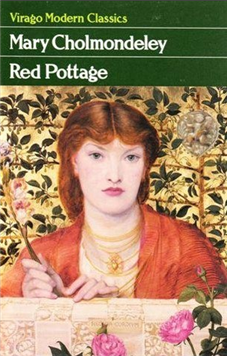
Day 895: Red Pottage

red-pottageBest Book of the Week!
Red Pottage is another find for me this year of a novel by a terrific classic author. I can include Mrs. Oliphant, Dorothy Whipple, and Julia Strachey in this list of classic authors I have not read before that I really enjoyed. My Doughty Library edition says the novel contains “every ingredient for a Victorian bestseller” and mentions wickedness and greed.

Hugh Scarlett has been having an affair with a married woman, Lady Newhaven. At first he thought he was in love with her, but now he has recognized her for who she is—a shallow and stupid beauty. He has already decided to break with her when he meets Rachel West at a party. At one glance he decides that Rachel is the woman to make a better man of him.

Rachel has also attracted the attention of Dick Vernon, a wine grower from Australia who is visiting his friends and family. Rachel likes him, but she is thinking of others.

Rachel has an unhappy past. Once the daughter of a wealthy man, she lost her fortune with her father’s death. For seven years she struggled to support herself, living in London’s East End and working as a typist. At that time, she fell deeply in love with an artist, Mr. Tristram, and was devastated when she realized he had no intention of marrying her. At the beginning of the novel, she has inherited another fortune and still believes herself in love with Mr. Tristram. Now that she has a fortune, though, she is looking like a much better prospect to him.

Another important character is Hester Gresley, an author who has been Rachel’s friend since childhood. Although Hester is better born than Rachel, her fortunes have suffered as Rachel’s have improved. She lives with her brother James, a rector who disregards her talent as a novelist and can only see his own point of view. James’s wife is jealous of Hester, and the children lovable but noisy. Hester finds herself unable to work during the daytime, so she stays up into the morning working, only to be accused by her sister-in-law of laziness.

Red Pottage is a story about morals and manners. That sounds boring, but it is quite satirical at times, while at other times it brought me to tears. The central conflict begins shortly after Hugh meets Rachel, when Lord Newhaven confronts him about Hugh’s affair with his wife. He makes Hugh a challenge, that they draw “lighters” (matches? straws?) and whoever draws the short one must take his own life within four months.

To complicate matters, Lady Newhaven eavesdrops on this conversation but does not learn who drew the short lighter. Then foolish, self-centered Lady Newhaven confides in Rachel, along with her assumption that if her husband dies, she will marry Hugh.

The story turned out just about how I thought it would, but I found the journey completely gripping. Another success from my Classics Club list!

Related Posts

Salem Chapel

Cheerful Weather for the Wedding

Someone at a Distance

Day 890: Charlotte and Emily

Cover for Charlotte and EmilyI have read two of Jude Morgan’s literary biographical novels but never felt I was really seeing the true character of the subjects. However, with Charlotte and Emily, Morgan seems to have found his subject.

Charlotte and Emily covers most of the Brontës’ lives, from the time they were children until Charlotte marries Arthur Bell Nicholls. By that time, all the other Brontë siblings have died.

Charlotte is the main character of the novel, although it is occasionally told from the point of view of Anne. Emily remains distant from the reader, harder to know.

Much of the novel is concerned with the focus of the entire family on the future of brilliant Branwell, the only son. The girls are sent for schooling so that they can be teachers and earn money to help educate Branwell. Although Charlotte wonders if she can become a writer and even tries sending poetry to Southey, the poet laureate, she is discouraged by both Southey and her father.

Of course, Branwell never finds a vocation and instead becomes a wastrel. Charlotte and Anne work doggedly as teachers, although they hate it. Emily gets herself sent home both from school and work.

I have read biographies of the Brontës, but this novel is the first I’ve read that gave me a sense of what their lives may have been like. I found it completely absorbing. If you are a Brontë lover, this is a book for you.

Related Posts

Passion

The Secret Life of William Shakespeare

Indiscretion

Day 884: Tales from the Queen of the Desert

Cover for Tales from the Queen of the DesertTales from the Queen of the Desert is a set of excerpts from two books by a remarkable woman, Gertrude Bell. Bell was a travel writer, diplomat, linguist, archaeologist, even a spy during World War I. She was widely regarded as an expert on the Near and Middle East and helped establish the country of Iraq.

She wrote the first book, Persian Pictures, after she visited her uncle in Persia (modern-day Iran) in 1892. She was very observant, and whether she is describing the landscape, the bazaar, or her impressions of Tehran, her descriptions are so vivid that it’s possible to imagine exactly what she saw.

In this book, she is sometimes a little snide, in a superior sort of way, although sometimes funnily so, as when she reports her impressions of the famous Peacock Throne of the Shah. At first she is astounded when she realizes that every inch of the room, including the carpet, is encrusted with jewels. But then she notices other objects among the jewels—patent medicine pills and toothbrushes, for example, which are also treated as treasures. As a final touch, she notes that the room is lined with boxes, which turn out to be music boxes. She understands that the Shah likes to turn them on all at the same time.

Some of her observations resound strongly even today. For example, at the beginning of the first chapter, she describes entering Tehran from the west gate. From that side, the city at the time was relatively unpopulated, the desert creeping in. But by the east gate, the town was vibrant and full of people. She concludes, “The East looks to itself, it knows nothing of the greater world of which you are a citizen, asks nothing of you and your civilization.”

Syria: The Desert and the Sown was published in 1907 after what was apparently Bell’s second trip to Syria, as she references a visit five years before. In this book, although she visits some of the area’s most important cities, the excerpts concentrate more on her travels in the hinterlands, where she meets many interesting people and examines archaeological sites. She also has another errand, which she does not discuss.

The excerpts from this book seem more fragmentary, for she begins chapters in different locations than she left off. Again, her descriptive powers are notable. By now, she gets by very well in Arabic and has studied the customs and courtesies of the area. Her attitude of slightly amused superiority is gone.

In both books, Bell’s writing is almost poetic at times. It’s easy to feel the romance and dangers of the East. There is nothing like some books for taking you to another place and time.

I received a copy of this book from the publisher in exchange for an honest review.

Related Posts

The Cruelest Journey: Six Hundred Miles to Timbuktu

The Great Game: On Secret Service in High Asia

Wild

Day 870: Jane Steele

Cover for Jane SteeleBest Book of the Week!
Fans of Lyndsay Faye’s Timothy Wilde trilogy (I am one) have undoubtedly been looking forward to Jane Steele, which she describes as a riff on Jane Eyre. In this novel, which Faye dedicates to “Miss Eyre and Mr. Nickleby,” Jane Steele describes her life as one very similar to Jane Eyre’s, only with an important difference—Jane Steele is a serial killer.

At the beginning of the novel, Jane is nine or ten years old, living in a cottage with her mother on the grounds of Highgate House. Although her mother has told her Highgate House belongs to her, it is occupied by her Aunt Patience Barbary and her cousin Edwin. Mrs. Barbary hates Jane and her mother, and after her mother’s death from an overdose of some opiate, Mrs. Barbary wastes no time in preparing to ship Jane off to Lowan Bridge School, run by Mr. Vesalius Munt. But before that can happen, Edwin tries to rape Jane, who pushes him off a cliff to his death. Terrified by the perspicacious Constable Quillfeather, Jane goes meekly to school.

It is difficult to know how much to reveal in this review, but suffice it to say that almost every action in Jane Eyre is echoed in some way in Jane Steele, but always with a twist. Mr. Munt is, if anything, a worse sadist and hypocrite than the headmaster of Lowood School. Jane Steele has a dear friend in the school, Rebecca Clarke, who comes close to dying, but when Mr. Munt offers Jane a choice between further starving Clarke or agreeing to be sent to an asylum, Jane instead chooses to stab him with a letter opener. Jane being sixteen by then, she and Clarke run off to London.

link to NetgalleyEventually, Jane meets her Mr. Rochester when she forges credentials as a governess to go work at Highgate House. There she hopes to search for proof of her mother’s claim that the house belongs to her. She finds herself in an unusual environment. The house belongs to Mr. Charles Thornfield, a nephew of Patience Barbary. Her charge is a little Sikh girl named Sahjara, and the entire household is Sikh. This household has its own secrets, to do with the betrayal of the Khaba, the Sikh military, by its own leaders.

This novel is a romping good read, full of adventure. It features a missing treasure, secret identities, several oily villains, and the resurrection of the heroine’s self-esteem. Yes, Jane kills five men. Do we still like her? Absolutely. I think you’re going to love this book.

Related Posts

Dust and Shadow

The Gods of Gotham

Seven for a Secret

Day 865: Arctic Summer

Cover for Arctic SummerFrom its description, I thought that Arctic Summer might be one of the most interesting books I’m reading from the Walter Scott Prize list. It is described as a fictional biography of E. M. Forster, particularly leading up to his publication of A Passage to India.

That is certainly the time period the novel covers, and A Passage to India is one of its preoccupations. But the novel spends most of its time on Forster’s obsession with his homosexuality and his desire for sexual experience. As I’m not all that interested in reading about anyone’s obsession with sexuality, this novel was not the best fit for me.

The novel begins in 1912 on Forster’s first trip to India. While he is there, he will visit a good friend, Masood, and he has hopes that his life will open up, particularly in regard to sex. At the age of 33, he is still a virgin, his fear of disgrace holding him back from expressing his sexuality at home. Perhaps in India he will have an experience, maybe with Masood, whom he loves.

Unfortunately, Forster, who goes by Morgan, has a tendency to fall in love with heterosexual men and prefers men from a lower class, so nothing quite works out the way he wishes. Even when he finally has some encounters, years later, what he is actually looking for is love, which he never finds. The novel follows him during the long gestation of his novel about India, back to England, to Alexandria during World War I, and back to India again. During this time, his most significant relationships are with two friends who do not return his feelings.

The novel is extremely well written, and Galgut deeply characterizes Morgan, if not the other characters. It did make me wonder if any person could be so relentlessly focused on sex, although of course he is also lonely. It also made me wonder how, if he really felt this unrelenting focus, he ever got anything written. Certainly this novel makes you feel for Forster—he was a sad man.

Related Posts

The Master

Under the Wide and Starry Sky

Studio Saint-Ex


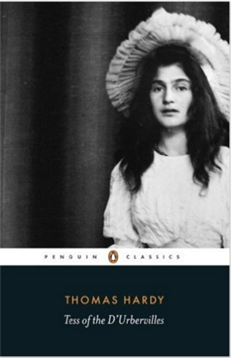
Day 844: Tess of the D’Urbervilles

Cover for Tess of the D'UrbervillesBest Book of the Week!
I love Thomas Hardy’s rural novels set in southwest England, and one of the highlights of a trip to England years ago was visiting his cottage in Dorset. My favorite of his novels has long been Tess of the D’Urbervilles, which I recently reread. I don’t mind admitting that in this reread, I was picturing scenes from Roman Polanski’s wonderful movie Tess, which follows the novel carefully and envisions it beautifully.

There is no doubt about it, Tess is a real tear-jerker, so if you prefer novels with happy endings, this is not the one for you. Still, in its own way, the novel ends hopefully.

The novel spans about five or six years, and we meet Tess as a naive young country girl attending a club dance. There she first sees a young man who will be important to her, Angel Clare, but he does not dance with her.

Hardy can be quite the fatalist, though, and Tess’ fate is sealed already, when her father John Durbeyfield meets a clergyman who dabbles in genealogy. Parson Tringham ironically addresses him as “Sir John” and tells him his family is the remains of the once-powerful D’Urbervilles. Her father immediately sets off to celebrate.

Tess’ foolish and feckless parents learn there is a rich old lady by the name of D’Urberville some counties away, so when Tess is partially responsible for the death of her father’s horse (because her father was too drunk to take the bees to town), they push her to go visit the old lady and claim kinship with her in hope of financial benefit. There she meets the charming wastrel Alec D’Urberville, who knows perfectly well they are not related, his family having bought the name and titles.

Tess gets a job from Mrs. D’Urberville as a poultry keeper, but Alec is always pursing her with his attentions. Tess finds these attentions unpleasant, but she is too naive to know what they mean or what she might fear.

Tess returns home with a past that is obvious to everyone and heartache ahead of her. Eventually, she gets another chance, as a dairymaid. There she meets Angel Clare, a gentleman studying to be a farmer, and finally falls deeply in love. But Angel is an idealist who has fantasized her into the embodiment of a pure child of nature. So, he is the last person to forgive her past.

Tess of the D’Urbervilles was a controversial book when it was published in 1891, because Hardy subtitled it “A Pure Woman.” This subtitle caused an uproar with the Victorians. Hardy’s message is strongly against the societal and religious laws that would condemn Tess.

Another aspect of the novel that I found more interesting this time through is that it depicts a rural way of life that is long gone. Although many of Hardy’s novels are rurally based, this one has more about the customs, work, and lifestyle as we follow Tess from one workplace to another than any of his novels except Far from the Madding Crowd. Tess’ father is a freeholder, a step up from a migrant farm worker, one whose family has leased the same land for generations. But when John Durbeyfield dies, the lease is up, and his widow and family are abruptly evicted so that the landlord can make room for someone who works for him. Such activities, Hardy makes clear, are the root cause of people migrating from the country to towns and cities, not that they were unsatisfied with country life.

Years after reading this novel last, I still became thoroughly engrossed in the story. It is a powerful one, poetically written, with gorgeous descriptions of the countryside and vivid imagery. I just love this novel.

Related Posts

The Land of Green Ginger

Independent People

The Warmth of Other Suns: The Epic Story of America’s Great Migration

Day 839: Charles Dickens: A Life

Cover for Charles DickensCharles Dickens: A Life covers some of the same material as The Invisible Woman, Claire Tomalin’s excellent book about Dickens’ affair with Nelly Ternan, but it is broader in scope and provides more information about his life. Of course, The Invisible Woman was in a way ground-breaking, because it brought out into the open a relationship that was concealed for many years. In fact, the Dickens biography by Peter Ackroyd, which came out in 1991, the same year as The Invisible Woman, dismissed the affair as an improbability.

I much preferred this biography to Ackroyd’s. While Ackroyd practically falls all over himself telling us what a genius Dickens was, Tomalin is not afraid to examine the whole person, warts and all. Certainly, Dickens was charming, energetic, lots of fun for his friends, and the possessor of a serious social conscience. He was also one who ruthlessly cut ties to some friends and family, occasionally for trivial reasons; who treated his wife shamefully when he separated from her after 22 years of marriage (insisting, for example, that his children take his side and cut off ties to her); who made a young girl from a financially struggling family his mistress when he was more than twice her age. I feel that his fame was not good for him—that it gave him an inflated sense of his own importance and made him think he was infallible. Of course, he was probably the most famous person of his time. We have no modern equivalent.

Those interested in Dickens’ life and works will enjoy this biography. Dickens’ story is unique. He certainly had a difficult early life and worked hard for his success. He also started out as a much nicer person than the man he became, so during most of the book he is very likable. In fact, it’s easy to see why he was so loved by most of his friends and family. He was one of those charming people who are loved whether they deserve it or not. And in many ways, he did deserve it.

The book is extremely well written and very well researched, with more than 100 pages of notes and bibliography. Although more than 400 pages long (not counting the back matter), it moves along nicely and is entertaining. There are three insets of pictures and photos to illustrate the discussion along with a few interspersed drawings.

Just a small comment on my recurring theme of the quality of publishing. My copy of the book was bound upside down. Yes, the cover is on upside down, which I found rather disconcerting as I was always picking it up to read upside down. Unfortunately, I had it too long before opening it to return it for another copy.

Related Posts

The Invisible Woman: The Story of Charles Dickens and Nelly Ternan

Charles Dickens

Jane Austen: A Life

Day 838: The Forgotten Room

Cover for The Forgotten RoomThe Forgotten Room is a romance novel, which is not my genre, but it has enough of a focus on family secrets to keep my interest. The novel relates the stories of three romances, set at different times in the same mansion in New York. Written by three romance authors, I suspect that each one wrote one of the stories.

In 1892, Olive Van Allen is employed in the house as a servant, but she is there under false pretenses. The owner of the house, a nouveau-riche businessman named Pratt, hired her father as an architect for the house but then ruined him by refusing to pay him. Olive hopes to find paperwork to prove Pratt owed her father money, but she is distracted by falling madly in love with one of the sons of the house, the artistic Harry Pratt, and stealing meetings with him in his attic studio.

In 1920, Lucy Young takes a job as a secretary at the office of Cromwell, Polk, and Moore, a law office that handles the affairs of the Pratt family. She also takes a room in a boarding house that used to be the Pratt mansion. In addition to the desire for advancement, Lucy hopes to discover in the Pratt papers the connection between the Pratts and her mother and perhaps learn why her mother whispered “Harry” on her death bed. Lucy is also soon torn between two men, her boss, Philip Schuyler, and a handsome art dealer from Charleston, South Carolina, John Ravenel.

In 1944, Kate Schuyler is a doctor serving in a hospital that used to be the Pratt mansion. She gives one of her patients, Captain Cooper Ravenel, her own room in the top of the hospital because the hospital is overcrowded. But she is surprised when Captain Ravenel seems to recognize her and calls her Victorine.

The pleasures in this novel came from trying to figure out how these people are related and what happens to Kate’s mother and grandmother. The tension is supposed to come from whether Kate will be parted from Captain Ravenel, who is engaged to be married to someone else. There’s not much doubt about that, though, and it’s more interesting to find out what secrets kept the other lovers apart.

link to NetgalleyUnfortunately, Olive’s story is based on something a few words could have cleared up and the spitefulness of Prunella Pratt, Harry’s sister. Lucy’s is a little more understandable. What I found unlikely was Prunella’s conversion at the end of the novel to an old lady who regrets her actions and encourages Kate to follow her heart. Yeah.

Related Posts

The Other Daughter

At the Water’s Edge

Beautiful Ruins


Day 829: The Kreutzer Sonata Variations

The Kreutzer Sonata Variations“The Kreutzer Sonata” is a controversial novella by Leo (Lev Nikolaevich) Tolstoy. It was banned in several countries because of its provocative message and because of what was considered at the time prurient content. If your nature contains an ounce of feminism, it will enrage you. Yet its origins are in eccentric ideas that Tolstoy almost certainly considered to be for the benefit of women.

The Kreutzer Sonata Variations brings together this work with others by the family on the same subject. Tolstoy’s wife Sofiya Andreevna (I’m using the spelling from the book) disliked the novella intensely and wrote two stories in answer to it, “Whose Fault?” and “Song Without Words.” These stories were suppressed by the family. Tolstoy’s son, Lev Lvovich, also wrote a story, “Chopin’s Prelude.” These stories are followed by a section including review comments by several contemporaries, excerpts from diaries, and other writings of all three Tolstoys.

So, what was “The Kreutzer Sonata” about and why did it evoke all this controversy? It is a virtually plotless story about a man who meets another man on a train journey and tells him the story of why he murdered his own wife. Throughout the story, the main character, Pozdnyshev, expresses abhorrent opinions about women, sex, and marriage, and shows no understanding of women at all. Although this character is not completely describing Tolstoy’s own marriage, he is giving voice to Tolstoy’s ideas about marriage. This story is harsh, disturbing, and reflects ideas that show no understanding of human nature, or for that matter, many other things. Tolstoy posits that marriage is simply legal prostitution, that sex is disgusting, and that people should just strive to be celibate (something he notoriously had a problem with). Because Tolstoy saw his role in later years as one to instruct and had too high an opinion of his own ideas, this information is presented didactically, in a polemic.

Sofiya Andreevna disliked the novella intensely and was embarrassed by it, because she believed that others thought it reflected her own marriage. She insisted it did not but mostly, I think, because she didn’t want people to think she became attached to another man while married to Tolstoy (and who would blame her?). She also felt that the story showed no understanding of the wife, and so she wrote her own story. In both, the story is basically the same, a madly jealous husband comes to believe his wife is unfaithful when she is not and kills her in a fit of anger. It was Sofiya herself who convinced Tolstoy that his story would be more effective if the wife was innocent.

It is in the context of the responding stories and other writings that “The Kreutzer Sonata” is most involving. The story itself is ridiculous to modern sensibilities. Two pages of quotations by contemporaries provide some interest, particularly the two (not surprisingly) that I most agree with.

No wonder the Countess was often near the end of her patience.—George Bernard Shaw

“The Kreutzer Sonata” is a nightmare, born of a diseased imagination. Since reading it I have not the slightest doubt that its author is cracked.—Émile Zola

For an enlightening look at the Tolstoy’s marriage, I recommend the novel The Last Station by Jay Parini.

Related Posts

The Possessed: Adventures with Russian Books and the People Who Read Them

The Prague Cemetery

The House of Special Purpose