Day 777: Barchester Towers

Cover for Barchester TowersBest Book of the Week!
As Trollope’s first book in his Chronicles of Barchester was about gentle Mr. Harding’s position as warden, it seems hardly possible that a good portion of Barchester Towers, the next in the series, would be about exactly the same subject. Yet, that is the case, and Trollope finds it to provide more food for satire and social commentary.

Several years have passed since the events of The Warden. The kindly old bishop, Dr. Grantly, is dying, attended by his son, the archdeacon, and his old friend Mr. Harding. Although the younger Dr. Grantly is certainly devoted to his father, he has hopes that he will be appointed to his father’s office, as he has been doing the work for years. However, just before his father dies, a new government comes in, and Dr. Proudie is appointed bishop.

The quarrels in this novel pit low church against high church, which is about all I understand about the religious issues. But all of the clergy in Barchester are high church, and Bishop Proudie is low. Bishop Proudie himself, a meek man, is not so much a problem, but he arrives with a wife who is determined to sit in on every meeting and meddle in diocese business, much to the shock of everyone else. In this she is assisted by Mr. Slope, the bishop’s own chaplain, selected by Mrs. Proudie. And an insinuating, unlikable Uriah Heepish character he is.

One of the first issues to come up for the bishop is the wardenship of the hospital for old men, which has sat vacant since Mr. Harding resigned. Bishop Proudie knows he must offer the position at its lowered salary to Mr. Harding, and Mr. Harding would enjoy returning to the house that was his home for so many years and taking up his old duties. But Mrs. Proudie wants anyone except the entrenched Barchester clergy, so she selects Mr. Quiverful, an impoverished curate with 14 children.

Under instruction from the bishop to offer the position to Mr. Harding, Mr. Slope does so by adding conditions to the position that he knows Mr. Harding will not accept and that Mr. Slope himself, or even the bishop, has no authority to request. Although Mr. Harding does not turn down the job outright, Mrs. Proudie then promises it to Mrs. Quiverful.

But Mr. Slope decides that he can run the bishopric himself if he can cut out Mrs. Proudie, so he and the bishop soon have a silent agreement to throw off the feminine yoke. They do so by offering the wardenship to Mr. Harding again. Mr. Slope has also found out that the beautiful widow, Mrs. Bold, is wealthy. He decides to marry her and feels that he won’t help his chances unless he assists her father, Mr. Harding, back into his position.

In the meantime, Mr. Slope is infatuated with Madeline Neroni, the crippled but beautiful married daughter of Dr. Stanhope. She herself is frankly toying with him and several other men, but she turns out to have some sympathy with Eleanor Bold. However, Madeline’s sister Charlotte Stanhope has decided that her impecunious brother Bertie must marry Eleanor for her money.

Barchester Towers affords another entertaining look at the political and social maneuvers underpinning this mostly religious community. It offers lifelike, engaging characters, plenty of humor, and an empathetic and perceptive view of Trollope’s own time. I enjoyed The Warden particularly because I sympathized with the upright Mr. Harding, but Barchester Towers offers more for our consideration and is an altogether more significant work.

Related Posts

The Warden

Happy Returns

Miss Bunting

Day 774: Miss Emily

Cover for Miss EmilyLast year, I read the novel Amherst, which was mostly about Emily Dickinson’s brother Austin but depicted Emily hazily. The excellent biography White Heat, about Emily’s relationship with Thomas Wentworth Higginson, portrayed her more fully but she still seemed hard to grasp. The Irish poet Nuala O’Connor presents a more fully realized character—Emily in her middle age*—through her relationship to a (fictional) Irish maid.

Ada Concannon is a good worker but a bit too much of a free spirit for her Irish employer. She arrives at work one too many times smelling of the River Liffey, in which she has bathed on the way to work. She is demoted to scullery maid, and her mother decides there is nothing to be done but send her to America to find better opportunities.

Ada has good luck at first. She finds a pleasant home with her aunt and uncle in Amherst, and they soon learn that the Dickinsons need a new maid.

Emily Dickinson has insisted that her parents get a new maid after the old one left, because she is spending all her time on housework and none on writing. Although she loves baking, she is not really interested in most of the other chores. Other than poetry, her main interest is in her warm relationship with her sister-in-law, Sue, but Sue is busy with her family. When Ada arrives, Emily becomes fascinated by the small, neat maid.

Ada soon finds she is being courted. Daniel Byrne shows he likes her right away, and she is attracted to him. His boss’s son, Patrick Crohan, is also trying to get her attention, but she dislikes him.

When Ada finds she needs help, she has only Emily to turn to. Emily, in her turn, goes to her brother Austin.

link to NetgalleyThis novel is beautifully written, sometimes poetically, with delightfully old-fashioned chapter titles. It explores the relationship between two women across a class divide. The two main characters are interesting and convincingly developed. Austin is also developed more fully than the others, but is not as likable.

I enjoyed this novel, which made me feel as if I understood O’Connor’s fictional Dickinson as a person. Although Dickinson at 16 was just beginning to develop some of the quirks she becomes well known for, O’Conner her thinking believable.

*I originally said that Emily was 16, but Caroline of Rosemary and Reading Glasses pointed out that I was mistaken. I thought I saw a reference to her age, but perhaps I got the age reference mixed up with one about Ada. My e-copy is expired, so I couldn’t go back and look it up.

Related Posts

Amherst

White Heat: The Friendship of Emily Dickinson and Thomas Wentworth Higginson

The Invention of Wings

Day 762: The Call of the Wild

Cover for The Call of the WildThe Call of the Wild is no boys’ tale. It’s rough, embodying as it does Jack London’s ideas about the survival of the fittest. It is also London’s classic tale about the relationship between dog and man.

Buck is a large, pampered dog, the pet of a rich judge in California. But the Alaska gold rush is on, and all large dogs on the west coast are at risk. A gardener’s assistant with debts kidnaps Buck and sells him.

Buck is beaten with a club and then taken up to Alaska to work as a sled dog. But Buck never becomes submissive. Through intelligence, cunning, and brute strength he survives in brutal conditions. Eventually, he begins to feel the urge of his wild heritage.

Although London has the dog have fairly ridiculous “racial memories” of tree-living humans, they are probably about on par with what was believed at the time about evolution. London’s short novel is typical of the school of naturalism, which endeavoured to show the worst of reality. This is not really my favorite of my Classics Club list books so far.

Related Posts

Robinson Crusoe

The Devil’s Backbone

Kim

Day 741: Seven for a Secret

Cover for Seven for a SecretSeven for a Secret is the second fantastic Timothy Wilde historical mystery by Lyndsay Faye. The series is set in 1840’s New York City. Wilde is a member of the newly formed copper stars, the city’s first police force.

It is Valentine’s Day, and Timothy and his colleague Jakob Priest are celebrating having solved an art theft when a beautiful woman of color comes looking for him at the station house. She is Lucy Adams, and she has just returned home from her job at a flower shop to find her son and sister missing. She knows exactly what happened to them. “Blackbirders” have snatched them to sell down south as escaped slaves, even though they are free.

Timothy asks his brother Valentine to go with him to get them back. Although Valentine is a corrupt Democratic party boss and a drug addict, he’s a good man in a fight. Timothy, his African-American friend Julius, and Valentine retrieve the three from the slavers, Varker and Coles, but not without a fight. The two women and little boy need somewhere safe to stay until Lucy’s husband returns, so Valentine offers them the use of his apartment.

Something is going on that is more complex than he understands, for when Timothy goes searching for Lucy’s husband, he finds that Lucy isn’t married to Charles Adams, a white salesman, as she thinks she is. She may or may not be married, but her “husband” is a Democratic senator for New York state.

Coming to see Lucy and her family a couple of days later, Timothy finds Lucy strangled and the room disrupted. Timothy is an honest police officer but he knows a frame job when he sees one. He has just finished removing the body and cleaning up when an enemy, Sean Mulquean, another copper star, arrives to investigate a reported disturbance. Timothy also soon learns that Varker and Coles have kidnapped Julius, so he must hurry to court to try to free him before he can look for Lucy’s sister Delia and son Jonas.

Faye’s historical setting of gritty 1846 New York is absolutely convincing. We like Timothy more the more we see him, and Faye is beginning to build a solid cast of supporting characters. This is a well-written, swift-moving, suspenseful series. At almost 500 pages, the novel is long for a mystery, but it didn’t seem like it for a second. Unfortunately, I have just learned that there is only to be one more in the series, and that one is waiting in my pile to be read.

Related Posts

The Gods of Gotham

Dust and Shadow

The Pale Blue Eye


Day 733: Little Women

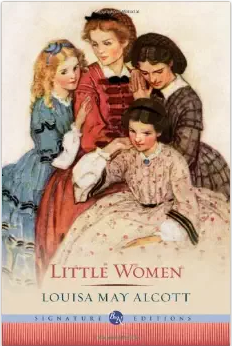
Cover for Little WomenOver the past months I have occasionally reread a childhood favorite to see what I think about it now. The Secret Garden and Anne of Green Gables, for example, came through with honors. Not only were both beautifully written, but I found them as entertaining as an adult as I did as a child.

Little Women doesn’t fare quite as well. I found some of the same parts of it affecting as I did when I was young. Who wouldn’t sympathize with these girls, bravely coping without the things their friends have, doing without their father for over a year, getting along as cheerfully as they can? However, as a child reading the book, I didn’t notice that almost every chapter ends with a moral lesson.

The novel covers about 12 years in the lives of the March family, beginning during the American Civil War. For the first half of the novel, Mr. March is away as a chaplain for the Union army. The main character is Jo March, at the start of the novel a tomboyish, gawky 15-year-old who loves writing and putting on plays, reading, and writing stories.

Her older sister Meg is more ladylike and laments having to wear old things to parties. Beth is the third sister, who is too shy to go to school. Amy is the youngest and a little spoiled. Although there are certainly events in their lives, the story is about how Marmee, their mother, raises them all to be good, productive women.

One of the closest relationships in the novel is the friendship between the family and their neighbor Laurie, a rich young man being raised by his grandfather. This and other relationships are warm ones, and the Marches all seem like real people, as do their friends.

If Alcott could have let up a bit on the moralizing, I would have enjoyed the novel more. The other two novels I mentioned earlier also have moral messages, but they leave the reader to figure them out themselves. Still, I’m sure any young girl reading this novel would be as drawn by it as I was years ago.

My comments have made me wonder what I would think of Eight Cousins, which was actually my favorite book by Alcott when I was a child. I’m a little afraid to find out.

Related Posts

Anne of Green Gables

The Loon Feather

Neverhome


Day 730: The Sea Captain’s Wife

Cover for The Sea Captain's WifeSince she was a little girl, Azuba has wanted to marry a sea captain and leave her home on the Bay of Fundy to live with him at sea. Although such arrangements are not usual, they are also not unheard of. She envisions a life of romance and adventure, traveling to the distant realms of the earth.

This is the life she plans with her suitor Nathaniel Bradstock, but once they are married, he changes his mind. Azuba is bored and discontented at home for years alone and feels he will be a stranger to their daughter Carrie. After a traumatic miscarriage, she decides to insist he take them with him on his next voyage.

In her loneliness, Azuba has befriended the young Reverend Walton. Just before Nathaniel is due to return, carelessness and misjudgment result in a scandal for the two of them. When Nathaniel learns about it, he decides she cannot be trusted home alone and makes immediate plans to leave instead of staying ashore awhile as planned, taking along Azuba and Carrie.

Azuba has got her way, but she is not happy. Aside from the misunderstanding with her husband, she has not realized the dangers and inconveniences of the voyage. To make matters worse, Nathaniel sees her and Carrie as more burdens among the many he must juggle as captain. The terrifying voyage around the Horn is the first in a series of mishaps that endanger them all.

I found this a fascinating book in its knowledge of sea lore and the ports of the time. The main characters are complex, the novel focused on Azuba and Nathaniel’s struggle to design the conditions of their marriage. I have one plot quibble when Mr. Walton reappears in Belgium, where he is studying to be a photographer. After booking Azuba and Carrie on a relatively safe journey home by steamship, Nathaniel suddenly decides to keep them with him. There is no explanation of this decision, and we don’t even see the scene where it is made. It seems awkward, as if Powning made the decision just to further the plot.

Finally, Nathaniel and Azuba don’t actually work out their conflict. Instead, the decision that resolves it is forced on Nathaniel. Still, I found this novel of absorbing interest. But one more quibble. Sometimes stopping to explain what Azuba or other female characters are wearing actually interferes with the story-telling.

Related Posts

Ahab’s Wife: or, The Star-Gazer

Galore

We, The Drowned

Day 725: The Warden

Cover for The WardenThe Warden was the first of Anthony Trollope’s Barchester novels, inspired by a setting and a series of Church of England preferment scandals. A chronicler of 19th century life, Trollope was interested in the intersections between practical and emotional considerations. He was a prolific writer known for complex, realistic novels.

The main character of The Warden is Mr. Harding, a kindly, well-meaning canon who is warden of a charitable hospital, sort of a retirement home for poor old men. For his care of the twelve old men’s spiritual well-being, he receives a salary of £800 a year. It is a position that involves little work and also includes a comfortable house, where he lives with his younger daughter Eleanor.

John Bold has been a friend of this house since a young boy, and Eleanor’s friends are expecting to hear of their engagement. John is a wealthy young man who doesn’t have to work for a living, so he has turned his attentions to reform. After a preferment scandal in another town, he decides to look into the will of the man who endowed the hospital. He finds that the pay of the warden has increased 25 times since the endowment 400 years ago, while the residents’ stipends have not increased, although of course the cost of their food and lodging and medical care has increased and is taken care of by the trust. In fact, the only increase the residents have had has come out of Mr. Harding’s own pocket.

Despite his sister’s advice, instead of taking this issue up with the church or the trust, John Bold brings a lawsuit on behalf of the hospital residents and takes the issue to The Jupiter, a powerful newspaper. His lawyer gets most of the elderly residents to sign a petition, rashly promising them £100 a year each. (Note how well the math works here. Even if they took all of Mr. Hardings’ salary, they wouldn’t have enough money to pay each of the residents £100 a year.)

It is Mr. Hardings’ reaction that forms the core of the novel, for he is not interested, like the lawyers and his son-in-law the archbishop, in whether the case will be won or lost but in whether the plaintiff’s point is morally correct. Although he has never given his position any thought, in fact is simply an employee of the trust, he is concerned that the intent of the original will might have been that the recipients of the charity should receive a larger share of it.

Except for his mild-mannered friend, the bishop, he cannot find anyone who will even enter into a discussion with him on this topic. And the bishop is completely dominated by his son, the archbishop Dr. Grantly. Dr. Grantly pushes aside Mr. Hardings’ concerns, which he considers weak, disregarding his wife’s ascerbic comments on how poorly he is handling her father. Soon, a newspaper article has appeared that makes poor Mr. Harding look greedy and grasping.

Not only is Trollope interested in exploring the differences between the reactions of Mr. Hardy, high-minded and feeling, and the lawyers and Dr. Grantly, all business and practicality, but he is also interested in the ramifications of reform. Although he shows there is corruption, this corruption is more of the institutional kind that has evolved over time. No one is purposefully trying to cheat anyone. On the other hand, he wants to point out that the alternatives to these entrenched systems might actually be worse.

We can predict that Mr. Harding ends up financially worse off than he started but that the hospital inhabitants do, too. Trollope’s first Barsetshire novel is quiet and slyly ironic. Trollope is not as often read these days, but he is certainly worth reading.

Related Posts

The Other Family

Miss Marjoribanks

Lila

Day 720: Galway Bay

Cover for Galway BayGalway Bay is fiction based on the stories of Mary Pat Kelly’s great-great grandmother about leaving Ireland in the first half of the 19th century to come to America. The novel covers a lot of ground—the iniquities of Ireland’s Anglo-Irish landlords, the Great Famine, early Chicago, the American Civil War, the Fenian Brotherhood—and ends with the Chicago World’s Fair.

Honora Keeley is a young girl living in a fishing village on Galway Bay when she meets Michael Kelly and they fall in love at first sight. They want to marry, but they have to convince Honora’s family, because Michael owns nothing but his horse. However, he earns enough to marry by winning a horse race in Galway.

Honora’s sister Maire, who was married the day Honora met Michael, is soon a widow after her husband dies in a fishing accident. On Honora’s wedding night, Maire saves Honora from the landlord’s droit du seigneur by volunteering in her stead. I’ll say something about this later.

Michael is no fisherman. Honora and Michael have a tough enough time of it farming but are making out okay when the potato blight hits. The behavior of the landlords and the British government during this time is shameful, and Kelly depicts it vividly. After several years of the blight and other misfortunes, Honora finally is able to convince Michael to leave for America, to Chicago, where his outlawed brother Patrick is said to reside.

Although this novel has a fairly good story, there is something about the narrative style that bothered me. It is told in first person, but in a modern style that is not convincing. Many things happen, but I didn’t ever feel as if I understood much about the characters’ personalities. Especially early on, when we are getting to know the main characters, often opportunities for revealing dialogue turn into storytelling episodes, where we hear another Irish legend. Everyone has one or two identifying characteristics, but they don’t feel like real people. I think the novel may have been more successful in the third person.

Finally, I was highly skeptical of whether droit du seigneur would have occurred in the 19th century, as it is usually associated with Medieval times. I’m sure this event is based on family legend, but I think Kelly could have treated this one with a little skepticism, especially as the lord’s behavior is abetted by a priest. I attempted some research on the topic and was surprised to find a lot of discussion about whether it was ever actually practiced at all. But with one exception, the references were to Medieval mainland Europe, not the British Isles. That exception was a Facebook page about Ireland, but I was unable to find the actual reference on the page to see if it cited any sources. I have read several history books about Ireland and took a graduate course in Irish history, and I have never heard anything about this, although the other abuses are well known. (I have since found one source for this alleged practice, Arthur Young, the author of a book called Tour of Ireland in 1780, who stated it was commonly practiced in rural Ireland. He is listed in Wikipedia as an agriculturalist who traveled to observe agricultural practices. Still, with this little information, we have no idea if his statement is based on rumor or fact, and this report is 50 years or so before the time of this novel.)

Related Topics

The Sea House

Troubles

Giants in the Earth

Day 716: The Siege of Krishnapur

Cover for The Siege of KrishnapurThe Siege of Krishnapur, the second in J.G. Farrell’s trilogy about the British Empire, is a novel of ideas, full of the mordant humor and irony that characterizes the first book, Troubles. Farrell based his novel on the true-life 1857 siege of Lucknow, during which British residents held out for five months against attacks from Indian sepoys.

As author Pankaj Mishra explains in the introduction, this siege and similar incidents generated at the time a popular romantic genre of fiction, wherein two young English people meet in India just before the rebellion and bravely withstand privation to prevail in the end. In The Siege of Krishnapur, Farrell is among other things satirizing this genre.

George Fleury arrives in Calcutta with his sister Miriam just before news of the first sepoy rebellions. Like Farrell’s protagonist of Troubles, Fleury is an unformed young man, and worse, he tends to the pedantic. He is inclined to the romantic and likes to lecture about the supremacy of feelings and ideas over the new plethora of objects and inventions resulting from the current Industrial Revolution.

In Calcutta, Fleury and Miriam meet another brother and sister, Harry and Louise Dunstable, offspring of one of Krishnapur’s doctors. Harry is a young lieutenant, and Louise is thought to be the prettiest (English) girl in India. Fleury is taken by her, but she spends her time flirting with the young soldiers.

Once the young people reach Krishnapur, it is not long before the rumors of trouble turn into reality. The Collector, who is in charge of the district, has been paying attention, though. The others have been ridiculing him for surrounding the Residency with trenches and sending his wife home to England.

The Collector can’t quite comprehend why the natives would want to attack the British, who in his mind are bringing them the wonderful benefits of civilization. He himself attended the Great Exhibition and has filled his house with some of the marvels exhibited there, including electroplated busts of some of the great poets. (Shakespeare’s head turns out later to make a great cannonball; Keats’ does not.)

Once the British are under attack, there are thrilling yet funny descriptions of the fighting, bravely and innovatively conducted by Harry and the other soldiers, who have limited resources, and incompetently assisted by Fleury. Fleury is continually arming himself with some bulky and impractical weapon. Inside the Residency, the British begin by maintaining strict social levels and having tea parties. Once Fleury and Harry have rescued Lucy, a suicidal fallen woman, from her bungalow outside the compound, the other ladies are horrified at having to share quarters with her, even though they are sleeping on billiard tables.

Many vibrant characters inhabit this novel. The Padre is an Anglican clergyman who endlessly tries to convert his flock’s thoughts into more pious channels, haranging them even in the midst of battle. Dr. Dunstable is so incensed by the more modern treatments of his rival, Dr. McNab, that he challenges him to verbal debates and eventually gets himself killed trying to prove Dr. McNab is wrong about the cause and treatment of cholera. Even when Dr. Dunstable’s death proves Dr. McNab is right, the supposedly rational and enlightened British still somehow believe he is wrong. The Magistrate is so interested in phrenology that he shocks everyone by feeling the back of Lucy’s head to determine its amativeness and is slapped for it.

As conditions in the Residency deteriorate, the true nature of the British rulers of India emerges, petty, jingoistic, and chauvinistic, caring little for the natives, who do not appear much in the novel except as servants or attackers. In one revealing speech, an opium grower rejoices at how much money has been made by forcing the Indians to grow opium and then using it to addict the Chinese. In fact, it was just at this time that the 8th Earl of Elgin stopped to hear about the rebellion in northern India while he was on his way to China to force the Chinese emperor to admit British opium dealers.

The novel tells a great story, while still being full of wit and philosophy.

Related Posts

Troubles

Sea of Poppies

River of Smoke


Day 713: Salem Chapel

Cover for Salem ChapelBest Book of the Week!
Because of the order the books were listed in on Wikipedia, I thought that Salem Chapel was the first of Margaret Oliphant’s Chronicles of Carlingford. However, the introduction to the book says it is the second. When I started to read it, I thought it was going to be, like Miss Marjoribanks, a light satire on society, only a different level of society. But it is much more dramatic than that.

Arthur Vincent proudly takes up his first clergy position as the Dissenting vicar of Salem Chapel at Carlingford. He is an educated gentleman of some ability, and he is certain he will soon be an accepted member of the best Carlingford society. But he receives a shock when he meets his congregation of buttermen, poulterers, and greengrocers and their wives. He soon finds, too, that he is expected to bend to their wishes, as they pay his salary.

Arthur is a proud young man of good family, and this doesn’t sit well with him. Still, he makes an impression with his first sermon and dutifully goes about his business until he is struck by the sight of the beautiful, young Dowager Lady Western. Although a mutual acquaintance tries to warn him not to make anything of her warm manner to him, as she is like that with everyone, he doesn’t pay attention. Soon, he is informed that his parishioners are displeased. He has been seen paying a call in Grange Lane, the home of the upper-class residents of Carlingford (and setting of Miss Marjoribanks), who all attend St. Roque’s.

Arthur has also made the acquaintance of a less prosperous woman, Mrs. Hilyard, an impoverished gentlewoman who takes in sewing. Mrs. Hilyard is an odd and unfortunate woman, and it is a favor she asks of Arthur and his family that drives the larger actions of the plot.

Up until the major events are set in motion, I found the book amusing, as when Arthur, moonstruck by the sight of Lady Western, spends an entire week daydreaming about her. His congregation interprets this lack of activity as a scholarly application to his sermon and is impressed.

This novel contains wonderful characters who can be a bit Dickensian, like the well-meaning butterman Deacon Tozer or the disturbing Mrs. Hilyard, who reminds me a bit of Rose Dartle in David Copperfield. From humor, the novel soon takes a more serious turn.

The introduction to this novel says that once Mrs. Oliphant was one of the most well-regarded of the Victorian novelists, but she is now nearly forgotten. I have found the two of her novels I’ve read to be very entertaining. I think she reminds me, with a delicate touch, more of Jane Austen than any other writer I’ve encountered, and some of the events of Salem Chapel are remindful of Pride and Prejudice. I can only hope that more people will decide to read the works of Margaret Oliphant.

Related Posts

Miss Marjoribanks

Persuasion

David Copperfield