Review 2223: A Double Life

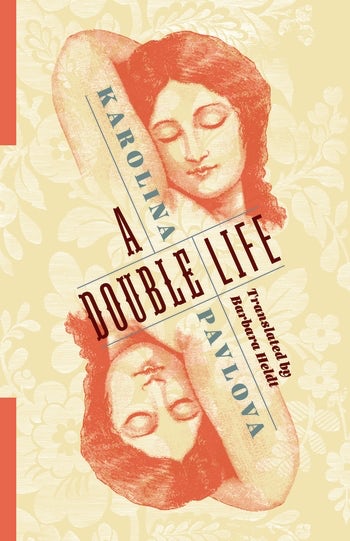
Published in 1848, A Double Life is the only novel written by the Russian poet Karolina Pavlova, who was well known in her time but forgotten by the time of her death. Almost more interesting to me than the novel was the biographical information about Pavlova, who was reviled as a Russian woman for daring to consider herself a poet. I read this novel for my Classics Club list.

Cecily is a young, innocent girl in the top levels of Russian society. Her mother, Vera Vladomirovna, has brought her up strictly to be submissive and ignorant of life. Vera Vladomirovna has noticed Prince Viktor’s interest in Cecily and hopes to marry her to him. But she doesn’t realize that her friend, Madame Volitskaia, intends him for her daughter Olga, Cecily’s best friend.

Upon hearing of the death of a man she never met, Cecily dreams about him that night. These dreams, related in poetry, end each chapter.

The prose narrative is full of satire against polite society, although Cecily doesn’t understand any of it. The poetry is more romantic and mystical, and I didn’t always get the point of it except the end result of it is to awaken Cecily to what life is really like.

The novel is very short, with a strong feminist message for the times. The dream sections are written with a romantic floridity that reminded me of the works of George Sand.

Related Posts

The Victorian Chaise-Longue

Strange Journey

A Footman for the Peacock

Review 2211: Horse

This novel tells the story of a famous racehorse and the people connected to him evoked through some objects—his own skeleton and three portraits of him. Although the main characters in the novel are fictional, many of the historical characters are not. The horse, Darnley, who is renamed Lexington, is still considered one of the best racehorses of all time, and many of his offspring have been champions.

In 2019 Theo is a Nigerian graduate student of art history at Georgetown. He plucks a painting out of the trash of his neighbor. It is of a horse, and he recognizes that it is well painted, so he decides to write an article about having it cleaned and valued.

Jess is the head of a lab at the Smithsonian that cleans and articulates animal skeletons for display and study. She has recently located the skeleton of the famous race horse Lexington for a scholar studying equine bone structure when Theo brings in his cleaned painting. Jess recognizes it immediately as one of Lexington painted by Thomas J. Scott, a 19th century horse painter.

In 1850, 13-year-old Jarrett is a slave working with horses for Dr. Warfield in Lexington, Kentucky. Jarrett’s father, Harry Lewis, is a well-known horse trainer who has bought his own freedom and is saving to buy Jarrett’s. Jarrett is with Alice Carneal when she gives birth to Darnley, the horse that will be renamed Lexington. After a promise from Warfield to give Darnley to Harry instead of his yearly wage, Jarrett develops a close relationship with the horse.

Thomas J. Scott is a young artist who specializes in painting horses and is hired by Warfield to paint some of his horses. While he is there, he paints a copy of his picture of Darnley and gives it to Jarrett. Later, he returns to paint an older Lexington.

These are the characters whose points of view are used to tell the story of Lexington. Brooks’s story is based on what is known of the real horse and characters with some inventions. It’s an interesting story with vivid descriptions of the races, of 19th century New Orleans, and of the racing industry of the time. It also has strong themes of the effects of slavery, racism, and cruelty to animals.

Related Posts

Horse Heaven

The Sport of Kings

People of the Book

Review 2170: The Road

When I briefly researched to find out what the second book in John Ehle’s Mountain series was, I came up with The Road. However, the end of the novel indicates that one other book precedes it, and Goodreads lists it as #4, the last one. (Looking back, I see I found a site that recommended they be read in that order, with the last one second.) In any case, the novels don’t seem to be closely linked, only featuring the same families.

The Road begins 100 years after The Land Breakers, in 1876. Weatherby Wright, an engineer born and raised in the mountains, has been tasked with building a railroad from the eastern part of North Carolina up the mountains to the Swannanoa Gap. This railroad will help the mountain dwellers take their crops to market and make medical and other kinds of help available to them. However, no one knows if the effort can be successful.

Most of the novel focuses on Wright and the details of this difficult project. He is dependent mostly on convict labor and hires as the project accountant Hal Cumberland. Another plot is the romance between Cumberland and a mountain girl, Henry Anna Plover.

The novel is powerful at times but at other times reads like a series of anecdotes passed down in the family that don’t really link up into a coherent story. The character of Weatherby is not always involved because of health reasons.

Related Posts

The Land Breakers

Giants in the Earth

Days Without End

Review 2169: The House on Half Moon Street

In Victorian London, Leo Stanhope is leading a difficult existence as a clerk for a hospital mortuary. His only extravagance is a weekly trip to the whorehouse, where he meets Maria, with whom he is madly in love. She is one of only a few people who knows his secret—that he was born a girl but has always believed he’s a boy. At 15, he left a comfortable home to live as a man.

One day the body of a murdered woman arrives at the mortuary. It is Maria, who did not turn up for the date they had for Saturday. Leo is soon brought in for questioning, but he is let go, and he becomes obsessed with trying to find Maria’s killer. He believes that her death may be related to that of another corpse brought in a few days before.

Of course, Leo finds that almost nothing Maria told him about herself was true, and that leads me to the first general discomfort I had with this novel even before Maria’s body turned up. That is, I really hate the trope of a young man being obsessed with a woman who is leading him on, especially one who exhibits stalker behaviors. If that wasn’t bad enough, Reeve puts Leo through so much physical and mental torment before he’s through that it made me very uncomfortable.

I think the mystery was complex and interesting, but Leo, who is self-obsessed and humorless, reminded me a lot of C. J. Sansom’s depressing hero, Matthew Shardlake. At one point, another character tries to point out that he is not only jeopardizing his own life but hers, but he thinks only of himself and continues to go on the same way.

Related Posts

Special Assignments: The Further Adventures of Erast Fandorin

The Gods of Gotham

Rustication

Review 2167: Weir of Hermiston. Some Unfinished Stories

I wasn’t aware when I picked up Weir of Hermiston that it was Robert Louis Stevenson’s last and unfinished novel. But unlike The Mystery of Edwin Drood, only nine chapters of it exist. It has been packaged in the slim volume I found, dated 1925, with several other unfinished novels or stories, but of the others only one or two chapters or partial chapters exist. Between most of the fragments is a note from the editor containing what is known about the fragment and Stevenson’s intentions.

Weir of Hermiston tells the story of Archie Weir, whose mother brought him up to fear and distrust his father, the Lord Justice-Clerk. As a young man, Archie reacts in a disgraceful way, possibly treasonous, to a hanging, so his father sends him to his estate in Hermiston to learn to run it. Archie is ashamed and is not socially adept, so he becomes a bit of a recluse. However, he meets Christina, a cousin, and begins to fall in love with her. He is joined by Frank, a financially embarrassed friend, who decides to give him some competition for Christina. Things aren’t looking good when the fragment ends.

The next fragment is Heathercat, about a young boy whose mother keeps disobeying the law in regard to religion—I didn’t really understand the details—to the point where his father is being ruined by fines. She is using her son, whose nickname is Heathercat, to run illegal errands and keep guard on illegal services of worship. The notes explain that this novel was going to be based on a true story about a young boy who was married to an older girl to prevent her being forced to marry someone else.

Other stories are about a beautiful wife of a wine seller who falls in love with an aristocratic customer, a prince, presumably Prince Charlie, who tires of waiting around and decides to act; a man who takes over the household of a friend who has fled the country; and so on. The fragments are set in Scotland, England, or France during the 15th to 17th centuries, except Weir of Hermiston, which is set in the 19th.

I forgot to add that my copy begins with a description of Stevenson’s death and funeral, written by his stepson, Lloyd Osbourne, who was apparently very fond of him.

I found a book composed of fragments to be frustrating, but it made me want to read more of Stevenson’s adult novels.

Related Posts

Kidnapped

Treasure Island

Travels with a Donkey in Cévennes

Review 2160: The Prime Minister

The Prime Minister is the fifth of Trollope’s Palliser novels and the most political so far. It follows two stories, one political and one not so much, but they intertwine.

The introduction to the Oxford World Classics edition says that Trollope wanted to write about politics but included a romance to make the book more acceptable to his readers. However, in this case, he admitted his idea of a romance was unfortunate. As a result, this novel was not as appreciated by his audience.

These days, we have bigger problems with this plot than Trollope’s contemporaries probably had. And that’s because of an anti-Semitism on the part of Mr. Wharton that seems so commonplace it’s not even commented on. As usual, I try not to judge older books by our standards, but be warned.

Instead of falling in with her family’s wishes and marrying Arthur Fletcher, who has been Emily Wharton’s friend since childhood, Emily falls in love with Ferdinand Lopez. Lopez has been generally accepted as a wealthy man and a gentleman, but no one knows anything about his family or his past.

Mr. Wharton is against the marriage, but the only reason he gives is that Lopez isn’t an Englishman and may even be a Jew. He doesn’t inquire into Lopez’s finances (which would have saved him a lot of trouble) or his background, but just refuses his permission until he finally gives up and allows Emily to marry. Slowly, we find out that Lopez has no money or any morals at all. Emily begins to learn what she has done on her honeymoon when Lopez insists that she ask her father for money after he has already given them £3000.

The political story concerns Plantagenet Palliser, now the Duke of Omnium. No one has been able to form a government, so the Duke is asked to attempt to form one, which of course would make him the Prime Minister. He tries to resist this honor, but he finally accepts it. At first he hates the position, because it doesn’t involve a lot of work on an important project, which is what he likes. He also has few social skills. He is upright and conscientious but not likable.

The Duchess at first determines to make a splash, so she begins endlessly entertaining. However, the Duke’s lack of appreciation for some of their guests begins to create problems, for example, when a man she invited to set up her archery range directly approaches the Duke for a political position and gets thrown out of the house.

One of her errors is to make Lopez a favorite, a decision which later causes problems for her husband. Despite its anti-Semitism, I found The Prime Minister to be an insightful depiction of marriage to an abuser, as Lopez separates Emily from her friends and family, belittles her, and makes all of his disappointments her fault. Even after he is gone, her behavior in thinking she has been shamed and must always bear that shame is true to the condition of an abused spouse.

I didn’t enjoy the political story quite so much but felt it to be insightful about people’s behavior in a political environment. I also like the ebullient, incisive Duchess.

Related Posts

Phineas Redux

The Eustace Diamonds

Phineas Finn

Review 2152: #1940 Club! The Corinthian

Since this is my first post for the 1940 Club, I’ll include my list of other books published in 1940 that I have already reviewed:

I was happy to reread The Corinthian for the club because I hadn’t read it in some time. It is one of Heyer’s sillier, unlikelier plots, and I found it delightful.

Richard Wyndham is handsome, wealthy, impeccable in appearance, and bored. When a family deputation informs him it’s time he got married and tells him Melissa Brandon considers herself all but engaged to him, he calls on her. He finds an icy, self-possessed young lady ready to make a marriage of convenience to help her family financially. With the prospect of calling on her father the next morning, Richard goes out and gets drunk.

During his subsequent rambles, he spots a boy climbing out of an upper-story window on a rope of knotted sheets that is unfortunately too short. When he catches the boy, he finds he is a girl. Pen Creed is escaping her family, as her aunt is trying to force her to marry her cousin for her money. When Richard finds Pen will not go home, he decides to accompany her to make sure nothing happens to her. She is on the way to the home of her old friend, Piers Luttrell, who vowed to marry her five years ago.

Richard finds himself experiencing many new things, starting with a stagecoach ride during which the coach is overturned. They meet a thief on the stage and soon learn that someone has stolen the famed Brandon diamonds. As if that wasn’t enough, they find a murdered man, assist a damsel in distress, and end up telling many fibs. Richard soon enough realizes he’s in love with Pen, but he can’t say so while she’s under his protection—and perhaps she’s still in love with Piers.

Heyer is always amusing and I had a lot of fun with this one.

Related Posts

The Nonesuch

Cotillion

The Convenient Marriage

Review 2146: Country Dance

In the mid-19th century, Ann Goodman is a young woman whose shepherd father is English and whose mother is Welsh. At the beginning of this novella, Ann lives in Wales near the English border. Although she speaks and understands Welsh, she’s been raised by her father to despise the Welsh. She is promised to Gabriel Ford, an English shepherd who is jealous of her.

Ann has been living with her cousins for 15 years when her father summons her to the English side of the border to help care for her ailing mother. At that time, Gabriel gives her a journal so she can write what she is doing and he can check up on her. Ann faithfully records her life, giving us great insight into farm life at the time.

Ann’s father works for a Welsh farmer, Evan ap Evans. Evans begins to pay attention to her, but she avoids him or is rude to him and says she hates Welshmen. When Gabriel comes to visit her, Evans speaks an endearment to her in Welsh, which makes Gabriel break up with her.

After her mother’s death, her father sends her back again to her cousins—in fact, never shows her any affection—and Gabriel attempts to court her. But Ann is angry that he wouldn’t take her word that nothing was going on with Evans, and also that when Evans tried to put things right, Gabriel attacked him.

As Ann relates her everyday activities, a feeling of dread grows in the reader. It’s no surprise to us that things go badly wrong, because the Introduction tells us so. But Evans, the author not the shepherd, gives this simple story depth by bringing in Ann’s ambivalence about her Welsh/English mixed heritage. This is a deceptively simple, sparely written story that I enjoyed reading for this month’s Reading Wales

Related Posts

Fair Helen

The Unquiet Grave

See What I Have Done

Review 2144: The Underground Railroad

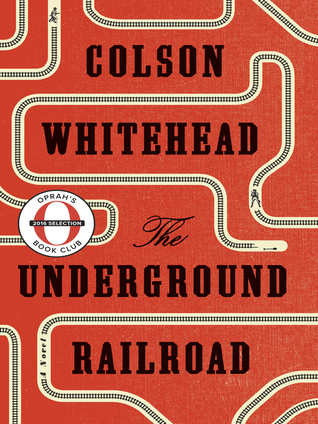
Cora is a slave on a brutal Georgia plantation. When a new slave on the plantation, Caesar, tells her he is going to escape and invites her to come, she at first refuses. But later her master’s brother inherits the plantation and sets his eye on her, so she and Caesar escape using a branch of the underground railroad.

Up to this point the book is grim and realistic, but Whitehead makes his underground railroad an actual train, destination unknown, and here the novel departs from reality so that Whitehead can make points about the evils of slavery and racism in all its incarnations.

Caesar and Cora arrive in what seems to be a utopian South Carolina, where the state has decided to educate and train slaves who have been freed. But there’s a deeper, darker subtext to the plan.

Determined to capture Cora is Ridgeway, an infamous slave-catcher. Cora’s mother Mabel disappeared when Cora was a girl, never to be seen again, and he took it as a personal failing. So, he’s determined to catch Cora, and he eventually turns up in South Carolina.

I have to admit I have problems sometimes with magical realism, and the combination of a real train and a South Carolina that never existed ground me to a halt. However, as Cora’s adventures continued, eventually I was charmed again and found the novel a powerful work of imagination.

Related Posts

Washington Black

The Nickel Boys

Harlem Shuffle

Review 2133: The Secret River

Kate Grenville started out writing a nonfiction account of her great-great-great grandfather’s family, but she ended up with too many questions. So, she fictionalized their story and combined it with what she had read about other Australian pioneers.

William Thornhill grows up in poverty in early 19th century London, but he sees a future for himself when Mr. Middleton, a waterman on the Thames, takes him on as an apprentice. William has grown up with Sal Middleton, his boss’s daughter, and he marries her shortly after he reaches journeyman status. However, things go wrong for Middleton, and William finds his livelihood is much more difficult to earn. Finally, he is caught stealing part of a cargo to support his family.

Although he is sentenced to death for theft, William manages to get his sentence reduced to transportation, and his family is allowed to accompany him. In Australia, although life is primitive, it doesn’t take him long to realize he can make money there and maybe return to England in style. However, when he takes a job ferrying goods from a river where settlers have begun farming, he sees a piece of land he can own by settling on it.

Now begins a conflict, with William realizing he will never return to England and Sal only wanting to return. The conflict is heightened when some of the settlers have clashes with the aboriginal people.

I was certainly engaged by this novel, and I felt that Grenville did a good job of portraying the conflicts with the aborigines. Grenville’s characters are flawed but totally believable. She looks unflinchingly at Australia’s brutal origin story, which is very similar to our own.

Related Posts

A Room Made of Leaves

Salt Creek

Rush Oh!