Review 2235: News of the Dead

One of the things I like about my shortlist projects is that they bring me into contact with books and authors I probably wouldn’t encounter otherwise. Certainly, I would never have run into News of the Dead if not for my Walter Scott Historical Fiction Prize project.

News of the Dead tells the story of one remote, secluded place—fictional Glen Conach—over the ages, mostly through a set of documents. The oldest is a book written in the middle ages about a Christian hermit the locals call St. Conach even though he’s not recognized as such by any authority. The Book of Conach tells the stories of lessons and miracles performed by the man, who died around 770 AD.

Another narrative is set in 1809 from the diary of Charles Gibb. Gibb is an antiquarian who has wangled himself an invitation to Glen Conach House ostensibly to study and translate The Book of Conach. His real goal, however, is to sponge off the Milnes, the current owners of Glen Conach House, for the summer. He rather cynically observes Glen Conach and his lady and daughter as they do him, at first. But slowly the situation changes.

The third narrative begins slightly pre-Covid and mostly concerns an elderly woman named Maja and her eight-year-old neighbor, Lachie, who likes to visit her. When Covid sets in, she decides to write him a letter telling the story of a girl who came to the glen as a child after World War II.

I did not have much patience for the stories about St. Conach, although it was clever how Robertson used variations of the stories to show how they change. It also, frankly, doesn’t reveal much about daily life except for superstition and wildness.

The other two narratives were a lot more interesting. Gibbs’s began at a fairly cynical level yet what we learn after it stops is surprisingly touching. And Maja’s story had me on the edge of my seat.

There were times when I wondered where this novel was going, but ultimately I found it a lovely examination of refuge. I also want to point out that all three narratives sound like they were written by different people, which they should in good fiction, and which is too often not the case.

Related Posts

Rose Nicolson

Luckenbooth

Ulverton

Review 2234: The Shadow King

All I can say is, this is a powerful and eloquent book. It took me a while to get into it, but it was worth the wait.

In 1975, Hirut, an older Ethiopian woman, is on the way to meet a former enemy, Ettore, an Italian photographer who was part of Mussolini’s invading army in 1935.

In 1935, the great Ethiopian warrior Kidane has taken orphaned Hirut into his household. However, his wife Aster is almost insane with jealousy of her and thinks Hirut has stolen a necklace Aster gave Kidane at their marriage. In searching for it, she finds Hirut’s rifle, the only possession she still has of her father’s. Kidane, coming upon the incident, confiscates it for the poorly equipped Ethiopian army, for they know the Italians will soon invade, eager to be avenged for their 19th century humiliation.

Although Hirut’s personal situation worsens, all of them are caught up in the war. The household flees to the highlands, where Kidane and his men carry on guerilla attacks against the army of Colonel Fucelli.

Meanwhile Emperor Haile Selassi is ineffective, spending most of his time listening to the opera Aida. When he finally leaves the country, his troops are discouraged until Hirut notices how much the musician Minim looks like the Emperor. Kidane sets him up as a shadow king to help inspire his people, and his guards are the warrior girls Hirut and Aster.

In the Italian camp, Fucelli forces the photographer Ettore to record his cruelties, including the innocent people he has hurled off the cliffs. At the same time, Ettore is worried about what he is hearing about the treatment of Jews in Italy, as his father is Jewish.

I was a little confused about the women warrior theme, as at first it doesn’t look like Hirut is going to do much actual fighting. Also, it seems to be the fashion now to write about war from both sides, as though some sides hadn’t done things that were unforgivable, and I don’t have much sympathy with that. However, ultimately I was carried along by this novel and felt it was powerful. I was unaware before that the behavior of the Italians in Ethiopia was so brutal.

This was a novel I read for my Booker Prize project.

Related Posts

Cutting for Stone

Life and Fate

The Invisible Bridge

Review 2226: Dust Tracks on a Road

Dust Tracks on a Road is Zora Neale Hurston’s lively memoir, which I read for my Classics Club list.

Hurston was raised in what was essentially in the wilderness at the time in Eatonville, Florida, the first town in the country, she alleges, founded and run by Black people. She was an energetic and imaginative child, and though her family was poor, she seemed to have an idyllic childhood (if you don’t count being whipped, and she didn’t) until her mother died when she was nine. (Other accounts say four, but she says nine.) Not long thereafter, her father remarried and her stepmother soon ran her and her older brother out of the house. (If, when I read Their Eyes Were Watching God, I had realized she was writing about the founding of Eatonville, I think I would have paid more attention to the information about the town.)

I found it interesting that Hurston had a series of visions as a child and that all of them came true. The first was her mother’s death, the second years of wandering from home to home. Having to go to work at an early age cut into her schooling, but such was her determination to get it that after trying to earn enough at various jobs, she finally just returned to high school, ending up with degrees in anthropology and ethnography from Howard and Barnard Universities.

Hurston relates her life in a lively way with lots of anecdotes, folk stories, and even songs and poetry. Although many of the recollections of her earlier life are very particular, the closer the memoir gets to when she was writing it, the more general it becomes, so we don’t find out much after her first ethnographic studies and novels are completed. Instead, Hurston finishes with a series of discursions on her opinions, which I found less interesting than the story of her childhood and young adulthood.

Related Posts

I Know Why the Caged Bird Sings

Kill ‘Em and Leave: Searching for James Brown and the American Soul

The Yellow House

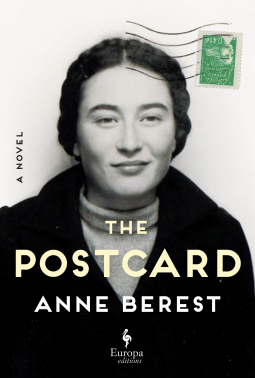
Review 2225: The Postcard

Although sold as fiction, I believe that The Postcard is very much autobiographical and historical, the story of the fates of Berest’s relatives and her own search for an identity.

The search begins with a postcard, one that arrived years before but that Anne’s mother Lélia shows her much later. It is an old postcard containing only the names of Anne’s grandmother’s parents, sister, and brother. All of them died in Auschwitz. The postcard is addressed by another hand to Lélia’s mother Myriam, but at Lélia’s address, where Myriam did not live. It is a mystery. Is it a threat? A reminder?

Myriam has never spoken about their family’s past and now she is dead, so both Lélia and Anne have grown up knowing very little about their family, Ephraïm and Emma Rabinovitch and their children, Noémie and Jacques. Since receiving the postcard, though, Lélia has built up an archive of documents about the history of the family up to when they were deported by the French government. The first part of the novel covers this history.

The further sections of the novel are about Anne’s attempts to discover who sent the postcard and what happened to Myriam. Why was she the only one missed, and what did she do during the war? And finally, how has her family’s experience affected Anne’s own life?

This is a deeply engaging story and an important one, I think. Although the Holocaust is long past, its effects are still reverberating.

Related Posts

Night

The Invisible Bridge

The Zone of Interest

Review 2222: Bitter Orange Tree

As Omani university student Zuhour pursues studies and friendships in England, she is haunted by thoughts about the woman she considered her grandmother, whom she neglected and avoided before her death. She revisits her family history, from the time when Bint Aamir, an impoverished relative taken in by her grandfather, was ejected, along with her young brother, from their father’s house at the urging of his new wife.

Back in England, Zuhour befriends Suvoor, a wealthy girl of Pakistani heritage brought up in England. Suvoor is devastated because her sister, Kuhl, has chosen a young man who she deems socially unworthy of their family. But Zuhour grows closer to Kuhl instead of Suvoor.

This novel is a poetic examination of the past and future of this character, where her contemplation of Bint Aamir’s life—in which her father did not permit the only marriage she was asked for—seems to predetermine her own—in which she is in love with her friend’s husband. The most interesting parts for me were the historical ones. The novel refers often to Zuhour’s dreams and sometimes seems dreamlike itself, but I didn’t feel touched by it. I read this book for my James Tait Black project.

Related Posts

A Thousand Splendid Suns

And the Mountains Echoed

In the Shadow of the Crescent Moon

Review 2216: Classics Club Spin Result! Miss Mole

I don’t know what readers in 1930 would have thought of Miss Mole—maybe found it a little shocking—but I thought it was delightful. I read it for the latest Classics Club Spin.

Miss Mole is a forty-something spinster of little means. Of yeoman stock, she was well educated but left with little when her parents died. Since then, she’s been working in various genteel, poorly paid positions. When the novel opens, she’s a companion for Mrs. Widdows, but she has difficulty sometimes hiding her true nature under the submissive aspect her employers expect, and she’s fairly sure she’s going to lose her position soon. She goes to tea with Mrs. Spenser-Smith, a prominent citizen in town who is also her cousin. Lillia Spenser-Smith would like her relationship with shabby Miss Mole to remain a secret, so she helps her get a position as housekeeper with the chapel rector Mr. Corder, as she is worried about his two daughters and the incursions of Patsy Withers, who would like to be their stepmother.

Miss Mole finds the Corder household an unhappy one. Corder is an energetic pastor, but at home he expects his family to see no fault in him and he pays no attention to the state of his children. Everything must revolve around him. His oldest daughter Ethel is restless, horsy, and prone to bad temper. She has been supposed to have been running the household but has been paying more attention to her charities. Cousin Wilfred soon appreciates Miss Mole’s sense of humor, but young Ruth is at first mistrusting. Miss Mole decides to help Ruth even though she dislikes Mr. Corder.

Mr. Blankinsop, an acquaintance from Miss Mole’s former lodging, comes to tell Mr. Corder that he is changing churches because he disagrees with him. Although he seemed to want to avoid Miss Mole at the lodging, he begins to seek out her company. She thinks he is in love with a helpless married woman at his lodging.

Energetic Miss Mole does her work well and the Corders’ lives improve, but she has a secret that threatens when a minister of a neighboring chapel, Mr. Pilgrim, appears.

Miss Mole is a great character—intelligent, cynical, but with an ability to find joy in life, coupled with a tendency to lie but also to speak her mind.

Related Posts

Sally on the Rocks

Chatterton Square

Cluny Brown

Review 2214: Life and Fate

Finished in 1960, Russian author Vassily Grossman’s Life and Fate was confiscated by the NKVD (predecessor of the KGB) and had to be smuggled out to be published in Europe. Taking War and Peace as its model, it is about the pressures of totalitarian governments during the siege of Stalingrad. It centers around one extended family, the Shaposhnikovs, but it also includes some of the German officers and others, visiting a variety of wartime settings: a besieged plant in Stalingrad, a German concentration camp, a scientific institute in Moscow, a Russian tank corps, and so on.

Because of its broad scope and length (more than 800 pages), it has a lot of characters, maybe a dozen of whom we visit and revisit, but others whom we see only once or twice. Some of the ones we revisit are Krymov, a commisar who is the ex-husband of Yevgenia Shaposhnikova; Viktor Shtrum, a famous physicist married to Lyudmila Shaposhnikova; Pyotr Novikov, a tank commander in love with Yevgenia; Yevgenia herself, who is worried about both Krymov and Novikov; Sofya Levinton, a doctor and friend of Yevgenia on her way to a German gas chamber. There is an appendix to the book listing hundreds of characters, but it doesn’t list most of the male characters’ first names or patronymics, so at times I wasn’t sure who the characters were talking about.

Although the Russian characters are uniformly patriotic, almost all of them live in fear, remembering the Terror of 1937 when many people were disappeared or deported to labor camps. Those times aren’t really over, as several characters run into trouble for minor infractions or no infraction at all, resulting in imprisonment and torture for some, demotions or exile for others. One character is labeled an enemy of the state for reporting that a soldier on his own side shot at him. In addition, bureaucracy gets in the way of people trying to do their war work.

This novel is powerful at times, but because of its structure, I didn’t really feel much connection to any of the characters except maybe Novikov, who spends hundreds of pages yearning for Yevgenia, not knowing she has returned to Krymov. It wasn’t until I was well into the book that I realized it was a sequel to Grossman’s Stalingrad, and it refers back to events that presumably occurred in that book, but it’s hard to know whether reading it first would have helped.

Also, Grossman occasionally takes a paragraph or two, sometimes a whole chapter, to philosophize on some subject. That’s a kind of polemic writing I don’t appreciate.

Related Posts

Sofia Petrovna

The Raven’s Children

Punishment of a Hunter

Review 2213: #ThirkellBar! A Double Affair

I have to start out with a spoiler for the book before this one, so if you haven’t read Never Too Late and plan to, skip now to the second paragraph. A Double Affair begins with the wedding of Miss Merriman, called Merry by her friends, to Mr. Choyce. Merry has appeared in many of the novels as the devoted secretary/companion to both Lord Pomfret and Lady Emily Leslie, and she deserves a happy ending. (Readers may recall that early in the series she had an unrequited love.) The wedding is described in much more detail than any of the others—if they are described at all—so Thirkell must have thought so, too.

Then we briefly return to the subject of Edith Graham, still eighteen after three books. And here, I think Thirkell has made a continuity error, for Edith is returning from a trip to America after having returned two books ago. I noticed this particularly because I read the beginning of this book out of order, so in my mind she had just returned and she was returning again. So, at the end of Never Too Late, I looked for an indication that she was going abroad again, but there was none—just her plan to go to agricultural school.

Thirkell gets over this, sort of, by saying she abandoned her studies to go to America with Uncle David and Aunt Rose, but never once is there a reference to two trips to America. Thirkell even has her say that she thinks her temperamental problems were caused by this trip, but she had those same problems two books ago when she returned the first time.

In any case, I’m a little tired of Edith and her temper. At the beginning of the book, she still has three admirers—George Halliday, the farmer; John Crosse, the banker and Lord Crosse’s son; and Lord Mellings, the young heir of Lord Pomfret. However, she seems to lose her temper if some man isn’t paying attention to her at all times.

This is a good time to look at the problems of George Halliday. His father died in the last book, and now his mother is feeling lonely. He is working hard and is sometimes irked because when he gets home, his mother wants attention, whereas he wants to work on the books or just relax. Finally, she goes for a visit to her daughter Sylvia at Rushwater, where Sylvia and Martin feel much the same. But Mrs. Halliday has a surprise for everyone.

This novel will finally dispose of the affections of George, John, and Edith, but in what combination?

Although I enjoyed keeping up with these characters, this is the first time I’ve felt that Thirkell lost track of her plotting a bit. Also, I don’t want to spoil any romantic surprises, but I’ll just say that she cheats a bit in this one.

Related Posts

Never Too Late

Enter Sir Robert

What Did It Mean?

Review 2208: The Foolish Gentlewoman

When crusty, prim Simon Brocken goes to live with his widowed sister-in-law Isabel while his home is repaired from bomb damage shortly after World War II, he isn’t expecting to enjoy living so closely with other people. However, the household gets along comfortably together even though the four occupants don’t have much in common. Isabel is kind and generous, although Simon thinks she’s an idiot. Her Australian nephew Humphrey has come to stay, and he is slowly pursuing an understated courtship of Jackie, Isabel’s companion/secretary.

However, something is bothering Isabel, and eventually she tells them what it is. A preacher’s sermon about bad acts in the past being no less bad has made her consider an incident from when she was a girl, when her actions blighted the marital hopes of Tilly Cuff, a poor cousin her family treated a little like a servant. Tilly took a job as governess, and Isabel eventually married Simon’s brother.

Now Isabel thinks she must make amends to Tilly, so she has invited her to stay. But she also intends to give Tilly her entire fortune. Simon is appalled by this but can’t get her to change her mind. Then Tilly arrives, and everyone but Isabel soon realizes that she is actively malicious.

This novel is witty and sharply observant of human nature. It creates a situation that I couldn’t imagine being resolved neatly and that made me want to see what happens.

Related Posts

Harlequin House

Rhododendron Pie

Cluny Brown

Review 2204: The Summer Book

The event that informs The Summer Book has already occurred before the novel starts—six-year-old Sophie’s mother has lately died. Sophie, her father, and grandmother travel early to an island on the Gulf of Finland where they spend their summers.

There isn’t much plot to his novel, which is mostly centered on Sophie and her grandmother. Sophie is changeable and sometimes anxious. Her grandmother, who is not in good health, is usually wise and responsive but can be irritable. In between tales of a visiting neighbor, the construction of a new road and a large, intrusive house, a haunted bathrobe, an unfriendly cat, the construction of a miniature Venice, and some massive storms, Jansson minutely describes the world of the island—the terrain, the insects and birds, the plants.

This is a lyrical novel that implies—most of them are unstated—some truths about life, death, and love.

Jansson spent most of her summers on such an island. She wrote this novel shortly after the death of her mother.

Related Posts

Moominsummer Madness

The True Deceiver

Abigail