Review 1669: Young Anne

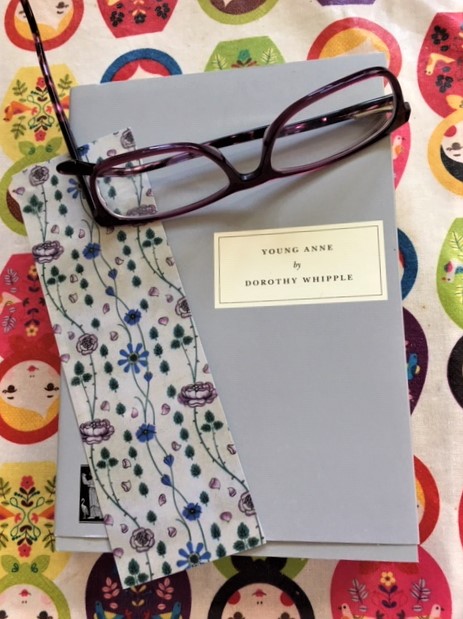
Young Anne is Dorothy Whipple’s first novel but unfortunately is the last one I’ll be reviewing, because I’ve read and reviewed them all. Like many first novels, it is at least somewhat autobiographical.

We meet Anne at age five and see her again at eleven and eighteen before the bulk of the novel when she is an adult, but these ages are enough to get to know her. At five, she is prone to misunderstand her parents. Her father is severely critical of her while he spoils his oldest son. He is a martinet, and Anne becomes defiant of him as she grows older. Her mother doesn’t care about anything happening in the household.

As Anne gets older, she becomes quite naughty, but she is sent away to school because she laughs at her father while he is singing. This is shortly after she destroys her father’s copy of Boswell and knocks all the berries off a holly bush while getting carried away playing schoolteacher.

As a young woman, Anne loses her father, and the household is broken up. She is sent to live with her Aunt Orchard, who constantly complains about her ingratitude. Her only comfort is the maid, Emily, who has always been her staunch supporter and follows her to work in Aunt Orchard’s house. That and her friendships with Mildred and Mildred’s cousin George.

I found the character of Anne very appealing as she, in her straightforward way, has trouble navigating in society. Some of the scenes, especially with Mildred’s kind but social-climbing mother or the one where Aunt Orchard reveals her true self to the rector, are quite funny. This novel seemed true to life and was sometimes very touching. I liked it a lot.

Related Posts

Greenbanks

High Wages

Because of the Lockwoods

Review 1667: JFK: Coming of Age in the American Century, 1917-1956

JFK is a biography that makes you feel you really understand John F. Kennedy despite it being the type of biography not necessarily aimed at mass consumption. Although it is eloquently and clearly written, it contains about 150 pages of notes and sources. It examines the first 39 years of Kennedy’s life in a balanced fashion, showing both strengths and faults, and is absorbingly interesting. It also tries to dispel some of the myths about Kennedy’s political career, showing, for example, that his interest in politics began long before his older brother’s death, in answer to the belief that he entered politics at his father’s urging as a replacement for his dead brother.

Although a lot of people are fascinated by the Kennedys, I knew only the basic facts and found the home life of his family growing up to be a very strange one. First was their emphasis on competition and winning, one that was extreme and probably explains the tendency toward alcoholism in a few of its members (not JFK, who was not a drinker). A few details stood out—one that family members didn’t seem to have permanent bedrooms in Hyannis Port but treated the house more like a hotel. Very odd.

I was less interested in his development as a politician than I was in the earlier material, but still, even though I knew, for example, that Kennedy was not the vice presidential nomineee in 1956, Logevall was able to make the Democratic convention truly exciting.

Logevall is a Harvard historican whose last book won the 2013 Pulitzer Prize for history. This is a serious, well-researched biography that nevertheless offers much interest to the more casual reader.

Related Posts

No Ordinary Time: Franklin and Eleanor Roosevelt: The Home Front in World War II

Grant

Alexander Hamilton

Review 1666: The Winged Horse

It’s going to be hard to describe this novel without either giving too much away or being too vague. The description on the Virago back cover focuses too much on the role of business tycoon J. G. Baron, when really he is more the catalyst of the action.

Harry Levitt is an American on his way to England for a job with J. G. Baron. He and Baron’s entourage are on shipboard along with Baron’s oldest daughter, Celia, who has been living in the States but is now separated from her husband and moving home.

J. G. is an unlikable person. He surrounds himself with yes men and is hypocritical and self-deceptive. He dislikes two of his three children and terrifies the third. Celia is the only one who doesn’t try to please him, as she dislikes him back.

When we meet Harry, he is a practiced dissembler who feels insecure about his Midwest background so has invented Californian origins. Despite a bad start with Celia, while living in England, Harry develops a close relationship with her siblings Tobias and Liz and with their friend Anthony Carey, a mediocre sculptor known to the family as Thank-God-for-Anthony. Anthony seems perfectly assured and the only person who is not afraid of J. G. The Barons consider him the epitome of probity.

Harry, as he grows to love England and feel accepted, becomes calmer and more assured. However, there is a family tragedy, and subsequent events allow Frankau to explore themes of power, truth, and dishonesty.

At first I had trouble being interested in these characters, but eventually I became involved in this story. I did find irritating the way Frankau handled the characters’ inner thoughts, just as if they were dialogue, which seemed artificial. But this is a minor criticism.

I read this book for my Classics Club list.

Related Posts

They Knew Mr. Knight

Because of the Lockwoods

Consequences

Review 1665: Sugar Street

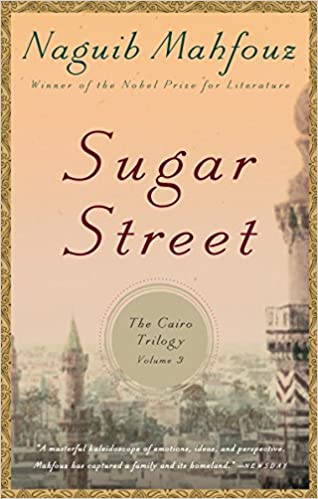
Sugar Street is the third book in Naguib Mahfouz’s Cairo Trilogy and in many ways the weakest. Although it spends some time with Kamal, it goes on to the next generation and deals mostly with Kamal’s nephews.

The patriarch of the family, Ahmad Abdal-Jawad, although only in his early 60’s in 1935, has let his intemperate habits get the best of him and becomes more and more decrepit as the book goes on. We don’t see much of him or his wife, Amina.

Kamal has come to believe in nothing. He is an English teacher who writes difficult philosophical articles for a journal for no pay. His family urges him to marry, but he does not. He is not happy except in a few friendships with men he can exchange ideas with.

Aisha is a faded shadow of herself after the death of her husband and sons, so it is Khadiya’s and Yasin’s sons we follow for most of the novel as they get involved in politics. Abdal-Muni’m becomes a Muslim Nationalist, Ahmad a socialist, and Ridwan becomes involved with an important political sheikh in a way that seemed vaguely homosexual to me but perhaps wasn’t.

In any case, although you might think these different political alliances would provide more insight into the state of the country, the strangely formal and didactic conversations I mentioned in a review of the previous book assume too much knowledge for me and throw too many names around. On the other hand, what was missing from this novel were the intimate family relationships and strong individual characterizations. We never really get to know any of these nephews like we did the original brothers and sisters.

Finally, Kamal’s character is so mired in inaction that he brings every scene to a halt with his inner observations. When he finally sees the little sister of his boyhood love, Aïda, and fancies himself in love with her, first he creepily stalks her and then, finally, having won her attention, he backs off. Oh! I thought at first, something is going to happen! Not!

Related Posts

Palace Walk

Palace of Desire

The Map of Love

Review 1664: Greenwood

Best of Ten!

Greenwood starts with an image of the cross-section of a tree trunk, this showing the novel’s structure. The novel begins in 2038, the outer ring of the tree, and visits four different years in the past, the center being 1908. Then it returns through each of those years to 2038.

In 2038, Jake Greenwood is an overqualified scientist working as a forest ranger in one of the few forests left on earth after the Great Wilt. She is glad to have the job in a world of excessively rich people and have-nots. Greenwood Island is a sort of private park that entertains the very wealthy by touring them through the forest.

Jake doesn’t think her family has a connection with the Greenwoods of the island, once owned by the fabulously wealthy lumber baron Harris Greenwood, but a lawyer arrives saying that she may have a claim to the island.

The novel returns back in time to visit Jake’s ancestors at important events in their lives. In 2008, Jake’s father Liam’s girlfriend leaves him and then lets him know she is pregnant. Later, doing a carpentry job, he has a serious accident.

In 1974, Liam’s mother Willow, an environmental activist, lives with Liam in her van and travels around sabotaging logging equipment.

In 1934, Everett, who makes a little money tapping and selling maple syrup, finds a baby hanging on a tree outside his cabin. Although he at first tries to give her away, he begins to think she’s in danger.

In 1908, two nine-year-old boys are the only survivors of a massive train wreck. When no one claims them, the town puts them in a cabin and provides the bare minimum of their needs, the boys growing up almost feral. The boys cannot remember their names, so the town calls them Harris and Everett Greenwood.

The novel is beautifully written and like The Overstory is concerned with trees and their impact on the world. Its descriptions of forests are lyrical. The plot itself is at times so involving as to read almost like a thriller. This is an unusual and absorbing novel.

The Overstory

Maddaddam

The Sunken Cathedral

Review 1660: Breakfast with the Nikolides

Because of the war, Louise and her children are forced to return to her husband Charles in India for the first time in many years. There, they take up what is apparently a toxic relationship.

Louise is a fearful, sometimes hysterical woman who seems to dislike Emily, her 12-year-old daughter. Louise considers her sly and deceptive when in actuality Emily is very truthful but seems unable to behave naturally with Louise. Emily loves India, but Louise only sees its dirty and ugly sides, not its charm.

The situation between husband and wife and between mother and child comes to a head over Emily’s dog, Don. In a crucial moment, Louise chooses to lie to Emily rather than tell her the truth as Charles advises.

In general, I liked this colorful novel, which, as always with Godden’s India novels, is luminous in its descriptions and sympathetic to its characters. However, for modern audiences there is a recounting of a rape scene that is handled in a very problematic way. For me, it detracted a good deal from my enjoyment of the novel.

Related Posts

Coromandel Sea Change

The River

The Lives of Others

Review 1653: The Parisian

Midhat Kamal is the son of a wealthy textile merchant from Nablus in Palestine. His father more or less deserted him with his second marriage after his mother’s death and lives in Cairo, visiting a few times a year. When Midhat is 19, in 1914, his father decides he should study medicine in France and arranges for him to stay with a French professor of anthropology, Frédéric Molineu, in Montpellier.

Unfortunately, Midhat falls in love with Molineu’s daughter, Jeanette. Although his feelings seem to be returned, Midhat discovers a betrayal that makes him flee Montpellier for Paris. In Paris, he works on developing a reputation as a bon vivant and womanizer, only peripherally involved in his friends’ discussions about Arab nationalism.

Nonetheless, returning to Nablus, he almost immediately adopts the life his father demands, learning how to run the Nablus store in preparation for moving to Cairo and finding a wife. Events, however, will turn the course of his life again.

Although the novel covers the beginning of the fight for Arab nationalism against the British and French, which sounds interesting, as well as the time period of World War I, Hammad is hampered by her choice of main character, for Midhat is so self-absorbed through most of this book that he hardly seems to know what’s going on around him. This detachment affects the readers’ relationship to the novel, making me feel detached from its actions. Further, although there is a weak link between the first part of the book and the rest, there seemed to be little connection except that Midhat’s self-absorption is related to this character he has created for himself, the Parisian. I found the love affair unconvincing in any case.

For a historical novel set in an interesting time and place, there is very little sense of that time or place. So, not a big recommendation from me for this novel, which I read for my Walter Scott project. It is well written, but although important things happen in the novel, the action is at such a remove that it feels as if nothing is happening, if that makes any sense.

Related Posts

Palace Walk

The Map of Love

The Forty Days of Musa Dagh

Review 1651: Three Weeks

I realized earlier this month that the deadline I set myself for finishing my Classics Club list is coming up this summer, with about a dozen books left. I’ve been reading lots of classic novels, just not necessarily the ones on my list. I have also read many of the ones on my list but just haven’t posted my reviews yet. So, I decided I was going to have to accelerate my schedule of reviewing and reading them in hopes of getting all my reviews posted on time. Here is one of them.

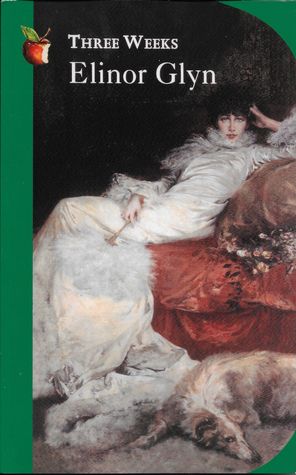
Elinor Glyn was a romance novelist at the turn of the 20th century whose works were considered scandalous at the time. Three Weeks is the story of a young English man who has an affair with an older Russian queen.

Naïve young Paul Verdayne fancies he is in love with the parson’s daughter, so his mother ships him off for a tour of the continent. He is young and sulky and hates Paris but, being a sportsman, enjoys Switzerland. While in Geneva, he becomes fascinated with a striking woman who is traveling only with her servants.

This mysterious woman, about ten years older than Paul, takes him in hand and begins opening his mind to art and ideas. Soon, they begin a torrid affair. But this affair must remain secret, because there is danger.

First, I found it difficult to buy that this sophisticated, cultured woman would fall madly in love with a gauche, uncultured young man whose only interest is his dog and horses and whose only attraction is his good looks.

Next, Glyn’s writing is florid and overwrought. It is often cloying and downright silly. The style resembles that of writers from the Romantic movement, which was well over by the time Glyn was writing. I have an idea that Glyn may be the type of writer Forster was mocking in A Room with a View.

Finally, the idea that Paul could become informed and educated just by spending three weeks with his mistress is ridiculous. The novel doesn’t say that he is interested in being more informed but that he comes back from his experience poised and culturally literate, enough so as to impress people with his elegance. Right.

In short, this is a really silly book.

Related Posts

Chéri

The Last of Chéri

Dolly: A Love Story

Review 1650: The River

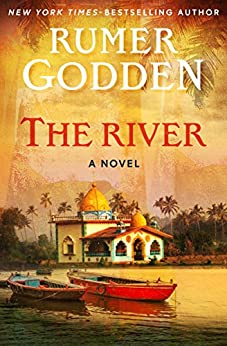
Harriet and her family live along the river in a town in India. Harriet is dismayed at the changes in her sister Bea, who is becoming a young lady and is no longer fun to play with. Her brother Bogey spends his time looking at insects and animals in the garden. Victoria is just a baby. Harriet spends some time each day writing in her book that she keeps hidden away, and she also is fascinated by her parents’ guest, Captain John, who was injured in WWI. Captain John, however, likes Bea best.

This little novel has a plot, but it is mostly atmospheric and descriptive, of the garden and house, of life on the river. I was just a short way in when I realized that I had seen the movie based on it by Jean Renoir. I said, “If there’s a snake, I’ve seen this.” There was a snake.

The semi-autobiographical novel is about Harriet waking up from childhood and complete self-involvement and learning to become a writer. It is beautiful and touching.

My Virago Modern Classics version also included two short stories, “Red Doe,” about Ibrahim, a bakriwar nomad who is on the way to another encampment to claim a wife, and “The Little Black Ram,” about Jassouf, a bad boy who is tamed by being give a black ram to care for.

Related Posts

Coromandel Sea Change

A God in Every Stone

Sea of Poppies

Review 1648: Joanna Godden

At first, I wasn’t sure I was going to like Joanna very much, in this novel that is essentially a character study. She is large and brash. She likes to wear bright colors and to impress people. She is a fine figure of a woman.

As a young woman, she inherits her father’s sheep farm on Walland Marsh in far southeastern Kent. From the first, she will take no advice. She’ll run her farm the way she wants, and she scandalizes the neighborhood for firing her father’s shepherd of 28 years, for painting her wagons and her house yellow, and for other such offences against tradition.

At first, she makes some costly mistakes in her willingness to experiment. She hires a shepherd just because she likes his looks, but he is too docile and inexperienced to warn her when she’s about to make a big mistake in breeding. She sends her little sister Ellen away to a posh boarding school and gets back a sulky, discontented young woman who thinks she is too good for the farm.

I couldn’t help growing to love this heroine, though. She is bumptious but well-intentioned, pushy but kind. By the end of the novel, I was touched and sorry it was coming to a close. I read it for my Classics Club list and hope to find more by the author.

Related Posts

Far From the Madding Crowd

Miss Marjoribanks

Chatterton Square