Review 1644: The 1936 Club! August Folly

This week it’s time for the 1936 Club, hosted by Stuck in a Book. For my first book published in 1936, I am delighted to review August Folly by Angela Thirkell. As usual with my first posting for the club, I am also listing the links for the books published in 1936 that I have reviewed previously:

__________________________________

Louise Palmer, who likes to manage things, has decided to put on a Greek play. This endeavor will involve the participation of most of the young people around the village of Worsted, including her summer guests, the Deans. Richard Tebbins, just up from Oxford with a poor third, is at the age when everything his parents do irritates him (although that’s usually earlier, in my experience). However, when he sets eyes on Mrs. Dean, his parents’ contemporary, he falls into puppy love. Mr. Fanshawe, the Deans’ guest, seems to be a confirmed bachelor, but he has always only loved young Helen Dean. However, he fears he is too old for her. These are just a few of the characters and subplots of Angela Thirkell’s fourth Barsetshire novel.

Sometime, I would like to read these novels in order, because although each one concentrates on different characters, they have characters that reappear in different books—presumably also plot lines. However, I used to randomly encounter the novels in bookstores and just picked up whatever I found.

August Folly is one of the more fun books, featuring eccentric academics, delightful children, realistic but absurd romances, and a cat, a donkey, and a bull. It is froth at its best. I was happy to revisit it for the 1936 Club and my Classics Club list.

Related Posts

Pomfret Towers

Wild Strawberries

Northbridge Rectory

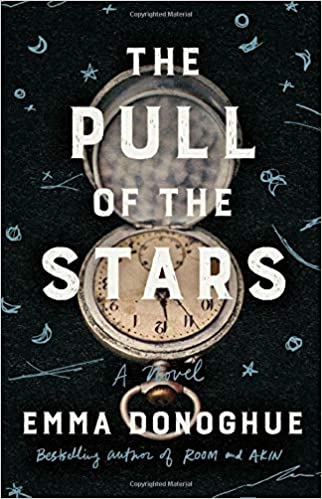
Review 1640: The Pull of the Stars

Julia Power is a maternity nurse in Dublin during the 1917 flu epidemic. The Pull of the Stars covers three days in her life on a small maternity ward for flu patients. With the hospital staff depleted because of illness and the matron away, Julia has only the help of a new volunteer, Bridie Sweeney, for most of the time. During this period, she has to cope with several emergencies and some deaths.

The novel appears to be knowledgeable about the state of medicine at the time and of the ignorance of the common people. One young woman expects to deliver her baby through her belly button, for example.

I found this novel interesting but curiously unsatisfying. I liked the characters Julia and Bridie, but no others are very fully developed. The plot seemed predictable and even a bit manipulative. I never know with Donoghue if I’m going to be blown away or relatively unmoved. This novel is timely, but that may make its content of very graphic medical details uncomfortable for some.

Related Posts

The Wonder

Akin

Room

Review 1631: Mrs. Tim Gets a Job

It turns out that Mrs. Tim Gets a Job is part of a series. Unfortunately, because I’d rather read series books in order, I never find this out until I mark that I’m reading it in Goodreads. Luckily, the novel seems to stand perfectly well on its own.

The Second World War is over, but Mrs. Tim’s husband is still stationed in Cairo and won’t be getting home anytime soon. Mrs. Tim’s two children are off at school, and she finds herself at loose ends. So, without really consulting her, a friend arranges a job for her at a hotel in Scotland. At first, Mrs. Tim is inclined to turn down the job, but then she gets a letter from her landlord giving her notice to move out.

With trepidation, she sets out to work for Miss Clutterbuck, who she understands is a difficult person. Miss Clutterbuck has been forced to open her family home to the public, and she has a rude manner. Mrs. Tim finds that part of her duties is to talk to the guests, because Miss Clutterbuck can’t bear them.

This novel is written in a light style as a diary, reminding me very much of the Provincial Lady series except gentler and with less overt humor. We follow Mrs. Tim’s progress as she grows to appreciate Miss Clutterbuck, learns how to deal with a housemaid who hates her, and straightens out a guest’s love life. I enjoyed this book very much.

Related Posts

Miss Buncle’s Book

Miss Buncle Married

Diary of a Provincial Lady

Review 1628: My Brilliant Career

My Brilliant Career is the very singular story of the life of an Australian teenage girl in the bush in 1901. It isn’t so much singular in its plot as in the personality of Sybilla, the main character.

Sybilla’s childhood was spent in comfort, as her father was a prosperous horse breeder. However, well before this novel starts, her father decided his talents were wasted, so he sold his property and began a career selling livestock. He was unsuccessful, and he drank heavily in entertaining prospective clients. When the novel opens, the family is struggling to run a dairy with their father drinking away the money he makes selling butter.

Sybilla at 15 is admittedly a difficult person. Her mother never gives her a kind word, and her mother and brother twit her about her lack of good looks. She angrily resents their life of endless labor for no good result. In fact, she is ambitious to become more but doesn’t know how to go about it. She is an unusual mixture of self-confidence and self-hatred and is angry and rebellious.

Sybilla’s mother becomes so angry with her that she arranges for her to go live with her grandmother farther into the bush. There, Sybilla blossoms under the kind treatment of her grandmother, her uncle, and her Aunt Helen. Her aunt helps her look more attractive, but she never gets over believing she is ugly. Romance even seems to be on the horizon.

I thought that the view this novel gives of Australian frontier life is really interesting, and I was particularly struck by the amount of traffic going by the grandmother’s house and the number of homeless, wandering men. However, I was unsatisfied with this novel, and to explain why, I have to include spoilers, so be warned.

A feminist interpretation of this novel might be that the heroine chooses to write a novel instead of getting married, but that would be ignoring Sybilla’s difficult personality. Continually, she seems to bite off her nose to spite her face, and in the case of marriage, really declines out of a sense of inferiority rather than anything else. She decides not to marry Harold and stays in a life she hates because she can’t believe he loves her and she thinks she is not good enough for him. I find that really frustrating. It’s not that I wanted a romantic ending so much as it bothered me how she never really sees herself or is able to get past being told how worthless she is by her mother.

I read this for my Classics Club list.

Related Posts

I Await the Devil’s Coming

My Mortal Enemy

The Vet’s Daughter

Review 1614: A Pink Front Door

Stella Gibbons’s books always start out seeming to be froth, but there is an edge to them, I’ve found. Still, she handles her characters’ foibles with compassion.

In A Pink Front Door, her heroine, Daisy Muir, is engaging, but she has one big flaw. She tends to make the problems of a set of misfits her own, much to the discomfort of her husband, James. At the beginning of the novel, she’s trying to keep one silly friend, Molly, from running after men, in particular an Eastern European refugee named Tibbs, who keeps losing both jobs and his lodging. Lodging is difficult to find in post-war London, and the next thing Daisy knows, she has Don, a man she barely remembers from Oxford, at her front door. Don and Katie and their three young children have just lost their lodgings, and Don hopes Daisy can help.

Daisy remembers “little Katie” from university, the most promising student of her year. Later, Katie reflects that she became stupid with love and made only a poor third. Don, however, is only a few months from finally taking his exams to qualify as a chemist, and Katie hopes to find a quiet place where he can work. If he passes, he can take a good job and they can begin a better life, but until now, they have been living in cramped, noisy, unpleasant quarters.

Daisy thinks of a former neighbor and friend of her father, Mrs. Cavendish, a horrible snob who has an entire upper floor free. Mrs. Cavendish, like many of the upper classes, has fallen on comparatively hard times and has lost her last servant. She agrees that the family can move in but insists that the hard-pressed Katie spend some time every day cleaning in exchange for the low rent that is all they can afford. The house is inconvenient. Katie must haul all their water and coal upstairs. It is also not laid out for children. But it is quiet, and Don is finally able to work.

While Daisy is embroiled in the difficulties of her friends’ lives, Molly has homed in on James and has begun dropping by Daisy’s house especially when Daisy isn’t there, making tea for James and babysitting James Too. James himself, usually tolerant of Daisy’s projects, has begun to lose his patience.

Gibbons has an eye for social follies and foibles, and she employs it here with effect. I enjoyed this novel and was touched by its conclusion.

I received this book from the publisher in exchange for a free and fair review.

Related Posts

Nightingale Wood

Not at Home

Miss Buncle’s Book

Review 1613: O, The Brave Music

Seven-year-old Ruan Ashley leads a bleak existence. Her unhappy mother seems to care little for her, preferring her sister Sylvia. Her father is a dour nonconformist minister. They have little money and live in a poor area of a Yorkshire factory town. Ruan is misunderstood, a dreamer who loves reading, especially poetry, and thirsts for beauty.

Things look up when Rosie, the daughter of a wealthy factory owner, comes to visit with David, a boy Rosie’s father has adopted. They take her for a visit to their home up in the moors, where she and David run wild. Family illness calls for her to remain there for the summer.

Ruan’s life becomes one of loss, but it is also mixed with some times of great contentment. Daring it all, she remains herself, a person who refuses to conform to expectation.

This novel is touching as well as lyrical. It is a true ode to life, written in 1940 and looking back 40 years.

I received this book from the publishers in exchange for a free and fair review.

Related Posts

Lolly Willowes

Stoner

They Were Sisters

Review 1612: Abigail

Gina is a fourteen-year-old girl who is adored by her father, General Vitaly, and has led a carefree life in Budapest. Then some changes occur. Her adored governess, Marcelle, must leave home because she is French and thus on the opposite side of World War II. Then, her father enters her into Matula, a school for girls in the provinces. He does this with no warning, and Gina is at a loss to understand why he has chosen a cheerless, strict Calvinist school.

Upon arrival, Gina is stripped of her possessions and given charmless garments to wear. Her hair is cut off. The other girls in her class seem friendly at first, but after a horrible first day, she has a melt-down and blurts out a class secret. After that, no one will speak to her.

One of the school traditions, at least among the girls, is that if you write a note asking for help and put it in the vase held by a statue named Abigail in the garden, she will help you. This tradition is one of the things Gina finds ridiculous in her first days, but after a while, she comes to believe that someone, perhaps one of the staff, probably is helping.

When Gina becomes so miserable at school that she can’t take it, she plots to run away. She is prevented by one of the teachers, König, whom she despises. Soon, her father comes to see her and tells her a secret, something that requires her to stay in the school. She realizes she must try to make peace with her classmates.

This may sound like a standard novel about life in school, but it is an adventure novel that actually becomes quite suspenseful. The identity of Abigail wasn’t very hard to guess. It is Gina who is oblivious to all the clues until the last sentence of the novel. There is certainly a cast to pick from, including Susanna, the beautiful and strict prefect; Mr. Kalmár, the handsome young teacher who is in love with her; and Gedeon Torma, the director, the source of the cheerlessness and strictness. This is also Mitsi Horn, a former student who is a legend at the school.

Despite knowing who Abigail was almost from minute one, I really enjoyed this novel. Gina, headstrong and oblivious, is still appealing, and the plot is an interesting one.

Related Posts

Salt to the Sea

The Book Thief

The Nightingale

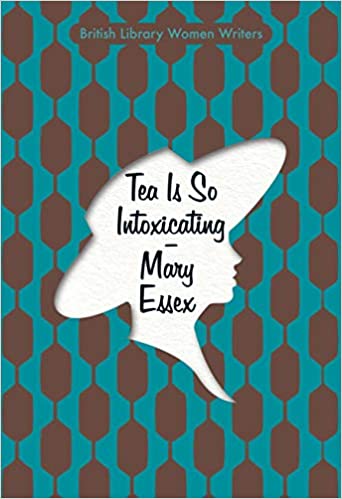
Review 1608: Tea Is So Intoxicating

Tea Is So Intoxicating is a froth of a novel with silly characters but comments to make about marriage, snobbery, and class. No one here is very likable, but quite a bit is funny.

Retired Commander David Tompkins has purchased a picturesque but inconvenient thatched cottage and decides to run a tea shop from it. His wife Germayne thinks it’s a terrible idea, but nothing can dissuade him. He thinks he is a wonderful cook and has visions of a first-class tea shop; however, his pilot meal, meant to induce an investment from his friend George, is a disaster. In fact, David can’t cook, but he is convinced that he can produce his estimated 240 delicious teas a day.

There is some hope for the cooking, because a friend at his previous job sends along Mimi, a Viennese cake baker. Mimi does know how to bake a delicious cake, but she is the type of woman whom all men want to protect and all woman distrust on sight, apparently with cause.

Mrs. Arbroath used to run the village in 1910 and thinks it is still 1910, not 1950. She is determined to keep the tea shop from opening, claiming it will attract lots of riffraff. In addition, the owner of the local pub, who has opened a small tea garden (also opposed by Mrs. Arbroath), thinks they’ll be too much competition so has barred the Tompkins from his pub.

As all this becomes (I can’t help it) a tempest in a teapot, Charmayne begins to wonder if she shouldn’t have stayed with her first husband, Nigel.

I received a copy of this book from the publishers in exchange for a free and fair review.

Related Posts

The Diary of a Provincial Lady

Nightingale Wood

The Bookshop

Review 1604: The Stone of Chastity

The Stone of Chastity is a bit of comic froth, poking fun at small village life. It is a farrago of nonsense populated by eccentric characters.

Nicholas Pounce is a recent Oxford graduate who has yet to find a purpose in life and isn’t trying very hard to find one. So, his uncle, Professor Pounce, announces that Nicholas can be his unpaid research assistant in a special project.

Professor Pounce has found an intriguing reference to folklore in an old diary. It asserts that there is a stone in a brook in the village of Gillenham, the Stone of Chastity. If a chaste woman steps on it, she can get across the brook, but if an unchaste woman steps on it, she will fall into the water. Note that no one seems to be testing the men.

When Nicholas and his mother arrive at the Old Manor in Gillenham, the house the professor has taken, they find Professor Pounce already in residence along with a sultry beauty, Carmen Smith, whose presence is unexplained.

The first thing Professor Pounce does is make up a questionnaire and have Nicholas distribute it throughout the village. Although the professor asks if people have heard about the stone, he also asks about the recipients’ chastity and seems unable to understand that the villagers may be offended.

They are, and a lot of resentment begins to build, especially among the cohorts of Mrs. Pye, an angry and fanatical Nonconformist. Also offended is the vicar’s wife, who has the Boy Scouts collect all the surveys and destroy them. The professor only gets one back, but it contains electrifying information: not only has the recipient heard of the Stone of Chastity, she has it in her scullery!

I have to admit this novel is funny, although much of its humor is slightly politically incorrect these days. It is funny enough that even this recap is making me laugh. Aside from the silly subject matter, it pokes fun at the rustic villagers as well as the researchers, although it bases a lot of its humor on class.

Full disclosure: I received a copy of this book from the publishers in exchange for a free and fair review.

Related Posts

All Done by Kindness

Not at Home

Love in a Cold Climate

Review 1601: Chatterton Square

Two very different families live across the road from each other on Chatterton Square. Mr. Blackett is self-satisfied and judgmental. He thinks Mrs. Fraser across the way is no better than she should be and is trying to attract him. He doesn’t understand that Rosamund Fraser is teasing him because of his conceit.

Rosamund Fraser is separated from her husband and supporting a household that contains her three sons and two daughters as well as Miss Spanner, a single friend and boarder. She runs her household loosely, and their warm home contrasts starkly with the Blacketts’, where Mr. Blackett is always picking on someone, particularly his daughter, Rhoda.

This novel is about more than two families or even about the three statuses available to women at the time. For, it is set shortly before World War II, when the British government was for appeasement. Mr. Blackett, who somehow managed to avoid serving in the First World War, is all for appeasement. Across the road, Rosamund Fraser believes appeasement is shameful, that you don’t make deals with criminals. Despite her fears for her sons, she feels war is the only honorable way forward.

There is finally the state of Rosamund’s marriage as well as Bertha Blackett’s. Rosamund, having been deserted by Fergus and assented to divorce, feels free to fall in love again, with Piers Lindsay, Bertha Blackett’s cousin. But having asked for a divorce, Fergus fall silent. Bertha has for years been hiding her contempt for her husband by pretending complete subservience to him. But eventually her true self must emerge.

This is an absorbing and ultimately touching novel about a particular time and place. The characters are believable and the women and most of the children sympathetic.

Disclosure: I received a copy of this book from the publishers in exchange for a free and fair review.

Related Posts

The Squire

Family Roundabout

Nothing to Report