Review 2303: Alice

Margaret admires her best friend, Alice, even from their days at school. She thinks Alice is beautiful and elegant and envies her her siblings. However, Alice’s sister Sonia disillusions Alice early by leaving home with a man and turning up at school to demand Alice give her her monthly allowance.

As the two naïve and protected girls emerge into womanhood, Margaret comes to understand that Alice is afraid of life and has no confidence in its success. After Sonia steals the boy that’s been courting Alice, she tries to commit suicide and then incautiously marries Cassius, the man who saves her, when she hardly knows him.

Although the marriage is clearly ill-advised, to Margaret Alice lives a much more exciting life than her own. Still, Margaret notices how suggestible Alice is to those giving bad advice, even people she used to avoid.

Although this novel, about young women in the upper echelons of society, works as a social satire, it also has a serious message about what happens to unprepared young women thrown into society, especially in the years between the wars, when mores where changing.

Related Posts

Sally on the Rocks

Beneath the Visiting Moon

Love in a Cold Climate

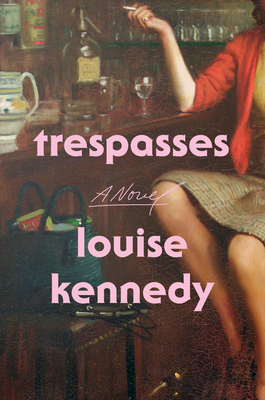
Review 2302: Trespasses

I read somewhere that Kennedy inserted the romance into Trespasses to make the political and social environment of her childhood palatable to readers. If that is so, I personally found the political and social parts more interesting, although the romance seems to take over the novel. However, the addition of the romance helped create the extremely touching ending.

Cushla is a Catholic schoolteacher who helps out at her brother’s pub in 1970’s Northern Ireland. One day Michael Agnew comes into the pub. He is nearly twice as old as she is, a Protestant, married, and a lawyer. She is immediately attracted to him even after she finds out he’s known as a womanizer. Soon he invites her to teach a group of his friends Irish, which leads to an affair.

At school, the children pick on one of her students, an eight-year-old named Davy McGeown, who is poor and who has a Catholic father and a Protestant mother. The family is threatened at home, and soon after Davy’s father finally gets a job, he is beaten mercilessly and left a cripple. Even the principal of the school treats Davy and the family badly, and there are hints of potential child abuse in the attentions toward Davy from the local priest. Cushla begins trying to help out Davy and his family, including his sullen older brother, Tommy.

Although Cushla’s family has successfully stayed out of the internecine conflict and serves people of both religions at the pub, things begin to change for them.

For quite a while that I was reading this novel, I was only mildly interested in the main story line but fascinated with the other things that were going on. However, towards the end, I was completely drawn in and found the ending particularly touching.

Related Posts

Milkman

The Last September

Troubles

Review 2296: Lament for Julia

I tried to read Lament for Julia several times, but I just couldn’t do it. Taubes’s father was a psychoanalyst who believed writing is a disease and her husband disapproved of it for religious reasons, so it’s no wonder it’s quite bizarre.

Lament for Julia is a novella that takes up more than half of the NYRB edition. It is narrated by a disembodied spirit that seems to be part of and not part of a girl named Julia Klopps. Since Taubes believed that each person is a multiplicity of selves, I took it more as another self. Nothing much seemed to be happening in the novella except Julia growing up and the second self obsessing about her, but I didn’t really find any of it interesting. The writing is beautiful, and the second self’s obsessions are akin to those of Humbert Humbert in Lolita. But while I found that novel fascinating, I found the novella too sexualized, too perverse, too Freudian, and too interested in dreams for my taste.

I tried reading some of the short stories, but “The Patient,” about a mental patient who lacks an identity, is told by her psychotherapist that her name is Judy Kopitz, and we seemed to be in for a rehash of Lament for Julia.

The next one was “The Sharks,” about a boy who keeps dreaming he is being eaten by sharks. (Julia also dreams of being eaten.) Nope, couldn’t do it.

I received this book from the publishers in exchange for a free and fair review.

Related Posts

Dangerous Ages

Murmur

Umbrella

Review 2291: Stories for Winter and Nights by the Fire

Here’s an appropriate book for the first day of the new year!

Stories for Winter is British Library Women Writers’ seasonal collection of 14 stories set in winter. They are arranged chronologically (sort of), starting with a story from 1902 by Edith Wharton and ending with one by Angela Carter for which a date is not given but may have been published in 1974. Most of them deal in some way with changes to society that affect women.

In “The Reckoning” (1902) by Edith Wharton, Mrs. Clement Westall has noticed a disturbing change in her husband’s behavior. He has begun lecturing on his radical views of marriage—views the couple agreed on when they married—when before he preferred not to discuss them. The problem is that Jula no longer thinks the same way—that if one of a couple finds they no longer are happy together, they should part.

In “My Fellow Travellers” (1906) by Mary Angela Dickens, Miss Lanyon tells a girl a story about why she believes in spiritual things. This story fits right into the Christmas tradition begun by Dickens’s grandfather, Charles.

In “The Woman Who Was So Tired” (1906) by Elizabeth Banks, “the little reporter” writes an article about a poor woman supporting a large family and then becomes embarrassed when it becomes very popular. Her boss thinks she made the situation up, but that’s not exactly what’s going on.

In “A Cup of Tea” (1923) by Katherine Mansfield, Rosemary Fell thinks she’s doing a charitable act by inviting a poor woman to tea. But she soon decides she’s made a mistake, highlighting the divide between rich and poor.

In “A Motor” (1922) by Elizabeth Bibesco, Eve spots her ex-lover’s car on the street and knows he is visiting his current lover.

In “Ann Lee’s” (1926) by Elizabeth Bowen, two women visit an expensive hat store only to have a slightly disreputable man insistently interrupt their shopping.

I couldn’t really get on the same wavelength with Elizabeth in “The Snowstorm” (1935) by Violet M. McDonald. A stranger talks her into a dubious adventure even though she has only met him once and found him irritating. I couldn’t really understand what he wanted to confide in her or why he wanted to handle it the way he did or why she even agreed to go, much less what happens afterward.

“November Four/Ffair Goeaf” (1937) by Kate Roberts follows a group of Welsh workers to town for the fair, and two women also try to buy a hat, with less success than the women in “Ann Lee’s.”

“My Life with R. H. Macy” (1941) shows a different side of New York than Wharton’s story—a satiric look at Shirley Jackson’s brief employment at Macys, where the workers are so degraded that they’re known by their employee numbers rather than their names.

“The Cold” (1945) by Sylvia Townsend Warner shows how different the staff who are ill are treated from the family.

As Simon Thomas points out in the Introduction, tea is very important to the British, and it is the offer of a cup of tea that begins an acquaintance in “The Prisoner” (1947) by Elizabeth Berridge. Miss Everton offers tea to a German prisoner of war, a young man who is part of a crew digging ditches near her house.

In “The Cut Finger” (1948) by Frances Bellerby, five-year-old Julia makes an upsetting discovery when she seeks help from her mother for her cut finger.

In “The Thames Spread Out” (1959) by Elizabeth Taylor, a mistress has an adventure that leads her to reconsider her relationship with her married lover while her house is flooded by the Thames.

Frankly, I had no idea what was going on with “The Smile of Winter” (1974?) by Angela Carter except someone is depressed.

Except really for one story, I very much enjoyed this collection. I received it from the publishers in exchange for a free and fair review.

Related Posts

Stories for Christmas and the Festive Season

Good Evening, Mrs. Craven: The Wartime Stories of Mollie Panter-Downes

:Let Me Tell You

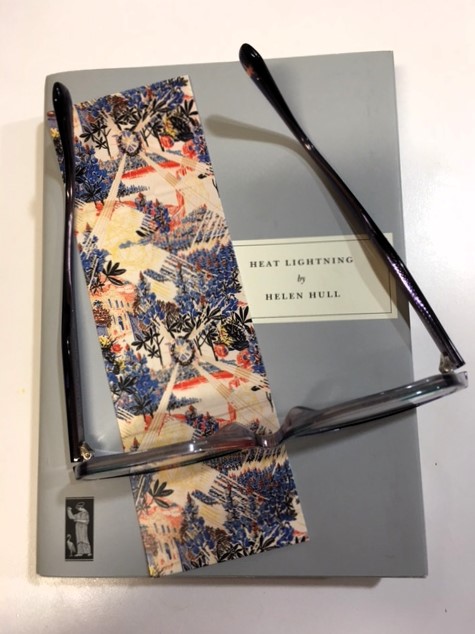
Review 2289: Heat Lightning

Amy travels back to her childhood home in Michigan from New York ostensibly to recover from surgery but really to think about the situation with her husband, Geoffrey. There is tension among her relatives. The Westovers are a wealthy family, but it is 1930. Her father Alfred’s farm machinery factory doesn’t have many orders, but his brother DeWitt made some bad investments and is asking him for help.

Amy’s cousin Tom is drinking too much and soon has a more serious problem. Her redoubtable grandmother is managing her fortune but is dealing with requests for help from Tom and DeWitt.

Amy watches everyone’s interactions carefully, because she is looking for some inspiration. She feels that her generation has no code for behavior and is trying to formulate its own. She doesn’t know how she feels about Geoff and is looking for guidance in her parents’ loving interactions.

Although a lot of this novel is about family interactions, some of the dinner conversations are about scientific discoveries that came earlier than I expected, for example, about entropy. On the other hand, the idea of race expressed in the novel is not scientifically based (or perhaps language is not carefully used). Amy, for example, considers the European immigrant working class characters to be of a different race than her family and friends. They’re Italians and Swedes.

A distressing topic for modern audiences is what the family should do with Curly, the mentally disabled gardener.

Overall, I found this a thoughtful and interesting look at family dynamics.

Related Posts

The Tree of Heaven

Family Roundabout

Family Furnishings

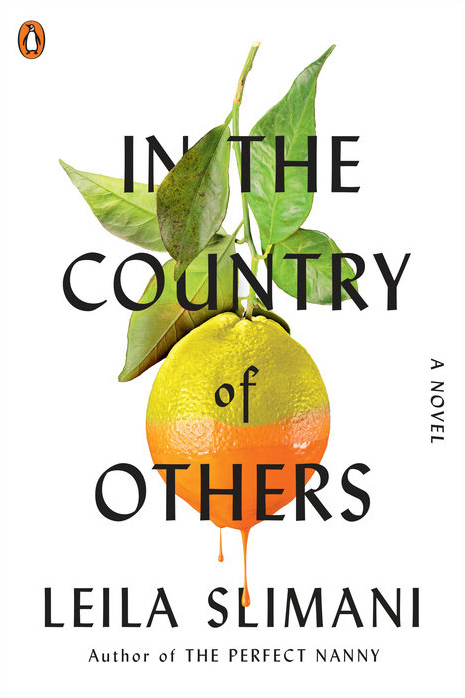
Review 2287: In the Country of Others

In the Country of Others tells the fictionalized story of Slimani’s own grandparents during a time of turmoil. During World War II, Amine Belhaj is a Moroccan soldier stationed in the Alsacian region of France. There he meets and marries his French wife Mathilde, and after the war, they go to live in Meknes, Morocco.

Mathilde finds it difficult to adjust to Moroccan life, especially once they move 15 miles out of town to live on the land Amine’s father bought and that he has dreamed of cultivating. Mathilde struggles to fight the total loss of power expected of an Arab wife. Amine can sometimes be physically abusive. Also, he works hard and spends all his time and money on the orchards. Mathilde would like to go into town and have some fun sometime. As what is considered a mixed-race couple, they are mocked on the street.

The narrative shifts mostly to her daughter Aïcha when she is a young girl starting school. Her parents send her to a Catholic school where she is mocked by her French schoolmates. She hates her kinky hair and is terrified when her parents leave her at school the first day.

As it gets into the 50s, the Moroccans move closer to war when France ignores their desire for independence. French people and homes are attacked.

This is a novel about sex and power. Although Mathilda doesn’t want Aïcha to be raised as a submissive woman, she finds herself forcing her sister-in-law Selma into marriage with an old man when Selma is deserted by her young French lover. It is also about power in terms of who will control the country.

It is an interesting story that’s told in a dispassionate way, keeping me from totally identifying with any of the characters. It’s clear toward the end that Aïcha is identifying with the native Moroccans rather than the French, even though she is half and half, but Slimani herself doesn’t seem to take any sides, either in war or in sexual politics, even though she clearly wants more for Moroccan women.

Related Posts

The Happy Marriage

Song of a Captive Bird

The Parisian

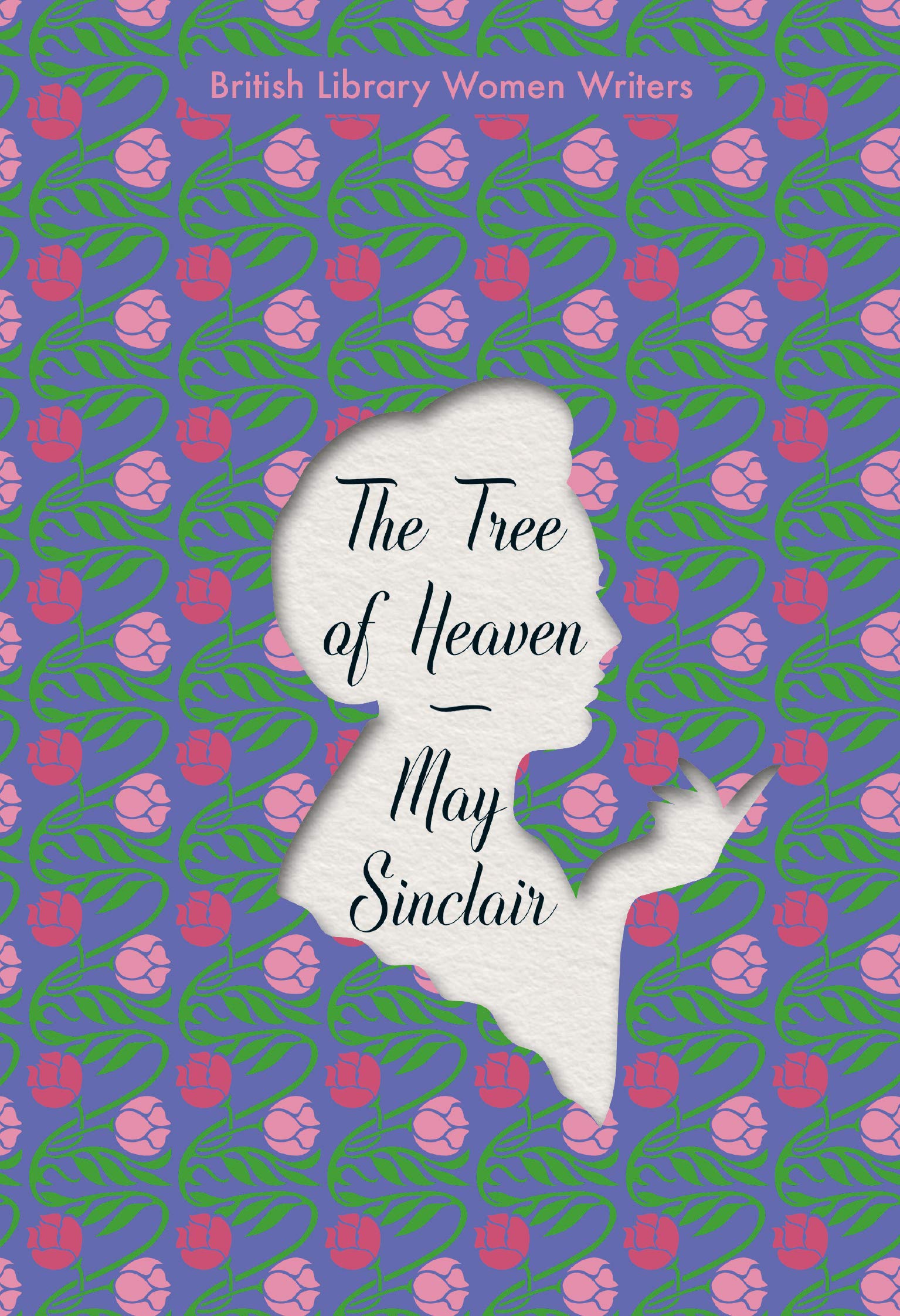
Review 2276: Classics Club Spin! The Tree of Heaven

Although the Preface states that the tree of heaven in this novel is stripped of its false identity in the end and shows itself as merely an ash—to symbolize the stripping away of Victorian sentimentality to realism—I have to say that depicting men’s deaths in World War I as glorious isn’t a bit realistic. But never mind. The book was written in 1917, so it pretty much had to.

The novel begins in the late 19th century when Anthony and Frances Harrison are young parents and have recently bought their house. One of the things Frances loves about it is the tree of heaven, which Anthony, a timber importer, states is nothing but an ash tree. The couple have four children, Dorothy, Michael, Nicky, and John. Frances is obsessed with her children, really the boys, to the point where Anthony feels left out.

This novel is about daily life in pre-war England through the microcosm of one family. Early on, as early as the first day depicted in the novel, when Michael refuses to go to a children’s birthday party, he demonstrates a fear of what he later calls the Vortex, which seems to be giving up his individuality because of the pressure of others’ excitements. As they grow, the children encounter situations which show and determine their personalities. The family takes in Veronica, the daughter of Anthony’s brother Barty and Frances’s best friend, Vera. Although Barty is family, he has become unbearable, and Vera leaves him for her long-time friend Ferdie Cameron. But Barty refuses to give her a divorce. Nicky, by then a schoolboy, becomes close to the lonely little Veronica, and it is thinking of her situation as a young man that makes him decide to marry a woman who is pregnant by another man, not for the woman but for the sake of the child.

As a young woman, Dorothy becomes involved in the suffrage movement, but doesn’t approve of some of their tactics. She too eventually backs off from the movement because of fear of the Vortex, while Michael joins a group of avant garde poets who renounce all previous poetry.

All of this leads up to World War I and the effect it has on the family and its friends. It is an interesting and well-written novel that provides a look at an ordinary (although well-off) family in the first couple of decades of the 20th century.

Related Posts

Family Roundabout

Some Do Not

They Were Counted

Review 2274: The Misses Mallett

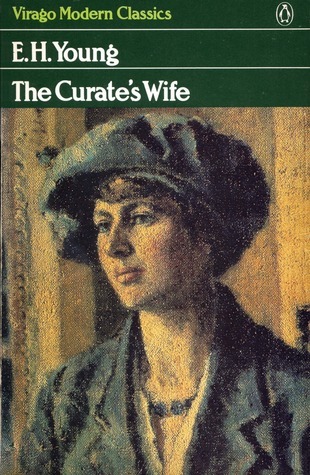
When I read that five years before she wrote this book, E. H. Young ran off with a married man, I had to wonder how much of it was autobiographical. Not that that’s exactly what happens in The Misses Mallett, but you’ll understand why I say this if you read it.

As a young woman, Rose Mallett rejects the proposal of Francis Sales. He is handsome, but she thinks he is sulky and boyish. And he is. Rose lives with her much older half sisters, whom she remembers thinking as a girl were like princesses. Now perhaps they are a little comic, but Rose doesn’t see them that way. Both are meticulously dressed in a style of twenty years before. Caroline, who likes to present a roguish effect but knows nothing about what she suggests, can be magnificent, while Sophia still looks girlish. Rose herself is beautiful in a cool, collected way, and dresses with a stylish severity.

Francis Sales goes away to Canada to learn farming and in a few years comes home with a wife, Christabel. Although Christabel says she wants to be friends, it’s clear she has some idea of Rose that is mistaken. Soon Christabel, in trying to prove her gameness at horse riding when she is actually afraid of horses, is badly injured so that she is a permanent invalid. For this incident she believes Rose had a part she did not play. Still, Rose begins a relationship with Francis that is not an affair but is more than a friendship.

When Rose is about thirty, the sisters’ niece Henrietta comes to live with them. Although the sisters never saw their brother Reginald unless he needed money, they still loved him. He has died, followed shortly by his widow, who rejected their money even though she and Henrietta were living in poverty, Henrietta having kept their lodgings by taking up the cooking for the whole house. When her mother dies, the sisters send for her.

Unfortunately, one of the first people Henrietta sees when she arrives is Francis Sales, who presents a romantic exterior riding his horse. She soon divines that Rose has a relationship with him even though they have lately broken up, and decides she will have him herself. As can be predicted, he’s not hard to get.

Because Henrietta sees Rose as a rival, she doesn’t understand the things Rose does for her. Rose has her flaws, but she isn’t the woman Christabel or Henrietta think she is. It is this misunderstanding that powers the plot of the novel.

I find Young fascinating. Her novels are not at all what I expect for her time, so early in the 20th century (this one is from 1922). Her heroines are complex and interesting. I have no idea what either of the heroines in this book see in Francis Sales, though.

Related Posts

Miss Mole

Chatterton Square

Jenny Wren

Review 2273: The Man in the High Castle

I wanted to read The Man in the High Castle for the 1962 Club, but it didn’t arrive from the library in time. Although speculative fiction is generally not my genre, this book is so well known that I was curious about it.

The novel postulates that the Axis powers won World War II. As a result, the United States was divided between Germany and Japan except for the Rocky Mountain states, which were deemed unimportant. Germany has the Eastern states and Europe and Japan has the Pacific states and Asia.

The action of most of the novel takes place in San Francisco, where a lot is going on. Frank Frink has quit his job at the factory and been convinced by his coworker to make jewelry, which his coworker is trying to sell. Mr. Cheldan, an antique dealer who specializes in pre-war American goods, very popular with Japanese businessmen, who are the only people with any money, finds out that some of his goods are counterfeit. A mysterious Swede named Mr. Beyner is coming to visit Mr. Tagomi at the Japanese Trade Mission. In the Rocky Mountain states, Julia Frink, Frank’s ex-wife, has met a young man. All of these characters incessantly consult the I Ching.

The fortunes of all these characters are going to be affected by the death of the head of Germany and the resulting factional struggle for power. A shocking book is circulating that posits that the Allies won the war. It’s banned in German areas, but in San Francisco everyone is reading it.

Almost 100 pages into this novel, I was profoundly uninterested in what was going on with all these characters. I only continued with the book because it began to be obvious who the person referred to by the title was, and I was mildly interested in that.

One of my problems with the book was the writing style, which is often very telegraphic, especially when reporting characters’ thoughts, leaving out parts of speech and using a lot of sentence fragments. I’m not familiar with Dick’s writing style, but at first I thought this was a device to show a sort of stereotyped Japanese influence, but then he used the same style for the thoughts of characters from the German-controlled areas.

I won’t tell what it is, but this is a novel with a twist. For me, novels with twists generally make everything fall into place, just a new place. However, in this case I felt the twist made the whole rest of the novel meaningless.

Related Posts

Aurorarama

To Paradise

Oryx and Crake

Review 2272: The Other Day

The Other Day is Dorothy Whipple’s charming memoir of her childhood in Blackburn, starting when she was very young until she was about 12. She clearly has a vivid memory of such things as her inability to understand when someone was teasing her, the ways she misunderstood things, and her great ideas based on childish misconceptions.

Her experiences of school were especially unfortunate. She was hopeless at mathematics, and her math teacher at her first school ridiculed her mercilessly until she “cheated” by claiming to get two answers right on a quiz. Later, she was entered into a convent school and became confused about what she was told about religion.

Most of her stories, whether happy or not, reflect a happy childhood, especially when the family later takes a cottage. Her memories reflect a lot of humor even though she seems to have been a serious child.

Related Posts

Someone at a Distance

Young Anne

Greenbanks