Review 2271: The Child and the River

Here is my lone contribution for Novellas in November, but it’s a great one!

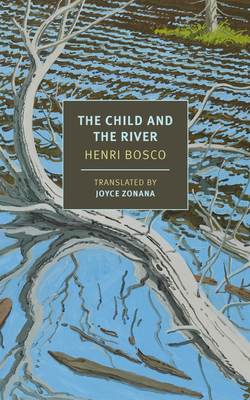
Pascalet grows up free on a farm in southern France, but his parents always tell him to stay away from the river. Of course, that means he is drawn to it, so while his parents are away and he’s in the charge of his aunt, he sneaks down to the river early in the morning.

There, he scrambles into a boat at the edge of the water and listens and looks, going into a sort of enraptured trance. Next thing he knows, his boat has drifted into the current. He is helpless, with no oars, until the boat comes aground on a small island.

On the island he spies on a gypsy camp, and there he sees a boy brought in and tied up. He waits for night, and when everyone is asleep, he cuts the boy free and they run away, stealing the gypsy’s boat. Pascalet and his new friend, Gatzo, begin living along the river.

This is a gorgeous, dreamy novella that fills your mind with the sights and even smells of the river. It is so evocative and beautifully written. The life along the river is minutely observed. It’s a lovely book.

I received this book from the publishers in exchange for a free and fair review.

Related Posts

Once Upon a River

The World My Wilderness

Dark Enchantment

Review 2269: Fanfare for Tin Trumpets

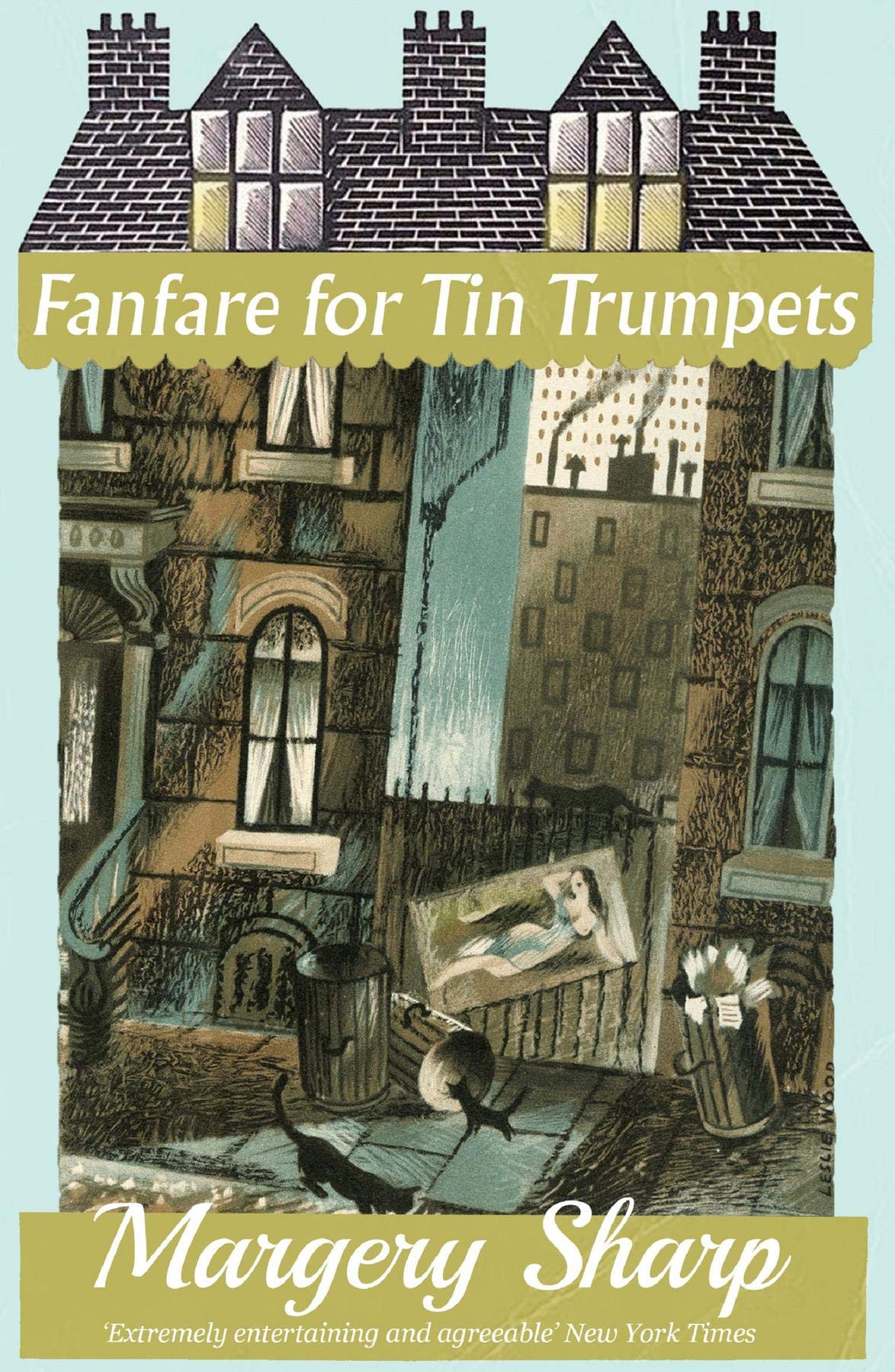
Young Alastair French is offered a place in his family’s stationers business, but he decides to take a room in northwest London with his friend Henry, who is going to be a student. Alastair has £100, and he figures he can support himself for a year while he becomes a writer.

Alastair and Henry move into an apartment building with an assortment of friendly neighbors, particularly Winnie Parker, who is always surrounded by young men. Although he starts a novel, Alastair decides to become a playwright mostly because plays are shorter. He doesn’t do much work but he does write up a scenario.

Then he meets Cressida Drury, an actress, and is immediately smitten. She returns some of his interest when she learns he is a playwright, but it’s hard to tell how much, and he didn’t think of dating when he made his budget.

This is a frothy, funny novel about youthful optimism and first love. It’s a lot of fun.

Related Posts

Harlequin House

Rhododendron Pie

The Foolish Gentlewoman

Review 2265: Mrs. Tim Carries On

Mrs. Tim Carries On is the second in the Mrs. Tim series, continued after a long break at the beginning of World War II. The narrator, Hester Christie, begins the novel as diary entries after her husband leaves for the front. Her husband’s Scottish regiment is stationed in a small Scottish town, and at first Hester feels she should leave but decides she is of more use there.

The diary is of everyday life that doesn’t seem to be that different from before the war except for war work and worry about loved ones. One of the young officers in her husband’s regiment asks her to invite Pinkie Bradshaw to stay, and Hester is confused by this because she remembers Pinkie as a girl with braces. But Pinkie turns out to be a tall and beautiful seventeen-year-old, practical, too, as she lets one young man after another know they’re just going to be friends. Pinkie stays, and Hester is happy to have her.

After Dunkirk, Tim’s regiment reappears, but without Tim, which leads to some anxiety. Otherwise, the book is calm, pushing the stiff upper lip approach with a few scares, sometimes funny, and entertaining.

Related Posts

Mrs. Tim of the Regiment

Mrs. Tim Flies Home

Mrs. Tim Gets a Job

Review 2261: Jenny Wren

This novel is called Jenny Wren after its main character, Jenny Randall, but I actually preferred her sister, Dahlia. The two sisters are the daughters of a mismatched couple, beautiful but lower-class Louisa and Randall, who is her social superior. Once her husband got over his infatuation, he criticized her actions and her manners and made himself responsible for their daughters’ education. Both have the right accents and manners, but Jenny cares more about what people think than Dahlia does and is ashamed of her mother, particularly because while their father was away at the war (WWI), Louisa had an affair with Thomas Grimshaw, a local farmer.

Now their father has died, and Louisa has sold the farm and purchased a large house in a fashionable neighborhood in Upper Radstowe to open a boarding house. The Dakins next door are friendly to the girls until they mistake Louisa for the cook. Miss Jewel, who also runs a boarding house, is hostile and on the look out for hints of scandal, such as that suggested by Thomas Grimshaw’s visits every Saturday. Louisa isn’t happy to see him, but she sold him the farm and borrowed money from him to buy the house. He’s hoping she will fail and be forced to marry him.

Jenny has dreams of meeting some young upper-class man and falling in love with him, but she sees the very existence of her mother as a threat to this “future.” She is disposed to like Edwin Cummings, their boarder, but looks down on him as worker in a shop. He is an expert on antique furniture and wants to have his own shop, and she is beginning to be friends with him when she meets the son of the local gentry, Cyril Merriman, and falls in love with him. After a misunderstanding, she lets him believe her name is Jenny Wren and is afraid to tell him who she actually is.

In the meantime, Dahlia goes from making fun of Mr. Sproat, the curate, to beginning to like him. However, the family’s second boarder, Miss Morrison, hopes to marry him.

Louisa, who makes several badly misjudged decisions based on wrong assumptions, invites her sister Sarah to stay with them. Sarah turns out to be an unpleasant woman who wants to take the boarding house over from Louisa. To do that, she decides both girls must leave the house and Louisa must marry Grimshaw, and she sets out to bring these outcomes to pass.

The novel concentrates on Jenny, because she undergoes the most personal growth. I found her to be quite foolish at times, and her attitude to her mother made it hard for me to relate to her, but she grows up in the end.

Related Posts

Chatterton Square

Miss Mole

Four Gardens

Review 2260: #ThirkellBar! Three Score and Ten

Three Score and Ten is the last novel of Angela Thirkell’s Barsetshire series, finished by a friend after her death. Could I tell the difference? Maybe.

As I’ve commented before, Thirkell’s later books don’t really have plots, but this book works toward three events—Mrs. Morland’s 70th birthday, a romance for Lord Mellings, and another romance for Sylvia Gould, whom I don’t even remember meeting before.

As usual with the later works, the novel consists of a series of tea parties and dinners, with the Barsetshire Agricultural Show also taking place. Mrs. Morland entertains her grandson Robin because his siblings have the measles, and he is exactly as I remember his father, Tony, as a boy, including behaving several years younger than his age of ten or eleven.

The birthday party gives its author the opportunity to bring in almost everyone who has ever appeared in the series. Several characters who aren’t invited appear in an indignant meeting called because of the intentions of Lord Averfordbury to tear down Wiple Terrace, home of Miss Bent and Miss Hampton and several Southbridge school teachers, and put up a factory.

Could I tell that not all of the novel was written by Thirkell? Not so much, although maybe the conversations at the birthday party are not as clever. Twenty pages, by the way, are devoted to that party, which is about 18 more than were taken for any of the many weddings that appeared in the series (although admittedly most were only mentioned) and about 15 too many.

One more issue that has little to do with the original novel. I think I’ve had occasion to comment about the earlier Moyer Bell editions (all of the post-war novels) that they had a lot of typos. I haven’t mentioned that in a while because they got better, but this book had lots of them, including ones that show the text couldn’t have even been subjected to a spell checker.

Related Posts

Love At All Ages

Close Quarters

A Double Affair

Review 2258: This Other Eden

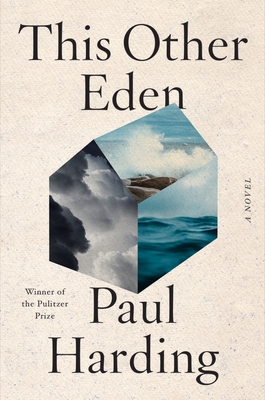
This Other Eden is based on a true event, when the State of Maine evicted the entire mixed-race community of Malaga Island, people whose forefathers had lived there since the 18th century, and placed 11 of them in a home for the feeble-minded.

It’s no coincidence that a conference on Eugenics takes place just before the committee of the Governor’s Council of the State of Maine begins considering the fate of the occupants of Apple Island, a fate the occupants have no say in. It’s the turn of the 20th century, but Benjamin Honey arrived on the island in 1793 with his pockets full of apple seeds, bringing his wife Patience.

Now four small families live on the island, the Honeys, the McDermotts, the Proverbs, and the Larks, along with the abandoned Sockalexis children, all guilty only of being dirt poor and mixed race. They live by subsistence fishing and gathering the fruits of the forest. The winters are brutal. In the spring, the schoolteacher/preacher Matthew Diamond settles in his house across the bay and rows over daily to teach the children. The mainlanders consider the islanders inbred and sub-intelligent, but Matthew Diamond knows that Esther Honey, the matriarch, can recite Shakespeare from memory, that he has to teach himself algebra to stay ahead of Emily Sockalexis, that Tabitha Honey has a gift for Latin, and Ethan Honey is a talented artist.

The fate of the islanders is already decided when the Governor’s Council arrives and starts measuring their heads with calipers and asking them idiotic “intelligence” questions. Matthew Diamond decides to try to save Ethan, so he writes a letter to his friend Thomas Hale in Enon, Massachusetts, asking him to sponsor Ethan at an art school. Soon, Ethan leaves the island.

Harding’s writing is sometimes poetic, and he likes to pursue extended metaphors. Sometimes I liked this, and other times I didn’t have the patience for it. However, I found this novel less obscure than the other two of his I have read, touching, and ultimately with a more positive ending than was probably the case with the actual inhabitants of Malaga Island.

I read this book for my Booker Prize project.

Related Posts

Enon

Tinkers

The Stars Are Fire

Review 2255: Introduction to Sally

Ever since Sally Pinner was very young, her parents have tried to keep her isolated. That’s because, although she is obedient and good, she is the most beautiful creature anyone has ever seen. Crowds gather when she goes out, and Mr. Pinner views the extra profit he makes when she helps him in his small grocery store as dishonest.

After his wife dies, Mr. Pinner is at his wit’s end trying to protect her in London, so he swaps stores with a man who lives in the middle of nowhere. This plan seems to work very well at first, most of their neighbors being widows and spinsters, but Mr. Pinner gets a shock after Christmas. He lives only ten miles from Cambridge. Term has been out, but as soon as it starts, the village fills up with young men.

Jocelyn Luke, a young man with a promising future in the sciences, spots Sally and immediately loses his head. He decides to marry her, throw up his university career, and go work in London as a writer. When Mr. Pinner hears the word “marry,” he hastily agrees, because other men have wanted something from her, but it wasn’t marriage. Soon poor Sally finds herself married to a stranger, who quickly realizes that her accent and her way of expressing herself are not going to impress his mother. So, he begins trying to get her to say her h’s. Everyone she meets has plans for Sally, but no one bothers to ask her what she wants.

This novel is played mostly for laughs, but it has some serious messages about the treatment of women and people’s view of women. A Pygmalion-like story where the girl to be transformed has no aptitude for change turns that idea on its head. Chaos ensues.

I received this book from the publisher in exchange for a free and fair review.

Related Posts

Expiation

Cluny Brown

Sally on the Rocks

Review 2254: #1962 Club! The Reivers

The Reivers is William Faulkner’s last novel, written in 1962, which I chose as my last selection for the 1962 Club. Unlike some of his more famous novels, it is told straightforwardly by its main character, Lucius Priest, as a grandfather telling a yarn about his childhood to his grandson. I believe Faulkner wrote this novel, which reminded me of Huck Finn, for pure fun.

Key to the story, which is set in 1904 when Lucius is 11, is Boon Hoggenbeck, an overgrown man-child who works for Lucius’s grandfather, referred to as Boss. Lucius’s grandparents and parents have no sooner departed for the funeral of Lucius’s other grandfather than Boon decides to take Boss’s brand new automobile and Lucius to Memphis, both sort of colluding in this misbehavior without actually discussing it. On the way there, they discover that Ned, Boss’s Black coachman, has hitched a ride with them by hiding under a tarpaulin.

In these early days of cars in Mississippi, the trip to Memphis is in itself an adventure, but things heat up when Boon delivers himself and Lucius to a whorehouse (although Lucius calls it a boarding house) where Boon has a favorite girl, Miss Corrie.

A bunch of colorful characters appear, including Otis, a boy described as having something wrong and who you don’t notice until it’s almost too late. But the story really kicks in when the miscreants learn that Ned has traded Boss’s automobile for a horse that he plans to race against another horse that already beat it twice.

I wasn’t sure this was going to be my kind of story, but mindful of the time (it is definitely not politically correct in so many ways), and I mean 1904 not 1962, it is funny and contains some philosophizing about right and wrong.

Related Posts

The Hamlet

The Town

The Mansion

Review 2253: #1962 Club! The Pumpkin Eater

I chose The Pumpkin Eater for the 1962 Club because the title seemed vaguely familiar (aside from its nursery rhyme connections) and because I don’t think I’ve read any Penelope Mortimer. I think the title is familiar because there was a reasonably popular movie of it in 1964 starring Anne Bancroft.

The unnamed narrator is a wife and mother of a large number of children, the number, names, and ages (except one) never specified. At a young age, she was already married three times, once a widow, and already had quite a few children, including three stepchildren whose father died. As the novel opens, she is recounting a discussion with her father to her psychiatrist, in which her father is trying to dissuade Jake from marrying her, basically saying she is too flaky and has too many children.

As she goes on to tell the story of her marriage, nothing improves. Her psychiatrist thinks her desire to have more children is a pathology (and also entirely her responsibility). Both her psychiatrist and her doctor are disdainful and condescending to her. Nothing seems to be thought of her husband having affairs (although she naïvely believes he is faithful for quite some time despite an early incident with a girl named Philpot).

The fact is, Jake, a screenwriter, is gone on set most of the time, most of their friends are his, the family is wealthy enough to have servants, and even the children are absorbed by nurses early and by schools later. So, she has little to occupy herself with except small children and cooking.

This book is billed as black humor. I didn’t find it funny, but I did sympathize with the narrator. Some horrendous things are done to her, and all of the men around her are manipulative. I thought the novel was bleak rather than funny.

Related Posts

The Women’s Room

The Transit of Venus

A Lady and Her Husband

Review 2251: #1962 Club! We Have Always Lived in the Castle

Twice a year, Simon of Stuck in a Book and Kaggsy of Kaggsy’s Bookish Ramblings sponsor a Read the Year club, for which they randomly pick a year in the first three-quarters of the 20th century, and participants select books published during that year to read. This time, the year is 1962, and We Have Always Lived in the Castle is my first selection for the club.

However, as usual, I have already posted reviews for three other books published in 1962:

We Have Always Lived in the Castle is a true modern gothic novel (or maybe novella—it’s very short), moving gradually but compellingly to reveal its secrets. Mary Catherine Blackwood lives with her sister Constance and their Uncle Julian in the family home, isolated from the rest of the village. We first meet Mary Catherine on one of her biweekly trips to the village for food, where she carefully plots her course to try to avoid people. However, she is mocked by the villagers, both young and old.

Slowly, we learn the first secret—that six years ago when Mary Catherine was twelve, most of her family was poisoned. Mary Catherine survived because she had been sent to bed without supper, Constance because she seldom used sugar, which had arsenic in it; Uncle Julian ate very little, so he survived but has since been feeble and muddled. Constance was tried for the crime but found not guilty. Ever since then, the girls have avoided other people.

Mary Catherine’s narrative hints that things are going to change. First, Helen Clarke arrives for tea, as she does once a week, but she brings along a friend, and Constance seems to be responding to her suggestion that she get out more. Mary Catherine worries about this, for she is very protective of Constance. Then Cousin Charles arrives. Naïve Constance accepts him, but Mary Catherine thinks he’s a bad one.

Mary Catherine is a dreamy girl who has strange compulsions and rituals, but one by one, Charles dismantles her protections around their property. We can see that the sisters are soon to be shaken from their oddly comfortable existence.

Jackson was a master at evoking an atmosphere. I think only her The Haunting of Hill House surpasses this one in power.

Related Posts

The Bird’s Nest

Hangsaman

Let Me Tell You