
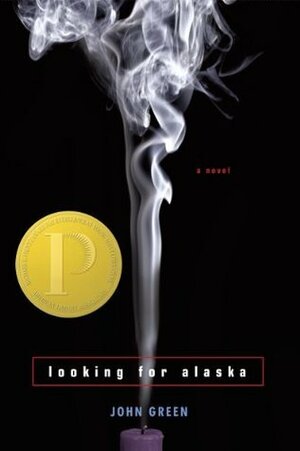
The few John Green books I’ve read are aimed at teenagers (although some are excellent adult reading) and address, fairly subtly, an issue. For Looking for Alaska, it’s death and grief.
Sixteen-year-old Miles is miserable in his school. He has no friends, and the level of education is fairly low, so he convinces his parents to send him to a boarding school in Alabama that his father attended. He is hoping this change will initiate what he calls the Great Perhaps.
He is lucky enough to pull as his roommate a stocky kid named Chip (aka The Colonel). The Colonel is at first dubious of him until some other students overdo it with the initiation for new students. The custom is to haul Miles off in the middle of the night and drop him into the lake, but because The Colonel and his friends have lately pranked them, one of them wraps Miles up in duct tape and then they drop him in the lake. He is in danger of drowning, but he manages to float himself to shore and then get the tape off.
The Colonel is outraged by this prank because it was so dangerous. He has a running feud with the Weekday Warriors, rich kids who board there but return home every weekend to their parents’ homes in Birmingham. It was some of those kids who duct-taped Miles because of his association with The Colonel.
The Colonel nicknames Miles “Pudge” because he’s so skinny and introduces him to his friends, a Japanese boy named Takumi and a girl named Alaska. Miles is immediately smitten by Alaska, a cool girl but with an unstable temperament, usually out-going and dare-devilish but sometimes hysterically unhappy.
The group pals around, teaches Miles to smoke and drink and get into trouble, but they also take studying and grades seriously, especially The Colonel, who is on a scholarship and comes from a very poor home.
Then one of the friends dies.
For once, I thought Green got a little of this wrong. Some of the friends’ reactions didn’t read true, or maybe they did and I just don’t know teenagers. For example, throughout the novel, Miles is fascinated by the last words of famous people, so much so that he reads a lot of biographies. When the friend dies, he is upset, but he regrets he didn’t get to hear the friend’s last words. He is supposedly devastated by the death and blaming himself, so that seems like a flippant reaction, but Green mentions it twice.
Otherwise, Green does his usual masterly job of gaining your sympathy for his characters and presenting them with a difficult situation. He writes well, avoiding that stereotypical “teenage voice” that so many adult authors use; has a good sense of humor; and is good at depicting believable teenagers.

 What? Me Read?