Review 2092: The Fair Jilt

I know that Aphra Behn wrote some bawdy comedies, and that’s what I was hoping The Fair Jilt would be. However, this prose work from 1688, which I read for my Classics Club list, is anything but funny.

Behn starts out with a long dissertation about foppishness, although it’s hard to say what that has to do with her story. She does not approve. Then she tells a story about a very beautiful woman named Miranda. She seems to like to pose her prose writing as if she is telling a true story with the names changed, as she did with Oroonoko.

Miranda starts out her career by flirting with all the men but never granting them favor. She lives in a sort of convent in Antwerp for women who have not made vows, but it seems to be full of her suitors. It is this kind of female aggression in her characters that has gotten Behn praise from feminists, but I’m not sure they understand her message. (Of course, she earns it for being a woman writer in the 17th century, as well as a spy.)

Miranda, who is as wealthy as she is beautiful, is living a gay and carefree life until she meets a beautiful young friar who is a prince with an unhappy past. She falls madly in love with him, but he is not interested. This fact enrages her and things go from bad to worse—for him.

Her continued career gets deeper into depravity after she marries handsome Prince Tarquin, even though he adores her. Her crimes include taking her husband’s ward’s fortune, lying, and incitement to murder.

So, you can imagine what a jolly tale this is. It even includes a man living after he is halfway decapitated. The biggest disappointment of this very unfunny work is that Miranda has a better fate than she deserves.
Related Posts

Oroonoko

The Duchess of Malfi

The Poison Bed

Review 1607: Classic Club Spin Result! Oroonoko

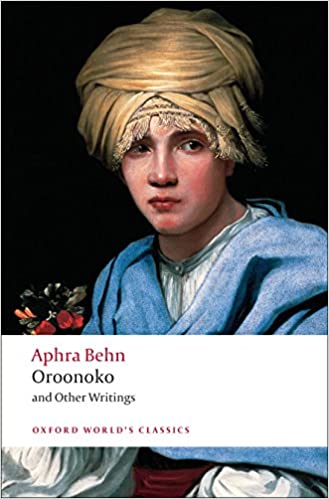
Oroonoko was the book I read for the most recent Classics Club Spin.

There are a few issues with Oroonoko, written in 1688, that might make it difficult for modern audiences. One is its acceptance of slavery (although the novel is viewed as an anti-slavery work), which in the 17th century was common. The other is its graphic violence, albeit off-stage, that has caused it to vary in popularity over time. (Apparently, even the publishers of the edition I read disagree about that, because the introduction says it was Behn’s most popular work, while the cover says it was not popular because of its violence.)

Oroonoko has been considered a novella rather than a biography, because there is no proof that such a man as Oroonoko existed. However, Behn writes the story in first person as herself, and she is known to have traveled to Suriname, where it is set, shortly before the country was ceded to the Dutch. So, you have to wonder.

Oroonoko is the prince of Coramantien, an area of present-day Ghana, the grandson of the king and a great warrior. He falls in love with a beautiful girl named Imoinda, and she becomes his betrothed. However, his grandfather sends her the veil, which means she is to join his harem, even though because of her betrothal that is a break in custom. Oroonoko must accept this or die, so he accepts it with the thought that the king cannot live long. However, the king regrets his actions and sees no way to recover the situation except if Imoinda was dead. He is unable to have her killed, though, so he sells her into slavery and tells Oroonoko she is dead.

Next, an English slave trader whom Oroonoko has sold slaves to invites him for a party. When he and his men have passed out from drink, the trader enslaves them and puts them on a ship for Suriname. It is when Oroonoko arrives there that he meets Behn and her traveling companions and they learn his tale and witness the rest of the action.

Oroonoko might be the first anti-slavery novel, although it is subtle about it, showing some of its abuses while not really commenting on the institution. Behn reveals the dastardly behavior of a series of Europeans, either slavers or owners, and contrasts it with the image she builds up of a handsome, brave, forthright black hero and his beautiful and virtuous lady. The novel was interesting, but I found what happened to Imoinda through Oroonoko’s hands distressing and the reflection of a type of thinking I did not find admirable—and the ending was just plain gruesome.

Related Posts

Merivel: A Man of His Time

Washington Black

Sugar Money