
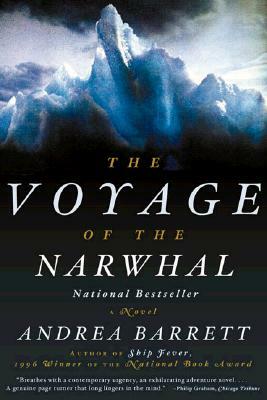
In 1855, Erasmus Wells has spent years working with the items in his father’s collection of specimens, ever since he himself returned from an ill-fated exploration in the South Pacific. The members of the expedition were mocked, but the worst thing was the acclaim given to the leader after he released his book—cut and pasted from the journals and records he confiscated at the end of the trip—including Erasmus’s—but giving them no credit.
But Erasmus almost unwillingly finds himself departing on a voyage to the Arctic, to be lead by his sister Lavinia’s young fiancé, Zeke Vorhees. Zeke was raised like a younger brother to Erasmus and his brothers. He is handsome and charismatic, but may not make good leadership material. However, Erasmus has promised Lavinia he will take care of Zeke.
And Zeke proves divisive as a leader almost from the beginning, determined to do what he wants even if it unnecessarily risks the lives of his men. He almost immediately gets on bad terms with Mr. Tyler, the sailing master, even though he should be relying on Tyler’s experience. Although the purpose of the voyage is to find out more about the Franklin expedition, Erasmus becomes worried that Zeke has other intentions.
Periodically, the novel looks back at the people left behind, particularly Alexandra, who has been hired to keep Lavinia company. She is also hired by Erasmus’s brothers to color illustrations for a book of exploration, and later begins to engrave, but she yearns to travel herself.
Barrett builds suspense as the novel moves from Erasmus’s loneliness and sense of isolation to his fears about the results of Zeke’s leadership to a sense of true peril. This is a truly fascinating novel that builds on the records of actual voyages of exploration during this period. Although Erasmus has his flaws, he is a sympathetic main character. I’ve read several really good historical novels this year, and this is one of them.


 What? Me Read?