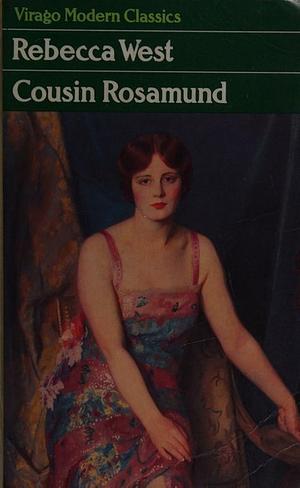
Review 2557: Cousin Rosamund

Cousin Rosamund is the third book in West’s Aubrey family series, and another was planned. I couldn’t tell when reading it, but apparently West died before finishing the second book, This Real Night, so it was finished from fragments and notes. Cousin Rosamund was assembled the same way, although West’s style was certainly captured.

The novel begins sometime after World War I. The three Aubrey girls, Rose, Mary, and Cordelia, are the only ones left of their immediate family, but they still have Nancy, their old neighbor; their beloved cousin Rosamund; and the folks at the pub on the river. Cordelia, always the odd girl out, has become less hostile since her marriage.

Cousin Rosamund comes to tell Rose and Mary that Nancy is getting married. Mary especially is upset that Nancy didn’t tell her herself, but Rosamund’s intercession, they see later, is needed so that they will not judge Oswald on sight, for he is gauche, awkward, unattractive, and a man-‘splainer. But he loves Nancy and she him, and that is all that counts.

Rose and Mary are now both successful and famous pianists, but neither is interested in marriage. Mary, in fact, seems to find the idea distasteful, although they are glad to see their friends happily married.

Inexplicably, Rosamund, who has been working as a nurse, marries one of her patients. The girls are all hurt not to be invited to the wedding, and once they meet the groom, they are horrified. His name is Nestor Ganymedios, and he is rich, extremely vulgar, ugly, and probably dishonest in his business dealings. Further, they see almost nothing of her after the marriage.

This novel is about marriage, which West examines in several incarnations. Unfortunately, it ends before we learn the explanation for Rosamund’s choice, but at least West’s intentions for the entire series are explained in the Afterword of my Penguin edition.

All of these novels are beautifully written and show a profound knowledge of music. The girls have such pure affection for the small number of people they love, yet the characters are realistically drawn.

One caveat: In this novel some characters express outdated ideas about homosexuality, and some homosexual characters in the book are not depicted positively, but it is not clear when she wrote this. The first book went to the publishers in 1956, at which point she said she planned three more, but though she finished most of the second, she seemed unable to finish this one. It ends about 1929, but her original plans were to encompass World War II.

Although it doesn’t fit the context of what I’ve discussed, I wanted to give just one quote because it’s so lucid and poetically spare. Rose has seemingly been disgusted with her long-time friend Oliver after he told her the story of his first marriage despite its end not being his fault. She is really fighting a battle with herself. She enters a room where he is.

He came toward me and I became rigid with disgust, it seemed certain that I must die when he touched me, but instead, of course, I lived.

Wow.
Related Posts

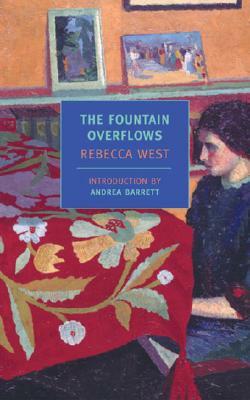
The Fountain Overflows

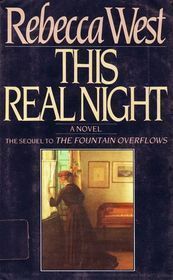
This Real Night

They Were Sisters

Review 2545: This Real Night

This Real Night is the second book in West’s Aubrey family trilogy, which starts with The Fountain Overflows. I put The Fountain Overflows on my Top Ten list for last year, and this novel is just as good.

The novel begins just after the girls’ father leaves them. He is beloved by all, but he is a gambling addict who has lost all their money many times, and when he leaves, goes with a collection of jewels he had hidden from their mother. Since he left, their mother has sold some paintings that she pretended were worthless, so they, although nowhere near well off, are comparatively comfortable.

Their mother was once a famous concert pianist, and she has trained the twins, Rose and Mary, to become pianists. Soon they will start music school. Their older sister, Cordelia, who was convinced by a teacher that she was a talented violinist, has finally realized that she is not, but she decides she wants to become an assistant in an art gallery. She begins studying art history. Their brother Richard Quin is still a schoolboy.

Their household is expanded because their Aunt Constance and beloved cousin Rosamund have moved in. Constance’s husband, although wealthy, is so stingy that they can’t support their household, as he only spends money on his spiritualism hobby.

One advantage of their father’s absence is that they can continue their friendship with Mr. Morpurgo. He had been a great supporter of their father, hiring him to be an editor of his paper, for their father was a brilliant political writer. Like all of their father’s past supporters and friends, Mr. Morpurgo broke with him, probably over a series of unpaid debts.

The novel begins with a visit from a strained, ill-looking Mr. Morpurgo, lately returned from a trip abroad. It is Richard Quin and Rosamund who figure out that their father has died, probably a suicide, but they don’t tell anyone. Rose only learns after she overhears them talking sometime later.

The family story continues relating fairly mundane events, but they are made interesting by the vibrant narration and the perceptions of this highly intelligent and gifted family. They are also very loving with each other except for Cordelia, whom Rose thinks hates them all and who definitely processes information differently than the others. For example, they all deeply love Richard Quin, who is attractive, charismatic, and kind, but Cordelia thinks he is going to be a failure.

The family faces difficulties such as the girls’ sense that people, especially men, don’t like them, the problems of Aunt Lily, whose sister is serving time for murder, and the revelation by Rose’s new professor that she has been trained wrongly for her talents. They are a family you fall in love with. The novel ends at the beginning of World War I.

Related Posts

The Fountain Overflows

Family Roundabout

The Big Music

Review 2516: The Fountain Overflows

Rebecca West based The Fountain Overflows on her chaotic family life when she was a girl. I understand it is the first of an unfinished trilogy. If so, I’m interested in reading all of it.

Rose Aubrey is a daughter of an unusual couple. Her father Piers is a writer and editor whom many consider a genius, but he is a gambler who continually impoverishes his family. He has a pattern of collecting followers or benefactors who at first seem to worship him, but eventually they break with him, usually after lending him money. However, his family adores him. Her mother is a gifted pianist, formerly a famous concert performer, who is teaching Rose and her sister Mary with the expectation that they will become concert pianists, too. Their oldest sister, Cordelia, has no talent for music but doesn’t know it. She takes up the violin. Their younger brother Richard Quin is adored by all, a toddler at the beginning of the novel.

The novel covers about ten years of the family’s life. There is plenty of incident, from Mrs. Aubrey’s struggles to keep the family financially afloat to the girls’ struggles at school because they’re considered peculiar but also because they hate wasting time at school when they could be playing piano. Cordelia finds a mentor in one of her schoolteachers who encourages her in the idea that she is talented, which Mrs. Aubrey and the other girls deplore. Rose and Mary meet poltergeist activity at a friend’s house, and the family gets involved in a murder case. Also of importance is the girls’ cousin Rosamund.

It’s difficult to summarize this novel, but this family is so interesting, brilliant, chaotic, well-intended, and right behaving. I found the novel delightful.

Related Posts

Little Women

Apricot Sky

The Pursuit of Love