Review 2664: The Bus on Thursday

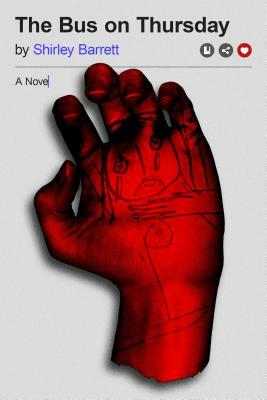
Well, this is certainly a strange book. It has been billed as a horror novel, but I think that’s misleading.

Eleanor Millet begins her story, which is related as blog entries, in a bad place. She is recovering from breast cancer after a mastectomy. She has lost her boyfriend and her job and has had to return to live with her mother. She is angry and outspoken and pretty darn funny, but we notice right away that she has poor taste in friends and men.

Her description of the path her cancer diagnosis took grabbed me right away, because last year I was called back (which in itself is fairly terrifying) for first an ultrasound mammogram and then two, count ’em, two biopsies. Luckily, I was okay, but Eleanor was not.

Now Eleanor can perhaps turn her life around. She gets her dream job—a teaching position in a very small town in the Snowy Mountains. But already she seems to be behaving a little off-kilter.

Eleanor is urgently needed because the previous teacher, Miss Barker, has disappeared without a trace. The school staff are Eleanor and Glenda, the school secretary, and the school holds all of the town elementary and middle school students up to age 14, with one boy, Ryan, who seems suspiciously older. Glenda behaves as if Eleanor has committed a crime by taking Miss Barker’s place, and Eleanor’s home used to be Miss Barker’s and has a lot of locks on the doors.

Things start out strange, with people treating Eleanor in an oddly hostile way, and two people telling her that her cancer was her own fault. The local minister tells her she had cancer because she is possessed by a demon.

This is all very strange, but Eleanor’s reactions are over the top, and she almost immediately begins drinking too much, having an inappropriate relationship with one of her students’ guardians, and behaving inappropriately with her students. She starts having bizarre dreams and soon we’re wondering about her reliability as narrator, even her sanity.

I am a critic of book blurbs, and the one on the back of my book seems particularly misleading, speaking of a “portrait of recovery and self-discovery.” Things are a lot darker than that.

Related Posts

Rush Oh!

The Bloody Chamber

Arcadia Falls

Review 2634: Restless Dolly Maunder

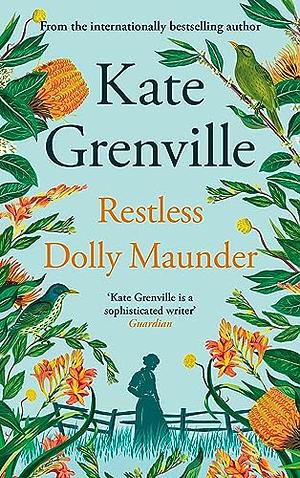
I’ve enjoyed a couple of books by Kate Grenville, but Restless Dolly Maunder seemed different, written in a stripped-down style and very matter of fact. It wasn’t until I got to the end that I realized Grenville was writing about her own grandmother. That explained things to me, because I’ve noticed the tendency in some historical fiction writers to be a little too careful when writing about people who actually lived, afraid to take liberties, maybe (while other have no trouble telling outright lies).

Dolly is born in 1831 to a hard-working farmer and a mother who married down and seems to be disappointed about it. Although Dolly is the baby of the family, she doesn’t feel any particular affection from anyone. She is very intelligent and plans to become a teacher, but her father has been waiting for her to reach the legal age to quit school, 14, as he sees no benefit in educating girls. Soon, she has to face up to the fact that if she doesn’t marry, she’ll be a spinster stuck on her father’s farm all her life.

Twice she thinks she’ll be asked by men she cares about, but she is not because she’s not Catholic in one instance or from a good enough family in the other. She waits a long time, but finally settles on Bert Russell, her only choice, really, a pleasant, outgoing handsome man whom she doesn’t really like, but he’s a hard worker.

Her anger about her lack of options follows her throughout her life, affecting her relationships with other people. It is intensified when she learns a few months after the wedding that Bert had a daughter out of wedlock with her family’s servant girl while he was courting her and that her family had to have known it.

Dolly stays with Bert, but it is her ideas that take the couple off the sheep farm and from one opportunity to another, amassing money as they go. This novel follows her through World War I, the Depression, and World War II.

I liked this novel well enough, but the entire time I was reading it, I felt as if it was the bones of a longer, more satisfying novel. We don’t really get to know any of the characters except Dolly, for example. Once I understood this was about a real person, I realized that Grenville didn’t want to play loose with her family history.

Related Posts

A Room Made of Leaves

The Secret River

Salt Creek

Review 2502: Novellas in November! Picnic at Hanging Rock

I have meant to read Picnic at Hanging Rock for years, so when I saw it on a list of short novels, I got a copy from the library for Novellas in November. It turns out I’m stretching a point with this one, though, at 204 pages, a little over the stated limit.

Let me warn you about this one. I suggest you don’t do too much poking around or read the Introduction before reading it. Even the Introduction suggests that you read it afterwards. Part of this suggestion has to do with a chapter that was removed at the suggestion of the original publishers. The Introduction to the Penguin edition summarizes this chapter, but I agree that the novel is much more powerful without it.

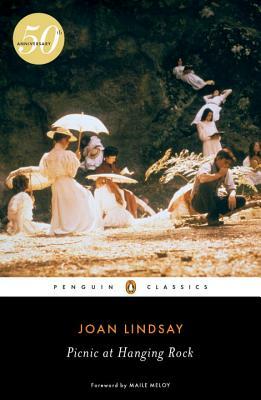
On a hot Valentines Day in 1900 Australia, most of the girls of Appleyard College for Young Ladies are bound for an outing—a picnic at Hanging Rock, an ancient local geographical and anthropological wonder. With them are three teachers and the coachman. The only student left behind is Sara, a 13-year-old orphan whom Mrs. Appleyard, the headmistress, uses as a scapegoat.

Although the girls are told to stay off the rock, after tea three senior girls ask to walk closer to it. They include Miranda, a girl loved by everyone at the school but especially by Sara. With her are her best friends, Irma, a beautiful heiress, and the brainy Marion. Edith, a younger girl who they think is a pest, tags along after them.

Although a couple of young men in a family party see them crossing a stream, no one sees them after that—or at least no one sees some of them. The girls fall asleep on a circular platform, and when they wake up very late, Miranda wanders away, seeming to hear no one’s calls. Later, Edith comes running screaming away from the rock but can’t remember anything except that she saw Miss McCraw, the mathematics teacher, running away without her skirt. By then, the party has been searching for the girls and has noticed that Miss McCraw is missing, too.

The whole countryside erupts into an uproar. On a subsequent search after the official police ones, the two young men who glimpsed the girls at the rock try searching again, and Mike Fitzhubert finds one of them barely alive. He is injured running for help, but his companion and groom, Albert Crundall, rescues them both.

Most of the novel is about the aftermath of the disappearances. This is an atmospheric and mysterious, even haunting novel that holds the attention. It’s an Australian classic.

Related Posts

The Sun Walks Down

The Secret River

A Room Made of Leaves

Review 2259: The Dry

I had some problems with the only other book I’ve read by Jane Harper, but I thought I’d try The Dry, her first and most acclaimed novel.

Aaron Falk, an Australian Federal agent, has returned to his home town for the first time in 30 years. Even though he is returning for the funeral of Luke Hadler, his childhood best friend, he probably would not have come if he hadn’t been urgently summoned by Luke’s father, Gerry.

Falk’s return is not warmly welcomed. When he was 16, one of his close friends, Ellie Deacon, was found drowned, with foul play suspected. A piece of paper with his last name on it was found in her room, and both he and his father were harassed until they left town.

The finding in the current crime is that Luke shot his son and wife and then himself over despair at the impending failure of his farm. The drought has gone on so long that many farmers have failed and along with them, most of the local businesses. The town is a shadow of its former self.

Gerry doesn’t believe his son shot his family. He wants Falk to stay a few days and investigate. Falk reluctantly agrees.

When he begins investigating, he finds that the local cop, Sergeant Raco, thinks some things were missed in the original investigation, which, since he was new in town, was conducted by the police from the nearest large town. Falk and he begin working together despite the local hostility toward Falk.

While he is at it, Falk also tries to find out what might have happened to Ellie. Are the two events related?

This novel was nicely plotted, with believable characters. The setting was so effectively described that at times I felt I could feel the heat and the town under pressure from the environment, old hostilities, and an unthinkable crime.

Related Posts

The Survivors

Truth

The Broken Shore

Review 2236: The Sun Walks Down

In 1883 Australia, the Wallace girls are at a wedding and Mathew Wallace is out working. Only six-year-old Denny and his mother are home when she sends him out to gather fuel. A huge dust storm comes up, and instead of staying where he is, he goes in the direction he thinks is home. And he is lost.

The family doesn’t realize he is lost right away, but when they do, Mathew takes off in the direction Denny went, along with Billy, his Aboriginal farmhand. Soon, almost everyone in the area is searching for Denny.

This novel doesn’t have a strong plot. Instead, it follows a mixture of characters during the search. There is Cissy, Denny’s headstrong sister, who joins the search; Constable Robert Manning, newly married, and his wife Minna; Foster, Manning’s superior officer, who ignores his trackers’ advice and follows the wrong trail; Karl and Bess Rapp, two painters who are traveling in the Australian bush looking for subjects to paint; and so on.

This is a beautifully written novel that shows insight into human nature and powerfully describes the Australian landscape. I read it for my Walter Scott prize project.

Related Posts

Homecoming

The Secret River

Salt Creek

Review 2201: Homecoming

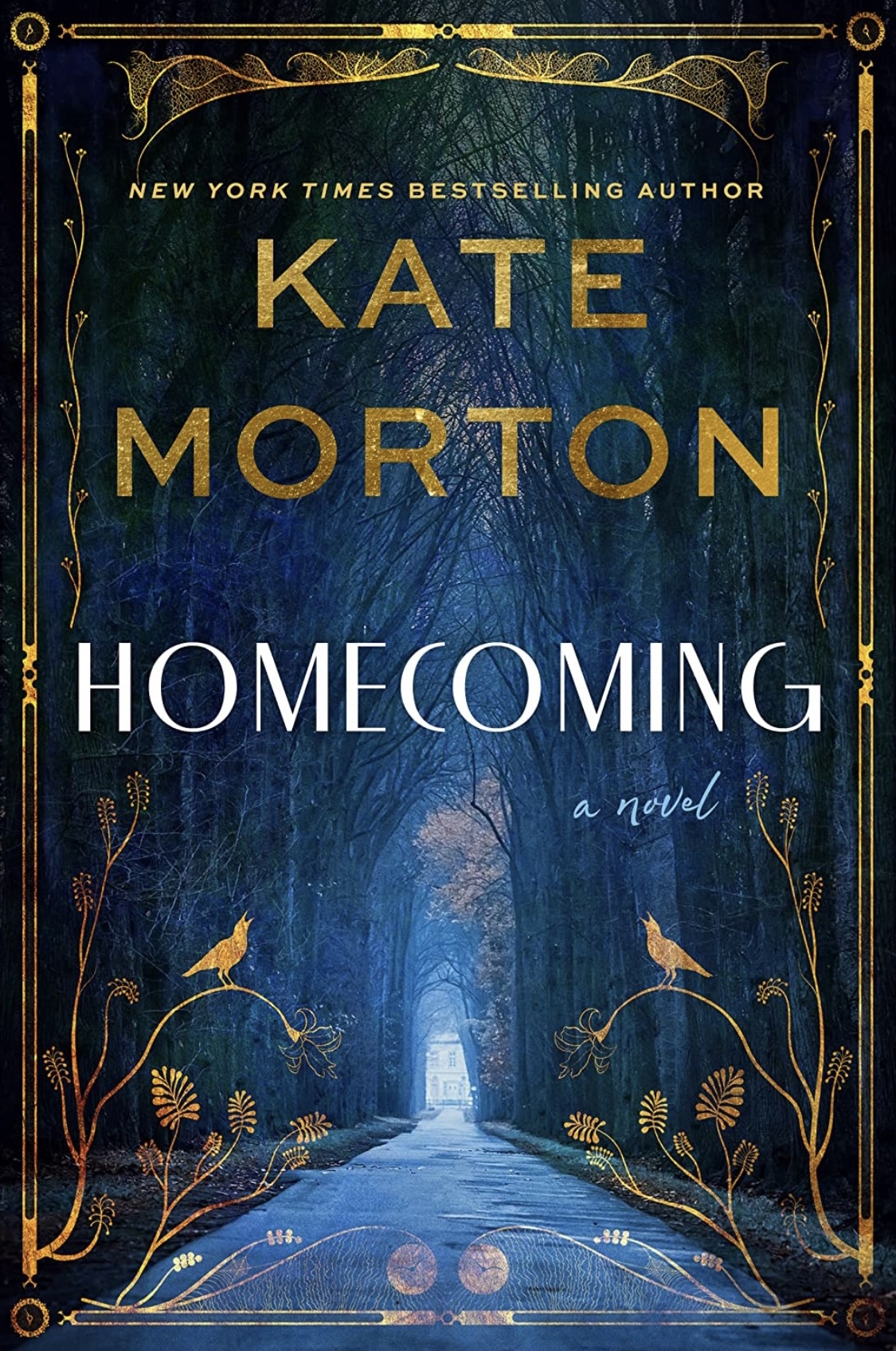
To a certain extent, you know what you’re getting with a Kate Morton novel—a split time-frame story with family secrets revealed. The storytelling is always very well done, and more often than not, the story is engrossing. Homecoming is no different.

On Christmas Eve, 1959, Percy Summers is riding past Halcyon, the estate in the Adelaide Hills recently purchased by Thomas Turner, when he trespasses to water his horse in the river. By the river, he finds Isabel Turner and her children apparently asleep near the remains of a picnic. Only they’re not asleep. In his shock, Percy fails to notice a basket hanging from a tree—where Isabel put her baby. Later, everyone realizes the baby is missing.

In 2018 London, Jess is summoned home to Sydney because her grandmother, Nora Turner-Bridges, is seriously ill, having fallen while trying to go up to her attic. Jess, a currently unemployed journalist, has not been home in 20 years, but it was her grandmother who raised her.

Nora has told Jess stories about her brother Thomas, but it is not until she begins looking through Nora’s things for a letter Nora’s caregiver said upset her that she learns Thomas had a house in the Adelaide Hills where his family was killed when he was abroad. Jess can’t believe Nora never told her about this. In fact, she finds a book about the crime in Nora’s bedroom.

While Jess investigates the old crime, we learn about it from flashes back and from the book she found, which is contained in its entirety. For me, this was an unfortunate choice that made the slow unwrapping of the plot more artificial, particularly because it is far too short to really be a book. However, I got used to it.

There were several big mysteries wrapped within this crime, but the two big ones are, what happened to the baby? and did Isabel poison her family? I was fairly sure I knew the answers to both early on, but I didn’t guess the details or complications. In all, I felt that this novel, while not my absolute favorite of Morton’s books, was right up there.

Related Posts

The Forgotten Garden

The Secret Keeper

The Lake House

Review 2133: The Secret River

Kate Grenville started out writing a nonfiction account of her great-great-great grandfather’s family, but she ended up with too many questions. So, she fictionalized their story and combined it with what she had read about other Australian pioneers.

William Thornhill grows up in poverty in early 19th century London, but he sees a future for himself when Mr. Middleton, a waterman on the Thames, takes him on as an apprentice. William has grown up with Sal Middleton, his boss’s daughter, and he marries her shortly after he reaches journeyman status. However, things go wrong for Middleton, and William finds his livelihood is much more difficult to earn. Finally, he is caught stealing part of a cargo to support his family.

Although he is sentenced to death for theft, William manages to get his sentence reduced to transportation, and his family is allowed to accompany him. In Australia, although life is primitive, it doesn’t take him long to realize he can make money there and maybe return to England in style. However, when he takes a job ferrying goods from a river where settlers have begun farming, he sees a piece of land he can own by settling on it.

Now begins a conflict, with William realizing he will never return to England and Sal only wanting to return. The conflict is heightened when some of the settlers have clashes with the aboriginal people.

I was certainly engaged by this novel, and I felt that Grenville did a good job of portraying the conflicts with the aborigines. Grenville’s characters are flawed but totally believable. She looks unflinchingly at Australia’s brutal origin story, which is very similar to our own.

Related Posts

A Room Made of Leaves

Salt Creek

Rush Oh!

Review 2019: Edith Trilogy Read-Along: Cold Light

In this third book of Moorhouse’s Edith trilogy, the League of Nations having closed and Edith’s hopes of getting a job with the United Nations dashed, Edith has decided to move back to Australia, thinking that Canberra will “snap her up.” (I was surprised that she thought this after her last job hunt in Australia.) Her husband Ambrose has managed to get a position with the British but is not happy to be there, and Edith has been back for months without any job offers. Her lack of an official title at the League, its spectacular failure, and sexism seem to be getting in her way.

Then her brother Frederick, who disappeared from the family 20 years ago, makes himself known to her. He is an organizer for the Communist party, a true believer. Talk is building up about banning the party in Australia, and in the U. S., Senator McCarthy is building power around this issue, so Edith isn’t sure what to do about Frederick and his girlfriend Janice.

Edith learns that the Canberra government isn’t hiring married women, but she eventually gets a temporary position organizing a conference about the design of the city. When the opportunity comes, she and Ambrose have just decided to move back to Europe and she thinks the job is beneath her, but by the end of the interview, she is sucked in. Of course, she uses this position to shoehorn herself into more opportunity.

I have been ambivalent about this series. At times, it is really interesting, while at other times it dwells too long on the details of some subject. For, continuing on with the theme of Edith being involved in world events of her time, there is a great deal of discussion of Communism from both sides as well as the ramifications of passing a law against it. (Edith has a long discussion with her old mentor, John Latham, a supreme court judge, who she believes voted wrongly on the issue, and it turns tedious.) The novel also deals with uranium and nuclear bombs vs. nuclear energy, as Edith makes herself an expert on uranium.

My other problem is that Edith has always seemed unconvincing to me as a woman. She is a bold and impulsive woman, true, but some of the things she does and the way she thinks don’t seem like the actions and thoughts of any woman I can imagine.

On a related issue, I was kind of fascinated by the cross-dressing aspect of her relationship to Ambrose and the emphasis on it—because there is no such emphasis on any of her other husbands. Robert is around for a millisecond, and she rarely mentions Richard after she marries him except in terms of his kids—not until she decides to leave him, at which point suddenly a chapter is devoted to their relationship.

Thinking about what Moorhouse chooses to talk about and what he ignores brought me to this conclusion. Authors often invest themselves in their characters by imagining that they are their main character (or some other). For a long time, I thought Moorhouse saw himself as Ambrose, but I finally decided that either he saw himself as both Ambrose and Edith herself or perhaps simply as Edith.

Related Posts

Dark Palace

Grand Days

A Town Like Alice

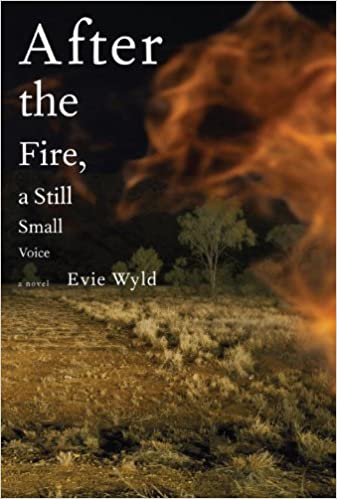
Review 1882: After the Fire, A Still Small Voice

After the Fire, A Still Small Voice is Evie Wyld’s debut novel about how family trauma can pass down the generations. In alternate chapters, it follows Frank Collard in the present time and Leon 40 years earlier. Maybe I was dense, but it took me a while to realize that Leon is Frank’s father.

Frank has just split up with his girlfriend when he decides to restart his life. He leaves Canberra and drives to a shack on the eastern coast that his grandparents purchased years ago and where he spent holidays as a boy. He gets an occasional job loading boats. It’s a primitive life, and the loneliness starts to get to him.

Leon trains under his father to be a pastry chef and takes over the bakery after his father, in gratitude for the country that took in himself and his wife, World War II Jewish refugees, volunteers for the Korean War. Leon’s father returns damaged, unable to work, so his parents leave Leon, ending up in the beach shack. Then Leon is conscripted for Vietnam and has his own damaging experiences.

I can’t come up with the reference for this, but I remember several years ago reading a post by someone complaining about women writing like men. The implication was that they were doing so to be taken more seriously by male editors and publishers. In particular, Evie Wyld’s All the Birds, Singing was mentioned with the remark that you didn’t even know if the main character was male or female for some time. I didn’t agree that (1) just because you don’t know the sex of the main character means that the author is writing like a man (look at The Towers of Trebizond) or (2) Wyld was writing like a man in All the Birds, Singing. I certainly didn’t have that impression. However, the feel of After the Fire, a Still Small Voice is very masculine, which makes sense with her male protagonists.

The only other observation I have about the novel is that it seemed a bit all over the place for me. Perhaps this is because of my initial confusion about the relationship between the two main characters. I guess I wasn’t paying attention to last names, and Leon’s isn’t mentioned right away. In any case, for a long time I wondered where the novel was going. Also, I didn’t much like either Frank or Leon, although Leon was okay until Vietnam. But Frank’s problem isn’t really explained, and he has major anger issues.

Related Posts

All the Birds, Singing

The Bass Rock

The Towers of Trebizond

Review 1865: Truth

Of the Peter Temple novels I’ve read, Truth strikes me as the most hard-boiled. It has witty dialogue but not the lightness of some of the others. The ending is lighter but also cynical.

Stephen Villani has just been made the head of the Victoria Homicide Squad, and he’s already exhausted. At a brand new, very expensive condo, the body of a young girl is discovered, in her teens, maybe, and clearly having suffered abuse before her death. Villani is even more affected because she looks like his 15-year-old daughter, Lizzie, who has run away from home.

When his team begins trying to collect data from the building’s security people, they are told there was a big system outage that night because of an opening at the attached casino, so they have no camera footage and cannot tell whose key card was used to enter the condo. Also, the management is reluctant to divulge the names of the owners.

A bit later, they are called to a scene of torture and murder of two thugs in a local gang. The pressure comes down to Villani to concentrate on this crime and drop the investigation of the girl’s murder, but Villani is not willing to do that.

Besides pressures at work, Villani has other troubles. A huge forest fire is threatening his father’s place as well as the forest he and his father planted, and he knows his father won’t evacuate. His daughter Lizzie was returned home but already ran away again. His relationship with his wife Laurie is on the skids. And he is tormented by his relationship with his father, who left him alone at a young age to take care of his younger brothers but has never shown him any affection. Finally, he has kept silent about a major crime committed by a coworker.

Temple never seems to use an unnecessary word, and here the effect is heightened by the tough, affectless cops who only seem to speak in incomplete sentences. The dialogue is witty, although I didn’t understand all of the slang. This is a complex, cynical thriller about family and politics in law enforcement.

Related Posts

The Broken Shore

White Dog

Dead Point