Review 2587: Luckier Than Most

Luckier Than Most is an autobiography by David Tomlinson, the stage and screen actor. Although I felt handicapped as an American reading this because I wasn’t familiar with many of the names he mentioned, I found it a pleasant read, and Tomlinson comes across as a good and patient person. Americans are probably most familiar with his comic work for Disney Studios, particularly in Mary Poppins or Bedknobs and Broomsticks. Although often a comic performer, he had serious stage roles as well.

Although some of his theater stories are interesting (and I noted that he rarely said a bad thing about anyone and was just as likely to say nice things about a crew member or understudy as he is about a star), I found most interesting his recollections of his childhood. Although fond of his mother, he and his brothers were terrified of their father, who was not affectionate and had a terrible temper. His father disliked David and told him he wasn’t going to amount to anything. He was hiding a big secret, hinted at from near the beginning of the book but not hard to guess, even though David and his brothers didn’t discover it until they were adults.

Later on, with David’s success and again with his discovery to CST (what the brothers called their father) that they knew his secret, David’s relationship to his father improved. CST even admitted that he had misjudged him.

The book is also interesting because of its light, well-intentioned stories about well-known figures. It was surprising, for example, to learn that Peter Sellers needed people around him all the times because he was an insomniac and had no hobbies or other resources for his spare time. The only person Tomlinson said anything negative about was the actor Jack Lord, who played in the original Hawaii Five-O.

If you want a book that dishes the dirt, this isn’t it, but if you want a nice, light read, it is.

I received this book from the publisher in exchange for a free and fair review.
Related Posts

Life Itself

In Pieces

Merry Hall

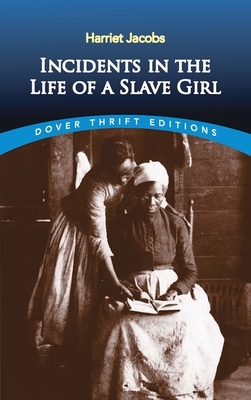
Review 2565: Classics Club Spin Result! Incidents in the Life of a Slave Girl

I pulled this book for the Classics Club spin, and I’m very happy to have done so. Because of the state of my reading right now, I was hoping for a short one, and this book is only 144 pages (albeit of very small type). It’s one of the few short works left on my Classics Club list.

The autobiography was written in the 1850s about events earlier than that and published in 1861. Although by then Jacobs was free, she wrote it under the pseudonym of Linda Brent, probably to protect others.

Linda had a fairly cheerful childhood, because she was owned by a kind woman who had promised to set her grandmother free. However, on the woman’s death, her slaves were seized as assets because she owed money, and Linda and her brother William ended up in the home of Dr. Flint, a relative. Linda’s grandmother was not freed and was also owed $300 by her mistress but never got it.

Jacobs recounts many instances of brutality on the part of slave owners, but her own troubles began when she reached puberty and Dr. Flint began relentlessly pressing her, trying to get her to have sex. Essentially out of desperation, she succumbed to another white man who she liked better and had two children by him. He, Mr. Sands, tried to buy her and her children several times, but Dr. Flint refused to sell them.

Eventually, Jacobs tried to escape, and the events of her escape, which took years, are the most harrowing in the book. Even after she escaped, she was in danger of being snatched back because of the Fugitive Slave Act, and Dr. Flint didn’t stop trying to find her until he died.

I thought this book was interesting, although at times it had very religious overtones, applied to events that she thought would make her look bad. But, after all, part of her purpose was to educate people against slavery, and she didn’t want her audience to turn against her. Frankly, she does little to deserve that (mostly, she feels she sinned by sleeping with Mr. Sands), but I can see why in that time she would worry about it.

For some reason, although I had sympathy for Linda’s really horrible troubles, I didn’t get as involved with this book as I might have expected. I’m not sure why.

Related Posts

The Underground Railroad

Booth

Beloved

Review 2156: #1940 Club! The Big Sea

I know nothing about Langston Hughes except he was a Black poet, novelist, and playwright associated with the Harlem Renaissance. For the 1940 Club, I thought it would be interesting to read The Big Sea, his autobiography.

Hughes had a pretty interesting life. Although he was in some ways from distinguished stock and his father was wealthy, his parents split up when he was young and he was very poor for much of his life.

Hughes’s parents split for good after his father took the family to Mexico, and almost immediately there was a big earthquake, so his mother took Langston and left. He was raised mostly by his grandmother in Lawrence, Kansas, while his mother traveled here and there trying to make a living. When his grandmother died, he went to some of her friends, rejoining his mother and stepfather as he got older.

Race is a major theme of Hughes’s life. Most of it was during the Great Migration, so housing for Black people was very expensive and scarce. I didn’t realize that at the time Jim Crow laws were all over the United States, not just in the South. The famous Cotton Club in Harlem, for example, was, as he put it, for white people and gangsters.

Hughes’s book opens when, after a year at Columbia University, he signs on with a freighter as a mess boy. He is excited to set foot in Africa, which he sees as a sort of spiritual home. But he is astonished to find that the Africans don’t consider him, a light-skinned man, to be Black.

Hughes seemed to have no fear and went his own way much of the time, traveling fearlessly, quitting good jobs because he didn’t like them and taking menial ones, splitting from a mentor. The book is interesting, written mostly as a series of anecdotes, but it does not tell much about his personal life. That is, it tells what he does but not much about how he feels or anything about very personal subjects. For example, late in the book, he has a break with Zora Neale Hurston that at least partially has to do with a woman he’s seeing (and partially about differences around a play they wrote together), but he does not otherwise mention this woman or any romantic life.

A few chapters about the Harlem Renaissances are a little boring, just mentioning lots of names, many of which mean nothing to us anymore. Here, he is often too general. For example, he recalls a party where amusing stories were told about the Queen of Romania. Of course, we want to know what they are, but he doesn’t tell us.

Considering when the book was written, there are lots of terms used that for our times are cringe-worthy, especially the constant use of “Negro.” He explains why “Black” (which became more socially acceptable during the 70’s) was not acceptable at the time.

I enjoyed most of this novel, but sometimes the descriptions of things that were popular then, some events, and the wording of things made me squirm. It just reads as very outdated.

Related Posts

The Warmth of Other Suns: The Epic Story of America’s Great Migration

I Know Why the Caged Bird Sings

The Yellow House

Review 1383: Educated

Educated is Tara Westover’s memoir about being raised by a bipolar, survivalist fundamentalist Mormon father and his subservient wife in the depths of rural Idaho. Westover and her younger siblings were home-schooled after her father’s paranoia led him to withdraw his children from school. This home schooling was something I have feared for many home-schooled children when their education is not supervised. Their mother began by trying to have school each day, but their father insisted on dragging the kids out to his junkyard to work. Finally, their mother settled for teaching them to read, and the only educated children in the family became so by their own efforts.

Westover’s father did not observe any work safety practices in the junkyard. Since he didn’t believe in medical care except for his wife’s herbal remedies, some accidents resulted in severe injuries for his children and himself.

Aside from Westover’s difficulties in getting a formal education, this book is more about the toll it took for her to go against her family’s teachings enough to do it—a woman’s place being in the home. Even more so, it is about her struggle with her own view of herself, especially after her sister asks her to support her when she tells the family that her brother Shawn is abusive. Westover must figure out who she is in the absence of her family. She must re-examine her own past to learn the lessons about her family—that her mother put her subservience to her father before the safety of their children; that their father would rather disown one child than face the reality of another’s abusive nature, and that some of her siblings will turn against her, too; even that most of her father’s ideas are actually not true.

This is an amazing and enthralling book. Westover’s journey from a college student who never heard of the Holocaust to a doctorate in history and a commensurate growth in self-awareness is inspiring.

Related Posts

Red Water

The 19th Wife

Open: An Autobiography


Review 1339: In Pieces

Cover for In PiecesI don’t normally read celebrity biographies or memoirs or, for that matter, very many autobiographies at all, because I don’t expect them to be truthful. Or let’s just say, I expect them to leave a lot out. Also, I’m not interested in celebrities so much as literary or historical figures. That being said, I was struck by how forthcoming Sally Field seemed in an interview, so when I saw In Pieces at the library, I decided to read it.

Field talks of a lifelong battle between what she needed to do for herself and what she needed to do for other people. The roots of her problems and her lack of confidence in herself seem to lie in the sexual abuse she underwent throughout her childhood at the hands of her stepfather and her mother’s reaction when she told her. Because of that, she learned to separate herself from her emotional life and only connected with it when she was acting.

Also interesting is her struggle to get herself taken seriously after her role in The Flying Nun. This problem haunted her career, even after she took on some difficult parts.

I found this an affecting and interesting book. It is well written and involving.

Related Posts

Open: An Autobiography

Giving Up the Ghost

Wild