
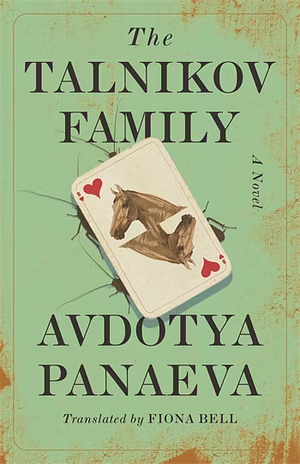
When The Talnikov Family was published in 1848, it stirred up quite the kerfuffle with its tale of an abusive family. In fact, it was suppressed. This novel is largely modeled on Panaeva’s own upbringing.
Natasha is part of a large family whose parents don’t pay attention to their many children except to abuse them verbally and physically. Natasha especially seems to be a target of her mother. The household also includes aunts—their father’s sisters—some of whom spy on each other and the children. When one of the boys goes to work for his uncle, his uncle seems to feel it’s his duty to beat him. And their mother hires a governess based on how strict she is.
The family seems to be upper class, but the girls are always cutting down clothing from the adult women or are padding out shoes that are adult sizes. They are poorly fed, because the governess likes to withhold food as punishment.
There isn’t much of a plot to this novel, just stories of superstition and mistreatment throughout the family. The novel doesn’t really have much of an arc, either, just recounts one appalling event after another, but it apparently began debates about such topics as gender, sexuality, and revolution.
Panaeva became a major force in the Russian literary world, running a literary journal that published works of the likes of Dostoevsky, Turgenev, and Tolstoy.

