Review 2646: #NovNov25! The Sweet Dove Died

It’s November, so it’s time for another yearly event, Novellas in November. I’ll start out this post with a recap of the novella reading I did during the year and finish with my first review. Since the beginning of the year, I’ve been tagging books with the word “novella” so that I don’t have to look at the page count for each. I think that since last year’s event, I have read quite a few more novellas than usual, and at least two that I read about during the event.

Novellas Read So Far This Year

Here are the novellas I have read up to this point, not counting the ones I am reviewing for this event, 20 of them!

I know that some people are counting short nonfiction, but I am not, and anyway, that would only add one more book to this list.

My Review
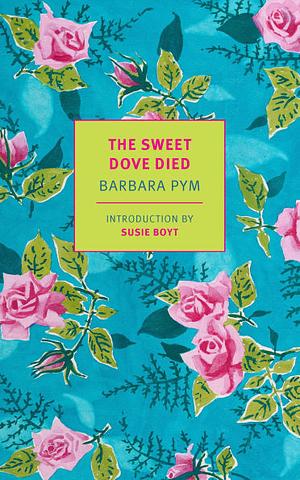
I decided to include this book as the first one for Novellas in November even though it is a few pages too long at 210. It is a book that wasn’t published for some years after it was written, during a time when Pym was considered past her prime before being rediscovered, and in its subtle way, it’s a little darker than she is known for.

Humphrey Boyce and his nephew James meet Leonora Eyre at a book auction when she nearly faints after a successful bid. Leonora is an elegant woman of a certain age, the kind then considered fragile. (I don’t think we have any of those anymore.) She is single and can be cold, and she is definitely snobbish, but then so are James and Humphrey. Both James and Humphrey are attracted to her, but although she is closer in age to Humphrey, who is in his 60s, she prefers James, in his 20s. (We know Leonora is “of a certain age,” but exactly how old is hard to say. Middle age came earlier even as recently as the 1960s.)

James is comfortable with Leonora, but there is no hint that he feels romantic about her, whereas when Leonora learns he has a girlfriend in the country, Phoebe, she sets to work to drive her away. While he is on a buying trip in Europe, she boots out her old lady tenant and moves his things into the attic apartment in her house, even taking some of them to decorate her own rooms. But he returns with an even more dangerous friend, an American named Ned. In the meantime, Humphrey is competing with James.

James is sweet-tempered and naïve, so he worries about hurting Leonora’s feelings, but she seems to me like an attractive spider. It’s ironic that she disdains her friend Meg for a similar relationship with a young gay man named Colin.

This novel is insightful into human behavior and slightly biting. It contrasts the new behaviors and mores of the young with the much more formal manners of the older characters. In fact, from the first few sentences, when stodgy Humphrey remarks that a book sale is no place for a lady, I wondered if I was in 1867 instead of 1967.

I received this novel from the publisher in exchange for a free and fair review.
Related Posts

Excellent Women

A Very Private Eye

The Camomile

Review 2570: #1952 Club! Excellent Women

Entry #2 for the 1952 Club!

By “excellent women,” Pym seems to mean a type of English spinsters who occupy themselves with charity events and helping others, dress drably, and are taken for granted by men. That’s what Mildred Lathbury seems to think she is. She’s a clergyman’s daughter of limited means, mild-mannered and religious but observant of others’ characters while not wishing them any harm. In Excellent Women, she gets a surprising amount of attention from men, but then she’s always picking up after them.

Mildred lives upstairs of a vacant flat, and she’s curious about what her new neighbors will be like. She knows they’re named the Napiers by the sign at the doorbell. She meets Helena Napier on page 2, a young, stylish woman, and sees her around with a man, whom she assumes is her husband, Rockingham (known as Rocky). But he is not. He is Everard Bone, an anthropologist, and he and Helena, also an anthropologist, are writing a paper together. Rocky is off serving in Italy.

Mildred is good friends with Julian Malory, the vicar of her rather high church, and his sister Winifred. It is the expectation of several characters in the book that Julian will marry Mildred, but she doesn’t seem to expect it. Or does she? It’s hard to tell. Certainly, he is very friendly with her, but she thinks he is not the marrying kind.

Mildred meets Everard before she meets Rocky. Although he seems not to notice her at first, after a while he begins seeking her out. He is abrupt and serious, and she doesn’t think she likes him. Or does she? It’s hard to tell.

Once he shows up, Rocky is utterly charming and handsome. He is very friendly to Mildred and keeps popping up for tea. Mildred senses friction in the Napier home—well, she can hear them arguing. Rocky does all the cooking and cleaning in their home, because Helena is completely undomesticated. (She sounds like my kind of gal, even though she isn’t depicted particularly positively.) Mildred distrusts Rocky’s charm. She understands from Everard that Helena thinks she’s in love with him (Everard).

It being post-war London, it is still hard to find a place to live, so the Malorys decide to lease their upper floor. Soon, it is taken by Mrs. Gray, a beautiful clergyman’s widow. Mildred finds both Julian and Winifred transfixed by her, so she steers clear. It’s pretty evident what Mrs. Gray thinks Julian’s fate should be.

Mildred isn’t at all liberated. She is constantly cleaning up after men or doing ridiculously involved favors for Rocky and Helena, and all take her for granted. Yet, this is a lively, amusing social comedy. It is also a tale of the rapidly disappearing lives of upper- and middle-class English people.

Related Posts

The Camomile

Alice

My Brilliant Career

Review 1392: A Very Private Eye

I am not much for reading letters and diaries, because I like story telling, even in nonfiction, rather than glimpses of a life. So, A Very Private Eye, a collection of Barbara Pym’s diary entries and letters, was probably not the best choice for me. Still, a good friend gave me the book, so I decided to read it.

The book was both worse and better than I expected. It begins with Pym’s diary entries as she starts Oxford. In no time, she has embroiled herself with Henry Harvey, who treats her shamefully. Unfortunately, instead of telling him to bugger off like he deserves, she records her heart-rendings, which continue for years.

Next comes a series of letters to Harvey and his wife, and to other friends. I found the letters to the Harveys excruciating. She gives herself the identity of the spinster, Miss Pym, and writes about herself in the third person in a false, jokey tone with constant reminders of her single status. Very obvious. I would think the wife would have been wary.

I was just about to give up on her at around 100 pages in, when the book gets into the war and becomes much more interesting. Similarly, it gets more interesting as she ages, although she refers to a lot of people whose role in her life is not explained. (That would have been helpful, although each section begins with an explanatory introduction by the editors.)

She went through about ten years when no one would publish her books because they were no longer thought to be marketable. Then two prominent literary figures independently listed her as one of Britain’s most underrated authors. Her next books were published, and she was eventually shortlisted for the Booker Prize. I felt it was sad that this happened for her just a few years before she died.

Related Posts

I Know Why the Caged Bird Sings

West with the Night

The Talented Miss Highsmith