Review 2648: #ReadingAusten25! Persuasion

Persuasion is a reread and re-review for me, and I see that my original post works just as well as it did before for a general review. So, I was trying to think of a topic I could discuss, and I decided to focus on its villains.

Maybe “villains” is too strong a word for this novel. The only outright villain in Austen that I can think of now is Mr. Wickham in Pride and Prejudice. But certainly Austen’s work features selfish people, people who wish ill to others, and even people who actively work against others. It strikes me that, although many of these characters are comic, they are less comic as she goes on. Is it my imagination, or are there also more of them?

First, there’s Anne Elliot’s entire family. Her father and sister Elizabeth are cold and snobbish and care only for appearances. Neither of them thinks Anne is of any account. And Sir Walter Elliot holds this high opinion of himself despite his having recklessly outspent his income, he and his daughter refusing to retrench where it might lessen their consequence. Above all, Sir Walter felt that Frederick Wentworth was beneath Anne when she fell in love with him seven years ago.

Anne’s sister, Mary Musgrove, is a little more bearable, but she is also self-consequential, as evidenced by her disdain of the Hayters, her husband’s cousins. However, she finds Mary useful (selfishly so, but Anne wants to be useful) and although she never considers Anne’s comfort, the contrast between Anne’s life in her father’s house and the one in Mary’s, with her nearby warm and welcoming in-laws and the visits with the neighbors, is striking. Of course, Anne has to bear Mary’s whining.

Then there is Mrs. Cox, Elizabeth’s friend, a poor widow and daughter to Sir Walter’s lawyer, so of inferior station. Pretty much everyone except Sir Walter and Elizabeth understands that Mrs. Cox means to marry Sir Walter if she can. However, she isn’t actively malevolent, and the only aspect we see of her is excessive agreeableness (sycophancy?). As she is living with two such people and probably endures many humiliations, I sort of feel sorry for her.

Now, if you don’t want spoilers, skip this part, because it’s about Mr. William Elliot, the young, handsome, well-mannered relative, Sir Walter’s heir, whom Anne encounters briefly in Lyme and meets later in Bath. Everyone thinks he and Anne will make a match (except Elizabeth and Sir Walter, who think he’s after Elizabeth), but Anne has one safeguard—she has been in love with Captain Wentworth since she was 19. Also, she instinctively feels that there is something about Elliot she doesn’t understand. He turns out to be the moral equivalent of Mr. Wickham, although he doesn’t do anything as dastardly. Still, his attentions to Anne get in the way for a while of her gaining an understanding with Frederick Wentworth.

These negative characters are maybe a bit more nuanced but also more seriously depicted than equivalent characters in her other books, where they are often comic. They’re not at all funny in this book, and notice how almost all of them are related to Anne.

Austen is certainly a master at showing us people’s foibles in a way that is absolutely believable.
Related Posts

Pride and Prejudice

Northanger Abbey

Emma

Review 2632: #ReadingAusten25! Northanger Abbey

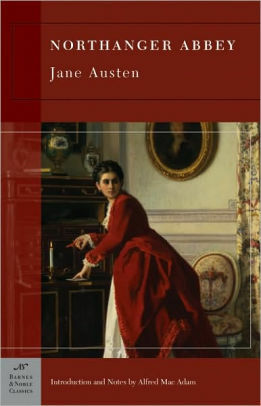
Northanger Abbey is, of course, partially Jane Austen’s spoof of Gothic novels, and her heroine, Catherine Morland, is definitely a fan of them. But before that story line kicks in, Catherine gets to visit Bath in the company of family friends, Mr. and Mrs. Allen.

Catherine is not a well-informed girl and tends to be naïve and to take people as they present themselves. The first few days at Bath go slowly, because the Allens don’t know anyone. Catherine, however, has a dance with Henry Tilney and is inclined to like him. Then Mrs. Allen meets an old school friend, Mrs. Thorpe, and Catherine immediately becomes bosom pals with Isabella Thorpe.

It seems that Catherine’s brother James is friends with Isabella’s brother John, and Isabella has set her sights on James. Despite the vaunted friendship, Isabella and John (who is obnoxious enough that even Catherine notices it) do a great deal to disrupt Catherine’s growing acquaintance with Henry Tilney and his sister Eleanor in favor of foursomes with them.

Finally, Catherine is invited to stay with Eleanor and delighted to learn the Tilneys own an old abbey. Unfortunately, Catherine lets her taste for Gothic literature carry her away.

Catherine is one of Austen’s most serious heroines, trying to navigate society and do what is right but fallen in with people whose intentions aren’t as honorable. But she is adorable, and her naïve reactions are amusing. Henry is genuinely witty and just the man to teach her to examine her assumptions a little more thoroughly. All in all, this is one of the lightest and most fun of Austen’s works.

Related Posts

Pride and Prejudice

Mansfield Park

Sense and Sensibility

Review 2453: The Square of Sevens

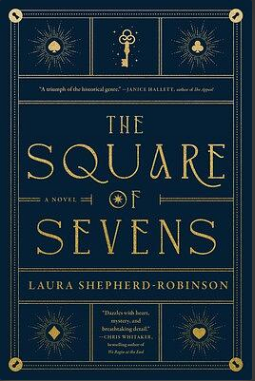
Now, this is the kind of historical novel I like. The time period seems to be well-researched, the flawed heroine is still likable, and the plot is twisty and interesting.

Red tells us about her life in 1730, when she was seven. She has been traveling all her life with her father, a Cornish cunningman named John Jory Jago. But he believes his life is in danger so is using an assumed name. He has taught her to read fortunes using the square of sevens, a technique passed down in her family. She knows nothing of her mother except she is dead.

They meet Robert Antrobus at an inn. He is an antiquarian who is interested in the square of sevens. Her father tries to get him to take Red, but he refuses. Red’s father dies, and Antrobus returns to take her home to Bath and adopt her.

Now named Rachel Antrobus, Red begins as a young woman to try to find out about her family. The pack of cards she has always used has a Latin slogan on it that is the motto of the rich and powerful De Lacey family. That family is engaged in a legal battle over the estate between most of the De Laceys and Lady Seabourne, a sister of Julius De Lacey who is estranged from the family. The dispute is about a codicil that Nicholas De Lacey left, leaving the bulk of his estate to his first grandchild. Lady Seabourne’s son is that grandchild, but the rest of the family claims that Nicholas burned the codicil.

Red learns enough about the family to believe that she is the daughter of a runaway marriage between John Jory Jago and Patience De Lacey. Then she finds the codicil in the tube that contained the document explaining the square of sevens and realizes she is the first grandchild.

Fairly early on, we see another point of view. Lazarus Darke is working for Lady Seabourne trying to find the codicil.

Someone breaks into the house, killing the housekeeper, Mrs. Fremantle, obviously looking for something. Then Mr. Antrobus dies. Red has reason to believe that her new guardian, Henry Antrobus, has stolen her inheritance from Mr. Antrobus, and then he sells the codicil. Red runs away from home to London.

Red finds herself a job telling fortunes at a show, an illegal activity. The show was once a joint enterprise between John Jory Jago and Morgan Trevthick. Red, who has thought her mother dead, finds out that Patience De Lacey is Lady Seabourne. She presents herself to her, but Lady Seabourne throws her out. So, Red decides to infiltrate the De Laceys as a fortune teller for Mirabel Tremaine, who she believes is her grandmother. But can she find the codicil? And how will she prove that she and John Jory Jago lived instead of both going over a cliff when she was a baby, as everyone believes?

Soon, Red realizes she has entered a nest of vipers. But are they all or only some of them vipers? It seems as if I have told a lot of the story, but there is much more to come.

Related Posts

The House of Fortune

The Last Confession of Thomas Hawkins

The Clockwork Girl

Review 1843: The Shape of Darkness

Newly recovered from a vicious bout of pneumonia, Agnes is still weak, but she is so poor she has returned to her job as a silhouette maker. Her mother is ailing, and she also has her nephew Cedric to support. Then she notices that her last few customers have been murdered—their throats slit.

Pearl is an 11-year-old albino who up until recently has been appearing as a ghost in her sister Myrtle’s seances. But Pearl seems to have a gift herself, so Myrtle has been advertising her as the White Sylph. Certainly something happens when she attempts to contact the spirits. She, though, doesn’t know what, because she passes out.

Agnes, worried that someone is targeting her business, decides that Pearl can help her.

Although I have been enjoying Purcell’s novels and this one is creepily Gothic, set as it is in old, dilapidated houses in Victorian Bath, it took me a while to get into it. However, I had patience that paid off. I had lots of theories about what was going on, but there’s no way I could have guessed the truth.

Related Posts

The Silent Companions

The Poison Thread

Sleep, Pale Sister

Day 433: Black Sheep

Cover for Black SheepI hadn’t read this Georgette Heyer novel in some years. Although it is not one of my absolute favorites, reading it is still a relaxing, amusing way to spend a few hours.

When Abigail Wendover is away from her home of Bath visiting her family, she hears disturbing rumors that her niece Fanny, an heiress, is being courted by a fortune hunter named Stacy Calverleigh. Returning home, she finds that her 17-year-old headstrong niece believes they are madly in love, and she is not ready to listen to arguments that Calverleigh, a much older man, has not behaved as he should. He has also worked his way into the good graces of Abigail’s foolish sister Selina.

Abigail encounters a man named Calverleigh in a hotel parlor, and she is shocked to find him neither of good looks nor address and much older than she is herself. He is further prone to uttering the most shocking remarks that unfortunately make her laugh. Soon Abigail finds that this Calverleigh is not Stacy but his uncle Miles, the black sheep of the family, who was sent away to India after a youthful scandal and has now returned. However, he is unwilling to interest himself in the situation between her niece and his nephew. He is only interested in Abigail herself.

Although Abigail knows she shouldn’t encourage his attentions and finds some of his views about family and duty shocking, he never fails to make her laugh. Soon she discovers that he is even more unsuitable a companion than she thought, for his youthful indiscretion was to run off with Fanny’s own mother, who later married Abigail’s older brother!

Abigail is one of Heyer’s more mature heroines, an intelligent, sensible woman with a sense of humor some of her relatives consider unfortunate. Of course, the journey out of the tangle her niece is in will be enjoyable and entertaining. Although this novel is not as funny as some of my favorites, it is always a pleasure to spend time with Heyer’s creations.

Day 250: The Last Detective

Cover for The Last DetectiveMy husband and I have been enjoying reruns of the older British TV series The Last Detective on Netflix, so I picked up this book. Unfortunately, I spent the first part of the novel bemoaning its lack of resemblance to the series. Since it has a strong message of lack of trust in “new” police methods and technology instead of reliance on the police’s judgment and intuition, I also couldn’t help thinking of recent cases such as that of Michael Morton, who spent 25 years in prison for murdering his wife based on very little but a scenario invented by the police and was last year found by DNA evidence to be innocent. However, since one of Lovesey’s hero’s traits is a dogged pursuit of the investigation rather than a rush to judgment, I got over that.

The body of a woman is discovered nude in a lake near Bath. Although the police aren’t certain of the cause of death, her clothes and possessions don’t turn up anywhere, and the pathologist believes she has been asphixiated. After some time, the body is identified as that of Geraldine Snoo, a soap opera star who had been written out of the plot months before.

One obvious suspect is Gregory Jackman, Gerry’s husband and a professor of English at the local college. Detective Superintendant Peter Diamond leads the investigation, which eventually seems to point toward another suspect, Dana Didrickson, a divorcee who seems to be in love with Jackman. The mystery also involves the whereabouts of letters purportedly written by Jane Austen.

My biggest problem with the novel is one of approach. It contains two long sections narrated first by Jackman and then Didrickson that are supposedly their statements to the police, an approach very similar to that used in older detective novels like The Moonstone. The Moonstone, though, had the excuse that its statements were written ones requested by the investigator to separately verify everyone’s statements of the crime. In the context of a more modern novel, I found them completely unlikely, written as they are like prose, containing too much detail, and with few questions interjected by the police.

Once the novel gets past these sections it improves a lot, though, and becomes lively and entertaining, including a chase through the Roman baths.