

Today is another review for the Literary Wives blogging club, in which we discuss the depiction of wives in fiction. If you have read the book, please participate by leaving comments on any of our blogs.
Be sure to read the reviews and comments of the other wives!
Eva of Paperback Princess
Lynn of Smoke and Mirrors
Naomi of Consumed By Ink
* * *
In the summer of 1951, young Miranda Schuyler arrives on Winthrop Island for her mother’s wedding to Hugh Fisher. There, she is immediately drawn to the young fisherman, Joseph Vargas, one of the lower class full-time population of the island that is in summer also occupied by the wealthy elite. She doesn’t care about his social position, but her new stepsister, Isobel, claims him for her own despite being engaged to someone else.
In the summer of 1930, a very young and naïve Bianca Medeiro falls madly in love with Hugh Fisher. She does not understand how he views their relative social positions and believes that having sex with him means they are spiritually married, despite his engagement to another girl.
In the summer of 1969, Miranda, now a movie star, returns to the island, where she has been a pariah since the events of 1951. Slowly, we learn what happened back then and what led to Joseph’s imprisonment for the murder of Hugh Fisher.
My Review
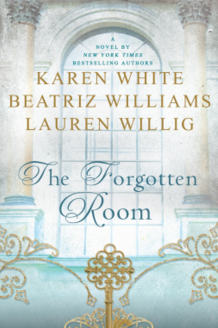
First, I have to say that this is absolutely not my kind of book, so I only read it because it was a selection for Literary Wives. I have read one other book by Beatriz Williams, but I’m guessing it was improved by being a collaboration with two other writers, Lauren Willig and Karen White. The Summer Wives is definitely chick lit, which I do not read, so I will attempt to comment on the other aspects of it.
The plot develops so slowly that I considered quitting about page 50, when nothing much had happened except girls swooning over boys. I was about at page 5 when I thought I knew every secret that was going to be revealed, and I was just about right, barring that by then only a few of the characters had appeared. I also expected more of a sense of what the island looked like and who the characters were, but they were very much one- or maybe two-dimensional.
The dialogue was uninteresting, and the writing was either fairly mundane or overstated. For example, Bianca is stunned at being given gin to drink, not surprised, not startled, but stunned.
The novel picked up a little at the end, but had a frankly unbelievable ending. And what is this fascination chick lit books seem to have with wealth? The novels all seem to be about rich people or poor girls brought into worlds of wealth. So, of course, Miranda’s mother marries a wealthy man and despite Miranda having been ostracized from the family at a young age, she doesn’t become just an actress but a movie star.
What does this book say about wives or the experience of being a wife?
Well, really not much. Despite its title, the novel isn’t really about wives so much as a series of illicit relationships and love affairs. In fact, the word “wives” is used ironically, I think. Bianca considers herself married to Hugh despite his engagement to another woman and is shocked when he actually marries her. The marriages that are depicted are all in some sort of dysfunction. Hugh Fisher and Bianca Medeiro marry others but cheat their spouses throughout their marriages. Miranda has just left her abusive husband who, of course, is a movie director. Another middle-aged wife has been seducing the young men on the island. These are not sincere depictions of marriage but stereotypes, and I find nothing much to say about them.

 What? Me Read?