

It’s unfortunate for me that Ben Lerner’s books seem to be devoted mostly to exploring his own psyche, as evidenced by his main character’s biographical details matching his own, because I’m not much interested in his psyche. Sadly, his books keep ending up on the shortlists of the projects I’m pursuing. This one is from the shortlist for the 2020 Pulitzer prize.
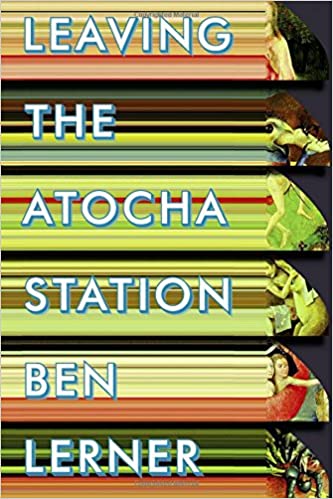
In The Topeka School, we encounter Adam Gordon, the protagonist of Leaving the Atocha Station. In this novel, he is sometimes older, sometimes younger than in the other, but the bulk of the novel is set in 1997, when Adam is a senior in high school.
Adam is the son of two psychoanalysts who work at the Foundation, a prestigious psychiatric hospital. His mother Jane has become famous by publishing a popular book about the relationships between men and women, and his father Jonathan works mostly with disturbed teenage boys. Adam is navigating relationships with friends, sex with his girlfriend Amber, and preparations for debating competitions.
Lerner has a fascination with words, and words play an important part in the novel. For example, Adam’s high school group includes a boy named Darren he’s grown up with who is behind developmentally. Although the group has been taught not to leave Darren out, inclusion involves submitting him to indignities, like leaving him to walk home from the lake after a party. But mostly, he is called names. Names are what hurts him most.
Aside from being a champion debater, Adam likes to participate in rapping with his friends (I’m probably using the wrong words) even while realizing that he and his upper-middle-class friends have little in common with the people they’re imitating and no true understanding of the idioms they’re using.
We also periodically check in with Darren, who has feelings he can’t express. And there’s Jane, who begins receiving abusive phone calls from men after her book is published. She responds by pretending that the phone connection is poor, so she can’t hear, which eventually makes them hang up.
One of the funniest scenes in the book is the first one, where Adam is in a boat with his girlfriend at night. He is pontificating about something only to realize that his girlfriend has left the boat and swum to shore. Later, when he finds her again, she tells a story about sneaking out of the room while her stepfather is talking, and he doesn’t notice that no one is there. Adam does not at this point understand what this story has to do with him.
Then there is a type of debating described in great detail, where the object is to present as many points as possible as fast as possible even if they are ridiculous, because the opponent loses points for missing an argument. And at several points, characters speak gibberish .
All the while, there is a tension going on between Adam’s pro-feminist familial upbringing and the hyper-masculine society he’s lived in as a young man. Unfortunately, although Jane is a great character, she isn’t very important in the novel. Nor are the other women. Only Adam is important.
The novel explores the past of the family and how it affects the present, using Jonathan, Jane, and Adam as narrators. But really, almost all of it is about Adam.
 What? Me Read?