
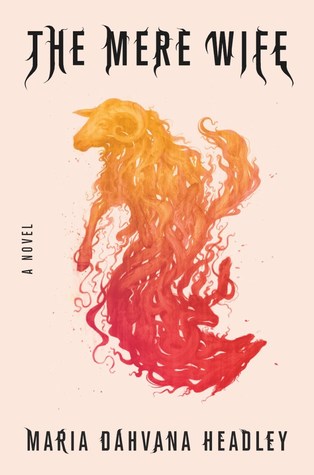
Maria Dahvan Headley called The Mere Wife her novel about monsters in suburbia. It certainly is, but it’s also loosely based on the Old English epic poem Beowulf, only about women, not men.
Dana Mills is a U. S. Marine fighting in a desert country when she is captured and appears to be publicly executed on television. She awakens in the middle of the desert six months pregnant with no memory of what happened. Since she can’t tell the conditions under which she was impregnated, the Marines put her in prison stateside. She escapes and returns to her home town, which her family has lived in for generations, only to find it demolished with a suburb built on top of it.
Dana finds her way to caves in the mountain surrounded by the suburb. Inside the mountain is a train station from when the town was thriving. Living in the cave, she has her baby, but she is traumatized by PTSD and thinks he is a monster.
Seven years go by, during which Dana has been training her son, Gren, to survive, which she believes includes staying away from other people. But Gren sneaks out and makes friends with a boy in the nearest house, Dylan, who has been both spoiled and restricted and neglected. When Dana finds out about this friendship, she has only dread. Despite her efforts to keep him away, Gren sneaks out and attends a New Years party. Willa, Dana’s mother, has been aware that something has been in her house, a wild animal, she thinks. When Dana comes to fry to fetch Gren home, a series of overreactions on her part and that of Dylan’s parents result in catastrophe. Soon the police are hunting down Dana and her son. Enter a macho policeman named Ben Wolff.
This is really a rough read. Stylistically, it’s beautiful and poetic, but it is also harsh and cynical. The question Headley forces on you is, Who is the monster? Well, there are lots of them.
The novel features a chorus of women and a strong distaste for men as well as for hypocrisy.
 What? Me Read?