
Review 2629: Plum Bun

I hadn’t heard of Jessie Redmon Fauset before, but according to the Preface of my Quite Literally Books copy, she was one of the most prolific writers of the Harlem Renaissance. Her novels were later critiqued for centering on the Black middle class, labeled as “bad fairytales,” a problem that doesn’t seem to have been resolved since then, if I can go by Percival Everett’s Erasure.

Angela and Virginia Murray are two sisters living in Philadelphia at the beginning of this novel. Their working-class parents have worked hard to purchase their house and provide them a comfortable life. Jinny appreciates this and loves her life, but Angela doesn’t want a life like they have. Unlike, Jinny, she looks White, and the only situations in which she has been made uncomfortable have been when White people discovered she was a Negro, to use the novel’s own terminology.

As young adults, the sisters lose both parents and inherit the house. Angela decides to sell her half to Jinny and study art in New York City, where no one knows her and she can pass as White. She wants to meet someone with money, so she can lead a carefree life. Girls just want to have fun.

In her art class, she meets Anthony from Brazil. She is drawn to him, but he is very poor, and when he asks her if she could live a poor life to be with someone, she says no. Then she meets Roger, a wealthy young man from a good family. He pursues her, and she comes to believe she can get him to propose. Unfortunately, she is being naïve and doesn’t seem to understand that he has no intention of marrying her, as she does not have the right social and economic background. She also ignores signs of racial bigotry.

But this book isn’t just about Angela’s relationships with men. It’s about the compromises and deceits involved in Angela’s decisions. It’s about her development from a selfish young girl to a woman who has learned empathy. It’s about what should underlie one’s life decisions. And it’s about the insidiousness of racism. It’s another time, so be prepared for some nasty attitudes that were okay at the time to express.

I didn’t like Angela for quite some time—she’s too cold and calculating, too selfish. But through strife, she learns to understand the feelings of others. I enjoyed this book very much.

I want to thank the new imprint, Quite Literally Books, for sending me the beautiful package that contained this book, in exchange for a free and fair review.
Related Posts

Erasure

Go Tell It on the Mountain

The Big Sea

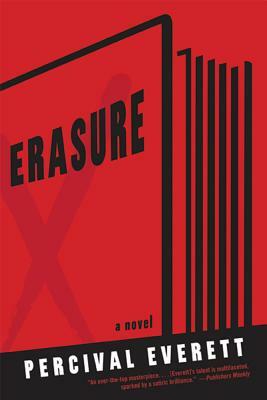
Review 2541: Erasure

If you’ve seen the movie American Fiction, you already know the plot of Erasure. I haven’t seen it yet, and I read this book for my A Century of Books project.

Thelonius (Monksie) Ellison is a writer of high intelligence whose dense, uncompromising novels have failed to make a hit with the general public. He has just put out his latest book, but his agent, Yul, is having difficulty placing it and has been told that Ellison is too far from his ethnic origins as a Black man.

Ellison lives in California, where he is a university professor, but on a visit to Washington, D. C., for a conference, he finds that his mother isn’t doing well. Eventually, he is forced to move back to D. C. to take care of her. That means taking a leave of absence, but he hasn’t sold his book. His mother’s affairs are in poor shape, so he finds he needs money.

He is infuriated by a recent book that is making a splash, We’s Lives in Da Ghetto. It’s written by a middle-class midwestern Black woman based on one week that she spent with relatives in New York, and it employs every known cliché about the lives of Black people.

On a whim, Ellison sits down and writes a parody of this kind of novel, which he titles My Pafology. He submits it to Yul, who is horrified, and asks him to submit it to publishers under the name of Stagg Leigh. Shockingly, Random House takes it as straight and offers him lots of money.

This novel produces spoof upon spoof. Even Everett’s character Ellison takes himself so seriously that I think he’s being mocked. Certainly, he starts out mocking academia with the learned talk he gives at the beginning of the novel. This talk is incomprehensible, and yet it makes another academic leap up and shout, “Bastard!” at him. He also hits the publishing industry, the reading awards organizations, and television interview programs.

The novel is presented as Ellison’s diary, so it includes learned jokes (most of which I didn’t understand), imagined conversations between various dead people in the arts, recollections from his past, especially about his father, and the entire text—about 50 pages—of My Pafology.

As My Pafology gains attention, Ellison begins to lament that he ever compromised his standards. Forced occasionally to masquerade as Stagg Leigh, he feels as if his own persona as a cultured Black man is being erased. Maybe he feels that that whole culture is being erased.

Parts of this novel were above my head, particularly some of the little scribbles in the diary. Also, when I say Everett is heaping on the satire, I’m not saying that the novel is funny (although some of it is). Most of the time I felt sorry for Monksie, who is too unyielding for his own good and knows it, but cannot stop.

Percival Everett is having a moment lately, which has resulted in four of his books being in my pile, of which this is the second. I’m not sure if I like his work, but it is at least interesting.

Related Posts

The Trees

Flights

Ferdydurke

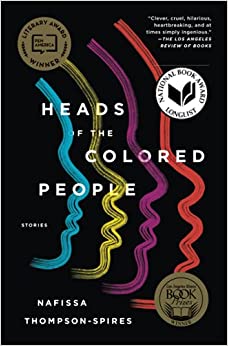
Review 2083: Heads of the Colored People

I read Heads of the Colored People for my James Tait Black project. It is a collection of short stories, many linked by common characters, that explore black identity in the middle class, a hyper-aware Californian middle class.

In “Heads of the Colored People,” what starts out as a somewhat comic clash at Comicon ends up as headlines because of Fighting While Black.

In “The Necessary Changes Have Been Made,” Randolph, one of the few black professors at an HBUC, learns that the problems he has had with his office mate are probably race-related.

In “Belles Lettres,” two highly educated black mothers duke it out by letter over their two schoolgirls.

In “The Body’s Defense Against Itself,” Fatima, one of the schoolgirls now grown, sees a woman in her yoga class who reminds her of her old arch-enemy. This makes her remember her years of body self-hatred.

In “Fatima the Biloquist: A Transformation Story,” Fatima, now a teenager, feels too white, as one of only two black children in her school. She meets Violet, an albino black girl. who offers to teach her how to be black.

And so on.

Some of the stories are funny but usually with a bite, such as “Suicide, Watch,” about a woman so obsessed with social media that she hints at suicide just to see if her numbers go up.

Some of theses stories verge on the bizarre, but I think most people can find something to relate to in them. They are insightful and original.

Related Posts

Sudden Traveler

Travelers

The Beadworkers