Well, I guess The Chocolate Lady has got me into something with her WWW Wednesday, which she does once a month. I had some encouragement when I tried it last month, so what the heck. Maybe I’ll make it a habit, although I don’t know if I’ll do it every month.
The idea is to talk about what you’re reading now, what you just read, and what you plan to read.
What Am I Reading Now?
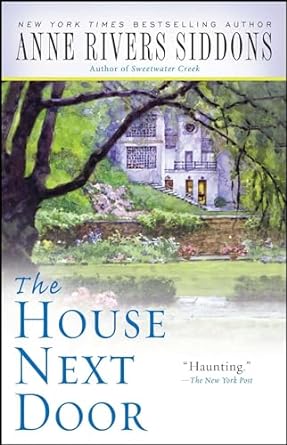
By now, I mean I just literally picked this book up to start it, The House Next Door by Anne Rivers Siddons. I may have read one book by this Southern writer before, but I am not sure. I got it because someone told me it was a good ghost story. I love a good ghost story. I’ll have to let you know about it, because I have literally not even read the first sentence yet.
I just checked the copyright date (1978), and this novel is going to help me fill a hole in my Century of Books project.
What Did I Just Finish Reading?
The last book I read, I enjoyed very much. It was Westwood by Stella Gibbons. It is partially about a naïve and suggestible young schoolteacher’s hero-worship of an older renowned playwright, a pompous and humorless man who thinks he’s god’s gift to literature and likes to philander with beautiful young women, one of which she is not. Some of the scenes with this character and the descriptions of the plots of his plays made me laugh out loud.
With a publication date of 1947, this book also helped me fill a hole in my Century of Books project.
What Will I Read Next?
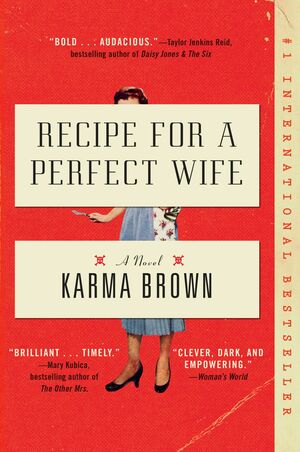
I just realized today that I needed to get hopping on my next book for Literary Wives. The date to post our reviews is the first Monday in June, and since I write up my reviews ahead of time, I have almost got up to it! So, I have to get reading. It is waiting for me to pick up at the library. I know nothing about it, Recipe for a Perfect Wife by Karma Brown.
Sadly, its 2019 publication date does not fill a hole in my project.
What about you? Have you read any of these books? What are you reading?
In January, I foolishly decided to join Simon Thomas’s Century of Book Challenge, even though I knew that reading 100 books, one for each year in a century, from 1925-2024, would be tough because last year I only read 169. So, how am I doing?
Here are the holes in my project with the books listed for April below. If you want to see the details, see my Century of Books page.
1925-1934: entries needed for 1926-31
1935-1944: entries needed for all years except 1935, 1936, 1937, 1941, and 1943
1945-1954: entries needed for all years except 1947, 1952, 1953, and 1954
1955-1964: entries needed for all years except 1958 and 1959
1965-1974: entries needed for all years except 1965, 1966, 1972, and 1974
1975-1984: entries needed for all years except 1975 and 1976
1985-1994: entries needed for all years
1995–2004: entries needed for all years except 2004
2005-2014: entries needed for all years except 2009, 2010, 2012, and 2014
2015-2024: complete!
Read since March 27th:
Unfortunately, not qualifying for the project, The Return of the Native by Thomas Hardy from 1878
Here it seems like we just had a Classics Club Spin and we’re having another one, #37! What is the spin, anyway? Well, if you are a member of the Classics Club you have posted a list of a number of classics you would like to read by a certain deadline, set by yourself. To participate, simply create a numbered list of 20 of the books on your list and post it by Sunday, April 21. On Monday, the club will post a number, and that number determines which book you will read for the spin. Post a review of that book by Sunday, June 2. It’s as simple as that. And don’t forget to add a link to that post in the Comments for the spin post on June 2nd.
With no further ado, here is my list. I no longer have 20 books left on it, so I have to repeat some:
Our Mutual Friend by Charles Dickens
Les Misérables by Victor Hugo
The Deepening Stream by Dorothy Canfield Fisher
The Book of Lamentations by Rosario Castellanos
The Methods of Lady Walderhurst by Frances Hodgson Burnett
The Passenger by Ulrich Alexander Boschwitz
Merkland, A Story of Scottish Life by Margaret Oliphant
The Prophet’s Mantle by E. Nesbit
Incidents in the Life of a Slave Girl by Harriet Jacobs
The Three Musketeers by Alexandre Dumas
Cecilia, Memoirs of an Heiress by Frances Burney
The Princess of Cleves by Madame de La Fayette
Love’s Labour’s Lost by William Shakespeare
Hero and Leander by Christopher Marlowe
The Tavern Knight by Rafael Sabatini
The Book of Dede Korkut by Anonymous
Merkland, A Story of Scottish Life by Margaret Oliphant
Tis Pity She’s a Whore by John Ford
The Deepening Stream by Dorothy Canfield Fisher
The Prophet’s Mantle by E. Nesbit
The Methods of Lady Walderhurst by Frances Hodgson Burnett
As usual, when preparing for the year club, hosted twice a year by Stuck in a Book and Kaggy’s Bookish Ramblings, I look to see what I have already reviewed for that year. For next week’s club, the 1937 Club, I had quite a few previous reviews. I listed them at the beginning of my first review for the club, and then I saw that She Reads Novels, in a similar situation, had done a separate post for hers. What a good idea! So, I’m copying her.
Alas, Poor Lady by Rachel Ferguson tells how an elderly spinster from a wealthy family ends up living on charity. It makes striking points about the education of women in the late 19th century.
Busman’s Honeymoon by Dorothy L. Sayers begins on Lord Peter Wimsey’s honeymoon with Harriet Vane, when they discover the body of their landlord in the basement.
Death of Mr. Dodsley by John Ferguson finds a bookstore owner, Mr. Dodsley, dead in his shop. Oddly, the death follows the plot of a recently published murder mystery.
Death on the Nile is one of Agatha Christie’s most well-known books. Hercule Poirot’s pleasure trip down the Nile is interrupted by arguments between former lovers and then the murder of one of the lovers’ new wife.
The Lady and the Unicorn is Rumer Godden’s story about an Anglo-Indian family in Calcutta. One of the daughters falls in love with a young English gentleman, but it’s a doomed romance that is echoed by a haunting in the family’s old house.
Lady Rose and Mrs. Memmary by Ruby Ferguson is a bit similar to Rachel Ferguson’s Alas, Poor Lady, but it’s about the fall of the aristocracy, and its heroine, Lady Rose, is married, not a spinster.
Mystery in White by J. Jefferson Farjeon takes place after a train is snowbound during Christmas. Some of the passengers try to find their way to the nearest town but end up taking shelter in an abandoned house. They think something bad has happened there, and then they learn that someone was murdered on the train.
Summer Half is the fifth novel in Angela Thirkell’s Barsetshire series. Before starting in the law, Colin Keith takes a summer job teaching at Southbridge School, where he is a witness to the romance of another teacher and the headmaster’s idiotically beautiful and selfish daughter. Later in the series, she improves.
Their Eyes Were Watching God by Zora Neale Hurston is about the struggles of Janey Crawford in her relationships with men. It is also about a town in Florida founded by black people, in which I learned later, Hurston grew up, making me wonder if the novel was based on the story of her mother.
They Found Him Dead is one of Georgette Heyer’s few mystery novels. First, a businessman is found dead at the bottom of a cliff and then his heir is shot. Will someone go after the next heir?
They Were Found Wanting by Miklós Bánffy is the second book of Bánffy’s Transylvania trilogy. Along with a love affair, it documents the failures of the Hungarian parliament as Europe heads towards World War I.
World Light by Halldór Laxness is about how the world treats a gentle soul. Although I enjoyed other books by Laxness, especially Independent People, I couldn’t finish this one once I knew where it was going.
You might be wondering why I’m not posting as often as I used to. Well, the answer is that I got caught up with myself in reading, and instead of being several months of books ahead of myself, I’m only about two weeks ahead, so I decided first not to post on Wednesdays except for special reasons, and then a little later, when the situation did not improve, not to post on Fridays. This situation will be fluid, like it has been since I started blogging. If I get way ahead of myself again, I’ll start posting on Fridays. I like being ahead on my reading, because it allows me to choose more carefully the order of books instead of having to review the next book I read.
Anyway, the Chocolate Lady is always doing bloggy type activities where she joins with other folks, and I don’t usually have time. Plus some of them take some planning. But she is occasionally doing WWW Wednesdays (I don’t know what WWW stands for, and she doesn’t explain), which seemed like an easy thing to take part in. If you want to take part, you just have to answer three questions: What are you reading now? What did you recently finish reading? What will you read next?
What am I reading now?
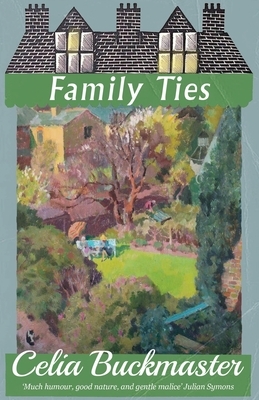
Right now, I am reading a Dean Street book from their Furrowed Middlebrow imprint, Family Ties by Celia Buckmaster. This gives me an opportunity to lobby for Dean Street publishing more Furrowed Middlebrow books. I know they are tied up in estate issues now, but I hope they will reconsider closing down this imprint. If you want them to continue with Furrowed Middlebrow maybe send them a message on their Facebook page, and please comment here! I am only a few pages into this book, and so far it seems to be about eccentric family life in a village. I always enjoy relaxing with a Furrowed Middlebrow book!
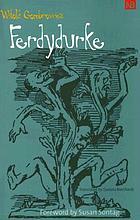
Technically speaking, I am also reading Ferdydurke by Witold Gombrowicz. I chose this book to read for the 1937 Club (coming up next week), but so far I just haven’t been able to hack it. It is supposed to be his masterpiece, and it is about a grown man who gets turned into an 11-year-old boy and put back in school. If that sounds juvenile, it is. I got into it about 70 pages and put it aside. Every time I finish another book, I look at it and say “Nah!”
What did I recently finish reading?
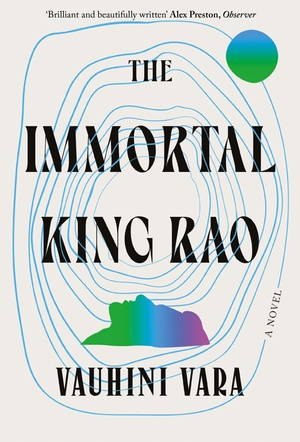
The last book I read was The Immortal King Rao by Vauhini Vara, which is part of my Pulitzer Prize project. One of my habits, maybe it’s a foible, is just to check the library periodically to see which books in my projects are available and get them without reading what they’re about. And in fact, I do the same thing with all the books in my stack. At some point I have usually read what they are about but I don’t do that right before I begin reading them. Well, for this book, the timing was unfortunate, because it is a dystopian novel, and not only do I not usually read dystopian novels, but it seems like recently everyone is writing them. And, in fact, I had read three just in the past few weeks. Now, don’t get me wrong, one of them was wonderful, as you’ll find out when I review it. I didn’t have as positive of an experience with The Immortal King Rao, although I didn’t dislike it. You’ll have to wait for my review, which should be coming up in a couple of weeks.
What will I read next?
When I troll the libraries for my project books (online, of course), I usually try to get one for each of my projects, although often I cannot find the Walter Scott Historical Fiction project books there and have to buy them. (That means they go into my pile and I get to them a lot later. I should do something about that. The Bee Sting has been there for quite a while.) Last time I trolled, I ended up with The Immortal King Rao for my Pulitzer project and Real Life by Brandon Taylor and Prophet Song by Paul Lynch for my Booker Prize project. (I am still waiting for After Sappho by Shelby Wynn Schwartz to arrive for my James Tait Black Project.) I have read Prophet Song, so after I finish my current book, I’ll read Real Life. As usual, I have no idea what it is about. I hope it’s not dystopian.
Have you read any of these books? What did you think?
In January, I foolishly decided to join Simon Thomas’s Century of Book Challenge, even though I knew that reading 100 books, one for each year in a century, from 1925-2024, would be tough because last year I only read 169. So, how am I doing?
I decided this accounting would make more sense if I listed the holes, so here goes. If you want to see the details, see my Century of Books page.
1925-1934: entries needed for 1926-31
1935-1944: entries needed for all years except 1936, 1937, 1941, and 1943
1945-1954: entries needed for all years except 1947, 1953, and 1954
1955-1964: entries needed for all years except 1958 and 1959
1965-1974: entries needed for all years except 1965, 1966, 1972, and 1974
1975-1984: entries needed for all years except 1976
1985-1994: entries needed for all years
1995–2004: entries needed for all years except 2004
2005-2014: entries needed for all years except 2009, 2010, 2012, and 2014
2015-2024: complete!
Read since February 28th:
The Circular Stairway by Mary Roberts Rinehart (unfortunately, it doesn’t fit in this project because it’s from 1908)
I occasionally look at my stats, and I find it interesting to note such things as which reviews are most read and when. I decided to look at them last week because I recently noticed that the novel Cathedral of the Sea had been popping up again as one of the reviews that was most read. I remembered it as a mediocre historical novel, so that piqued my curiosity.
Sure enough, the novel has the third highest number of views of any other on my site. (I’m not counting views of my home page, which has more than 83,000. That page, after all, is whichever review is up for that day.) The one in first place with 983 views is The Devil All the Time, which I don’t really count because it got linked to from Robert Pattinson’s official site after I mentioned the character he was playing and was only looked at for that year and the next. The second place review is for The Cruelest Journey: Six Hundred Miles to Timbuktu, but views of it peaked from 2017-2019 and fell off to almost nothing from there. Cathedral of the Sea only had a few views for the first few years after I reviewed it, but starting in 2020, it has had an average of 90 views a year, which is a lot for one of my several thousand reviews, and continues to pop up regularly as one of the most viewed posts of the week.
Cathedral of the Sea was published in 2006, but I didn’t review it until 2013. It was a popular book for a while—you can see that it says “#1 International Bestseller” on the cover—but I found it an uninspired and rather poorly told story. I looked back at my review to remind myself what I thought of it, and I observed that the characters were poorly defined and Falcones had a habit of bringing people and things into the story when he needed them and then forgetting them. His women have no personality at all and have horrible fates. The oddest thing about it was that he has a plot where the main character is trying to discard his mistress for years so that he can have good marriage with his long-suffering wife. He finally does, and then there is an immediate jump of five years and within a page or so from that jump, Falcones kills off the wife. The wife is a cipher the entire time, and it’s like he doesn’t know what to do with her once the mistress is gone.
So, I notice that in 2018 Netflix posted a production of it. Could this be the reason people keep looking it up? It’s true that in 2018 the views of my post jumped from almost none to 33 that year and then almost doubled the next year and again the next year. But it has continued to be viewed at about the same rate every year since then. It’s a mystery.
Maybe the Netflix program is better than the book. I guess I have my answer. (I was looking all this stuff up as I was writing this, so I didn’t even know I had an answer until the end of the post. In fact, my plan was to ask my readers if they had a clue about it.) I was unaware of the Netflix series before now. It’s little research expeditions like this that make looking at the stats interesting.
Have you read Cathedral of the Sea or seen the Netflix show? What did you think of it?
In January, I foolishly decided to join Simon Thomas’s Century of Book Challenge, even though I knew that reading 100 books, one for each year in a century, from 1925-2024, would be tough because last year I only read 169. So, how am I doing?
I decided that the method I chose last month to keep track was meaningless to anyone but me, so it makes more sense if I list the years for which I don’t yet have entries. If you want to see the details, see my Century of Books page.
1925-1934: entries needed for 1926-31
1935-1944: entries needed for all years except 1941 and 1943
1945-1954: entries needed for all years except 1947
1955-1964: entries needed for all years except 1958 and 1959
1965-1974: entries needed for all years except 1965, 1972, and 1974
1975-1984: entries needed for all years except 1976
1985-1994: entries needed for all years
1995–2004: entries needed for all years
2005-2014: entries needed for all years except 2009, 2010, and 2012
2015-2024: entries needed for 2015 and 2024
Read in February (up to today):
Fear Stalks the Village by Ethel Lina White from 1932
The Warrielaw Jewel by Winifred Peck from 1933
Wonder Cruise by Ursula Bloom from 1934
Tom Tiddler’s Ground by Ursula Orange from 1941
Weatherley Parade by Richmal Crompton from 1943
Skeletons in the Closet by Jean-Patrick Manchette from 1976
Murder at the Residence by Stella Blómkvist from 2012
Mrs, March by Virginia Feito from 2021
Chenneville by Paulette Jiles, The Bookbinder by Pip Williams, and Somebody’s Fool by Richard Russo from 2023






 What? Me Read?