Nonfiction November: Week Five

This week’s host is Hopewell’s Public Library of Life, and the theme is New to my TBR:

It’s been a month full of amazing nonfiction books! Which ones have made it onto your TBR? Be sure to link back to the original blogger who posted about that book!

I haven’t participated in this event before, and I am not a big nonfiction reader, but I got a lot of ideas during the month for further nonfiction reading. Here are the nonfiction books mentioned this month that piqued my interest. I’m just dividing these up by weeks to give me a little space between cover images.

Books from Week Two

The theme for Week Two was what attracts you to a book, so a lot of people were just showing interesting covers. But even though I don’t think I use covers to attract me to nonfiction books generally, these made me look at a few books more carefully.

I saw A Place for Everything: The Curious History of Alphabetical Order by Judith Flanders posted on She Seek’s Nonfiction‘s page during week two. It sounds right up my alley, and it has a beautiful cover. I hadn’t heard of it before.

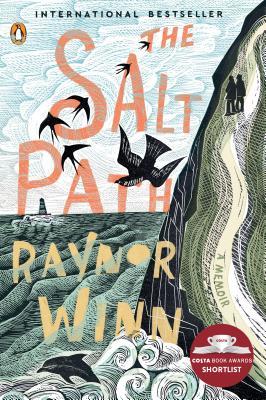
Entering the Enchanted Castle had the cover of The Salt Path by Raynor Winn on the post for Week Two. That reminded me that one of my best friends told me about the book, so I put it on my TBR. And again, what a great cover!

I’m sure I’m not the only one to notice what’s going on in our political arena, so when Silver Button Books put the cover of Cultish by Amanda Montell up in Week Two, I immediately added it to my TBR.

Books from Week Three

The theme for Week Three was pairing a nonfiction and fiction book. I admit that in a few cases, the fiction book looked more interesting to me than the nonfiction. However, here were four nonfiction books that struck my interest.

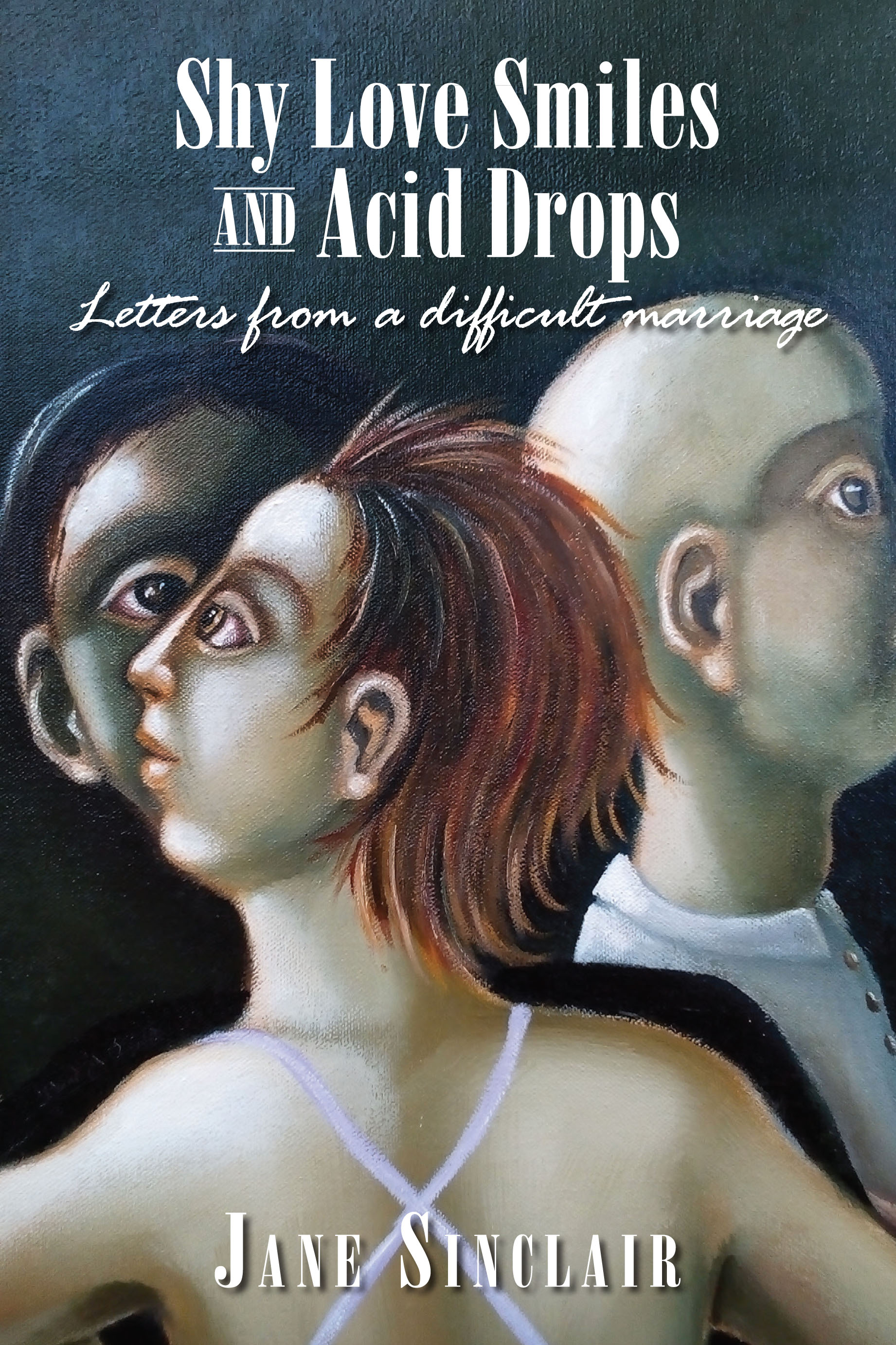
The cover of Shy Love Smiles and Acid Drops that Whispering Gums listed for Week Three as well as its subject matter made me put it right on my TBR. OK, this time I admit picking a nonfiction book for its cover.

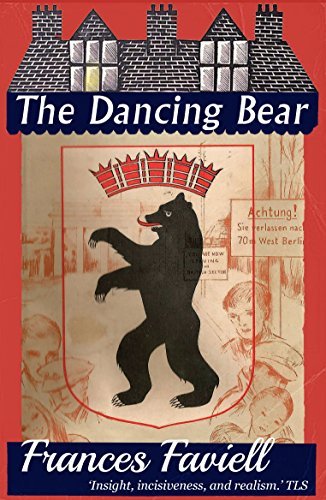
Books Please featured a memoir called The Dancing Bear by Frances Faviell for Week Three, and as I love the Furrowed Middlebrow imprint and have read some fiction by Faviell, I’m definitely putting this one on my TBR.

I love Amitav Ghosh, and I was unaware of the nonfiction book he’d written, The Nutmeg’s Curse: Parables for a Planet in Crisis until I saw it on Unsolicited Feedbacks post.

Entering the Enchanted Castle listed The Wild Silence, also by Raynor Winn, and I have to read it because of the cover and because it’s about Iceland.

Books from Week Four

For some reason many of the participants’ choices for Week Four weren’t grabbing me. The theme was Worldview Shapers, and maybe it was because some of participants didn’t really explain much about their choices but just posted their covers. Many of the participants posted several books on one subject, so I felt a little overwhelmed to pick one of them, even if I was interested in it, as I was by the holocaust books and the ones on the aboriginal experience, for example. In any case, Shoe’s Seeds and Stories selected the graphic nonfiction book Ducks by Kate Beaton, which I was already planning to read and in fact have in my pile right now.

Nonfiction November: Week Four

This week’s host is She Seeks Nonfiction, and the theme is Worldview Shapers:

One of the greatest things about reading nonfiction is learning all kinds of things about our world which you never would have known without it. There’s the intriguing, the beautiful, the appalling, and the profound. What nonfiction book or books have impacted the way you see the world in a powerful way? Is there one book that made you rethink everything? Do you think there is a book that should be required reading for everyone?

I can’t answer this one with just one book, and I can think of a few books that I read before blogging that made me see things differently. However, I’ll stick mostly to ones that I have reviewed on this blog.

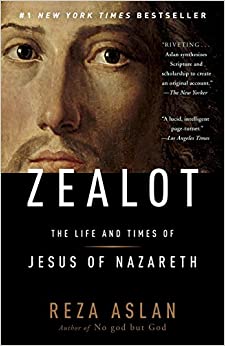
One was a book recommended by my brother called Zealot: The Life and Times of Jesus of Nazareth by Reza Aslan, an acclaimed religious scholar. Aslan’s goal was to try to find as much evidence as possible about the man Jesus aside from the religious claims. In other words, the historical record. What he found was that most of what we think we know about his life is myth, created by the gospel writers years after his death to further the claim that Jesus was the Messiah.

On the subject of religion, another book that affected me profoundly before I started the blog was Jon Krakauer’s Under the Banner of Heaven, about the beliefs and behavior of some fringe apostolic Mormon groups.

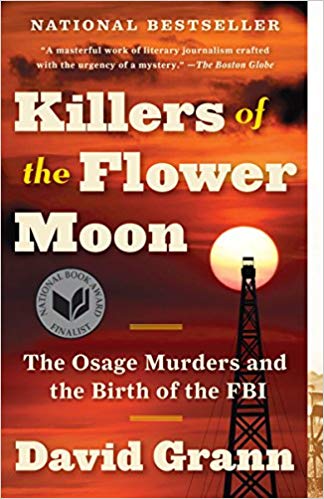
Cover for Killers of the Flower Moon

A book that might be popular again now that told me something I didn’t know about from history is Killers of the Flower Moon: The Osage Murders and the Birth of the FBI, which profoundly shocked me when I read it four years ago. As most of you probably know, it’s about members of the wealthy Osage tribe who were murdered by their guardians (the government deeming they were not able to look after their own interests) or white family members in order to get claims to their share of the oil money. The movie that is out now by Martin Scorsese is excellent.

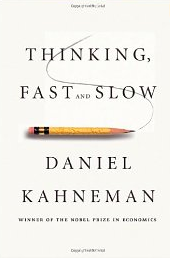
Cover for Thinking, Fast and Slow

Thinking, Fast and Slow by Nobel Prize winning Daniel Kahneman explains the results of years of scientific experiments that show that most of our decisions are made by our unconscious rather than our conscious mind. This was an entertaining book full of intellectual surprises and little exercises that you can try yourself that show the profound implications of how we make our decisions.

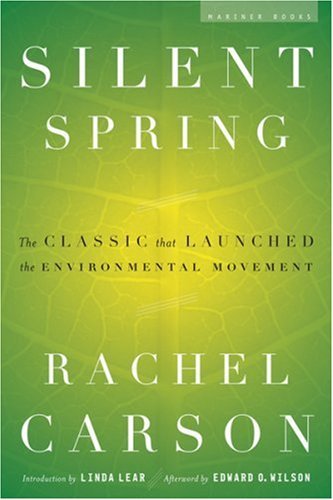
I was aware that DDT was banned as a result of Rachel Carson’s ground-breaking book Silent Spring, but her book about the poisons that we still use every day in agriculture and other industries made me realize why the world seems to be dying of cancer. This book may have been written in 1962, but it still needs to be paid attention to. I think everyone should read it.

Cover for The Omnivore's Dilemma

Finally, for me personally, the first book I ever reviewed on this blog was revelatory. That is The Omnivore’s Dilemma by Michael Pollan, about the foods we eat and how our basis in corn and soy is not really good for us. I was even more profoundly affected by his In Defense of Food, but I read it before starting this blog.

Nonfiction November: Week Three

This week’s host for Nonfiction November is Liz of Adventures in reading, running and working from home. The theme is Book Pairings, and here is its description:

This week, pair up a nonfiction book with a fiction title. Maybe it’s a historical novel and the real history in a nonfiction version, or a memoir and a novel, or a fiction book you’ve read and you would like recommendations for background reading. You can be as creative as you like!

This is a toughie. I can think of some obvious pairings, like Middlemarch and My Life in Middlemarch, or the biographies of authors whose books I have read, or Elif Batuman’s The Possessed: Adventures with Russian Books and the People Who Read Them and one of those Russian books, but I was looking for something more creative.

Here’s what I came up with: The Hare with Amber Eyes: A Hidden Inheritance is the world-renowned ceramicist Edmund de Waal’s nonfiction account of a collection of netsuke that belong to his family and what happened to it during World War II, when the family thought it was stolen by the Nazis. In tracing the collection, de Waal traces his own family history, beginning with Charles Ephrussi, the original owner of the collection, who was the cousin of de Waal’s great-grandfather and also the inspiration for Proust’s Charles Swann.

I’m pairing this with Great House by Nicole Krauss, a collection of linked short stories about the migrations of a desk, which the character Nadia tries to find after giving it away because she cannot write without it. The desk turns out to have a sad history and comes to represent all the objects lost in the Holocaust.

Nonfiction November: Week Two

Week Two of Nonfiction November is hosted by Volatile Rune. The theme is Choosing Books, and here is its description:

What are you looking for when you pick up a nonfiction book? Do you have a particular topic you’re attracted to? Do you have a particular writing style that works best? When you look at a nonfiction book, does the title or cover influence you? If so, share a title or cover which you find striking. 

Cover for The Wicked Boy

I am not nearly as big a nonfiction reader as I am a fiction reader, so to answer this question, I had to look back at my list of nonfiction books since I started my blog. It’s clear that I like to read books about literary subjects and biographies and memoirs, often by or about literary figures, but although I have read a few, not often celebrity biographies and memoirs. I think in general I just look for nonfiction books that pique my interest in some way, either because of who wrote them or what they are about.

Although the cover generally influences me for fiction books, I haven’t been able to discover that I read any nonfiction books because of their covers. However, I will read books by certain authors: the biographers Doris Kearns Goodwin, Claire Tomalin, and Ron Chernow, for example. I also like true crime novels, but mostly true crime of an older vintage, so I have enjoyed a couple of books by Kate Summerscale (The Suspicions of Mr. Whicher, The Wicked Boy) and have another one on my pile.

Cover for Annals of the Former World

There are also periods of history I’m interested in, particularly the Wars of the Roses. I’ll read histories and biographies about that time.

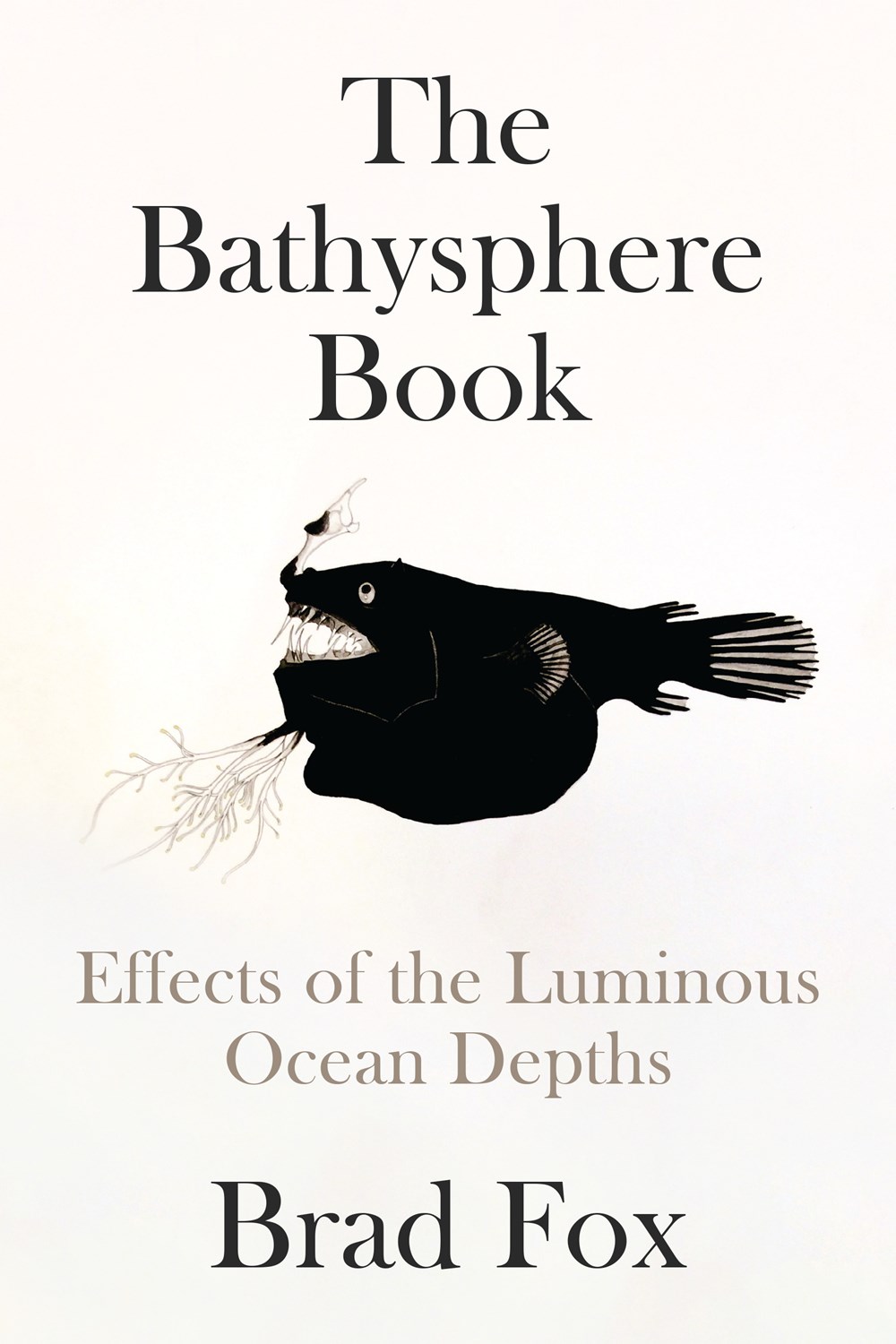
I am not very scientific minded, but occasionally I hear of a book about science that sounds fascinating. I have an upcoming review of The Bathysphere Book that I found really interesting, and it has a great cover illustration.

Ten years ago, I discovered John McPhee’s Annals of the Former World, about how our continent was formed geologically, in four big, fat volumes, and I read every one. Fascinating stuff, and McPhee is a great writer.

Nonfiction November

I thought I might participate in Nonfiction November this year. I haven’t participated before, not being the biggest nonfiction reader, but I thought I’d try to do a post a week, if they are appropriate. I am also planning to review two nonfiction books this month, including one I originally intended for the 1962 Club, but it didn’t fit my schedule.

The host for this week’s Nonfiction November is Based on a True Story, so people’s reviews and comments will be listed there.

So, here is the description for the theme for this week:

Week 1: Your Year in Nonfiction : Take a look back at your year of nonfiction and reflect on the following questions – What was your favourite nonfiction read of the year? Do you have a particular topic you’ve been attracted to more this year? What nonfiction book have you recommended the most? What are you hoping to get out of participating in Nonfiction November?

I have read eight nonfiction books this year, three of which I haven’t reviewed yet (although two are coming up in a few weeks). They are listed in order of my reviews:

These books don’t easily fall into categories, but:

  • 3 are memoirs and 1 is a biography
  • 4 are related to literature, 3 by authors known in the literary world and the last about Shakespeare’s work
  • 1 is a sort of travelogue or nature book
  • 2 are science-related

The books I enjoyed most were The Other Day, a memoir of Dorothy Whipple’s childhood, which was touching and funny, and The Bathysphere Book, a nonlinear account of the ocean explorations of William Beebe in a bathysphere, leading up to his deepest dive in 1930. This book was really interesting and included vivid descriptions of a bunch of colorful characters. Unfortunately, my reviews of these two books won’t appear until November or December. Silent Spring also made my mind boggle.

I have only recommended The Bathysphere Book to my husband. It will be interesting to see if he reads it.

I didn’t really have in mind gaining anything by participating except maybe that participation will draw me into reading more nonfiction.

Classics Club Spin #35

It’s time for another Classics Club spin. For the spin, members select 20 titles from their Classics Club lists and post them in a numbered list on their blogs. On Sunday, October 15, the club selects a number, and that determines which book to read for the spin. The goal this time is to read that book by Sunday, December 3, and post your review.

So, with no further ado, here is my list of 20 books:

  1. The Book of Dede Korkut by Anonymous
  2. The Tree of Heaven by May Sinclair
  3. Hero and Leander by Christopher Marlowe
  4. The Tavern Knight by Rafael Sabatini
  5. Love’s Labour’s Lost by William Shakespeare
  6. Les Misérables by Victor Hugo
  7. Tis Pity She’s a Whore by John Ford
  8. The Deepening Stream by Dorothy Canfield Fisher
  9. The Princess of Cleves by Madame de Lafayette
  10. Weatherley Parade by Richmal Crompton
  11. Cecilia, Memoirs of an Heiress by Fanny Burney
  12. The Book of Lamentations by Rosario Castellanos
  13. Our Mutual Friend by Charles Dickens
  14. The Methods of Lady Waldhurst by Frances Hodgson Burnett
  15. The Three Musketeers by Alexandre Dumas
  16. The Passenger by Ulrich Alexander Boschwitz
  17. The Return of the Native by Thomas Hardy
  18. Merkland, A Story of Scottish Life by Margaret Oliphant
  19. Incidents in the Life of a Slave Girl by Harriet Jacobs
  20. The Prophet’s Mantle by E. Nesbit

Since I have exactly 20 books left on my list, this will be the last spin that I can participate in for a while that doesn’t require repeating some of my entries. I’m interested to see how it turns out.

If I Gave the Award

As I just posted my review for the last short-listed book for the 2019 James Tait Black Award for Fiction, it is now time for my feature where I decide whether the judges got it right. This time the choice is difficult for me, because I didn’t really like any of the shortlisted books. Most of them share a strong intellectualism, although that’s not why I felt so-so about them.

It’s kind of a toss-up which of the books I liked least. I remarked in the review of Murmur by Will Eaves how much I dislike books with dreams in them. In this novel about an Alan Turing-like figure, the main character eventually experiences wakened dream states as a side-effect from chemical castration. It’s ironic that the other book I disliked, Crudo by Olivia Laing (the winning entry), is also a fictional character study of a real person, a woman very much like the poet Kathy Acker, with whom I was completely unfamiliar. In this case, I found Kathy really annoying in her neuroticism and use of crude language. Both of these books were extremely well written, but I had difficulties with them.

Heads of the Colored People by Nafissa Thompson-Spires was probably the least intellectually removed of the four books. It’s a collection of short stories linked by common characters that explores black identity in the California middle class. The stories are insightful and original, and some of them are bizarre.

That leaves me not quite knowing what to do with Sight by Jessie Greengrass. It’s about seeing below the surface, narrated by a woman who is conflicted about her own pregnancy. It combines her ruminations with stories about scientists whose discoveries also have to do with seeing below the surface. I found it to be written in meticulous prose but also to be distanced from the reader, and I didn’t like the main character’s neuroticism.

I guess I’m going with Sight, but this one was a tough choice.