Classics Club Spin #35

It’s time for another Classics Club spin. For the spin, members select 20 titles from their Classics Club lists and post them in a numbered list on their blogs. On Sunday, October 15, the club selects a number, and that determines which book to read for the spin. The goal this time is to read that book by Sunday, December 3, and post your review.

So, with no further ado, here is my list of 20 books:

  1. The Book of Dede Korkut by Anonymous
  2. The Tree of Heaven by May Sinclair
  3. Hero and Leander by Christopher Marlowe
  4. The Tavern Knight by Rafael Sabatini
  5. Love’s Labour’s Lost by William Shakespeare
  6. Les Misérables by Victor Hugo
  7. Tis Pity She’s a Whore by John Ford
  8. The Deepening Stream by Dorothy Canfield Fisher
  9. The Princess of Cleves by Madame de Lafayette
  10. Weatherley Parade by Richmal Crompton
  11. Cecilia, Memoirs of an Heiress by Fanny Burney
  12. The Book of Lamentations by Rosario Castellanos
  13. Our Mutual Friend by Charles Dickens
  14. The Methods of Lady Waldhurst by Frances Hodgson Burnett
  15. The Three Musketeers by Alexandre Dumas
  16. The Passenger by Ulrich Alexander Boschwitz
  17. The Return of the Native by Thomas Hardy
  18. Merkland, A Story of Scottish Life by Margaret Oliphant
  19. Incidents in the Life of a Slave Girl by Harriet Jacobs
  20. The Prophet’s Mantle by E. Nesbit

Since I have exactly 20 books left on my list, this will be the last spin that I can participate in for a while that doesn’t require repeating some of my entries. I’m interested to see how it turns out.

If I Gave the Award

As I just posted my review for the last short-listed book for the 2019 James Tait Black Award for Fiction, it is now time for my feature where I decide whether the judges got it right. This time the choice is difficult for me, because I didn’t really like any of the shortlisted books. Most of them share a strong intellectualism, although that’s not why I felt so-so about them.

It’s kind of a toss-up which of the books I liked least. I remarked in the review of Murmur by Will Eaves how much I dislike books with dreams in them. In this novel about an Alan Turing-like figure, the main character eventually experiences wakened dream states as a side-effect from chemical castration. It’s ironic that the other book I disliked, Crudo by Olivia Laing (the winning entry), is also a fictional character study of a real person, a woman very much like the poet Kathy Acker, with whom I was completely unfamiliar. In this case, I found Kathy really annoying in her neuroticism and use of crude language. Both of these books were extremely well written, but I had difficulties with them.

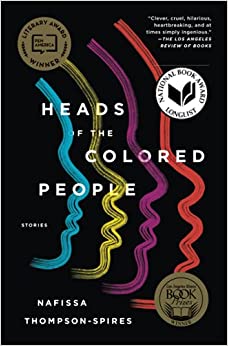
Heads of the Colored People by Nafissa Thompson-Spires was probably the least intellectually removed of the four books. It’s a collection of short stories linked by common characters that explores black identity in the California middle class. The stories are insightful and original, and some of them are bizarre.

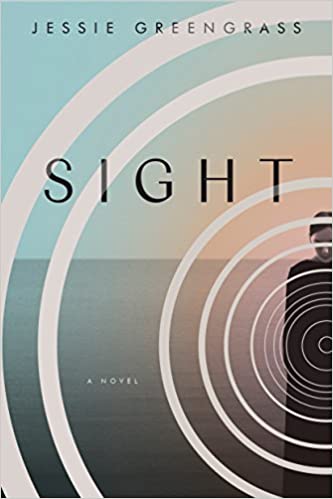
That leaves me not quite knowing what to do with Sight by Jessie Greengrass. It’s about seeing below the surface, narrated by a woman who is conflicted about her own pregnancy. It combines her ruminations with stories about scientists whose discoveries also have to do with seeing below the surface. I found it to be written in meticulous prose but also to be distanced from the reader, and I didn’t like the main character’s neuroticism.

I guess I’m going with Sight, but this one was a tough choice.

If I Gave the Award

As I have just posted my review of News of the Dead, the last of the shortlisted books for the 2022 Walter Scott Prize for Historical Fiction, it is now time for my feature where I decide whether the judges got it right. The shortlisted books are set in 16th century Scotland; 8th, 19th, and 20th century Scotland; 20th century Trinidad, and 20th century Germany, California, and Switzerland. For this year, most of the entries were strong ones.

The book set in 20th century Trinidad, Fortune by Amanda Smythe, is the fictionalized story of a true one, a love triangle that resulted in a disaster. I felt that the characters in this novel were not very interesting and the setting not vividly described. Also, the writing was rather mundane. However, this book was the weakest entry on the shortlist.

The writing in The Magician by Colm Tóibín was not at all mundane. This novel is more difficult to evaluate in the context of my having to pick the best one, because I said only good things about it in my review, but it didn’t make as much of an impression on me as some of the others. A biographical novel about the writer Thomas Mann, the book was intuitive and meditative in tone and Tóibín’s writing is always excellent.

The winner this year was News of the Dead by James Robertson, and I’m guessing it was picked because of its scope. It tells the story of a remote Scottish glen through manuscripts written about a figure in the 8th century, a family in the 19th century, and an individual in the 20th, and how these people found refuge. It was well written, and I certainly found it involving and was unexpectedly touched by the second and third narratives. However, I wasn’t very interested in the first, about a supposed local saint.

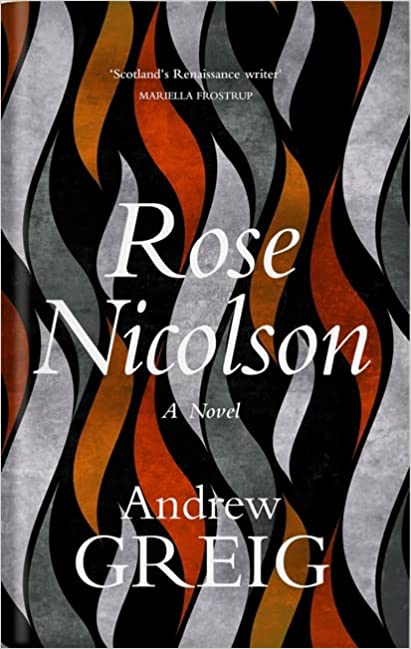
Despite the three really good books in this year’s shortlist, it wasn’t difficult for me to pick my favorite because of the lasting impression it gave me despite being the book I read first, in August 2022. That is Rose Nicolson by Andrew Greig. It is set in the difficult times of 16th century Scotland, when people are still fighting about religion, about a young man’s love for an extraordinary young woman who is in danger of being thought a witch just because of her intelligence. I am a big Greig fan, and this was one of his best (although I might put in a word for his Fair Helen).

Reading Thirkell’s Barsetshire Series in Order: #28 Love at All Ages + #27 Close Quarters Wrap-Up

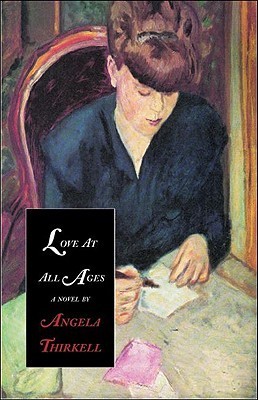
Thanks so much to the people who are plodding along with me to the finish. I have to admit that the last couple of books were not as sparkling as the rest of the series, but now we are almost at the end. So, thanks for your comments about Close Quarters.

I notice that Goodreads describes the next book, Love at All Ages, as the last one! However, all of the sources I looked at before beginning this project also listed one more. So, I’ll be posting my review of Love at All Ages on Friday, September 29, with one more to go after that.

Reading Thirkell’s Barsetshire Series in Order: #27 Close Quarters + #26 A Double Affair Wrap-Up

We’re counting down to the end here with only three books to go. My thanks to the loyal followers who have continued to comment even if they haven’t been able to read the books.

  • Liz Dexter
  • Penelope Gough
  • Renee

In A Double Affair, I believe I caught Thirkell in a continuity error for the first time. We’ll see how she finishes off the series.

The next book is Close Quarters, and I’ll be posting my review on Thursday, August 31.

And here’s our badge.