
For this period, there’s a tie for Best Book: A Town Called Solace by Mary Lawson and Hester by Margaret Oliphant!

Reviews, reviews, and more reviews

For this period, there’s a tie for Best Book: A Town Called Solace by Mary Lawson and Hester by Margaret Oliphant!
I know I’m losing participants, but thanks to those who are keeping up or made comments about Private Enterprise, the first post-war book in the series. Those who participated were

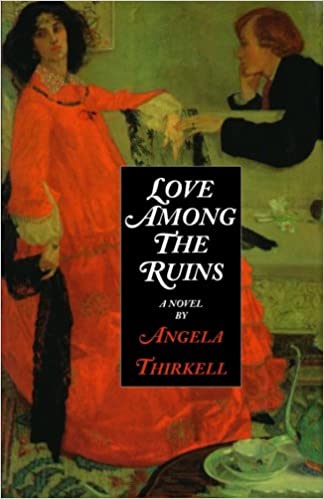
Our book for October is Love Among the Ruins. I will be posting my review on Monday, October 31. I hope that one or two people will read along with me, as I am getting into completely uncharted waters.
And here’s our little emblem.

With my review of The Year of the Runaways, I have finished reading the shortlisted books for the Booker Prize of 2015. So, it’s time for my feature where I decide whether the judges got it right. My reactions to the shortlist of that year were really mixed. There were a couple books I intensely disliked, one that I thought was pointless, one that was interesting but didn’t really pull me in, and two that were excellent.
The winner for the year was A Brief History of Seven Killings by Marlon James, about an assassination attempt on Bob Marley and its ramifications years later. I found it brutal and sexist and couldn’t even figure out which of many dead people the seven killings referred to. Though it was the first book in this shortlist that I read, I knew even then I wouldn’t be picking it as my favorite.
My next least favorite book was The Fishermen by Chigozie Obioma, about what happens between brothers after a prophecy. I found this book interesting because of its insight into Nigerian village culture and life, but I also found it extremely and graphically violent. Worse, I found Obioma’s writing immature, with unusual metaphors that often didn’t work well and his love for long, overblown sentences.
I didn’t see any point at all in Satin Island by Tom McCarthy, about U, a corporate anthropologist, whose job is to observe, connect, and deconstruct all known human activity. I’m sure it is meant ironically, but the novel seemed an exercise in Absurdism to me. It almost had a plot, but then it petered out at the end.
I liked The Year of the Runaways by Sunjeev Sahota a little bit better. Written as if it was 19th century social realism, it is about several young Indian men who illegally immigrate to England with unrealistic expectations of their job prospects. It’s pretty grim, though, and it gets worse before it gets better. Its social realist style leaves you detached from its characters.

Now, we get to the good stuff. I just loved A Spool of Blue Thread by Anne Tyler. About a family that gathers to decide what to do about their aging and faltering parents, I found it to be a lovely story about family stories and secrets, loving and forgiveness.
Finally, however, there is A Little Life by Hanya Yanigihara. A beautifully written novel, it centers around four young men who were roommates in college. Slowly, we learn the secrets of one mysterious character, Jude, around whom everything seems to center. This was a powerful and deeply touching novel.
So, I pick A Little Life, with strong recommendations for A Spool of Blue Thread.

Having posted my review of the last shortlisted book for the 2018 James Tait Black Fiction Prize, I think it’s time for my feature where I discuss whether the judges got it right. The four entries for this year are disparate and for each of them, I have both positive and negative reactions. In fact, this is so much the case that I hardly know which book to start with or to pick. I’ll just work my way toward the winner.
I guess I’ll start with First Love by Gwendolyn Riley, because I’m still not sure what Riley meant by the title. The novel depicts the main character’s two abusive relationships, one with her older, ill husband and the other with her first boyfriend. Although these depictions are realistic, the theme doesn’t give the reader much to like.
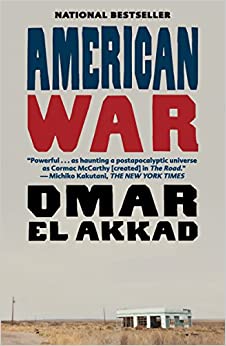
American War by Omar Al Akkad was not my genre, being a dystopian novel about the results of climate change and about how young people are radicalized for war. However, I found it completely engrossing, despite disliking its themes.
White Tears by Hari Kunzru is about a relationship between two young men in college who form a friendship and a company based on a mutual fascination with sound. However, it turns out that that neither the narrator nor the reader understands what is going on, and the novel gradually moves from complete realism to having a strong supernatural bent. Although this novel flagged for me at times, its ending was so unexpected that Kunzru was the only author of these four from whom I wanted to look for more to read. (Although this reminds me that I have not yet done that.)
The winner of the award that year was Attrib. and Other Stories by Eley Williams. I can understand the judges’ choice, because this collection is so playful with language. Still, I only had a strong reaction to a couple of the stories and felt that its playfulness was beyond me at times. Also, I often struggle with short fiction.
So, which book did I think should get the award? I had the biggest reaction to White Tears, but didn’t think I should give the honor to a book that flagged for me at times. American War was the only one I called engrossing, but it was also really not the kind of thing I like to read. Attrib. and Other Stories was way above my head at times, but at other times it was funny and endearing. I think for this shortlist, I’ll recommend that, if you want to read one, pick the one that sounds most interesting to you. That’s right. I am totally copping out.
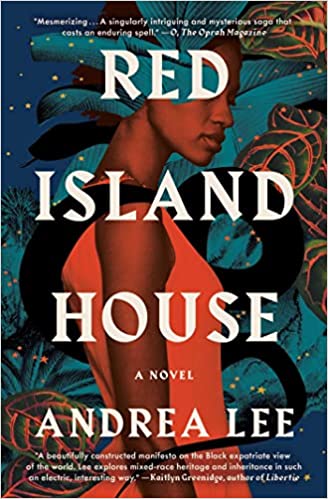
The Best Book for this period is Red Island House by Andrea Lee!
It’s time for another Classics Club Spin. Members who want to participate post a numbered list of 20 of the books from their Classics Club list by this Sunday, September 18. The club takes a spin, and the number selected determines which book from my list I’ll read next.
So, here’s my list:
I’ll be waiting to see which one I got. Did you join the spin? What book would you like to get?

Thanks to everyone who participated in reading Peace Breaks Out, the last of this series set during World War II. Those who participated were
The next book is Private Enterprise. I’ll be posting my review on Friday, September 30. Now, we’re getting into new waters, because I think that of the rest of the novels, I have only read one or two. I hope some of you will read along occasionally.
And here’s our badge.
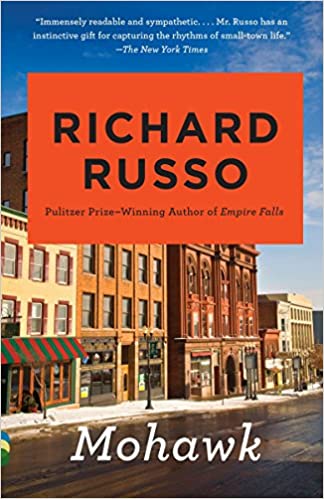
The Best Book for this period is Mohawk by Richard Russo!

This period’s Best Book is Rose Nicolson by Andrew Greig!

Having just reviewed the final shortlisted novel for the 2010 James Tait Black Prize for Fiction, it’s time for my feature where I decide whether the judges got it right. Most of the shortlist left me unsatisfied for this year, but it contains two wonderful books.
The novel I found least interesting was Strangers by Anita Brookner. The story of a lonely man and his unsatisfying relationships, I found it slow moving and repetitive, although it was well written.
I have loved some of Kazuo Ishiguro’s novels and applaud him for seeming to try different things, but I found his collection of short stories about music and fame, Nocturnes, unsatisfying. I also found some of the situations frankly unbelievable.
The Selected Works of T. S. Spivet by Reif Larsen is probably the most unusual of the entries. It is a boldly illustrated story about a boy genius and his trip to the Smithsonian to accept a fellowship. I found some of the aspects of the story unlikely, but my biggest problem with it was the narrator’s voice. There was no time that the voice sounded like a 12-year-old boy, genius or not.
The winner of the prize that year was The Children’s Book by A. S. Byatt. I can understand why it won, because it is an ambitious novel that tries to paint a portrait of Victorian society against the microcosm of one family’s experience. It is also completely absorbing, so I think it deserves the award.
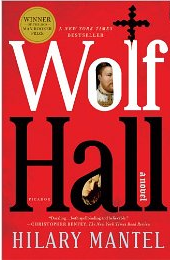
However, the other shortlisted book was Wolf Hall by Hilary Mantel, a fascinating novel about the life of Thomas Cromwell and one of my favorite novels of all time. I’m not saying that the judges got it wrong this time, but the choice between these two would be difficult for me. I’m guessing The Children’s Book won because of its larger scope.
Book reviews of mainly modern & contemporary fiction
Writer and Historian
There is nothing more satisfying than reading a book while sipping a hot cup of tea.
A historical fiction book blog
Emerging as an artist
Liz Dexter muses on freelancing, reading, and running ...
For mostly adult, literary, fiction; focusing on historical, contemporary, biographical, and women.
"Well, there’s so much to read, and I’m so far behind." Wallace Stegner
Read to live and live to read
A bookish blog (mostly) about women writers of the nineteenth and twentieth centuries
A Celebration of Russian Literature
Reading: it's personal
Based in Romania, reading all over the world. Mostly fiction, some memoires and a little bit of poetry.
Adam Burgess
"Vivre le livre!"
"History is a vast early warning system." Norman Cousins
Scottish Book Blogger
"She had read novels while other people perused the Sunday papers" - Mary Elizabeth Braddon
A word after a word after a word is power. --Margaret Atwood
Books • Opera • Art • History
FOR DISCERNING READERS
Your online source for Jane Austen and her legacy
A Community of Classics Lovers
A blog about Irish books, writers, writing and everything in between.
 What? Me Read?