The book we’re reading for August is Peace Breaks Out. We can guess part of what happens in that book! I’ll be posting my review on Wednesday, August 31. I hope more of you will join me!
It’s time to wrap up The Headmistress and continue on to July’s book. Thanks to everyone who participated in the discussion, made comments, or sent links for The Headmistress. They were (and I hope more will appear)
Our book for July is Miss Bunting, which is a reread for me. I’ll be posting my review on Thursday, July 28. I hope some of you will join me. And here’s our little badge.
Having just posted the review for the last of the shortlisted books for the 2020 James Tait Black Award, I find it is time for my feature, where I decide if the judges got it right. This time it’s going to be a hard one, for none of the nominated books struck much of a chord with me. Usually, I judge the books by how I reacted to them, as most people would do, I think.
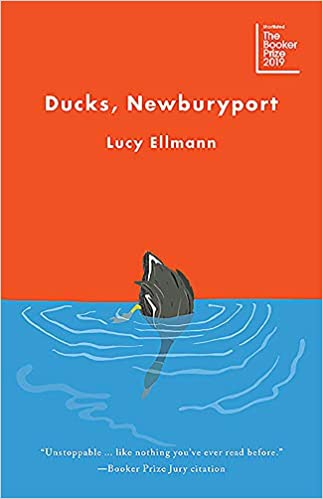
Often, I start with the book I liked least, but I am not even sure which one that is. So, I guess I’ll start with the winner, Ducks, Newburyport by Lucy Ellman. This book is by far the most experimental of the four shortlisted books, which I’m guessing is why it’s the winner. It is mostly one 1000-page sentence—except for short passages of regular narrative—and it breaks just about every rule of fiction I can think of. I felt that Ellman got details wrong for her character, a middle-aged American Midwestern housewife. She seemed too old and too British. The novel was compelling enough in an odd way for me to finish (that is, I kept wondering why I was still reading it), but didn’t have much of a payoff.
A lot of people are calling linked short stories novels these days. The James Tait Black award is for fiction, but almost every entry I have read so far has been a novel or a novel of linked stories, so Sudden Traveler by Sarah Hall is an anomaly. That is, it is definitely a collection of short stories rather than linked stories making a novel. Some of these stories are slice of life and some quite fantastical. Although I liked another book I read by Hall, I am not generally so comfortable with short fiction (although I like the linked story novels) or with the fantastic, and I found some of the stories perplexing. If this book had any overarching theme, I guess it might be girl power.
Although I liked Girl by Edna O’Brien, it is definitely the least experimental of all the entries. It is a very short, straightforwardly told story about a young Nigerian girl who is kidnapped and the results of that even after she is returned to her family. O’Brien’s writing is beautiful and the novel is affecting.
I’m ending with Travelers by Helon Habila, a novel of linked short stories about the plight of African refugees in Europe. Does that mean I liked it best? I’m not even sure. If I had to pick a winner, I guess it would be either Girl or Travelers. I had more of a response to Girl but think it is slighter than Travelers. Do I think the judges got it right this time? If they are awarding for experimentalism, maybe, but I’m not even sure whether Ducks, Newburyport deserves all the accolades it got. I think that sometimes reviewers in any genre of media get excited because something is different, and this may be a case of that.
The Classics Club has announced another spin. To participate, members post a numbered list of 20 of the books from their personal lists, to be posted by this Sunday, June 12. The club announces a number, and that determines which book to read by Sunday, August 7.
So, with no more further ado, here is my list:
The Castle of Otranto by Horace Walpole
Cecilia, Memoirs of an Heiress by Fanny Burney
The Moonspinners by Mary Stewart
The Aeneid by Virgil
Phineas Finn by Anthony Trollope
Miss Mole by E. H. Young
Weatherley Parade by Richmal Crompton
Sleeping Murder by Agatha Christie
Love’s Labours Lost by William Shakespeare
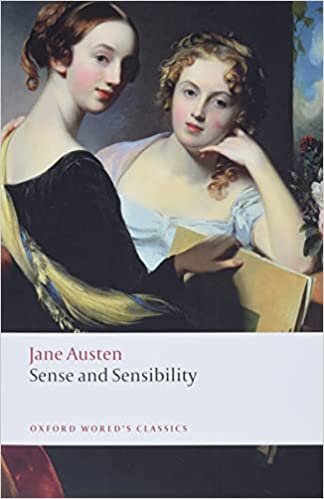
Sense and Sensibility by Jane Austen
Merkland, A Story of Scottish Life by Mrs. Oliphant
Thanks to everyone who joined in commenting on or reviewing or even just reading along with Growing Up. Although we met some new characters, I enjoyed catching up with some old friends. The participants were
This month’s book is The Headmistress, which I will be reviewing on Thursday, June 30. I am fairly sure I have never read this one before, so I’m looking forward to it.
Every once in a while, I mention that I’m reading about islands again. For some reason, I have always drifted toward books set on islands or in other remote locations. So, I thought I’d do an extra post for fun, listing all of the books set on islands that I’ve reviewed since I started the blog. I’m not going to count New York City or the main lands of the British Isles, because there would be too many (or any Game of Thrones books, set on mythical Great Britain), or Australia, since it is a continent. I hope I don’t forget any of them.
And in the upcoming months, expect reviews of more island-set novels, such as The Moonspinners by Mary Stewart (set in Crete), Red Island House by Andrea Lee (set in Madagascar), and The Unseen by Roy Jacobsen (set in a Norwegian archipelago).
Do you like books set on islands, or am I just weird? Which of these have you read?






 What? Me Read?