
The Best Book for this period is A Room Made of Leaves by Kate Grenville!
Reviews, reviews, and more reviews

The Best Book for this period is A Room Made of Leaves by Kate Grenville!

I’ve now reviewed all the shortlisted books for the 2021 Walter Scott Prize for Historical Fiction, so it’s time for my feature where I decide whether the judges got it right. In this case, I can’t begin with the book I disliked most, because I liked all of them. In fact, that’s the difficulty, to choose between these worthy candidates.
I very recently reviewed The Tolstoy Estate by Steven Conte, about the German occupation of Tolstoy’s estate during World War II. I enjoyed this novel but didn’t like the letters that skipped ahead of the plot and felt the novel was somehow slight.
I also enjoyed The Dictionary of Lost Words by Pip Williams, which explored the ways that gender influenced the making of the Oxford English Dictionary and looked at the women who helped create the dictionary. I found the novel touching and interesting, although a few of the plot points were predictable.
The freshest book in my memory of is A Room Made of Leaves by Kate Grenville. I found this novel about how a woman learns how to work within a difficult marriage and helps found the sheep industry in Australia vivid and deeply interesting. Of course, the husband gets all the credit.

One of my favorite writers is Maggie O’Farrell. Her novel Hamnet is about the death of William Shakespeare’s and Anne Hathaway’s son and its influence on the writing of Hamlet. I found it to be deft and sensitive, although at first I wasn’t comfortable with how much O’Farrell was making up about Hathaway.
But speaking of favorite authors, along with many people, I was waiting for the last entry in Hilary Mantel’s trilogy about Thomas Cromwell. That book, The Mirror and the Light, follows Cromwell’s life as he serves Henry VIII and tries to keep him from his worst excesses. It begins with the beheading of Anne Boleyn and of course, ends with his own death. It had me in tears, which is my best gauge of how much I enjoy a book. This novel was the winner of the award for 2021, and I think the judges got it right.
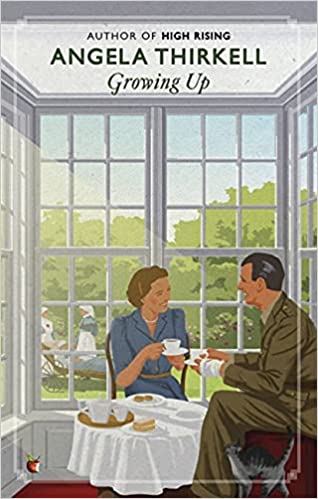
Thanks to everyone who participated in or commented on this month’s reading of Marling Hall, in which we caught up on some familiar characters and met some new ones. Participants were

The book for May is Growing Up, for which I will be posting my review on Tuesday, May 31. This is another new one for me, so I’m excited. I believe it features the return of one of my favorite characters, Lydia Merton.
And here’s our badge.

The Best Book for this period is Unsettled Ground by Claire Fuller!

The Best Book for this period is Temptation by János Székely!

It looks like the Classics Club is having another spin. Members can participate by making a numbered list of 20 of the books on their Classics Club lists and posting it by Sunday. On March 20, the Classics Club will pick a number, and that determines which of the books on your list to read by Saturday, April 30.
So, here’s my list for the spin:
If you choose to participate, good look on getting a book you enjoy!
Since I have posted my last review of the shortlisted books for the Booker Prize of 2019, it’s time for my feature where I decide whether the judges got it right. The nominees for that year include a dystopian novel, several novels that experiment in form and two that experiment in narrative style, and one fantasy/satire.
I often start this post with the books I liked least, but in this case, I have a little problem with that, and that is to decide which ones I disliked the least. In fact, on the list for this year, there are none that I thought were entirely successful and several that I actively disliked.
So, I’ll start with the one that is freshest in my mind, Quichotte by Salman Rushdie. This fantasy/satire about an elderly man on a road trip (that doesn’t get anywhere) with his imaginary son was a DNF for me. I felt Rushdie constantly winking at me as he proceeded with his ponderous humor that wasn’t funny at all.
The other novel I disliked intensely was An Orchestra of Minorities by Chigozie Obiama. I thought this novel, about a man who will supposedly do anything for love, was riddled with sexism and outright hatred of women. Its hints of Igbo culture are interesting, but also slowed down the forward impetus of the novel.
Now, we get to the novels that I thought were ambitious but not quite successful. Elif Shafak’s 10 Minutes 38 Seconds in This Strange World tackles violence toward women in an unusual way, but I found its change in tone to be jarring. In addition, the concept of the first part of the novel, which represents the 10 minutes and 38 seconds of brain activity in a dying person in 200 pages (short period of time, long time of reading), just didn’t work for me.
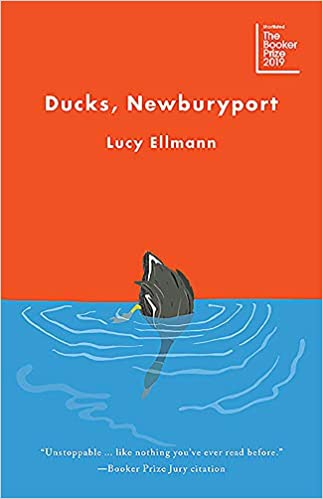
Ducks, Newburyport by Lucy Ellman was experimental by anyone’s reckoning. This novel, which is basically one 1000-page sentence (except for a few intervals that are written normally) broke every rule about writing I can think of. It was oddly compelling, enough to make me finish, but I’m not sure it provided much payoff for all the effort.
I didn’t actually say this in my review of The Testaments, but I really felt it was a bit of a sell-out by Margaret Atwood, only written to satisfy the fans of The Handmaid’s Tale television series. I felt it very conveniently wrapped things up and was far less of a landmark book than her original novel. It was also the most traditionally written book of the shortlisted novels for 2019. However, it was Atwood, so it was compelling reading.
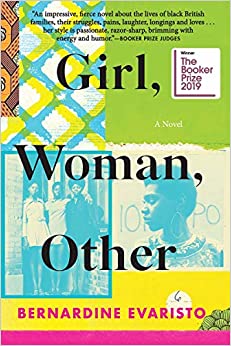
That brings us to Girl, Woman, Other by Bernardine Evaristo, a cowinner of the award with The Testaments. This novel of linked short stories about women is also experimental in form, having hardly any periods. I called it a semi-successful experiment in form and writing style, but it did include some powerful stories. In a year that was hard to pick favorites, I guess this would be my pick. Since this novel was a cowinner of the award, I guess that makes the judges half right.

It was a short month, so we didn’t get much participation this time. However, thanks to those who participated in reading or commented on Cheerfulness Breaks In, which was a real joy! Those contributors are:
The book for March is Northbridge Rectory, another re-read for me. I’ll be posting my review on Thursday, March 31. I hope more of you will be able to read along.
And here’s our little badge.

The Best Book for this period is The Mercies by Kiran Millwood Hargrave! Also highly recommended is The Grand Sophy by Georgette Heyer!

The Best Book of the most recent ten is The Historians by Cecilia Ekbãck!
Book reviews of mainly modern & contemporary fiction
Writer and Historian
There is nothing more satisfying than reading a book while sipping a hot cup of tea.
A historical fiction book blog
Emerging as an artist
Liz Dexter muses on freelancing, reading, and running ...
For mostly adult, literary, fiction; focusing on historical, contemporary, biographical, and women.
"Well, there’s so much to read, and I’m so far behind." Wallace Stegner
Read to live and live to read
A bookish blog (mostly) about women writers of the nineteenth and twentieth centuries
A Celebration of Russian Literature
Reading: it's personal
Based in Romania, reading all over the world. Mostly fiction, some memoires and a little bit of poetry.
Adam Burgess
"Vivre le livre!"
"History is a vast early warning system." Norman Cousins
Scottish Book Blogger
"She had read novels while other people perused the Sunday papers" - Mary Elizabeth Braddon
A word after a word after a word is power. --Margaret Atwood
Books • Opera • Art • History
FOR DISCERNING READERS
Your online source for Jane Austen and her legacy
A Community of Classics Lovers
A blog about Irish books, writers, writing and everything in between.
 What? Me Read?