A Century of Books: How Am I Doing? November Report

In January, I foolishly decided to join Simon Thomas’s Century of Book Challenge, even though I knew that reading 100 books, one for each year in a century, from 1925-2024, would be tough because last year I only read 169. So, how am I doing?

Here are the holes in my project with the books listed for this month below. If you want to see the details, see my Century of Books page.

  • 1925-1934: entry needed for 1928
  • 1935-1944: entry needed for 1939
  • 1945-1954: entries needed for 1948 and 1950
  • 1955-1964: entries needed for 1955, 1957, and 1960
  • 1965-1974: entries needed for 1969 and 1973
  • 1975-1984: entries needed for all years except 1975, 1976, 1978, 1980, and 1984
  • 1985-1994: entries needed for all years except 1987, 1988, 1989, and 1992
  • 1995–2004: entries needed for all years except 1998, 1999, and 2004
  • 2005-2014: entries needed for 2005, 2006, 2007, and 2013
  • 2015-2024: complete!

Since October 30,, I read the following books. As we’re closing in on the end of the year, I decided to mark the ones that fill one of my holes in bold from now on. I didn’t do well on this project this month because of the several other projects I was reading for in November.

  • Beauvallet by Georgette Heyer from 1929
  • Murder after Christmas by Rupert Latimer from 1944
  • The Late Mrs. Prioleau by Monica Tindall from 1946
  • The Dancing Bear by Frances Faviell from 1954
  • The Fledgling by Frances Faviell from 1958
  • The Stone Angel by Margaret Laurence from 1964
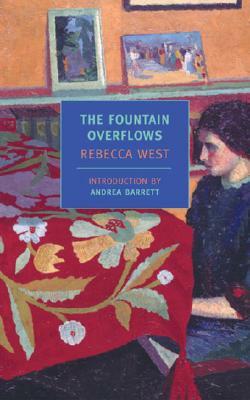
  • This Real Night by Rebecca West from 1984
  • A Death in Summer by Benjamin Black from 2011
  • Fever Dream by Samanta Schweblin from 2014
  • Euphoria by Elin Cullhead from 2020
  • The Trees by Percival Everett from 2021

Nonfiction November: Week Four

Here we are already coming up on week four of Nonfiction November. It’s gone by really fast. This week, the prompt is as follows:

Week 4 (11/18-11/22) Mind Openers: One of the greatest things about reading nonfiction is the way it can open your eyes to the world around you–no plane ticket required. What nonfiction book or books have impacted the way you see the world in a powerful way? Is there one book that made you rethink everything? Is there a book where, if everyone read it, you think the world would be a better place? (Rebekah)

I don’t think any of my nonfiction choices this year impacted me as strongly as expressed in the prompt. Rather, some reaffirmed my interest in topics that I have neglected. I like reading books that tell me something I didn’t know about, and this year, the only one that fits in that category is David Grann’s The Wager: A Tale of Shipwreck, Mutiny, and Murder. It is about an ill-conceived venture of 1740 to capture rich Spanish ships in the Pacific Ocean. It was part of the War of Jenkin’s Ear, a conflict I also know nothing about (something to look up!). The expedition left too late for good conditions and had misestimated when the best weather for rounding Cape Horn would be. The Wager was the smallest ship in the fleet. It underwent some problems before getting to the Horn, and when it did, it was shipwrecked. What was most interesting was what happened among the crew once it was wrecked.

Another book that restressed some reading I had already done was The Inconvenient Indian: A Curious Account of Native People in North America by Thomas King, which I have not yet reviewed. It merely reconfirmed and built upon my reading from way back, when I read Bury My Heart at Wounded Knee by Dee Brown. Our history with dealing with native peoples is shameful, and our double-dealing hasn’t stopped. I need to get more informed on this issue and see what is going on today.

As I mentioned before, I really didn’t read much nonfiction this year despite my resolve to read more. It just didn’t happen that way, but I’ll try harder next year.

Nonfiction November: Week Three

I had to think a lot about what I could do for this week, because the most self-evident answer to the prompt was too obvious. Here’s the prompt for this week:

Cover for Wolf Hall

Week 3 (11/11-11/15) Book Pairings: This week, pair up a nonfiction book with a fiction title. Maybe it’s a historical novel and the real history in a nonfiction version, or a memoir and a novel, or a fiction book you’ve read and you would like recommendations for background reading. Or (because I’m doing this myself) two books on two different areas have chimed and have a link. You can be as creative as you like! (Liz)

Cover for Bring Up the Bodies

Maybe this pairing is obvious, too, but it didn’t immediately come to mind. Here it is, though. I recently finished the history/biography Hunting the Falcon: Henry VII, Anne Boleyn and the Marriage That Shook Europe by John Guy and Julia Fox. This account begins when both figures are younger, with Henry becoming king and Anne first going to the French court. But it concentrates on the years of their relationship and marriage, including the fallout from Henry’s divorce of Katherine.

I’m actually pairing this nonfiction book with three fiction books that concentrate on the same subject matter, and they, of course, are well known. I meant Hilary Mantel’s outstanding trilogy about Thomas Cromwell. The trilogy begins with Wolf Hall, in which Cromwell helps Henry with his divorce from Katherine so he can marry Anne. It continues with Bring Up the Bodies, in which Cromwell eventually helps ruin Anne after she fails to produce a son and Henry sets his eyes on Jane Seymour. Finally, it ends in The Mirror and the Light, which begins with the beheading of Anne.

Whether you’re interested in the nonfiction or the fiction books, you’ll be entertained, but the trilogy happens in my opinion to be a set of top historical fiction books.

Nonfiction November: Week Two

Here’s the prompt for Week Two of Nonfiction November:

Week 2 (11/4-11/8) Choosing Nonfiction: What are you looking for when you pick up a nonfiction book? Do you have a particular topic you’re attracted to? Do you have a particular writing style that works best? When you look at a nonfiction book, does the title or cover influence you? If so, share a title or cover which you find striking. (Frances)

What are you looking for when you pick up a nonfiction book? Do you have a particular topic you’re attracted to?

As far as the overall categories are concerned, I tend to gravitate toward history and biography, with a distinct slant toward reading about literary figures. However, there are certain periods of history that appeal to me (the Wars of the Roses and the Tudors, for example), and there are certain authors that I trend toward, usually buying any books that I come across. Here are some of those authors:

  • Bill Bryson
  • Doris Kearns Goodwin
  • David Grann
  • Erik Larson
  • Kate Summerscale
  • Claire Tomalin
  • Lucy Worsley

As you can see, several of these names are historians and biographers. I also like reading about art and true crime.

Do you have a particular writing style that works best?

Where writing style is concerned, I obviously want the book to be well written. In nonfiction, writing can get pretty academic and stuffy. If I’m not reading a book for a particular research goal, then I prefer the style to be more informal, maybe even with a touch of humor. However, Goodwin uses a more formal style, but it is eminently readable and not stodgy.

When you look at a nonfiction book, does the title or cover influence you? If so, share a title or cover which you find striking.

Yes, of course, the covers influence me to buy books. I’m not going to pretend otherwise. However, I’m more influenced by the author than the cover, usually. Titles not so much in nonfiction, because they are often stodgy or ruined by those stupid subtitles they all seem to have now. I think the cover that I liked best from my reading of the last year was the one for The Salt Path (note no subtitle).

WWW Wednesday!

It’s my week for WWW Wednesday, where I answer three questions about my reading, and you can, too, if you like!

  • What did I just finish reading?
  • What am I reading now?
  • What will I read next?

I stole this idea from The Chocolate Lady, and it seems to be popular. If you would like, please let me know about your own reading life!

What did I just finish reading?

I have been reading for several projects lately, although my intention was to read as many books as possible for my A Century of Books project before the end of the year. The book I read last was supposed to fill a hole in this project, but alas, once I had read it, I realized that I had already filled that particular hole. I thought that by making a list of the holes I had left and marking them off as I bought or reserved books at the library, I would avoid that, and I have so far. Until now. Anyway, this book was Beauvallet, one of Georgette Heyer’s early novels, and it is a swashbuckler rather than a Regency romance. It was supposed to fill the hole for 1929, but I read The Islander a week or so ago, and that filled it first. It’s possible that this book appeared in a list for the wrong year on Goodreads. I’ve seen them make that mistake before.

What am I reading now?

The book I am reading now is The Stone Angel by Margaret Laurence, and it will indeed fill a hole in my Century of Books project. I thought I had read something by her before, but it turns out I have not. So far, it’s an interesting novel about the life in small-town Canada of a very old woman and about the perils of getting old. Although I am not as decrepit as this 90-year-old woman, it’s ringing some bells, let me tell you. Let’s hear it for filling the hole for 1964!

What will I read next?

I generally read well ahead of my posts unless I decide to insert reviews for a special occasion that I hadn’t planned (as I will be doing this month, getting ready for Dean Street in December). After I finish a book, I write up a rough review in a notebook, and then I prepare my posts about a month ahead. Why am I telling you this? Because I have already passed the point in my prepared posts for my Literary Wives review of Euphoria by Elin Cullhed. Got to get going on that! After that will come a couple of books for Dean Street, so I won’t be back on my Century of Books project for a few books.

Take a moment and let me know what you have been reading or plan to read!

Nonfiction November: Week One

Last year, I participated in Nonfiction November, and it was fun, even though I don’t read a lot of nonfiction. It takes a different approach than a lot of the challenges, which just have you reading books from the topic or time. Instead, each week it asks a series of questions about your nonfiction reading throughout the year.

The hosts this year are Liz of Adventures in reading, running and working from home, Frances of Volatile Rune, Heather of Based on a True Story, Rebekah of She Seeks Nonfiction, and Deb of Readerbuzz. Each week one of the hosts lists a different set of prompts for people to answer.

Here’s the prompt for this week.

Week 1 (10/28-11/1) Your Year in Nonfiction: Celebrate your year of nonfiction. What books have you read? What were your favorites? Have you had a favorite topic? Is there a topic you want to read about more?  What are you hoping to get out of participating in Nonfiction November? (Heather)

What books have I read?

I only read 12 nonfiction books this year, which I suppose by any standard is a poor showing. I don’t want to list them all, but let me categorize them by overall topic.

  • Histories: 3
  • Memoirs: 5
  • Biographies: 3
  • Graphic nonfiction (graphic as in graphic novel): 2
  • Essays: 1

You can see that these numbers add up to more than 11. That’s because the categories overlap a bit.

What were my favorites?

I read two literary biographies by Lucy Worsley and found her writing style so smooth, funny, and lively that I liked them a lot. These were Jane Austen at Home and Agatha Christie: An Elusive Woman. I also very much liked the charming graphic biography by Raymond Briggs, Ethel & Ernest.

Another book that stands out for writing style is the ironic but informative style of Thomas King in his book The Inconvenient Indian, about the history of broken treaties, evil government policies and so on toward the native peoples of Canada and the United States. I put this book in the essays category because it jumps from topic to topic, but it could also be in the history category and in current events, if I had a category like that. My review of that book hasn’t come out yet, but I compared him to Bill Bryson in writing style but with more sarcasm.

An interesting memoir for me was The Islandman by Tomás O’Crohan, translated from the Irish by Robin Flower. It is the recollections of a man born on the Blasket Islands off the coast of Southern Ireland in 1865, a very primitive existence.. Part of what I refer to as my “forced march through Ireland” 30 years ago included hiking up a hill on the Dingle Peninsula to look at the Blasket Islands, which have been unoccupied since the 1950s, when the Irish government removed the few remaining inhabitants.

It’s actually a little hard to answer this question, because I liked all of the nonfiction books I read this year. I always like David Grann, for example, and his history of The Wager in its last voyage was as compelling as usual.

Have I had a favorite topic?

I think it’s clear from my list of books that I like books about people, so I have read a preponderance of memoirs and biographies, but also histories about people more than events. For example, I put under the histories and biographies categories Hunting the Falcon by John Grey and Julia Fox, about the early lives of and relationship between Henry VIII and Anne Boleyn. I haven’t reviewed this one yet, either.

I only read one book on this topic this year, but I also like true crime and books about topics like spiritualism (not in the philosophical sense but histories about it), so what could be better than a book that combined both? It’s The Haunting of Alma Fielding by Kate Summerscale. The crime in this one isn’t a murder or anything, just ripping people off.

Is there a topic I want to read more about?

Not specifically, although perhaps I would like to read more about the Halifax explosion, and I have so far only read fiction about that. I will probably just continue to read the types of nonfiction that I usually read. I don’t usually go out looking for nonfiction, but if I hear about a new book by a favorite author or read someone’s review of one that sounds interesting, I’ll look for it. I believe I heard of Hunting the Falcon in a review by Helen of SheReadsNovels.

I could also swear that I read another book on the Blasket Islands, but looking at the available ones online does not ring a bell for me, although there are several similar memoirs to the one I read this year. It’s just that I vividly remember the part about having to leave the island. Anyway, when I tried to figure out what book I read, I saw Island by Alastair MacLeod. I’m not altogether sure it is set on the Blaskets (in fact, I think they are not), but remote Irish and Scottish island life has always appealed to me, so I have put it on my reading list.

What am I hoping to get out of Nonfiction November?

Last year I made a list of other people’s nonfiction reads with the idea of reading some of them. I didn’t think I read any of them, but I did, The Salt Path by Raynor Wynn, Ducks by Kate Beaton, and I have The Dancing Bear by Frances Faviell on my desk! And today, I am going to check that the others are on my To-Read list on The StoryGraph, so I don’t forget them. (They are!)

Otherwise, it’s kind of nice to reflect back on what I have read. In addition, the entries from last year by other people made me think about nonfiction more and add 8 nonfiction books to my To-Read list.

A Century of Books: How Am I Doing? October Report

In January, I foolishly decided to join Simon Thomas’s Century of Book Challenge, even though I knew that reading 100 books, one for each year in a century, from 1925-2024, would be tough because last year I only read 169. So, how am I doing?

Here are the holes in my project with the books listed for this month below. If you want to see the details, see my Century of Books page.

  • 1925-1934: entries needed for 1928
  • 1935-1944: entry needed for 1939
  • 1945-1954: entries needed for 1948 and 1950
  • 1955-1964: entries needed for 1955, 1957, 1960, and 1964
  • 1965-1974: entries needed for 1969 and 1973
  • 1975-1984: entries needed for all years except 1975, 1976, 1978, and 1980
  • 1985-1994: entries needed for all years except 1987, 1988, 1989, and 1992
  • 1995–2004: entries needed for all years except 1998, 1999, and 2004
  • 2005-2014: entries needed for all years except 2008, 2009, 2010, 2012, and 2014
  • 2015-2024: complete!

This month my reading was slowed down by a couple of big honkers, especially The Possessed or Devils by Dostoevsky, which is too early to qualify for my project. However, as you can see, I really buckled down trying to fill the holes in my project. Since September 25, I read the following books. As we’re closing in on the end of the year, I decided to mark the ones that fill one of my holes in bold from now on:

  • Devils (The Possessed) by Fyodor Dostoevsky from 1873 (too early)
  • The Camomile by Catherine Carwell from 1922 (too early for this project)
  • The Islandman by Tomás O’Crohan from 1929
  • Highland Fling by Nancy Mitford from 1931
  • Young Man with a Horn by Dorothy Baker from 1938
  • Sparkling Cyanide by Agatha Christie from 1945
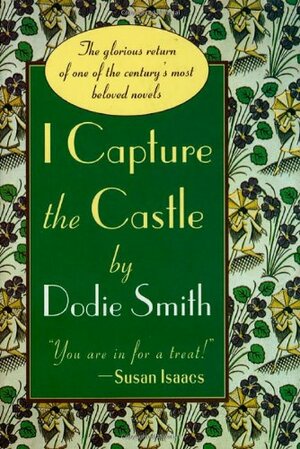
  • I Capture the Castle by Dodie Smith from 1949
  • School for Love by Olivia Manning from 1951
  • The Bell Jar by Sylvia Plath from 1963
  • Picnic at Hanging Rock by John Lindsay from 1967
  • The Home by Penelope Mortimer from 1971
  • Such Small Hands by Andrés Barba from 2008
  • The Inconvenient Indian by Thomas King from 2012
  • Margaret the First by Danielle Dutton from 2016
  • The Whole Art of Detection: Lost Mysteries of Sherlock Holmes by Lyndsay Faye from 2017
  • Hunting the Falcon: Henry VIII, Anne Boleyn, and the Marriage that Shook Europe by John Guy and Julia Fox from 2023

Another Classics Club Spin! #39

It seems like we just had a Classics Club Spin, and now it’s time for another one. How does it work? If you have posted a Classics Club list, select 20 books from it and post a numbered list of those books before Sunday, October 20. On that day, the club will announce a number, which determines which book from the list you will read first. The challenge is to read that book by December 18.

So, here is my list:

  1. The Passenger by Ulrich Alexander Boschwitz
  2. Incidents in the Life of a Slave Girl by Harriet Jacobs
  3. Hero and Leander by Christopher Marlowe
  4. Our Mutual Friend by Charles Dickens
  5. Les Misérables by Victor Hugo
  6. The Tavern Knight by Rafael Sabatini
  7. The Three Musketeers by Alexandre Dumas
  8. Love’s Labour’s Lost by William Shakespeare
  9. The Princess of Cleves by Madame de La Fayette
  10. The Methods of Lady Walderhurst by Frances Hodgson Burnett
  11. The Book of Lamentations by Rosario Castellanos
  12. Tis Pity She’s a Whore by John Ford
  13. Cecilia, Memoirs of an Heiress by Frances Burney
  14. The Passenger by Ulrich Alexander Boschwitz
  15. Incidents in the Life of a Slave Girl by Harriet Jacobs
  16. Hero and Leander by Christopher Marlowe
  17. The Tavern Knight by Rafael Sabatini
  18. The Three Musketeers by Alexandre Dumas
  19. Love’s Labour’s Lost by William Shakespeare
  20. The Methods of Lady Walderhurst by Frances Hodgson Burnett

I only have 13 books left on my list, so I had to repeat some. I am really slammed for November, what with Novellas in November and Nonfiction November, so I am hoping for one of the shorter books on the list. Wish me luck!