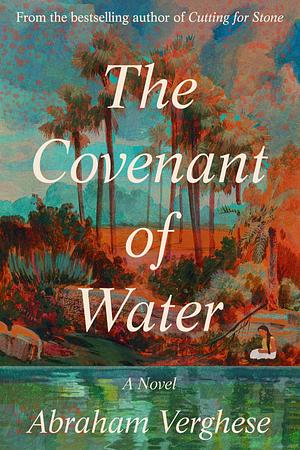
The Best Book for this period is The Covenant of Water by Abraham Verghese!
Reviews, reviews, and more reviews

The Best Book for this period is The Covenant of Water by Abraham Verghese!
Here’s the prompt for Week Two of Nonfiction November:
Week 2 (11/4-11/8) Choosing Nonfiction: What are you looking for when you pick up a nonfiction book? Do you have a particular topic you’re attracted to? Do you have a particular writing style that works best? When you look at a nonfiction book, does the title or cover influence you? If so, share a title or cover which you find striking. (Frances)
As far as the overall categories are concerned, I tend to gravitate toward history and biography, with a distinct slant toward reading about literary figures. However, there are certain periods of history that appeal to me (the Wars of the Roses and the Tudors, for example), and there are certain authors that I trend toward, usually buying any books that I come across. Here are some of those authors:
As you can see, several of these names are historians and biographers. I also like reading about art and true crime.
Where writing style is concerned, I obviously want the book to be well written. In nonfiction, writing can get pretty academic and stuffy. If I’m not reading a book for a particular research goal, then I prefer the style to be more informal, maybe even with a touch of humor. However, Goodwin uses a more formal style, but it is eminently readable and not stodgy.

Yes, of course, the covers influence me to buy books. I’m not going to pretend otherwise. However, I’m more influenced by the author than the cover, usually. Titles not so much in nonfiction, because they are often stodgy or ruined by those stupid subtitles they all seem to have now. I think the cover that I liked best from my reading of the last year was the one for The Salt Path (note no subtitle).
It’s my week for WWW Wednesday, where I answer three questions about my reading, and you can, too, if you like!
I stole this idea from The Chocolate Lady, and it seems to be popular. If you would like, please let me know about your own reading life!

I have been reading for several projects lately, although my intention was to read as many books as possible for my A Century of Books project before the end of the year. The book I read last was supposed to fill a hole in this project, but alas, once I had read it, I realized that I had already filled that particular hole. I thought that by making a list of the holes I had left and marking them off as I bought or reserved books at the library, I would avoid that, and I have so far. Until now. Anyway, this book was Beauvallet, one of Georgette Heyer’s early novels, and it is a swashbuckler rather than a Regency romance. It was supposed to fill the hole for 1929, but I read The Islander a week or so ago, and that filled it first. It’s possible that this book appeared in a list for the wrong year on Goodreads. I’ve seen them make that mistake before.

The book I am reading now is The Stone Angel by Margaret Laurence, and it will indeed fill a hole in my Century of Books project. I thought I had read something by her before, but it turns out I have not. So far, it’s an interesting novel about the life in small-town Canada of a very old woman and about the perils of getting old. Although I am not as decrepit as this 90-year-old woman, it’s ringing some bells, let me tell you. Let’s hear it for filling the hole for 1964!
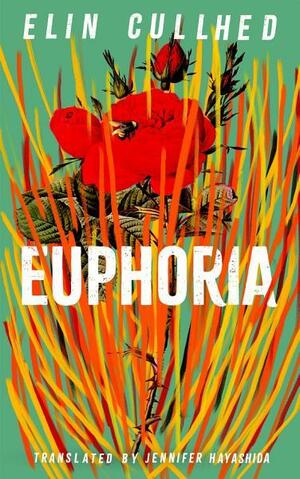
I generally read well ahead of my posts unless I decide to insert reviews for a special occasion that I hadn’t planned (as I will be doing this month, getting ready for Dean Street in December). After I finish a book, I write up a rough review in a notebook, and then I prepare my posts about a month ahead. Why am I telling you this? Because I have already passed the point in my prepared posts for my Literary Wives review of Euphoria by Elin Cullhed. Got to get going on that! After that will come a couple of books for Dean Street, so I won’t be back on my Century of Books project for a few books.
Take a moment and let me know what you have been reading or plan to read!
Last year, I participated in Nonfiction November, and it was fun, even though I don’t read a lot of nonfiction. It takes a different approach than a lot of the challenges, which just have you reading books from the topic or time. Instead, each week it asks a series of questions about your nonfiction reading throughout the year.
The hosts this year are Liz of Adventures in reading, running and working from home, Frances of Volatile Rune, Heather of Based on a True Story, Rebekah of She Seeks Nonfiction, and Deb of Readerbuzz. Each week one of the hosts lists a different set of prompts for people to answer.
Here’s the prompt for this week.

Week 1 (10/28-11/1) Your Year in Nonfiction: Celebrate your year of nonfiction. What books have you read? What were your favorites? Have you had a favorite topic? Is there a topic you want to read about more? What are you hoping to get out of participating in Nonfiction November? (Heather)
I only read 12 nonfiction books this year, which I suppose by any standard is a poor showing. I don’t want to list them all, but let me categorize them by overall topic.
You can see that these numbers add up to more than 11. That’s because the categories overlap a bit.
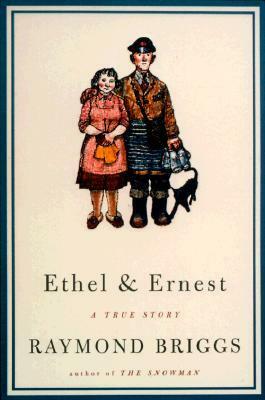
I read two literary biographies by Lucy Worsley and found her writing style so smooth, funny, and lively that I liked them a lot. These were Jane Austen at Home and Agatha Christie: An Elusive Woman. I also very much liked the charming graphic biography by Raymond Briggs, Ethel & Ernest.
Another book that stands out for writing style is the ironic but informative style of Thomas King in his book The Inconvenient Indian, about the history of broken treaties, evil government policies and so on toward the native peoples of Canada and the United States. I put this book in the essays category because it jumps from topic to topic, but it could also be in the history category and in current events, if I had a category like that. My review of that book hasn’t come out yet, but I compared him to Bill Bryson in writing style but with more sarcasm.
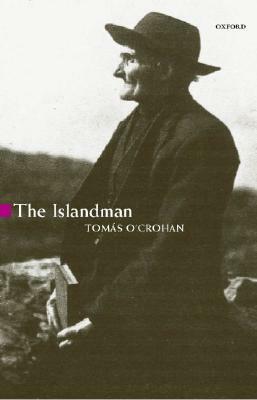
An interesting memoir for me was The Islandman by Tomás O’Crohan, translated from the Irish by Robin Flower. It is the recollections of a man born on the Blasket Islands off the coast of Southern Ireland in 1865, a very primitive existence.. Part of what I refer to as my “forced march through Ireland” 30 years ago included hiking up a hill on the Dingle Peninsula to look at the Blasket Islands, which have been unoccupied since the 1950s, when the Irish government removed the few remaining inhabitants.
It’s actually a little hard to answer this question, because I liked all of the nonfiction books I read this year. I always like David Grann, for example, and his history of The Wager in its last voyage was as compelling as usual.
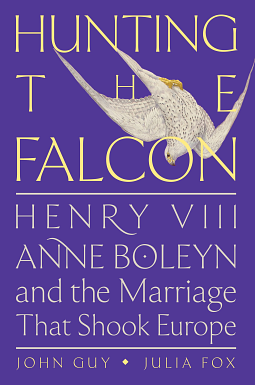
I think it’s clear from my list of books that I like books about people, so I have read a preponderance of memoirs and biographies, but also histories about people more than events. For example, I put under the histories and biographies categories Hunting the Falcon by John Grey and Julia Fox, about the early lives of and relationship between Henry VIII and Anne Boleyn. I haven’t reviewed this one yet, either.
I only read one book on this topic this year, but I also like true crime and books about topics like spiritualism (not in the philosophical sense but histories about it), so what could be better than a book that combined both? It’s The Haunting of Alma Fielding by Kate Summerscale. The crime in this one isn’t a murder or anything, just ripping people off.
Not specifically, although perhaps I would like to read more about the Halifax explosion, and I have so far only read fiction about that. I will probably just continue to read the types of nonfiction that I usually read. I don’t usually go out looking for nonfiction, but if I hear about a new book by a favorite author or read someone’s review of one that sounds interesting, I’ll look for it. I believe I heard of Hunting the Falcon in a review by Helen of SheReadsNovels.
I could also swear that I read another book on the Blasket Islands, but looking at the available ones online does not ring a bell for me, although there are several similar memoirs to the one I read this year. It’s just that I vividly remember the part about having to leave the island. Anyway, when I tried to figure out what book I read, I saw Island by Alastair MacLeod. I’m not altogether sure it is set on the Blaskets (in fact, I think they are not), but remote Irish and Scottish island life has always appealed to me, so I have put it on my reading list.

Last year I made a list of other people’s nonfiction reads with the idea of reading some of them. I didn’t think I read any of them, but I did, The Salt Path by Raynor Wynn, Ducks by Kate Beaton, and I have The Dancing Bear by Frances Faviell on my desk! And today, I am going to check that the others are on my To-Read list on The StoryGraph, so I don’t forget them. (They are!)
Otherwise, it’s kind of nice to reflect back on what I have read. In addition, the entries from last year by other people made me think about nonfiction more and add 8 nonfiction books to my To-Read list.
In January, I foolishly decided to join Simon Thomas’s Century of Book Challenge, even though I knew that reading 100 books, one for each year in a century, from 1925-2024, would be tough because last year I only read 169. So, how am I doing?
Here are the holes in my project with the books listed for this month below. If you want to see the details, see my Century of Books page.
This month my reading was slowed down by a couple of big honkers, especially The Possessed or Devils by Dostoevsky, which is too early to qualify for my project. However, as you can see, I really buckled down trying to fill the holes in my project. Since September 25, I read the following books. As we’re closing in on the end of the year, I decided to mark the ones that fill one of my holes in bold from now on:
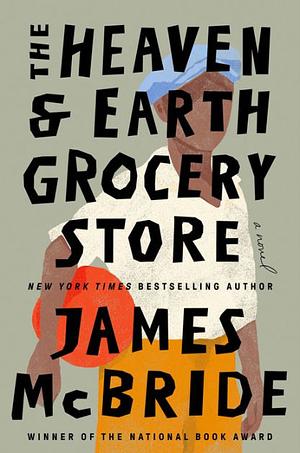
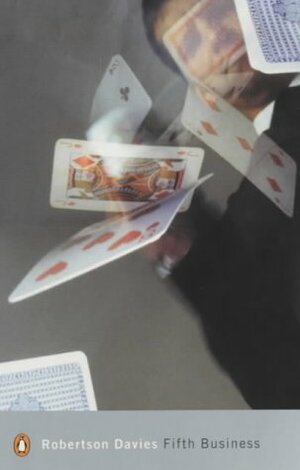
The Best Book for this period is The Heaven and Earth Grocery Store by James McBride! Also highly recommended is Fifth Business by Robertson Davies!

It seems like we just had a Classics Club Spin, and now it’s time for another one. How does it work? If you have posted a Classics Club list, select 20 books from it and post a numbered list of those books before Sunday, October 20. On that day, the club will announce a number, which determines which book from the list you will read first. The challenge is to read that book by December 18.
So, here is my list:
I only have 13 books left on my list, so I had to repeat some. I am really slammed for November, what with Novellas in November and Nonfiction November, so I am hoping for one of the shorter books on the list. Wish me luck!
My intention has been to do WWW Wednesday once a month, the first Wednesday of the month, if I remember. What is WWW Wednesday? It’s an idea I stole from the Chocolate Lady, who took it from someone else, I think. For that day, you discuss what you are reading now, what you just finished, and what you plan to read next.
If you like, please comment with your own answers to these questions.

My last book was one I read to fill a spot on my A Century of Books project. Unfortunately, as has happened all too often, by the time it surfaced in my stack, I had already read another book from that year. However, I enjoyed it very much. It was School for Love by Olivia Manning, who is best known for her Levant Trilogy. This book is also set in that area, in Jerusalem at the end of World War II. It’s about an orphaned teenage boy who is stuck in Jerusalem awaiting a place on a ship back to England.
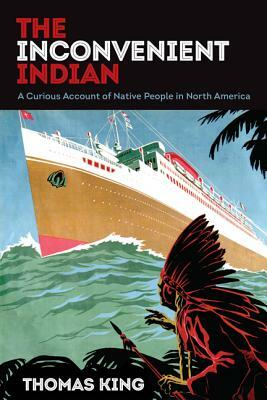
I found this book when I was looking for more by First Nations authors. Thomas King was recommended, but it seemed as though he mostly writes short stories, which I am not big on, just because I usually want more. I thought this book was a novel, but it actually turned out to be nonfiction, which I would have figured out if I had read the subtitle. It is more like a set of essays on subjects to do with the treatment of native populations at the hands of both Canada and the United States. I am finding it interesting and written in a loose, acerbic style. Like Bill Bryson only with more sarcasm. The title of the book is The Inconvenient Indian.

I’ve got another book lined up to fill a hole in my Century of Books project. I was so delighted with Cassandra at the Wedding that I was glad to see Young Man with a Horn listed by the same author, Dorothy Baker. So far, I don’t think I’ve read another book for the same year, so that will be nice, too.
Since we are now in the last quarter of the year, I’ll probably be concentrating on trying to finish this project, to the neglect of my other projects and contemporary reading. But you know me, I like to mix it up!
Take a minute and let me know what you have been reading or plan to read.
In January, I foolishly decided to join Simon Thomas’s Century of Book Challenge, even though I knew that reading 100 books, one for each year in a century, from 1925-2024, would be tough because last year I only read 169. So, how am I doing?
Here are the holes in my project with the books listed for this month below. If you want to see the details, see my Century of Books page.
Since August 28, I read the following books:
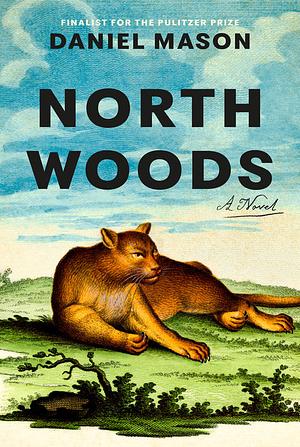
The Best Book for this period is North Woods by Daniel Mason!
I Guess I'm Doing This (and other Adventures)
Writer and Historian
There is nothing more satisfying than reading a book while sipping a hot cup of tea.
A historical fiction book blog
Traveling Through the Pages of Books
Emerging as an artist
Liz Dexter muses on freelancing, reading, and running ...
For mostly adult, literary, fiction; focusing on historical, contemporary, biographical, and women.
"Well, there’s so much to read, and I’m so far behind." Wallace Stegner
Read to live and live to read
A bookish blog (mostly) about women writers of the nineteenth and twentieth centuries
A Celebration of Russian Literature
Reading: it's personal
Based in Romania, reading all over the world. Mostly fiction, some memoires and a little bit of poetry.
Adam Burgess
"Vivre le livre!"
"History is a vast early warning system." Norman Cousins
Scottish Book Blogger
"She had read novels while other people perused the Sunday papers" - Mary Elizabeth Braddon
A word after a word after a word is power. --Margaret Atwood
Books • Opera • Art • History
FOR DISCERNING READERS
Your online source for Jane Austen and her legacy
A Community of Classics Lovers
A blog about Irish books, writers, writing and everything in between.
 What? Me Read?