
The Best Book for this period is Illyrian Spring by Ann Bridge!
Reviews, reviews, and more reviews

The Best Book for this period is Illyrian Spring by Ann Bridge!
It’s the first Wednesday of the month, so now it’s time for my new feature, WWW Wednesday (which I stole from The Chocolate Lady). The idea is to talk about the book I’m reading now, what I just finished, and what I’ll read next. If you want to pop in and tell me about your reading, please do by adding your comments.

I have to admit to not looking forward to this book for my Booker Prize project. It’s Glory by Noviolet Bulawayo. At this writing, I have just picked it up, but it is one of those allegories that uses animals as characters. My initial reaction is to think that Animal Farm was enough of that. Sigh. We’ll see how we go.

My last book was from Dean Street Press, the Furrowed Middlebrow line, a place I go for relaxation. It was Village Story by Celia Buckmaster. This is the second book I’ve read by Buckmaster, and they both seem to have lots of characters and less of a straightforward plot than most of the others. This one does indeed tell the story of a village through the characters of some of its principal citizens, through a few years in time. It was published in 1951, but its time setting isn’t clear.

I’ve been going back and forth on this. I picked up the next book in my stack, but when I read what it was about, I put it way back on my stack. Bad timing. However, a few months into my Century of Books project, I put my TBR list in order of publication date and picked out some books for years I didn’t have an entry. The Voyage of the Narwhal by Andrea Barrett was a book that had been on my list for a long time and that filled one of those holes. For some reason I thought it was nonfiction, but it says clearly on the front cover that it is a novel, about a voyage to Greenland.
No matter what you read next, I hope you enjoy it. Let me know what you’re reading, if you don’t mind. Do any of these books sound tempting to you?
In January, I foolishly decided to join Simon Thomas’s Century of Book Challenge, even though I knew that reading 100 books, one for each year in a century, from 1925-2024, would be tough because last year I only read 169. So, how am I doing?
Here are the holes in my project with the books listed for April below. If you want to see the details, see my Century of Books page.
This month I read the following books:
Not eligible for this project, unfortunately, because written too early:
Eligible and read since May 29th:

Having reviewed the last of the shortlisted books for the 2023 James Tait Black Award, I am ready for my regular feature, in which I decide whether the judges got it right. I have to say that in terms of my own reading enjoyment, the 2023 shortlist was a tough one.
Bolla by Pajtim Statovci, set in Kosovo before and during the Balkan War, is about a love affair between two male students, one Serbian and one Albanian. Although it was beautifully written and ultimately touching, I so disliked its main character that I had difficulty reading it.
Indifference to the main character was my problem with Bitter Orange Tree by Jokha Alharthi. In this dreamy novel, the main character, an Omani student in England, contemplates the life of the woman she considered her grandmother and finds parallels with her own. I was more interested in the historical parts of this novel than in the contemporary ones.

I found the histories of lesbian women in After Sappho by Selby Wynn Schartz to be interesting. However, there were just too many characters for me to keep track of, and the vignettes about the women were too short for me to really feel like I could differentiate the women from each other.
The winner of the award for this year was Barbara Kingsolver’s Demon Copperhead, a modern retelling of Dickens’s David Copperfield set in rural Southwestern Virginia. Although I had problems with this novel as well, it was certainly a spellbinding tale. So, this time I have to say that the judges got it right. Although they don’t seem to publicize the longlist, this selection makes me wonder what was on it.

Real Life by Brandon Taylor was the last of the books shortlisted for the 2020 Booker Prize that I had to review, so having done that, it’s time for my feature where I decide if the judges got it right. For 2020, the shortlist included one dystopian novel, one historical novel, and four that are more or less contemporary. One of the novels was set in Zimbabwe, one in India, one in Ethiopia, and one in Scotland, the others in the United States. Two involve unlikable heroines.
I didn’t dislike any of these novels, but there were a couple I didn’t actually like that much, either. These were two quite different novels, The New Wilderness by Diane Cook and This Mournable Body by Tsitsi Dangarembga. The New Wilderness is a dystopian novel about people who go to live in the wilderness after climate change leaves their city air too dangerous to breathe. They are forced to leave no trace, and the living conditions are brutal, but it was the lack of character development and what I felt was unlikely behavior of the people that left me cold. I was most interested in the character of Bea, but she disappears from the novel early on and it centers on her daughter, whom I didn’t find interesting.
As far as This Mournable Body is concerned, I think part of my problem is that it is the third in a series, which I didn’t know before reading it. So, I found it difficult to follow at times. It is about Zimbabwe during the rule of Mugabe, but it is mostly concerned with Tambudzai, an embittered and unlikable woman who always thinks, because of her education, that she deserves more than she is getting. Yet when she does get a job, she does poorly because she thinks she deserves more.
I find myself grouping these novels in pairs this time. The next two I liked better. Real Life was written with a morose atmosphere that was hard to get past. It’s about a young Black gay man trying to work in a graduate program in science at a university where almost everyone else is White. Although the main character has a lot to put up with, peers who are trying to sabotage him and his experiments and lots of slights and racist comments, I found it frustrating that instead of explaining things to his friends or standing up for himself, he kept telling people everything was fine. He seemed to think this was a way to fit in, but instead he undercut himself. Also, I am not a fan of explicit sex scenes of any kind.

Burnt Sugar by Avni Doshi follows the activities of a woman who grows up to be an artist from her girlhood days when her mother moves into an ashram to be the lover of the guru. There, she was alternately neglected and mistreated, brought up mostly by another woman. Now her mother is beginning to experience dementia so is left to the care of her daughter. I found the main character unlikable, but I also said I found the novel fascinating, which I don’t remember in retrospect.
I have to put The Shadow King by Maaza Mengiste and Shuggie Bain by Douglas Stuart in my last and best group. The Shadow King is a historical novel about Ethiopia’s war with Italy just before World War II. It follows the fate of Hirut, a young girl who belongs to the household of Kidane, a leader in the revolt against the Italians. Although I was slow to warm to the novel, I came to feel that it was powerful and effective.
As for Shuggie Bain, which was the 2020 winner, about a young poor gay Scottish boy, well, I feel the judges got it right this time. The Bains are deserted by their father, and their elegant mother becomes an alcoholic. One by one, Shuggie’s older siblings leave, and he is left to try to care for his mother. I found this novel moving, gripping, and heart-breaking.
I got this idea from The Chocolate Lady, and it’s turned out to be a bit different and fun, so I’ll continue with it.
The idea is to talk about what you’re reading now, what you just read, and what you plan to read. If you’d like to do that, too, please leave a comment.
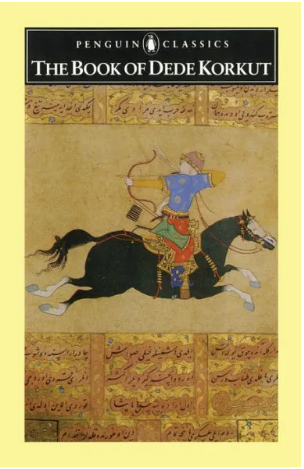
I just started reading The Book of Dede Korkut, an anonymous 14th- or 15th-century work that calls on Turkish tales from much earlier than that. When I make up my Classics Club list, I try to find very early works to put on it, and this one surfaced last time. I am just reading the third of twelve tales, supposedly written or drawn together by the shaman and bard Dede Korkut, and so far, like with most early tales, there’s a whole lot of smiting going on.

In celebration of the revival of Dean Street Press’s Furrowed Middlebrow imprint, I just read The House Opposite by Barbara Noble. From 1943, this novel does the best I’ve ever read of conveying what it was like to live in London during the blitz. It’s about a friendship between neighbors that starts out as indifference and even enmity.

Unless something drastic happens, the next book on my list is Deep Beneath Us by Catriona McPherson. Although McPherson has several series going, my favorites are her stand-alone thrillers. They are sort of cozy thrillers, if that’s not an oxymoron, usually set in rural Scotland. Whenever one is going to be published, I always purchase it pre-publication. This one just arrived last week.
What about you? Have you read any of these? Do they seem tempting?

The Best Book for this period is Prophet Song by Paul Lynch!

In January, I foolishly decided to join Simon Thomas’s Century of Book Challenge, even though I knew that reading 100 books, one for each year in a century, from 1925-2024, would be tough because last year I only read 169. So, how am I doing?
Here are the holes in my project with the books listed for April below. If you want to see the details, see my Century of Books page.
Read since April 24th:
Unfortunately, too early to be counted, The Prophet’s Mantle by Fabian Bland (E. Nesbit) from 1885
Books that count:
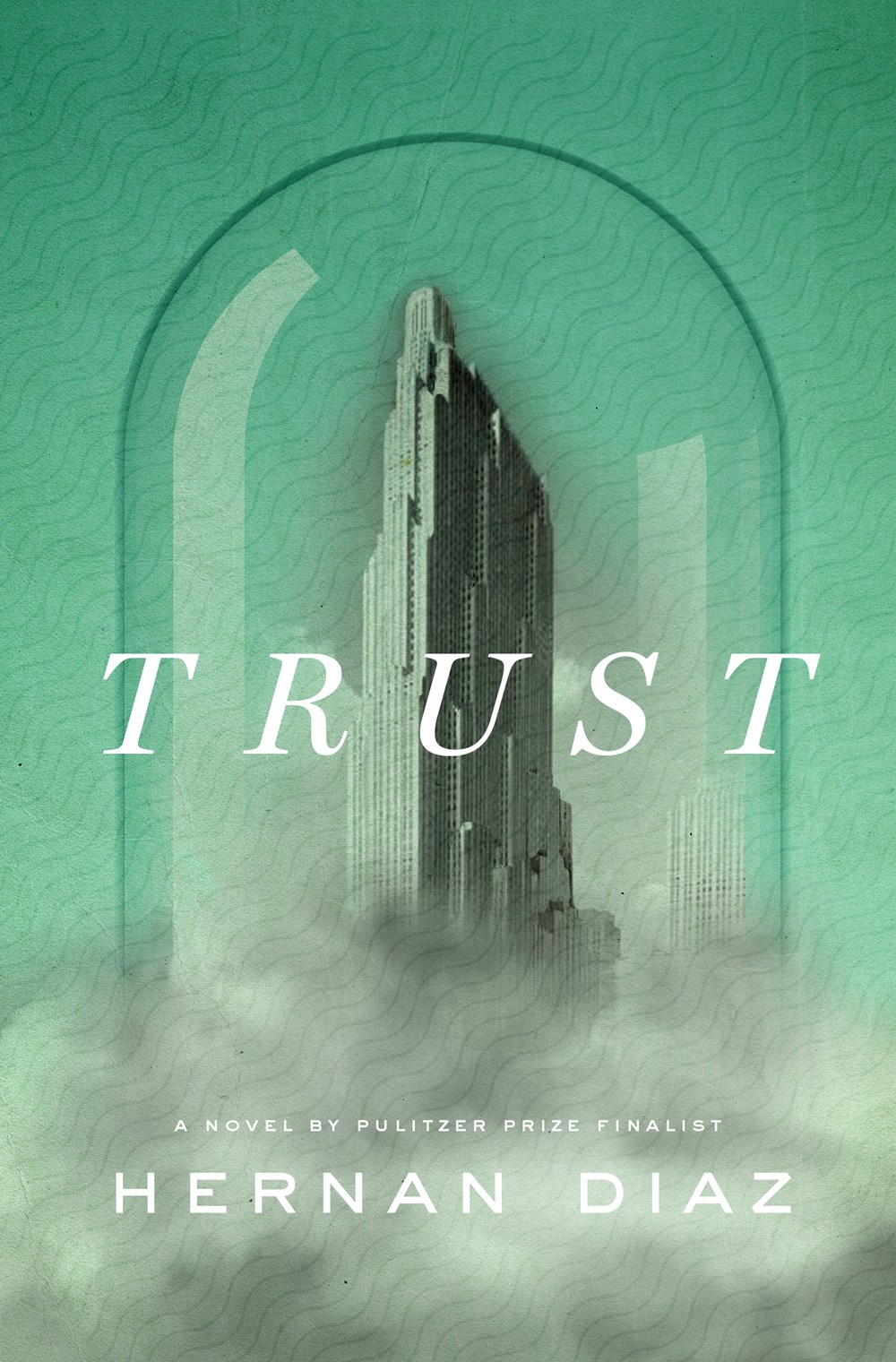
Since I just reviewed the last book on the shortlist for the 2023 Pulitzer Prize for Fiction, it’s time for me to evaluate whether I think the judges got it right. That year was an unusual one, because they awarded it to two of the three novels on the shortlist, Trust by Hernan Diaz and Demon Copperhead by Barbara Kingsolver. I felt that there were flaws in all three novels.
I think I’ll start where I often do, with the book I liked the least. That is with The Immortal King Rao by Vauhini Vara. It may be that I’ve just read too many dystopian novels this season, and they are not my favorite. But I also thought Vara tried to tackle too many subjects. This impressed some of the newspaper and magazine reviewers, but it made me feel the novel was too all over the place. It hits runaway technology, social networking dangers, climate change, the disintegration of national governments, not to mention dysfunctional families.
It’s harder for me to evaluate the other two. Although I am not a fan of novel rewrites, Demon Copperhead was a clever rewrite of David Copperfield, placing the old classic in a modern framework. However, Barbara Kingsolver is not really good at funny, which is one of Dickens’s hallmarks, and I missed the innocence of the original character. The story is gripping, however.
I think I’m going to go with Trust as the most ambitious of the three novels in terms of structure. Trust presents the story of a wealthy early 20th century tycoon and his wife three times. Although the first time, a novel about the couple, was commonplace, and the second retelling, an “autobiography,” by the tycoon, was so megalomaniacal that it was hard to read, the third section by the tycoon’s ghost writer is where the meat and the surprise of the novel lie. I likened this novel to Russian nesting dolls, and it’s the one that has stuck with me longest.
Last week, the New York Times released a list of its top books since 2000. Glancing down at the titles of both the 10 Best Books from each year and the Notable Books, I realized that, at least for the first few years, I had read at least one book. So, I decided it might be fun to post the list of books I have read from each year. I only looked at the titles shown by their covers in the article, skipping the long lists of Notable Books.
From the 10 Best Books:
None yet, but I have The Bee Sting and Northwoods in my pile.
From the 7 top Notable Books:
And I have The Covenant of Water in my pile.
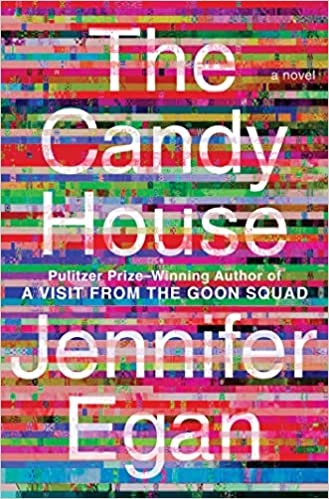
From the 10 Best Books:
From the 7 top Notable Books:

From the 10 Best Books:
From the 7 top Notable Books:

From the 10 Best Books:
From the 7 top Notable Books:
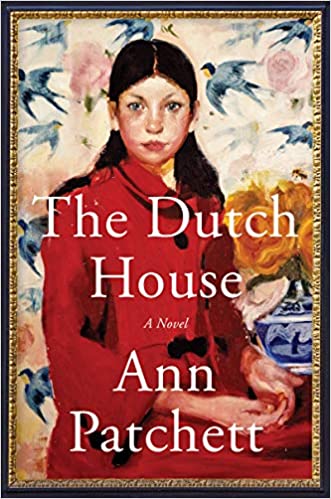
From the 10 Best Books:
From the 7 top Notable Books:
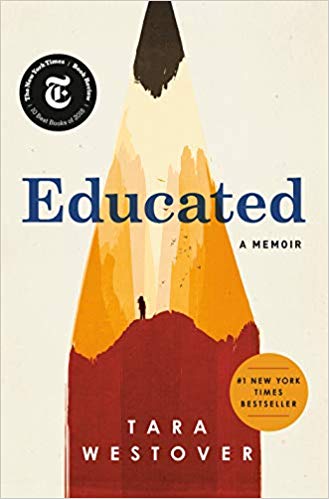
From the 10 Best Books:
From the 7 top Notable Books:
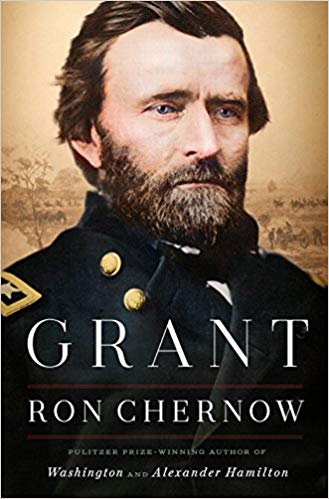
From the 10 Best Books:
From the 7 top Notable Books

From the 10 Best Books:
From the 7 top Notable Books

From the 10 Best Books:
From the 7 Top Notable Books:

From the 10 Best Books:
From the 7 top Notable Books

From the 10 Best Books:
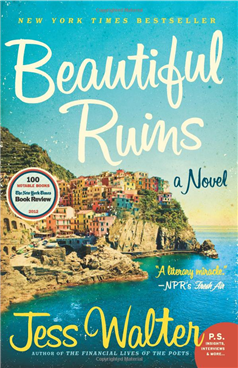
From the 10 Best Books:
From the top 7 Notable Books:
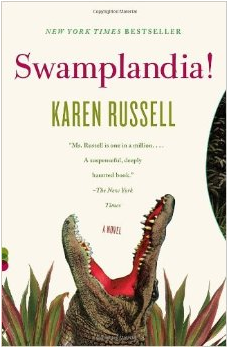
From the 10 Best Books:
From the top 7 Notable Books:
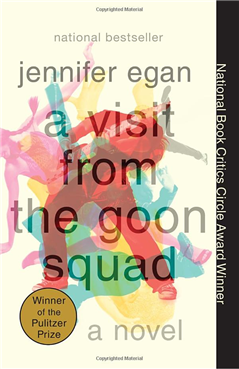
From the 10 Best Books:
From the top 7 Notable Books:
From the top 7 Notable Books:
From the 10 Best Books:

From the 10 Best Books:
From the 7 top Notable Books:
From the 10 Best Books:
From the 7 top Notable Books:

From the 10 Best Books:
From the 7 top Notable Books:
From Editor’s Choice:

From the 7 top Notable Books:
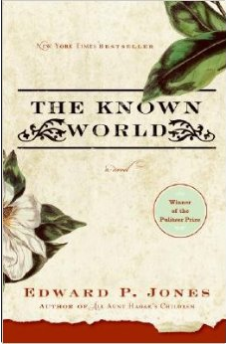
From the Editor’s Choice:
From the 7 top Notable Books:
From Editor’s Choice:
From Editor’s Choice:
From the 7 top Notable Books:
Have you read any of these books? What did you think?
And here’s an added bonus,
In the order in which they occur:
Again, in the order in which they appear, and there were some that I really hated:
I Guess I'm Doing This (and other Adventures)
Writer and Historian
There is nothing more satisfying than reading a book while sipping a hot cup of tea.
A historical fiction book blog
Traveling Through the Pages of Books
Emerging as an artist
Liz Dexter muses on freelancing, reading, and running ...
For mostly adult, literary, fiction; focusing on historical, contemporary, biographical, and women.
"Well, there’s so much to read, and I’m so far behind." Wallace Stegner
Read to live and live to read
A bookish blog (mostly) about women writers of the nineteenth and twentieth centuries
A Celebration of Russian Literature
Reading: it's personal
Based in Romania, reading all over the world. Mostly fiction, some memoires and a little bit of poetry.
Adam Burgess
"Vivre le livre!"
"History is a vast early warning system." Norman Cousins
Scottish Book Blogger
"She had read novels while other people perused the Sunday papers" - Mary Elizabeth Braddon
A word after a word after a word is power. --Margaret Atwood
Books • Opera • Art • History
FOR DISCERNING READERS
Your online source for Jane Austen and her legacy
A Community of Classics Lovers
A blog about Irish books, writers, writing and everything in between.
 What? Me Read?