Reading Thirkell’s Barsetshire Series in Order: #20 The Duke’s Daughter + #19 County Chronical Wrap-Up

Again, I had fun revisiting old friends and meeting new ones in County Chronicle. I thank anyone who has had time to send in a comment. They are

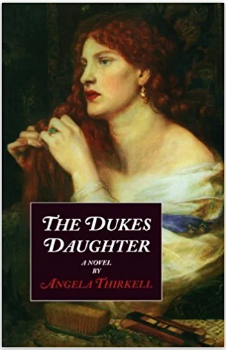
The next book is The Duke’s Daughter, which I will be reviewing on Tuesday, January 31. If you get a chance to read the book or have read it or just have something to say, pop in and make a comment. And here’s our little badge.

Reading Thirkell’s Barsetshire Series in Order: #18 The Old Bank House + #17 Love Among the Ruins Wrap-up

Thanks to my stalwarts who participated by commenting, even though one was unable to get a copy of Love Among the Ruins this month. They are

  • Liz Dexter
  • Penelope Gough

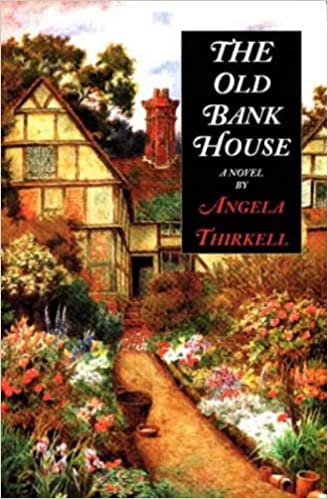
Our next book is The Old Bank House. Yes, I’m going to the bitter end, even if no one can follow. So far, it has not been painful. I am posting my review on Wednesday, November 30. I hope a few of you will pop in and join me in reading it or some of the others coming up.

And here’s our badge.

Reading Thirkell’s Barsetshire Series in Order: #17 Love Among the Ruins + #16 Private Enterprise Wrap-Up

I know I’m losing participants, but thanks to those who are keeping up or made comments about Private Enterprise, the first post-war book in the series. Those who participated were

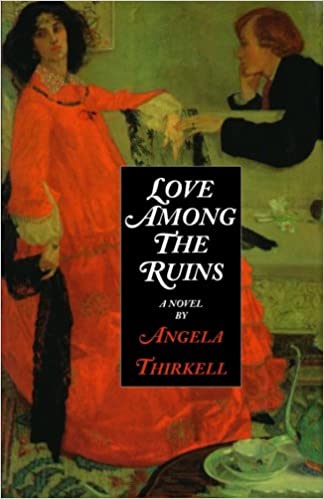
Our book for October is Love Among the Ruins. I will be posting my review on Monday, October 31. I hope that one or two people will read along with me, as I am getting into completely uncharted waters.

And here’s our little emblem.

If I Gave the Award

Cover for A Little Life

With my review of The Year of the Runaways, I have finished reading the shortlisted books for the Booker Prize of 2015. So, it’s time for my feature where I decide whether the judges got it right. My reactions to the shortlist of that year were really mixed. There were a couple books I intensely disliked, one that I thought was pointless, one that was interesting but didn’t really pull me in, and two that were excellent.

The winner for the year was A Brief History of Seven Killings by Marlon James, about an assassination attempt on Bob Marley and its ramifications years later. I found it brutal and sexist and couldn’t even figure out which of many dead people the seven killings referred to. Though it was the first book in this shortlist that I read, I knew even then I wouldn’t be picking it as my favorite.

My next least favorite book was The Fishermen by Chigozie Obioma, about what happens between brothers after a prophecy. I found this book interesting because of its insight into Nigerian village culture and life, but I also found it extremely and graphically violent. Worse, I found Obioma’s writing immature, with unusual metaphors that often didn’t work well and his love for long, overblown sentences.

I didn’t see any point at all in Satin Island by Tom McCarthy, about U, a corporate anthropologist, whose job is to observe, connect, and deconstruct all known human activity. I’m sure it is meant ironically, but the novel seemed an exercise in Absurdism to me. It almost had a plot, but then it petered out at the end.

I liked The Year of the Runaways by Sunjeev Sahota a little bit better. Written as if it was 19th century social realism, it is about several young Indian men who illegally immigrate to England with unrealistic expectations of their job prospects. It’s pretty grim, though, and it gets worse before it gets better. Its social realist style leaves you detached from its characters.

Cover for A Spool of Blue Thread

Now, we get to the good stuff. I just loved A Spool of Blue Thread by Anne Tyler. About a family that gathers to decide what to do about their aging and faltering parents, I found it to be a lovely story about family stories and secrets, loving and forgiveness.

Finally, however, there is A Little Life by Hanya Yanigihara. A beautifully written novel, it centers around four young men who were roommates in college. Slowly, we learn the secrets of one mysterious character, Jude, around whom everything seems to center. This was a powerful and deeply touching novel.

So, I pick A Little Life, with strong recommendations for A Spool of Blue Thread.

My latest haul (finally) from the British Library Press

After several requests, I finally got another package of review copies from the British Library Crime Classics and Women Writers series. I’m not sure what went wrong with the first few requests, as each time they said they would send some books. Unfortunately, I got more Crime Classics than Women Writers books, when I thought it would be the other way around. However, I am looking forward to some delicious reading.

If I Gave the Award

Cover for Bring Up the Bodies

Now that I have reviewed the last shortlisted book for the 2012 Booker Prize, it’s time for my feature where I decide whether the judges got it right. This shortlist is another mixed bag of genres, two historical, two set in the 1970’s, and two contemporary. One is experimental enough to render it almost incomprehensible while another sometimes reads as if pages were taken from a textbook.

As I often do, I’ll start with the books I liked least. My least favorite of the nominees was Umbrella by Will Self. With an idea that should have been interesting, based as it is on Oliver Sacks’s Awakenings, this novel is so concerned with its devices that it is very difficult to read. It shifts point of view in mid-sentence, sometimes in mid-word, and uses stream-of-consciousness confusingly.

Narcopolis by Jeet Thayil is set in late 1970’s or early 80’s Bombay, about a young man exploring the city’s opium dens and brothels. Although I found some of the characters interesting, I was not interested in the overall subject matter, and when the novel became philosophical, it read as if it came out of a textbook.

My main objection to Swimming Home by Deborah Levy is that I found the situation unbelievable. When vacationers find a disturbed girl occupying their vacation house, they invite her to stay even though she is clearly a fangirl of the poet husband. The entire atmosphere of the novel is foreboding, and the placement in time of an initial scene is confusing.

Cover for The Garden of Evening Mists

The Lighthouse by Alison Moore is another menacing novel, about a sad, gray man who goes on a hiking trip out of nostalgia for happy times with his father. He unwittingly gets into a situation between a woman and her jealous husband. Although I didn’t like any of the characters, I found this novel oddly compelling.

I enjoyed The Garden of Evening Mists by Tan Twan Eng about post-World War II Malaya. It immersed me in the story of a Malayan judge suffering from aphasia who is revisiting her memories.

That leaves the winner of that year’s prize, Bring Up the Bodies by Hilary Mantell. This novel was the second installment of Mantell’s trilogy about Thomas Cromwell, dealing with Anne Boleyn’s frantic attempts to hold onto her throne and her life. It is an absolutely enthralling story of Tudor politics and intrigue. So, this time, yes, the judges got it right.