Review 2674: Long Island

Long Island is Colm Tóibín’s sequel to Brooklyn. Twenty years have passed, and Eilis is the mother of two nearly grown children, Rosella and Larry.

A man comes to the door one morning and tells Eilis that her husband Tony has made his wife pregnant. He tells her that he won’t have the child in his house, and when it is born, he’s bringing it to her. When Eilis talks to Tony, she says she won’t have the baby in her house. No one consults her, but she learns that her mother-in-law plans to raise the child. Eilis doesn’t want this either, because she lives in a small cul-de-sac next to the homes of her in-laws. For the last 20 years, everything has been about Tony’s Italian family, and no one has shown any curiosity about Ireland at all.

Eilis decides to fly to Ireland to see her mother and decide what to do. Her children will follow in a few weeks.

To understand what happens in Ireland, it helps to know how Brooklyn ended, so if you haven’t read it and plan to, you might want to stop here.

Twenty years before, Eilis flew back to Ireland for her sister’s funeral and stayed for the summer. She had already married Tony, but for some reason that I can’t remember, they kept it a secret. In Ireland, which Eilis didn’t want to leave in the first place, she met Jim Farrell. He was close to asking her to marry him when she fled back to New York.

Jim has remained single, but lately he has been seeing Nancy Sheridan, Eilis’s best friend, and they have decided to get married, but they are keeping it a secret until after her daughter Miriam’s wedding. Eilis returns confused about what to do about the situation at home. She wants to talk to Jim, but sees no way to do it for a while. She knows nothing about Nancy. When she finally sees Jim, the spark is still there.

I was a little frustrated with these people and their secrets, which cause all the problems. There’s Tony’s secret and the fact that he won’t discuss it with Eilis but figures the situation out with his family instead, showing just how much of an outsider Eilis is. There’s Eilis and Tony’s original secret marriage, which created the situation with Jim. Then there’s the secret engagement.

If you like your stories all settled and wrapped up in a bow, this may not be the book for you. I can handle some ambiguity, though, so I liked it very much, although maybe not as much as I liked Brooklyn.

Just as a side point, Tóibín throws in an appearance by Nora Webster from a prior book, a character I understand is based on his own mother.
Related Posts

Brooklyn

Nora Webster

The Heather Blazing

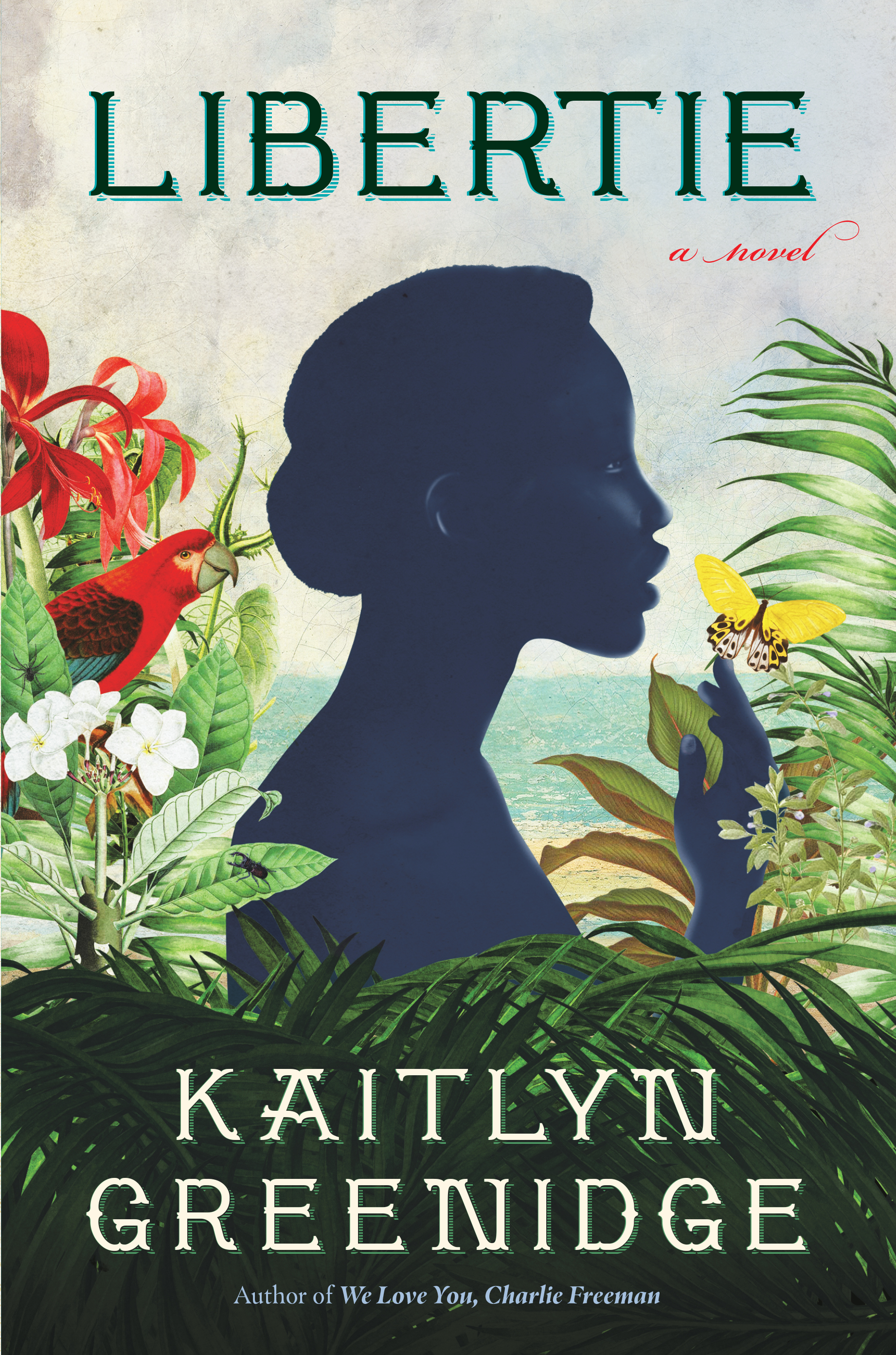
Review 2298: Libertie

Libertie is an African-American girl growing up in pre-Civil War Brooklyn. Her mother, Mrs. Sampson, practices as a homeopath and has been training Libertie in the use of plants. Her great desire is for Libertie to study medicine and become the first African-American woman doctor.

But Libertie seems to be a person who only knows what she doesn’t want. She doesn’t want to study medicine, but her mother arranges a course of study for her at a college in Ohio for African-American students, without consulting her. She is the only girl in the science department. There she decides to punish her mother for sending her away by neglecting her studies. She spends her time trying to figure out how to fit in with one group or another and finally settles on girls nicknamed the Graces, two women with beautiful singing voices.

The novel is mostly concerned with the relationship between the two women—the mother constantly pushing, disapproving, eaten up with ambition for her daughter but with no regard for what her daughter wants, the daughter seeking approval but rebelling at the same time, with no ambitions for her own life. This relationship becomes even more difficult when Libertie comes home after a year at college, lying about her results, and meets Emmanuel Chase, her mother’s protégé from Haiti.

I was uncomfortable with this book, I think, partly because of its first-person point of view. I don’t like historical fiction that makes its heroines modern, and there is nothing 19th century about Libertie’s narrative, especially when it comes to sex. But even more than that, it didn’t help that neither Libertie nor her mother is a particularly appealing character or that all of Libertie’s life decisions are poor ones. A 21st century young person might fritter away the opportunity that her mother is struggling to provide her, for example, but I can’t imagine a 19th century one, with her knowledge of what her people have been through, would. Libertie behaves more like a spoiled 21st century child than someone who in the 19th century would be considered a young woman.

Finally, Greenidge says this novel was inspired by the first African-American woman doctor in the States, but I kept wondering who it was meant to be. Mrs. Sampson herself is not a qualified doctor, and Libertie purposefully sabotages her opportunity in pre-med.

I read this novel for my James Tait Black project.

Related Posts

The Underground Railroad

Beloved

Washington Black

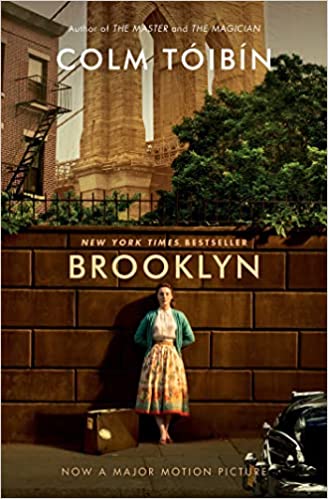
Review 1765: Brooklyn

It wasn’t until I finished reading Colm Tóibín’s latest novel on Sunday that I noticed no review for Brooklyn, which I was sure I had read. I looked back at my old records, and sure enough, I read it in March 2016, but mistakenly removed the flag from my notes that indicates I haven’t reviewed it yet. So, here goes.

Brooklyn is a quiet story set in post-World War II Ireland and New York. It is about the tension between yearning for home and desiring to make your own way in the world.

Eilis Lacey has finished a bookkeeping course and is eager for work, but the only job she can find in her small Irish home town is clerking at Miss Kelly’s store on Sunday mornings. Her brothers have emigrated to England for work, and the family is supported by her older sister Rose, who works as a bookkeeper. Rose wants more for Eilis, so she arranges for Father Flood, a visiting priest, to find Eilis a job in Brooklyn.

The best he can do for her is a clerk’s job in a department store, Bartocci’s. Eilis enjoys her job, but she is frightfully homesick and does not much enjoy living in Mrs. Kehoe’s boardinghouse. Reasoning that being busy will make her less homesick, Father Flood signs her up for courses at Brooklyn College.

Soon, she is making a new life for herself, doing well in her courses, and even finding a boyfriend, a cheerful Italian plumber named Tony. She is finally settling into her new life when something unexpected occurs that takes her back to Ireland and a choice between her two lives.

Written in Tóibín’s graceful prose, Brooklyn is a quiet but powerful character study and exploration of the immigrant experience in post-World War II America.

Nora Webster

The Empty Family

Galway Bay

Review 1463: This Must Be the Place

Daniel Sullivan is about to leave Ireland for a business trip when he catches a segment of a radio broadcast more than 20 years old. He hears the voice of Nicola Janks, his old girlfriend. When he learns she died in 1986, the year he last saw her, he becomes obsessed with finding out what happened to her, fearing he was responsible for her death.

Unfortunately, he is unable to explain this concern to his wife, Claudette. Instead, she hears from his family about his erratic behavior. He is supposed to visit his 90-year-old father in Brooklyn but stays only a few minutes before abruptly leaving to visit his children from his first marriage.

These are the first events in a series that will change his life. But O’Farrell is interested in more than these events. In chapters ranging back and forth over 30 years and switching point of view among the characters, she tells about the lives of many of them, of Claudette, the reclusive ex-movie star; of Daniel; of Daniel’s children and Claudette’s children; of Daniel’s mother; even of some of the novel’s secondary characters.

I came late to O’Farrell and so far have only read two books by her, but I’ve enjoyed them immensely. She catches you with her complex plots but keeps you with her characterizations.

Related Posts

After You’d Gone

Where’d You Go, Bernadette

Mercy Snow

Review 1409: Brookland

Prue Winship grows up the oldest daughter of a gin distiller in 18th century Brooklyn. Her father having failed to have sons, he brings her into the distillery as an apprentice when she is 14, and she learns to run it. She doesn’t expect, though, that her father’s early death will leave her and her sister Temperance in charge of it.

Despite the preoccupations of running a business, Prue has another dream—to build a bridge across the East River into New York. Many have tried to design one, but nothing has been proposed that would not obstruct water traffic for hours. Prue thinks she has an idea that would work.

This seems like it would be a book I would enjoy, but I could not get going in it. I gave it an effort, but after six days of reading, I still wasn’t into it and hadn’t reached the halfway mark. (Usually six days is enough for me to read most works of fiction, no matter how long. Often in six days I have read two or three novels.) I still had about 300 pages to read when I decided to stop. I couldn’t put my finger on my problem. The novel was well written and on an interesting subject. However, it was very slow moving and kept relating the heroine’s dreams. There is nothing more boring than a dream in fiction, I think. Finally, I dimly remember reading a book on this same subject, the distillery and the bridge, years ago, although I am fairly sure it was not this one. So, not the book for me despite its good reviews in the press.

Related Posts

Golden Hill

Seven Locks

Parrot and Olivier in America