Day 1126: The Unquiet Grave

Cover for The Unquiet GraveI have long admired several of Sharyn McCrumb’s “ballad series” mysteries, novels based upon old Appalachian ballads, some of which have a chilling supernatural element. I thought that The Unquiet Grave might be one of these, but instead it is more closely related to her The Ballad of Tom Dooley, which I thought had severe flaws.

The Unquiet Grave, like The Ballad of Tom Dooley, is about a true crime, in which Edward Shue was accused of murdering his wife, Zona, in 1897. The story of this incident, narrated by Zona’s mother, Mary Jane Heaster, alternates with the narrative by attorney James P. D. Gardner, the resident in 1930 of a mental asylum. How these stories are connected isn’t explained until about halfway through the novel.

It is when Gardner starts telling his doctor about the case that the story began to lose me. For almost immediately, he maunders off into long stories about his boss at the time of the trial, Shue’s defending attorney, Dr. Rucker. I am sure that McCrumb’s intention, both in this novel and in Tom Dooley, is to tell colorful stories about the region, but the fault in both of these novels is that she gets readers interested in one story only to invoke the wandering memories of some old man, going off in twenty different directions.

link to NetgalleyI did not have the patience for this, so I gave Gardner’s section about 20 pages of time to get back on the subject. When he didn’t, having read more than half the book, I quit reading. I sympathize with what McCrumb is trying to do, trying to invoke the story-telling of an old man who knows a lot of local history, but she lost me twice using this same technique. I think she needs to find a better angle into these true stories of West Virginia.

This is the second book I read for the R.I.P. challenge.
Related Posts

The Ballad of Tom Dooley

Burial Rites

Alias Grace

Day 1124: The Ivy Tree

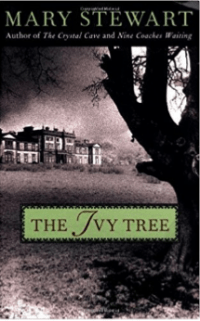
Cover for The Ivy TreeThe Ivy Tree is the first book I’m reading for R.I.P.

Mary Grey is a Canadian who has recently moved to Northumberland when she encounters Connor Winslow on the Roman Wall. Connor mistakes her for his long-lost cousin Annabelle and seems so angry to see her that Mary is frightened. She has some difficulty convincing him of his mistake.

Later, Connor’s half-sister Lisa locates Mary at her workplace in Newcastle. Connor and Lisa want Mary to impersonate Annabelle to help insure that Con will inherit the family farm, Whitescar, from his great-uncle Matthew, who is in poor health. If Mary as Annabelle inherits the farm, she will give it to Con in exchange for a small income that will save her from poverty.

Mary agrees to the job because it doesn’t seem as if it will hurt anyone. The only other interested party, Annabelle’s cousin Julie, views the farm simply as a holiday home. But the impersonation may turn out to be more difficult than anticiapted, for Annabelle had her secrets. And Mary has some, too.

I have long been a huge fan of Mary Stewart. Recently, I turned a friend on to her, and our discussions made me eager for a Stewart fix. The Ivy Tree is one of her best, particularly because, on reread, when you understand a secret of the plot, almost every scene in the novel turns out to have a double meaning.

Stewart is known for her convincing characters and her gorgeous descriptions of the setting. This novel is lush with descriptions of the plants and rural geography of Northumbria. It has a great plot and is truly suspenseful. If you have never read anything by Mary Stewart, I can’t recommend her highly enough, particularly those of her novels written before the 1980’s and her Merlin series.

Related Posts

This Rough Magic

Wildfire at Midnight

Touch Not the Cat

R.I.P.

logo for RIPI haven’t ever participated in R.eaders I.mbibing P.eril before, but I saw a post about it on Helen’s She Reads Novels page, so I took a look at my future posts. The object of the challenge is for people to read books in the following genres during September and October:

  • Mystery
  • Suspense
  • Thriller
  • Dark Fantasy
  • Gothic
  • Horror
  • Supernatural

It looks like I have plenty of mysteries on my schedule, and I may be able to come up with something in the other genres as well, so I think it will be fun to participate. You can look at the pages of the hosts, Estella’s Revenge and My Capricious Life for more information if you are planning to participate.

I think I’ll be participating at the Peril the First level, which means I must read four books from these genres in the next two months. If you’re familiar with my blog, you know that will not be a problem for me. I will be reading at least four of the following novels:

  • The Ivy Tree by Mary Stewart (suspense)
  • The Unquiet Grave by Sharyn McCrumb (mystery)
  • Consider the Lilies and Death Among Friends by Elizabeth Cadell (suspense)
  • The Moonstone by Wilkie Collins (mystery)
  • The Victorian Chaise Lounge by Marghanita Laski (gothic and supernatural)
  • My Darling Detective by Howard Norman (mystery)

First Classics Club List Complete!

I have not posted all of the reviews yet, but with Henry VI, Part III, I just finished all of the books on my first Classics Club list. I completed my list almost two years ahead of my posted deadline of February 12, 2019!

That means that I am ready to post my second Classics Club list! I will continue to show my first list in my Classics Club page until all my reviews are posted, and then I will copy it off to a subsidiary page and post my new list.

My first list was an experiment, as I had never belonged to a blogging club before, so many of my selections were old favorites that I hadn’t read in a long time. I think a brief summary of my reading for this first list is called for.

Top Five Books from My First List

Least Favorite Books from My First List

My New List!

I can’t seem to bring myself to make a list of 100 books at a time for the Classics Club. I think it is more satisfying for me to finish shorter lists faster than to finish a long list more slowly. This list is different from my previous one in that I have only previously read about half a dozen of the books on this list. I am posting this list on June 30, 2017, and I plan to finish it by June 29, 2021.

I made this list some time ago, so I see that I have already finished one of the books, The Lark, by E. Nesbitt.

15th Century

  • Le Morte D’arthur by Thomas Malory (1485)

16th Century

  • The Prince by Machievelli (1532)
  • Edward II by Christopher Marlowe (1592)
  • Titus Andronicus by William Shakespeare (1588-1593)

17th Century

  • Oroonoko by Aphra Behn (1688)
  • The Duchess of Malfi by John Webster (1612-13)

18th Century

  • Evelina by Frances Burney (1778)
  • The Expedition of Humphry Clinker by Tobias Smollett (1771)

19th Century

  • Mansfield Park by Jane Austen (1814)
  • Aurora Floyd by Mary Elizabeth Braddon (1863)
  • The Tenant of Wildfell Hall by Anne Brontë (1848)
  • The Haunted Hotel by Wilkie Collins (1879)
  • The Brothers Karamazov by Fyodor Dostoevsky (1880)
  • The Viscounte de Bragelonne by Alexandre Dumas (1848)
  • Letters from Egypt by Lucie Duff-Gordon (1865)
  • The Mystery of Mrs. Blencarrow by Mrs. Oliphant (1890)
  • Kenilworth by Sir Walter Scott (1821)
  • The Heir of Redclyff by Charlotte M. Yonge (1853)

20th Century

  • The Shuttle by Frances Hodgson Burnett (1907)
  • My Mortal Enemy by Willa Cather (1926)
  • The Old Man’s Birthday by Richmal Crompton (1934)
  • Consequences by E. M. Delafield (1930)
  • Vanishing Cornwall by Daphne du Maurier (1967)
  • This Side of Paradise by F. Scott Fitzgerald (1920)
  • The Good Soldier by Ford Madox Ford (1915)
  • Owls Do Cry by Janet Frame (1957)
  • The Winged Horse by Pamela Frankau (1953)
  • My Brilliant Career by Miles Franklin (1901)
  • Three Weeks by Elinor Glyn (1907)
  • The Lady and the Unicorn by Rumer Godden (1937)
  • Harriet by Elizabeth Jenkins (1934)
  • Joanna Godden by Sheila Kay-Smith (1921)
  • The Victorian Chaise-longue by Marghanita Laski (1953)
  • Greenery Street by Denis MacKail (1925)
  • West with the Night by Beryl Markham (1942)
  • Anne of Avonlea by L. M. Montgomery (1909)
  • The Lark by E. Nesbit (1902)
  • Mary Lavelle by Kate O’Brien (1936)
  • The Last of the Wine by Mary Renault (1956)
  • The Sea Hawk by Rafael Sabatini (1915)
  • Memories: From Moscow to the Black Sea by Teffi (2016, but written around 1920)
  • Challenge by Vita Sackville-West (1923)
  • Miss Buncle’s Book by D. E. Stevenson (1934)
  • August Folly by Angela Thirkell (1936)
  • I Go by Land, I Go by Sea by P. L. Travers (1941)
  • Madame de Treymes by Edith Wharton (1907)
  • Because of the Lockwoods by Dorothy Whipple (1949)
  • The Priory by Dorothy Whipple (1939)
  • The Wise Virgins by Leonard Woolf (1913)
  • To the Lighthouse by Virginia Woolf (1927)


Day 1063: The 1951 Club! Hangsaman

Cover for HangsamanI picked Hangsaman to read for the 1951 Club. Unfortunately, although I have read other books published in 1951, I haven’t done so recently enough to have reviewed them on this blog.

Hangsaman is a very strange book about a young woman and her first months away at college. Although it does a masterful job of exploring her consciousness, that is unusual territory. The first scenes of the novel show her interacting with her parents while she imagines being questioned by a detective about her father’s murder.

And no wonder. Her father is an arrogant and pompous editor, who, under the guise of helping her with her writing, daily subjects her to alternating insults and compliments and tries to enlist her sympathies against her mother. Her mother also tries that, apparently with more reason.

1951 Club logoIn these circumstances, Natalie is delighted to go off to college for a fresh start. But things don’t go well there. The students are cliquish and cruel. The one girl who seems to be seeking her out as a friend turns out to be mentally unstable. And two other girls use her to torment a young university wife whose husband is having an affair with one of them.

Natalie finally makes a very strange friend, and at that point the novel goes off into murky territory, where I didn’t quite understand what was going on. When I read later that the novel was inspired by the actual disappearance of a Bennington student—the girl’s college where Jackson’s husband was employed—I understood it a little better. If you have read Shirley by Susan Scarf Merrell, it will ring some bells.

Related Posts

Let Me Tell You

Shirley

Wylding Hall

Classics Club Spin #15

It’s time for another Classics Club spin. We are to choose 20 books from our Classics Club lists, and on Friday, the Classics Club will pick a number. That will determine the book we will read for May 1.

I am getting so close to completing my list that I haven’t had 20 books left to pick for the last several spins. This time I’ll list both Henry VI, Pt. II and III, which will force me to read Pt. II if Pt. III is chosen. Then I’ll be done with old Henry. So, here goes:

  1. The Moonstone
  2. Henry VI, Pt. II
  3. The Idiot
  4. Henry VI, Pt. III
  5. Bleak House
  6. Middlemarch
  7. The Moonstone
  8. Henry VI, Pt. II
  9. The Idiot
  10. Henry VI, Pt. III
  11. Bleak House
  12. Middlemarch
  13. The Moonstone
  14. Henry VI, Pt. II
  15. The Idiot
  16. Henry VI, Pt. III
  17. Bleak House
  18. Middlemarch
  19. The Moonstone
  20. The Idiot

Day 1003: Classics Club Spin! Look at the Harlequins!

Cover for Look at the HarlequinsI was supposed to read Vladimir Nabokov’s Ada for the latest Classics Club spin, but after attempting to read it, I substituted Look at the Harlequins!, the last novel published before Nabokov’s death. Sometimes I encounter a novel that really makes me feel stupid, or perhaps intellectually lazy, and such was the case with Ada. It was so full of literary allusions and wordplay that I felt I didn’t know what was going on half the time. In addition, it focuses on some of the same themes as Lolita, and while I found Lolita fascinating, the delights of prepubescent girls are not really what I want to read about.

Look at the Harlequins! is a more straightforward fictional autobiography. Many critics consider it a parodic biography, in which Nabokov twists the events of his life to make them meet public expectations of his character. For example, his family’s exit from Russia after the Revolution was relatively uneventful, while Nabokov has his alter ego, V. V., shoot a Red soldier on the way out. Similarly, although in life Nabokov was monogamous, he gives V. V. four wives and a salacious extra-marital career.

His literary career, however, is reflected in the novel, as is, to some extent, his academic career. I believe he transfers events involving his wife Véra to characters such as his fictional daughter Bel and a briefly mentioned assistant. In any event, he addresses his novel to an unnamed “you,” who we may assume is Véra’s alter ego.

We still don’t avoid the theme of prepubescent girls, though, as V. V. fondles an 11-year-old daughter of friends (whom he has an affair with when she is in her 20’s and he is in his 70’s), has such a questionable relationship with his daughter Bel that friends advise him to send her away to school (he fatefully decides to remarry instead), and ultimately marries a woman his daughter’s age. Obviously, this sexual focus on girls was a motif for Nabokov, but I find it disturbing.

It’s hard to evaluate this novel on a literary level. It has none of the beautiful language of Lolita. It is told in a facetious manner and focuses several times on what the narrator considers a mental aberration. Each time we have to endure a description of the problem, which actually seems like a silly one that obsesses the narrator more than it should. V. V. opens the subject each time he decides to marry but describes the problem over and over. I’m not sure what the point of it was.

Because of its facetious tone, however, the novel lacks highs and lows. Instead, it is full of puzzles, anagrams, and self-references. It is entertaining enough but ultimately unsatisfying.

Related Posts

Véra (Mrs. Vladimir Nabokov)

The Gathering

A Heartbreaking Work of Staggering Genius

Day 983: The 1947 Club! The Iron Clew

Cover for The Iron ClewI read The Iron Clew for The 1947 Club and what a blast it was! I was expecting a typical Golden Age mystery—heavy on the puzzle, light on motivation and character. What I got was something completely different!

Leonidas Witherall is blocked. He is the author of a series of adventure novels starring the fiery Lieutenant Haseltine. But now that the war is over, Witherall thinks that his usual villains are passé. The Nazis are beat, and the Russians are our allies, for heaven’s sake!

Mrs. Mullet, his housekeeper, advises him to move from espionage to mysteries. In no time, Witherall has invented a plot involving brown paper packages and a murder of a prominent man.

Witherall has been ignoring his own brown paper package. It is a report from the Dalton Safe Deposit and Trust Company that he is supposed to be reviewing before his dinner meeting with Balderston, the bank manager. But the muse is calling, so Witherall has just enough time to dress for dinner before going down to the hall to pick up the package. But it is gone!

Witherall hears a door closing and realizes that the thief has just left. When he sees no one walking away, he surmises that the thief is hiding in the yews at the front of the house. He tricks the thief into coming out and sees a lady in a mink emerge with a brown paper package in her handbag.

1947 clubAfter he steals the package, he becomes the quarry in a rowdy chase through the neighborhood, to be rescued by Harriman, an old boy from his school-teaching days. This incident sends him on a rollicking adventure involving several brown parcels, a green handbag, a dinosaur footprint, a murder, a kidnapping, and a massive Massachusetts snowstorm. Leonidas is helped along by a plethora of young people and an old flame.

The plot of this novel is ridiculous. The writing is energetic and witty, the characters engaging. What more could you ask? This novel was a lot of fun!

Related Posts

Death in the Stocks

Death on the Nile

Death on the Riviera

Classics Club Spin #14!

Another Classics Club spin is starting, so here is my list. Classics Club will pick a number between 1 and 20 on Monday, and that will determine which book I will read. I only have nine books left on my list that I haven’t read (although I haven’t yet reviewed all that I have read), so I have repeated all of them on this list to make 20. I listed them in order backwards by the time year they were written and then went back the other way, and then randomly filled out the list. Most of the ones left on my list are re-reads. We have until December 1 to read the next book chosen. I can’t wait to finish this list, because I have a new one already prepared!

  1. Cover for The MoonstoneAda by Vladimir Nabokov
  2. Middlemarch by George Eliot
  3. The Idiot by Fyodor Dostoevsky
  4. The Moonstone by Wilkie Collins
  5. Bleak House by Charles Dickens
  6. Vanity Fair by William Makepeace Thackeray
  7. The Vicar of Wakefield by Oliver Goldsmith
  8. Henry VI Pt. III by William Shakespeare (if I get this one, I’ll have to read the next one first)
  9. Henry VI Pt. II by William Shakespeare
  10. Henry VI Part III
  11. The Vicar of Wakefield
  12. Vanity Fair
  13. Bleak House
  14. The Moonstone
  15. The Idiot
  16. Middlemarch
  17. Ada
  18. The Moonstone
  19. Vanity Fair
  20. Bleak House

Classics Spin #13!

It’s time for another Classics Club Spin, for which I will post the rest of my Classics Club list, numbered. On Monday, the spin will select the number of the novel I must read and review by August 1. Since August 1 is a Literary Wives posting date, I will be posting my review the week before. And, since I have fewer than 20 books left on my list, I will have to repeat some of them. I have gotten my list down so that many of the remaining books are rereads. So, here goes:

  1. Cover for The MoonstoneThe Vicar of Wakefield
  2. Beloved
  3. Ada
  4. Henry VI, Part II
  5. The Idiot
  6. The Moonstone
  7. The True Heart
  8. Troy Chimneys
  9. Vanity Fair
  10. Bleak House
  11. Middlemarch
  12. The Beggar Maid
  13. The Moonstone
  14. Troy Chimneys
  15. The True Heart
  16. Vanity Fair
  17. Ada
  18. The Idiot
  19. Beloved
  20. Bleak House