Classics Club Spin #42

It’s time for another Classics Club Spin. To participate, post a numbered list of 20 books from your Classics Club list (here’s mine) before Sunday, October 19. Classics Club will announce a number on that day, and that determines the book to read before the 21st of December.

I no longer have 20 books left on my list, although I have neglected it shamefully, so I have to repeat titles. In fact, I have exactly 10 books left to read. Here’s my list for this spin:

  1. The Tavern Knight by Raphael Sabatini
  2. Love’s Labour’s Lost by William Shakespeare
  3. The Deepening Stream by Dorothy Canfield Fisher
  4. Tis Pity She’s a Whore by John Ford
  5. The Methods of Lady Walderhurst by Frances Hodgson Burnett
  6. The Princess of Cleves by Madame de la Fayette
  7. Les Misérables by Victor Hugo
  8. Cecilia, Memoirs of an Heiress by Frances Burney
  9. The Three Musketeers by Alexandre Dumas
  10. Our Mutual Friend by Charles Dickens
  11. Our Mutual Friend by Charles Dickens
  12. The Three Musketeers by Alexandre Dumas
  13. Cecilia, Memoirs of an Heiress by Frances Burney
  14. Les Misérables by Victor Hugo
  15. The Princess of Cleves by Madame de la Fayette
  16. The Methods of Lady Walderhurst by Frances Hodgson Burnett
  17. Tis Pity She’s a Whore by John Ford
  18. The Deepening Stream by Dorothy Canfield Fisher
  19. Love’s Labour’s Lost by William Shakespeare
  20. The Tavern Knight by Raphael Sabatini

Good luck to everyone! I hope you get a book you enjoy.

Classics Club Spin Result! Review 2595: The Passenger

I know I’m early in reviewing my Classics Club Spin book, but it just so happens that when it was picked for the spin, I had just read it but not reviewed it yet. Lucky for me, because so many of the books remaining on my list are really long!

I am not sure how The Passenger made it onto my Classics Club list, but its origins are certainly interesting. Boschwitz, who had already escaped Germany with his mother, was so affected by the events of Kristallnacht that he wrote this novel in a great hurry. It was published in England in 1939 and in the U. S. in 1940, but then it just vanished. Revisions he mailed to his mother never arrived. Then, in 1942, he and his manuscript were on a passenger ship that was torpedoed by a German U-boat, and they were lost. Nearly 80 years later, a correspondence with Reuella Shachaf, Boschwitz’s niece, mentioned to Peter Graf that the manuscript for the book was held in an archive of the Deutsche Nationalbibliothek. So Graf looked it up and helped edit it and get it republished. It came back out in 2018.

The book opens with wealthy Jewish businessman Otto Silbermann handing over 51% of his business to a friend, Becker, to save it from being taken. As Becker points out, there is nothing Silbermann can do about it because he’s Jewish. Jewish men are being rounded up, but Silbermann has an advantage of not looking Jewish.

Back at home with his Christian wife, he tries to sell his house to another friend, Findler, who cheats him. Again, there is nothing he can do about it. Then thugs begin pounding on the front door, so Findler sends him out the back, saying he’ll protect Elfrieda.

Silbermann begins a journey lasting days, traveling by train from one city to another to find a way to escape Germany. His goal is to go to his son Eduardo in Paris. But Eduardo has been unable to get him the papers he needs. In the meantime, he lives in a state of paranoia, listening to constant insults to Jews, fearing strangers, and thinking he’ll be arrested any minute.

This is a tense novel that seems very realistic, although Silbermann occasionally becomes incandescent with anger about the injustice, thereby risking his own life. It’s a compelling novel.

Related Posts

The Oppermanns

Sarah’s Key

The Weight of Ink

It’s Time for Another Classics Club Spin!

The Classics Club is beginning its 41st spin event this week. If you are a member and want to participate, just post a choice of 20 books from your Classics Club list in a numbered list before Sunday, June 15. You can duplicate some, especially if you don’t have 20 books left to read, like me.

The Classics Club will announce a number on Sunday, and that’s the number of the book you should read from your list. The idea is to try to read that book before the 24th of August and post a review.

If you are not yet a Classics Club member and would like to participate, all you need to do is post a list of books you want to read, most people post 50-100 books, and a deadline by which you would like to have them read. Submit that list to the Classics Club, and you’re signed up! Then post your list of 20 for the spin.

Here’s my list of 20 for the spin:

  1. Love’s Labour’s Lost by William Shakepeare
  2. The Deepening Stream by Dorothy Canfield Fisher
  3. Our Mutual Friend by Charles Dickens
  4. The Methods of Lady Walderhurst by Frances Hodgson Burnett
  5. Cecilia, Memoirs of an Heiress by Frances Burney
  6. Tis Pity She’s a Whore by John Ford
  7. The Tavern Knight by Rafael Sabatini
  8. Les Misérables by Victor Hugo
  9. The Princess of Cleves by Madame de La Fayette
  10. The Three Musketeers by Alexandre Dumas
  11. The Passenger by Ulrich Alexander Boschwitz
  12. Love’s Labour’s Lost by William Shakepeare
  13. The Deepening Stream by Dorothy Canfield Fisher
  14. Our Mutual Friend by Charles Dickens
  15. The Methods of Lady Walderhurst by Frances Hodgson Burnett
  16. The Passenger by Ulrich Alexander Boschwitz
  17. Tis Pity She’s a Whore by John Ford
  18. The Tavern Knight by Rafael Sabatini
  19. The Princess of Cleves by Madame de La Fayette
  20. The Three Musketeers by Alexandre Dumas

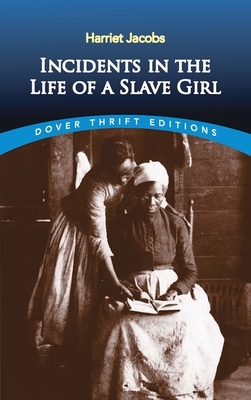
Review 2565: Classics Club Spin Result! Incidents in the Life of a Slave Girl

I pulled this book for the Classics Club spin, and I’m very happy to have done so. Because of the state of my reading right now, I was hoping for a short one, and this book is only 144 pages (albeit of very small type). It’s one of the few short works left on my Classics Club list.

The autobiography was written in the 1850s about events earlier than that and published in 1861. Although by then Jacobs was free, she wrote it under the pseudonym of Linda Brent, probably to protect others.

Linda had a fairly cheerful childhood, because she was owned by a kind woman who had promised to set her grandmother free. However, on the woman’s death, her slaves were seized as assets because she owed money, and Linda and her brother William ended up in the home of Dr. Flint, a relative. Linda’s grandmother was not freed and was also owed $300 by her mistress but never got it.

Jacobs recounts many instances of brutality on the part of slave owners, but her own troubles began when she reached puberty and Dr. Flint began relentlessly pressing her, trying to get her to have sex. Essentially out of desperation, she succumbed to another white man who she liked better and had two children by him. He, Mr. Sands, tried to buy her and her children several times, but Dr. Flint refused to sell them.

Eventually, Jacobs tried to escape, and the events of her escape, which took years, are the most harrowing in the book. Even after she escaped, she was in danger of being snatched back because of the Fugitive Slave Act, and Dr. Flint didn’t stop trying to find her until he died.

I thought this book was interesting, although at times it had very religious overtones, applied to events that she thought would make her look bad. But, after all, part of her purpose was to educate people against slavery, and she didn’t want her audience to turn against her. Frankly, she does little to deserve that (mostly, she feels she sinned by sleeping with Mr. Sands), but I can see why in that time she would worry about it.

For some reason, although I had sympathy for Linda’s really horrible troubles, I didn’t get as involved with this book as I might have expected. I’m not sure why.

Related Posts

The Underground Railroad

Booth

Beloved

Classics Club Spin #40!

It’s time for another Classics Club spin! How does it work? You post a numbered list of 20 of the titles from your Classics Club list. The club picks a number, and that determines which book you read before the end of the spin.

If you want to participate, post your list before Sunday, February 16, and read the book and post your review by Sunday, April 11. That gives you two months to read the book. If you’re not a member of the club, all you have to do is post a list of 50-100 classic books you would like to read and set a deadline for yourself. Then sign up for the club at the Classics Club blog site. If you are having a hard time thinking of that many classic books, the reviews on our website or the Big Book List will help.

And here’s my list, with repeats, because I have fewer than 20 titles left to read:

  1. Les Misérables by Victor Hugo
  2. Love’s Labour’s Lost by William Shakespeare
  3. The Passenger by Ulrich Alexander Boschwitz
  4. Incidents in the Life of a Slave Girl by Harriet Jacobs
  5. Tis Pity She’s a Whore by John Ford
  6. The Methods of Lady Walderhurst by Frances Hodgson Burnett
  7. The Deepening Stream by Dorothy Canfield Fisher
  8. Cecilia, Memoirs of an Heiress by Frances Burney
  9. Our Mutual Friend by Charles Dickens
  10. The Princess of Cleves by Madame de La Fayette
  11. The Three Musketeers by Alexandre Dumas
  12. The Tavern Knight by Rafael Sabatini 
  13. The Passenger by Ulrich Alexander Boschwitz
  14. Love’s Labour’s Lost by William Shakespeare
  15. Incidents in the Life of a Slave Girl by Harriet Jacobs
  16. The Tavern Knight by Rafael Sabatini 
  17. Tis Pity She’s a Whore by John Ford
  18. Our Mutual Friend by Charles Dickens
  19. The Methods of Lady Walderhurst by Frances Hodgson Burnett
  20. The Deepening Stream by Dorothy Canfield Fisher

I’ve got some hefty ones in there, and I have been reading a series of tomes, so I hope I get one of the shorter ones!

Review 2513: Classics Club Spin Result! Hero and Leander: Not!

I made a mistake when I put Hero and Leander on my Classics Club list. I wanted to add a play by Marlowe, and I picked it out from a list of his works without realizing it was a long poem. Why I didn’t pick one of his plays from a volume of four that I already had, I don’t know. What I know is that long poems and I don’t get along, especially ones laden with classical illusions.

But I tried. Leander, a beautiful virginal youth, sees Hero, a nymph who has vowed to Venus to keep her virginity. They fall in love. He woos her but she is reluctant. She finally gives in. He leaves but decides to marry her.

The poem is divided into six “sestiads.” I got about halfway through the fourth one—about halfway through the poem—when I realized I had stopped knowing what was going on. I tried several times but Marlowe just seemed to be babbling on about various deities. I finally stopped.

Reading this made me remember a college paper I wrote about whether Shakespeare really wrote Shakespeare. The assumption made by people who thought he didn’t was the classist idea that he wasn’t educated enough to have such a vocabulary, but this idea reflected a lack of knowledge of Elizabethan society. He was the son of the mayor of Stratford, which didn’t put him in the first ranks of society but made his family provincial but important. True, he had no university education, but he was clearly an autodidact who was fascinated with words. And he was educated enough to be a tutor when young to a prominent family. There are contemporary references to him, and he suffered some flak for not having been at Eton or Oxford.

But just reading the various contenders’ work (of which Marlowe was one despite having died well before the end of Shakespeare’s career) told me that there was no resemblance between his style and others’. His was much more sophisticated and flowing. It’s that iambic pentameter and that word play. And all I have to say is, Roland Emmerich may know a lot about film, but he knows nothing about literature.

My apologies if I made any mistakes. This is all from my memory.

Related Posts

Edward II

Antony and Cleopatra

King Lear

Another Classics Club Spin! #39

It seems like we just had a Classics Club Spin, and now it’s time for another one. How does it work? If you have posted a Classics Club list, select 20 books from it and post a numbered list of those books before Sunday, October 20. On that day, the club will announce a number, which determines which book from the list you will read first. The challenge is to read that book by December 18.

So, here is my list:

  1. The Passenger by Ulrich Alexander Boschwitz
  2. Incidents in the Life of a Slave Girl by Harriet Jacobs
  3. Hero and Leander by Christopher Marlowe
  4. Our Mutual Friend by Charles Dickens
  5. Les Misérables by Victor Hugo
  6. The Tavern Knight by Rafael Sabatini
  7. The Three Musketeers by Alexandre Dumas
  8. Love’s Labour’s Lost by William Shakespeare
  9. The Princess of Cleves by Madame de La Fayette
  10. The Methods of Lady Walderhurst by Frances Hodgson Burnett
  11. The Book of Lamentations by Rosario Castellanos
  12. Tis Pity She’s a Whore by John Ford
  13. Cecilia, Memoirs of an Heiress by Frances Burney
  14. The Passenger by Ulrich Alexander Boschwitz
  15. Incidents in the Life of a Slave Girl by Harriet Jacobs
  16. Hero and Leander by Christopher Marlowe
  17. The Tavern Knight by Rafael Sabatini
  18. The Three Musketeers by Alexandre Dumas
  19. Love’s Labour’s Lost by William Shakespeare
  20. The Methods of Lady Walderhurst by Frances Hodgson Burnett

I only have 13 books left on my list, so I had to repeat some. I am really slammed for November, what with Novellas in November and Nonfiction November, so I am hoping for one of the shorter books on the list. Wish me luck!

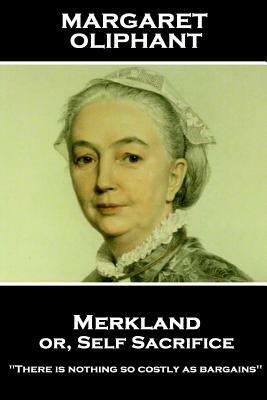
Review 2479: Classics Club Spin Result! Merkland

I have read and enjoyed all of Margaret Oliphant’s Carlingford series as well as her first novel and one other. Merkland (which has different subtitles depending on where I look at it: in my eBook it says “A Story of Scottish Life” and in my hardcopy it says “or, Self-Sacrifice”) is her second novel and shows her inexperience. I read it for my Classics Club Spin.

Although the main character of the novel is Anne Ross, it has two plots concerning the fates of two disgraced young men. At the opening of the novel, Anne learns from her unsympathetic stepmother not only that her older brother Norman Rutherford, long believed dead, may be alive, but that he is believed to be the murderer of Arthur Aytoun, who was found shot to death 18 years before. Anne is horrified when she learns that her great friend, Mrs. Catherine Douglas, has invited this man’s daughter, Alice, to stay with her, for she thinks Alice must hate her family.

Mrs. Catherine, for her part, is facing a dilemma. She has unexpectedly inherited some money and, being already wealthy herself, had intended to give it to hard-working but poor young James Aytoun, Alice’s brother. However, two old friends have come to her to ask for help for Archie Sutherland, the young local laird, who has fallen in with bad companions and is badly in debt. She decides in Archie’s favor, but before she can send him the money, he loses his entire estate gambling.

Mrs. Catherine sets about rescuing Archie by bringing him home to recover and arranging honest employment where he might eventually earn enough to buy back his heritage.

For her part, Anne discovers a letter that indicates Norman may be innocent of the crime even though the circumstantial evidence against him is strong. She makes it her goal to try to clear her brother’s name, especially important because Alice Aytoun has fallen in love with Anne’s young stepbrother, Lewis.

So far, so good. Two interesting plots plus other subplots such as the identity of a mysterious child and the fate of Rutherford’s estate in the hands of his dissolute English ex-companions. However, this novel is much longer than it needs to be, containing passage after passage of moralizing and sermonizing. Modern audiences may also be dismayed at its strong message against women’s rights. Further, the novel takes several chapters beyond the crisis to wrap up its loose ends, and by the end I was just skimming the paragraphs trying to finish.

A final note about the edition I read. I dislike reading eBooks, so even though I have Oliphant’s complete works on my iPad, I looked for a paperback version. Drat these print-on-demand books! I ended up with the edition shown above, published by Horse’s Mouth, that had all the evils except that it was corrected for misreadings by machine reading, which I have encountered before. No page numbers, no copyright or any other kind of information except a short biography and a list of other works, no formatting (the text starts at the bottom of page 2). Worst of all, it is only in about 6 pt. type at the largest, when anyone who knows anything about it knows that about the smallest you can go and still be readable is 9 pt.

Related Posts

Passages in the Life of Margaret Maitland of Sunnyside

Hester

A House in Bloomsbury

Classics Club Spin #38

It’s time to participate in another Classics Club spin. If you want to participate, post a numbered list of 20 books from your Classics Club list by Sunday, July 21. On that date, the club will announce a number, which determines which book you read for the spin. Then you try to read the book and post a review by September 22.

So, here’s my list for the spin:

  1. Les Misérables by Victor Hugo
  2. Hero and Leander by Christopher Marlowe
  3. The Passenger by Ulrich Alexander Boschwitz
  4. Cecilia, Memoirs of an Heiress by Frances Burney
  5. The Tavern Knight by Rafael Sabatini
  6. Love’s Labour’s Lost by William Shakespeare
  7. Our Mutual Friend by Charles Dickens
  8. The Methods of Lady Walderhurst by Frances Hodgson Burnett
  9. Merkland, A Story of Scottish Life by Margaret Oliphant
  10. The Deepening Stream by Dorothy Canfield Fisher
  11. Incidents in the Life of a Slave Girl by Harriet Jacobs
  12. Tis Pity She’s a Whore by John Ford 
  13. The Three Musketeers by Alexandre Dumas
  14. The Princess of Cleves by Madame de La Fayette
  15. The Methods of Lady Walderhurst by Frances Hodgson Burnett
  16. Love’s Labour’s Lost by William Shakespeare
  17. Merkland, A Story of Scottish Life by Margaret Oliphant
  18. Our Mutual Friend by Charles Dickens
  19. The Three Musketeers by Alexandre Dumas
  20. The Tavern Knight by Rafael Sabatini

Classics Club Spin Yet Again!

Here it seems like we just had a Classics Club Spin and we’re having another one, #37! What is the spin, anyway? Well, if you are a member of the Classics Club you have posted a list of a number of classics you would like to read by a certain deadline, set by yourself. To participate, simply create a numbered list of 20 of the books on your list and post it by Sunday, April 21. On Monday, the club will post a number, and that number determines which book you will read for the spin. Post a review of that book by Sunday, June 2. It’s as simple as that. And don’t forget to add a link to that post in the Comments for the spin post on June 2nd.

With no further ado, here is my list. I no longer have 20 books left on it, so I have to repeat some:

  1. Our Mutual Friend by Charles Dickens
  2. Les Misérables by Victor Hugo
  3. The Deepening Stream by Dorothy Canfield Fisher
  4. The Book of Lamentations by Rosario Castellanos
  5. The Methods of Lady Walderhurst by Frances Hodgson Burnett
  6. The Passenger by Ulrich Alexander Boschwitz
  7. Merkland, A Story of Scottish Life by Margaret Oliphant
  8. The Prophet’s Mantle by E. Nesbit
  9. Incidents in the Life of a Slave Girl by Harriet Jacobs
  10. The Three Musketeers by Alexandre Dumas
  11. Cecilia, Memoirs of an Heiress by Frances Burney
  12. The Princess of Cleves by Madame de La Fayette
  13. Love’s Labour’s Lost by William Shakespeare
  14. Hero and Leander by Christopher Marlowe
  15. The Tavern Knight by Rafael Sabatini
  16. The Book of Dede Korkut by Anonymous
  17. Merkland, A Story of Scottish Life by Margaret Oliphant
  18. Tis Pity She’s a Whore by John Ford
  19. The Deepening Stream by Dorothy Canfield Fisher
  20. The Prophet’s Mantle by E. Nesbit
  21. The Methods of Lady Walderhurst by Frances Hodgson Burnett