Day 794: Classic Club Spin #10! Selected Poems of Robert Frost

Cover for Selected PoemsMy book for Classics Club Spin #10 is Selected Poems of Robert Frost. I have to confess to not having quite succeeded in finishing my selection this time, but more than 300 pages of poetry is a lot of poetry to read. I got about halfway through the book.

Poetry is just not my thing, I guess. I did enjoy many of the poems in this book, but they were the same ones I’ve enjoyed before, so it was like visiting old friends—“Mowing,” “Mending Wall,” “After Apple-Picking,” “The Road Not Taken,” “Acquainted with the Night,” “Stopping by Woods on a Snowy Evening.” Most of these, I notice, are devoted to observations about nature or are about rural work.

I do not so much enjoy what Robert Graves refers to in the introduction as his “poignant country dramas,” like “The Death of the Hired Man.” They seem more like prose to me, which is ironic, since I am generally more comfortable with prose. But they are not what I come to Frost for. I come to him for things like this:

My long two-pointed ladder’s sticking through a tree
Toward heaven still,
And there’s a barrel that I didn’t fill
Beside it, and there may be two or three
Apples I didn’t pick upon some bough.
But I am done with apple-picking now.

Related Posts

The Bees

The Selected Poetry of Edna St. Vincent Millay

Goodbye to All That


Day 787: The Hunchback of Notre Dame

Cover for The Hunchback of Notre DameWhen I was making my list for Classics Club, I thought I should finally read something by Victor Hugo. The obvious choices were Les Miserables or The Hunchback of Notre Dame, but I had tried Les Mis some years ago only to put it down in disgust when Jean Valjean hits the priest who has tried to help him over the head with the candlesticks he wants to steal. So, it was Hunchback for me.

I was interested to read in the Introduction that the French title of this novel was Notre-Dame de Paris and that Hugo hated the English title. And truly, the focus of the novel is more on Notre Dame and 15th century Paris than it is on the story we’re familiar with. In fact, one entire chapter just describes Paris as it looks from the tower of the cathedral in 1482, street by street. I have to say, though, that the chapter was almost meaningless to me, since I found myself unable to visualize what he describes, at least not in that detail.

The novel has many characters, not just the three emphasized in all the movies. It begins with Pierre Gringoire, a hapless poet who is attempting to put on a play he wrote in celebration of Epiphany and the Festival of Fools. This great (and long) production is supposed to pay tribute to the betrothal of the Dauphin with Margaret of Flanders. The problem is that the people have been waiting since dawn to see it. It is past noon, when the play is supposed to have started, but the Cardinal and the Flemish ambassadors haven’t arrived yet. The crowd, egged on by the student Jehan Frollo du Moilin and his buddies, is getting disruptive.

Gringoire decides to start the play, and the crowd settles down, but the actors are still reciting the prologue when the Cardinal and the Flemish arrive, making a lot of noise. The students turn their attention to making rude remarks. Soon the crowd begins trying to select the Pope of Fools instead of watching the play. They choose the hideously deformed hunchback Quasimodo, the bellringer at Notre Dame, and everyone leaves. Poor Gringoire will not be paid, so will not be able to pay his lodging, and he goes off homeless to wander the street.

So, we meet Quasimodo, who was taken in as a child by Claude Frollo, the severe Archdeacon of Josas and older brother of Jehan Frollo. Claude Frollo is obsessed by his studies of alchemy until his eye lights on Esmeralda, a young gypsy dancer and street performer. He becomes infatuated and lustful and so (with the typical logic of zealotry) decides she must be a witch who has enchanted him. On the other hand, when Quasimodo is sentenced to the stocks simply because he is too deaf to hear the judge, the only person who is kind to him is the gypsy dancer. So are sewn the seeds of tragedy.

And make no mistake, there is tragedy in store for most of the characters in this novel. Justice is solely dependent upon the whims of powerful men, and the more powerful they are, the more scathingly Hugo treats them. We even spend some time with the king, Louis XI, who is depicted as grasping, arbitrary, and vicious. Hugo pretty much skewers everyone except Quasimodo and the gypsy girl, who are basically cardboard figures.

Hugo is interested in many things in this novel—the cathedral itself, its own architecture, and the architecture of Paris are strong presences. The transmission of culture from century to century is a preoccupation, as are the themes of the nature of love, loyalty, and not judging by appearances. As a son of the revolution, he also has an axe to grind about the aristocracy and the corruption in the church.

I have to confess, though, that I only mildly enjoyed this gothic novel. The only highly developed character is Claude Frollo, and he is a sickening person.

Related Posts

La Reine Margot

The Lily and the Lion

The Rhetoric of Death


Day 762: The Call of the Wild

Cover for The Call of the WildThe Call of the Wild is no boys’ tale. It’s rough, embodying as it does Jack London’s ideas about the survival of the fittest. It is also London’s classic tale about the relationship between dog and man.

Buck is a large, pampered dog, the pet of a rich judge in California. But the Alaska gold rush is on, and all large dogs on the west coast are at risk. A gardener’s assistant with debts kidnaps Buck and sells him.

Buck is beaten with a club and then taken up to Alaska to work as a sled dog. But Buck never becomes submissive. Through intelligence, cunning, and brute strength he survives in brutal conditions. Eventually, he begins to feel the urge of his wild heritage.

Although London has the dog have fairly ridiculous “racial memories” of tree-living humans, they are probably about on par with what was believed at the time about evolution. London’s short novel is typical of the school of naturalism, which endeavoured to show the worst of reality. This is not really my favorite of my Classics Club list books so far.

Related Posts

Robinson Crusoe

The Devil’s Backbone

Kim

Classics Club Spin #10!

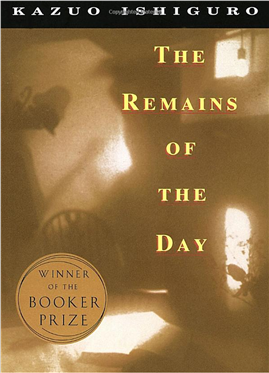
Cover for The Remains of the DayJust announced was the first Classics Club Spin since April. For the spin, we pick 20 entries from our Classics Club list, and then the Classics Club picks a number. We read the book corresponding to that number and post a review on October 23.

Unfortunately, since I always enjoy the spin, this may be the last in which I can participate with my current list, because I have so diligently read my classics that even though I have more than 20 still on my list, that is only because I have read them but not yet posted my reviews. I have exactly 20 unread books left, so I will be short for the next spin. If I want to participate, I will have to leave off some numbers and hope they’re not picked, or post the same books twice, or something. Any suggestions? I don’t want to change my list until I finish it.

Here is my list for Spin #10! My last 20 books! (My goal was to read all 50 by February 13, 2019. I think I’m going to make it.)

  1. The Vicar of Wakefield
  2. Henry VI Pt. II
  3. Night
  4. A Wreath of Roses
  5. Selected Poems by Robert Frost
  6. The Idiot
  7. Ada
  8. That Lady
  9. Beloved
  10. The Remains of the Day
  11. The True Heart
  12. The Beggar Maid
  13. Troy Chimneys
  14. Red Pottage
  15. Rebecca
  16. The Moonstone
  17. Far From the Madding Crowd
  18. Vanity Fair
  19. Bleak House
  20. Henry VI Pt III (I hope they don’t pick this number, because if they do, I’ll have to read Henry VI Pt II, too!)

Update: The selected number was #5, aargh!

Day 739: Sisters by a River

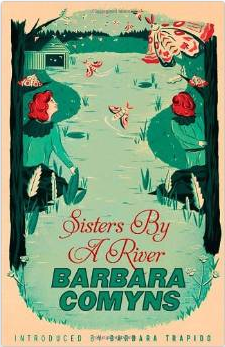
Cover for Sisters by a RiverBest Book of the Week!
In trying to characterize the tone and atmosphere of the autobiographical Sisters by a River, I have to say that it reminds me a bit of Shirley Jackson’s We Have Always Lived in the Castle, minus the murder. As reported in the introduction by Barbara Trapido, this novel did not fit the 40’s vogue for fond and touching memories of childhood, so it was not published for six years after Comyns began looking for a publisher. Comyns wrote it as a private recollection.

It is difficult to explain just how gripping this novel is. It is an unordered collection of fictionalized memories written by Barbara about the life of her family. Barbara and her sisters suffer a combination of abuse and neglect. Her father, known as Daddy, met her mother, called Mammy, when Mammy was a young child and arranged with her mother to marry her. She began having children when she was eighteen and only stopped after her sixth childbirth made her deaf. She also seems to be insane, periodically rampaging around or talking to invented lovers. Aside from cooking delicious meals, she completely neglects her children.

Granny is a dark and unpleasant presence. She does not allow anyone to clean her room, which is filthy, the floor caked with spilled substances. There she spends most of her time brewing up potions. When Daddy leaves the house, he has to lock up the billiard room to keep her out of the booze.

Daddy is prone to attacks of rage and cruelty. He throws Beatrix downstairs when she is a baby because she is crying. He blackens Mammy’s eye right before they are to host a big party. Yes, both of them are conscious of their social position. Mammy tells her semi-illiterate, poorly dressed, neglected daughters how cultured they are while Daddy takes pride in his hundreds of pairs of polished boots and shoes and takes three hours to prepare for a monthly meeting in town. Meanwhile, the girls’ teeth go bad and one governess after another is fired for some silly infringement or because her feet smell.

The oldest sister Mary has learned bullying from her father. She won’t allow the younger girls to read any of the books she likes, and she chooses what color clothes they may wear. Barbara must always wear brown, which she hates.

I could go on and on about this violent and eccentric family. But what really stands out about the book is its style. All of these events, and many that are worse, are related in a completely matter-of-fact way, no pathos or complaining. The writing style is that of a very young person, including many spelling errors, and this air of innocence and matter-of-face quality give the novel its charm. It’s hard to figure out how old the narrator is. The novel moves back and forth in time, and it seems that at her oldest, she is about sixteen. But there are references to her husband, so it’s hard to tell. My guess is the book was written at different ages.

If you care to try this novel, prepare yourself for something truly unconventional. It sounds dreadfully harrowing, I know, but it actually is not.

Related Posts

The Pursuit of Love

Brother of the More Famous Jack

The Death of Bees

Day 723: Greenbanks

Cover for GreenbanksBest Book of the Week!
This novel begins with a large family Christmas dinner at Greenbanks, the home of Robert and Louise Ashton. It is around 1910. Louise is in her late middle age, a quiet, kind woman who delights in her housekeeping skills and her garden. Her husband, a serial philanderer, has proved a source of pain and humiliation, but she has tried to live it down.

Although the Ashtons are grandparents, three of their grown children live at home. Jim works at the family business, allowing his father to devote little time to it. Charles also purportedly works there, but he prefers to spend time fiddling with inventions, tinkling the piano, and entertaining his adoring mother. Laura is just about to engage herself to Cecil Bradfield. Rachel, the five-year-old daughter of Letty and Ambrose, is Louise’s favorite grandchild.

Robert soon dies in embarrassing circumstances. But even though the novel follows the fortunes of the family over roughly 15 years, it concentrates on the relationship between Louise and Rachel. Rachel, with a self-absorbed mother and an officious father, loves spending as much time as possible at Greenbanks with her grandmother.

The novel has overtones that are feminist for the time, as Rachel finds she has a gift for scholarship. Her father’s rigid and old-fashioned ideas about the place of an education in the lives of young women cost her a scholarship at Oxford, but she manages to continue her education despite him.

Inside cover
The cover at the top is really plain, but for some reason Amazon shows this picture, which is actually the inside of the cover!

One source of disagreement in the family is Louise’s choice of companion. Louise always felt sorry for Kate Barlow when she was a child and tried to include her in family activities. When Kate was a young woman, it was rumored she became pregnant by a married man and had his child, then was thrown off by her parents. Louise meets her in town one day and begins a correspondence with the reluctant woman. After Charles leaves for South Africa and her other two children marry, she invites Kate to become her companion. But Kate never really accepts Louise’s kindness.

The story of the Ashtons is told in spare, matter-of-fact prose that makes no attempt to influence the reader. Many of the characters are flawed and some are unlikable, but there are no heroes and villains here, just a set of ordinary middle-class people. It’s difficult, then, to explain why I so much enjoyed reading this novel. Whipple is a master of style and shows us her characters in the fullness of their lives.

Related Posts

Someone at a Distance

A View of the Harbour

Mrs. Palfrey at the Claremont

Day 707: Don Quijote

Cover for Don QuijoteI know. This is not the spelling of “Quixote” most people are accustomed to seeing, but it is the one used in my Norton Critical Edition, translated by Burton Raffel. And a sprightly translation it is.

Don Quijote is the story of an old man who has studied the popular chivalric romances so much that they have addled his brain. He declares himself a knight errant and takes to the road seeking adventure. Accompanying him is a neighboring farmer, Sancho Panza, who he has convinced to come with him as his squire in exchange for a share in certain rewards. In particular, Sancho has his heart set on the governorship of an island.

Don Quijote doesn’t just look for adventure. In the first book, he hurls himself at every passer by, convincing himself that windmills are giants, a barber is a knight, an inn is a castle. Above all else, he worships his lady, the beautiful Dulcinea, whom he has never met but whom Sancho remembers as a muscular peasant girl.

Don Quijote is both a parody of the chivalric romances and a satire against the Spanish conquistadores. Its most important distinction is that it is considered the first modern novel. I found volume one to be amusing in a sort of slapstick style, as Don Quijote’s adventures always go wrong and end up with him and Sancho Panza being beaten up.

Volume two was a little too much of the same, though. In a bit of metafiction, Cervantes lists some of the things readers criticized from the first volume and then attempts to avoid them. So, for example, the two adventurers are not beaten up as often. However, both volumes contain long disquisitions on such topics as marriage, poetry, chivalry that don’t all translate well into modern times.

Finally, after Don Quijote had himself lowered into Montesino’s Cave to see its wonders and then fell asleep and dreamt a bunch of nonsense and never even saw the cave, I had to stop. Quijote was in the midst of recounting his ridiculous dream, which he took for reality, and it seemed to go on and on. I leafed ahead, looking for the end of it, never found the end, and finally lost patience. I fully believe, since apparently someone else published a book about our hero after the first volume came out, that Cervantes only brought Quijote back out on the road so that he could kill him off at the end.

Related Posts

People of the Book

The Black Tulip

Othello

Day 704: Henry VI, Part I

Cover for Henry VI, Part 1Henry VI Part I is my book for the latest Classics Club Spin! Enjoy the review.

The only one of Shakespeare’s history plays I’ve ever read previously is Richard III, although I once saw Peter MacNicol perform Richard II in Central Park (with Martin and Charlie Sheen two rows down in the audience). Henry VI Part I is Shakespeare’s first play as well as one of his Wars of the Roses plays, of which Richard III is the last.

As a history play, Henry VI Part I is more about the events at the beginning of Henry’s reign than about Henry’s life. In fact, he is very young through much of the play and only appears occasionally. The play depicts the discord among the powerful men surrounding Henry, culminating in the Wars of the Roses (although the seeds of the discord can be traced back earlier, to when Henry of Bolingbroke (later Henry IV) deposed Richard II). Henry IV and Henry V, in their turns, have held the country together, but Henry V’s young son shows no such ability. Although Shakespeare himself (and many historians) seems to be disposed toward the Yorkists, it is clear by the end of the play that the Lancastrians will prevail during Henry’s reign.

Painting of scene
The choosing of red and white roses, a scene from the play

The other main event of the play is the war in France. I should not have been surprised to find Joan of Arc (referred to in the play as Jean La Pucelle) the villain of this plot, since the English burned her, but it was a shock nonetheless. The gallant Lord Talbot is the hero, while Jean fights with the aids of demons.

The play is not as dramatic as some others, but it has its moments. I thought it was most interesting as showing the Tudor view of this great series of conflicts.

Related Posts

The Wars of the Roses

Macbeth

Lords of Misrule

Day 688: The Age of Innocence

Cover for The Age of InnocenceI have certainly read The Age of Innocence before, but it was not until this rereading that I gained a full appreciation for its subtlety and complexity. I may have read it years ago, but I became really interested in it after an interview with Martin Scorsese about his movie adaptation (my favorite film ever) where he commented on “the brutality under the manners” of the upper class New Yorkers in the novel, set in the 1870’s, and likened them to gangsters.

This novel is about the tension between individual desires and the expectations of a rigid society. However, it is also about the two main characters trying to do the right thing in the face of yearning and passion.

Newland Archer is an intellectually inclined young man interested in art and travel who thinks he understands but sometimes is a little impatient of the rigid and insular customs of his time and social class. He has just become engaged to May Welland during a difficult time for the Welland family. May’s cousin, the Countess Ellen Olenska, has returned to New York to her family, having left her husband, and society is shocked to see them bringing her to parties and the theatre. Archer decides to show solidarity with the Wellands and soon finds himself drawn into the Countess’ affairs in his professional capacity as a lawyer. Countess Olenska wants to divorce her husband, and the family is horrified, asking Newland to convince her not to.

Newland succeeds, but he soon realizes that he is in love with Ellen Olenska himself. Ellen is determined not to betray her cousin.  When she admits she loves Newland, she comments that by getting her to drop her divorce, he has assured that they can never be together. A disappointed Newland marries May.

Within a short time, Newland regrets his marriage and foresees a gray existence of doing the same things with the same people year after year. The innocence and purity he saw in May is actually an incuriosity and inability to grow or change. Although Newland doesn’t see Ellen, who has moved to Washington, he has begun to think of her as the only real corner of his life. All these feelings are brought to a climax when the Countess returns to New York and her family decides she should reunite with her husband.

This novel is vivid with carefully observed descriptions. Underlying it all is an understated yet savage critique of petty and provincial New York society of the time. Almost every sentence is double-edged, such as when Wharton describes a soprano’s solo in the first chapter:

She sang, of course “M’ama!” not “he loves me,” since an unalterable and unquestioned law of the musical world required that the German text of French operas sung by Swedish artists should be translated into Italian for the clearer understanding of English-speaking audiences.

Nice! I understand that when this book was published, nearly 50 years after its setting, members of New York society were still able to match most of the characters in the novel with their real counterparts.

Related Posts

The Master

Persuasion

Miss Marjoribanks


Classics Spin #9!

Cover for The MoonstoneI always enjoy the Classics Club spin, where the club invites members to post a list of 20 book from their Classics Club lists, draws a number, and then you promise to read the book corresponding to that number by the deadline. Unfortunately, the date for posting that list always seems to fall on the same day as Literary Wives club, so I’m posting it a little early. Here is my list, and I will read the book chosen by May 15.

  1. The Vicar of Wakefield by Oliver Goldsmith
  2. Henry VI Pt I by William Shakespeare (chosen by the spin)
  3. The Idiot by Fyodor Dostoevsky
  4. The Call of the Wild by Jack London
  5. Night by Elie Wiesel
  6. The Moonstone by Wilkie Collins
  7. Vanity Fair by William Makepeace Thackeray
  8. Troy Chimneys by Margaret Kennedy
  9. Far from the Madding Crowd by Thomas Hardy
  10. Rebecca by Daphne du Maurier
  11. The Remains of the Day by Kazuo Ishiguro
  12. The Beggar Maid by Alice Munro
  13. Ada by Vladimir Nabokov
  14. Red Pottage by Mary Cholmondeley
  15. A Wreath of Roses by Elizabeth Taylor
  16. Bleak House by Charles Dickens
  17. Middlemarch by George Eliot
  18. O Pioneers! by Willa Cather
  19. The True Heart by Sylvia Townsend Warner
  20. Beloved by Toni Morrison