Review 2513: Classics Club Spin Result! Hero and Leander: Not!

I made a mistake when I put Hero and Leander on my Classics Club list. I wanted to add a play by Marlowe, and I picked it out from a list of his works without realizing it was a long poem. Why I didn’t pick one of his plays from a volume of four that I already had, I don’t know. What I know is that long poems and I don’t get along, especially ones laden with classical illusions.

But I tried. Leander, a beautiful virginal youth, sees Hero, a nymph who has vowed to Venus to keep her virginity. They fall in love. He woos her but she is reluctant. She finally gives in. He leaves but decides to marry her.

The poem is divided into six “sestiads.” I got about halfway through the fourth one—about halfway through the poem—when I realized I had stopped knowing what was going on. I tried several times but Marlowe just seemed to be babbling on about various deities. I finally stopped.

Reading this made me remember a college paper I wrote about whether Shakespeare really wrote Shakespeare. The assumption made by people who thought he didn’t was the classist idea that he wasn’t educated enough to have such a vocabulary, but this idea reflected a lack of knowledge of Elizabethan society. He was the son of the mayor of Stratford, which didn’t put him in the first ranks of society but made his family provincial but important. True, he had no university education, but he was clearly an autodidact who was fascinated with words. And he was educated enough to be a tutor when young to a prominent family. There are contemporary references to him, and he suffered some flak for not having been at Eton or Oxford.

But just reading the various contenders’ work (of which Marlowe was one despite having died well before the end of Shakespeare’s career) told me that there was no resemblance between his style and others’. His was much more sophisticated and flowing. It’s that iambic pentameter and that word play. And all I have to say is, Roland Emmerich may know a lot about film, but he knows nothing about literature.

My apologies if I made any mistakes. This is all from my memory.

Related Posts

Edward II

Antony and Cleopatra

King Lear

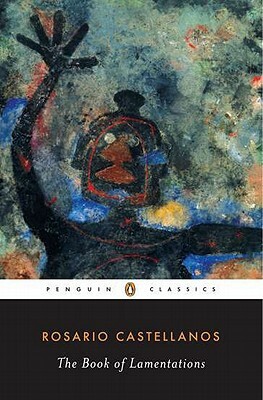
Review 2491: The Book of Lamentations

When I put this novel on my Classics Club list, I was looking for a few classics written originally in a foreign language. So, I chose this novel without knowing much about it.

It is set in Chiapas, a remote state in the far south of Mexico. At first, you might think it is set in the 19th century, but it is actually set in the 1930s, at a time when Mexico began to exact reforms that would return portions of the wealthy ranches to the native population.

One of the first images that indicates the treatment of the native population is that of travelers sitting in chairs that are strapped to Indians, who carry the people through the mountains. (I’m using the term “Indian” because the book does.) The Introduction says that Castellanos experienced this as a child.

I was confused at first, because the novel starts out with one group of people only to switch to another and another before bringing their stories together.

Although other characters are introduced first, the action starts with Marcela, a young native girl, traveling into the city of Cuidad Real to sell pots. She is told by a Ladina woman to bring the pots to her house. What she doesn’t know is that Doña Mercedes is a procuratress, and Mercela ends up being raped by Don Leonardo Cifuentes, who likes them young.

Returning home, she is rebuffed by her parents until she is taken under the wing of Catalina Díaz Puilgir, an ilol (sort of a sorceress) and her husband Pedro González Winiktón. She is made to marry Catalina’s brother Lorenzo, a man of limited intellect, and eventually has a child. And that’s all we see of her until much later.

Suddenly we switch to Cuidad Real and the lives of the Ladino characters. Leonardo Cifuentes, a wealthy rancher, is married to Isabel and probably murdered her first husband. Her daughter, Idolina, has taken to her bed since her father’s death. Leonardo has been courting a newcomer to town, Julia Acevedo, the supposed wife of Fernando Ulloa, the engineer who has been sent by the government to survey the ranches in preparation for the land reforms.

So far, Julia has avoided Cifuentes’s advances and made friends with his daughter. Her attempts, however, to be accepted by the rest of the Ladinas in the upper classes are unsuccessful. Instead of staying properly at home, she walks around town with her red hair flowing, earning her the nickname “La Alazana.”

The real issue in the novel is the land reform, which the ranchers oppose. However, an excuse for violent action comes when Catalina finds a cave with ancient stone figures in it. She gains a large following among the Indians by falling into trances in the cave and making utterances. The ranchers use the excuse of the large gatherings to claim that the Indians are planning a revolt. And violence eventually follows.

The novel is acerbically written, with no totally likable characters but with sympathy for the Mayan outcasts, who don’t really understand what is going on most of the time. They don’t understand the language or the mode of thought of the Ladinos, and when questioned later by authorities, since they don’t understand the questions, they just answer yes or no at random.

This novel was difficult to read. It wasn’t just the subject matter but more how the novel would jump to a new set of characters and tell a lot about them only to have them vanish for many pages. I may have also had problems because I was on vacation and then sick while trying to read it. But I was determined to finish it, and did. Although the novel is sympathetic to the native peoples of the area, to the modern eye it is also patronizing.

Related Posts

Mexican Gothic

The Bridge of the Gods

Black Narcissus

Another Classics Club Spin! #39

It seems like we just had a Classics Club Spin, and now it’s time for another one. How does it work? If you have posted a Classics Club list, select 20 books from it and post a numbered list of those books before Sunday, October 20. On that day, the club will announce a number, which determines which book from the list you will read first. The challenge is to read that book by December 18.

So, here is my list:

  1. The Passenger by Ulrich Alexander Boschwitz
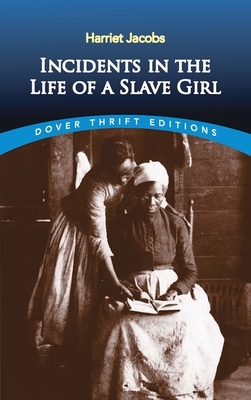
  2. Incidents in the Life of a Slave Girl by Harriet Jacobs
  3. Hero and Leander by Christopher Marlowe
  4. Our Mutual Friend by Charles Dickens
  5. Les Misérables by Victor Hugo
  6. The Tavern Knight by Rafael Sabatini
  7. The Three Musketeers by Alexandre Dumas
  8. Love’s Labour’s Lost by William Shakespeare
  9. The Princess of Cleves by Madame de La Fayette
  10. The Methods of Lady Walderhurst by Frances Hodgson Burnett
  11. The Book of Lamentations by Rosario Castellanos
  12. Tis Pity She’s a Whore by John Ford
  13. Cecilia, Memoirs of an Heiress by Frances Burney
  14. The Passenger by Ulrich Alexander Boschwitz
  15. Incidents in the Life of a Slave Girl by Harriet Jacobs
  16. Hero and Leander by Christopher Marlowe
  17. The Tavern Knight by Rafael Sabatini
  18. The Three Musketeers by Alexandre Dumas
  19. Love’s Labour’s Lost by William Shakespeare
  20. The Methods of Lady Walderhurst by Frances Hodgson Burnett

I only have 13 books left on my list, so I had to repeat some. I am really slammed for November, what with Novellas in November and Nonfiction November, so I am hoping for one of the shorter books on the list. Wish me luck!

Classics Club Spin #38

It’s time to participate in another Classics Club spin. If you want to participate, post a numbered list of 20 books from your Classics Club list by Sunday, July 21. On that date, the club will announce a number, which determines which book you read for the spin. Then you try to read the book and post a review by September 22.

So, here’s my list for the spin:

  1. Les Misérables by Victor Hugo
  2. Hero and Leander by Christopher Marlowe
  3. The Passenger by Ulrich Alexander Boschwitz
  4. Cecilia, Memoirs of an Heiress by Frances Burney
  5. The Tavern Knight by Rafael Sabatini
  6. Love’s Labour’s Lost by William Shakespeare
  7. Our Mutual Friend by Charles Dickens
  8. The Methods of Lady Walderhurst by Frances Hodgson Burnett
  9. Merkland, A Story of Scottish Life by Margaret Oliphant
  10. The Deepening Stream by Dorothy Canfield Fisher
  11. Incidents in the Life of a Slave Girl by Harriet Jacobs
  12. Tis Pity She’s a Whore by John Ford 
  13. The Three Musketeers by Alexandre Dumas
  14. The Princess of Cleves by Madame de La Fayette
  15. The Methods of Lady Walderhurst by Frances Hodgson Burnett
  16. Love’s Labour’s Lost by William Shakespeare
  17. Merkland, A Story of Scottish Life by Margaret Oliphant
  18. Our Mutual Friend by Charles Dickens
  19. The Three Musketeers by Alexandre Dumas
  20. The Tavern Knight by Rafael Sabatini

Review 2439: Classics Club Spin Result! The Prophet’s Mantle

I picked this book out of my collected works of E. Nesbit for the Classics Club as one of her first novels for adults. In fact, it is her first novel. So, I wasn’t aware until I looked for a hardcopy that it was publicized under the name of Fabian Bland. In fact, I was confused, because some editions showed both names, so I thought they were two different people. I don’t agree with the custom some publishers use of listing works under the most well-known name just to make more money, but I have had to revise my listings of this work because of this error and listed both so as not to confuse.

In the prologue to this novel, Count Michael Litvinoff prevents Armand Percival from drowning himself after gambling away all his money. Litvinoff takes Percival as his secretary to Russia. But Litvinoff is the author of a pamphlet that the Russian authorities deem dangerous, so the two have to flee. On the trip, it is reported that the secretary is killed by their Cossack pursuers.

It takes a while to see the connection between this story and the body of the novel, which begins with two brothers, Richard and Roland Ferrier. Their father leaves his mill to both of them, hoping to keep them friends, as they are rivals for the same girl, Clare Stanley. If they can’t run it together, the business will fold.

However, Richard believes a rumor in the village that Roland is responsible for the disappearance of Alice Hatfield, the assumption being that she left because she was pregnant. When Roland learns this, the two become unreconciled and the mill is closed. It’s clear from the beginning that Roland knows nothing about Alice, though.

In London, we again meet Count Litvinoff, a Nihilist (although Nesbit doesn’t seem to understand what one is, and although there is a lot of discussion about revolutionary principles, no one actually states what the characters believe) who has published several books and has been speaking around town. Clare Stanley is in town, and she is trying to attract the count, but after she hears a talk by another Russian, Mr. Petrovich, she begins to be interested in the cause. It soon becomes clear that it is Litvinoff, not Roland, who is responsible for Alice’s plight.

It’s not long before several plots are going. Who will win Clare? What will happen to Alice? Who is the mysterious Petrovich? Is Litvinoff a hero or a villain? Will Richard and Roland make it up? And what about the poor mill workers?

Despite its revolutionary theme and good intentions, I fear the mill workers get the short shrift. This novel goes in too many directions to really do a satisfactory job in 159 (small print) pages. I guessed all its secrets almost immediately, and only Litvinoff has anything approaching a rounded character. The novel is supposed to have a stunning romantic ending, but I wasn’t interested enough in the characters to care much. I think Nesbit’s young revolutionary fervor (she was a Fabianist) gets in the way of this being effective fiction.

Related Posts

That Lass O’Lowrie’s

Challenge

Sofia Petrovna

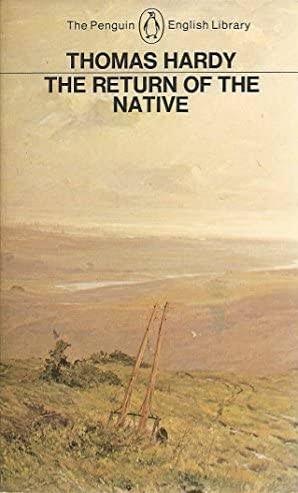
Review 2429: The Return of the Native

A love triangle—or rather a love pentagon—is at the heart of The Return of the Native. I put this novel on my Classics Club list because, although I read it years ago, I could remember nothing about it.

The Return of the Native is Hardy’s most contained novel, all of it taking place on Egdon Heath. The action begins on Guy Fawkes night with the lighting of bonfires. The occupants of one barrow are discussing the supposed marriage that day of Damon Wildeve and Tamsin Yeobright. But Tamsin returns home in distress and unmarried, saying Wildeve made a mistake with the license.

Wildeve has told Tamsin they can marry on Monday, but on that very night he goes to see Eustacia Vye, the girl he dropped for Tamsin. Eustacia is a vibrant, proud woman, and there is no doubt that she is tempted to get revenge on Tamsin.

Tamsin and her aunt view themselves disgraced if the marriage doesn’t come off, even though Wildeve lets weeks go by as he tries to court Eustacia. But Eustacia has heard of the return after years away of Tamsin’s cousin Clym, an educated man who works as a diamond seller in Paris, and sight unseen, she decides he’s the man for her. She hates the heath and wants to go to Paris. So, she misses a rendezvous with Wildeve and he marries Tamsin.

With this ill-conceived marriage, we are halfway set up for the tragedy. Then Eustacia marries Clym even after he tells her he plans to run a school for the poor on the heath, thinking she can easily change his mind after the wedding. The fifth point of the pentagon is occupied by Diggory Venn, a rettleman, or man who sells the red substance used to mark sheep and whose skin and clothing are dyed red from handling it. Although the Introduction to my edition explains that Hardy meant him to be a rather freakish figure about the heath, he ends up using him as a sort of deus ex machina, always in aid of Tamsin.

A strong theme of snobbery is inherent in the novel as we learn (1) that Wildeve was meant for better things but ended up owning the neighborhood pub, (2) that Tamsin turned down a proposal from Venn even when he was a respectable dairyman because he wasn’t good enough for her, (3) that the only suitable suitors for Eustacia in the neighborhood are the morally dubious Wildeve or the unambitious Clym. And Mrs. Yeobright clearly disapproves of both her son’s and niece’s choices.

So, we’re all set up for one of Hardy’s tragedies, in which he lays into the Victorian idea of marriage while making all his characters suffer. I usually like this stuff, but Hardy was forced by his publisher to add on the last section, thus providing a happier ending and making the story seem to last a little too long.

Related Posts

Far from the Madding Crowed

Tess of the D’Urbervilles

The Mayor of Casterbridge

Classics Club Spin Yet Again!

Here it seems like we just had a Classics Club Spin and we’re having another one, #37! What is the spin, anyway? Well, if you are a member of the Classics Club you have posted a list of a number of classics you would like to read by a certain deadline, set by yourself. To participate, simply create a numbered list of 20 of the books on your list and post it by Sunday, April 21. On Monday, the club will post a number, and that number determines which book you will read for the spin. Post a review of that book by Sunday, June 2. It’s as simple as that. And don’t forget to add a link to that post in the Comments for the spin post on June 2nd.

With no further ado, here is my list. I no longer have 20 books left on it, so I have to repeat some:

  1. Our Mutual Friend by Charles Dickens
  2. Les Misérables by Victor Hugo
  3. The Deepening Stream by Dorothy Canfield Fisher
  4. The Book of Lamentations by Rosario Castellanos
  5. The Methods of Lady Walderhurst by Frances Hodgson Burnett
  6. The Passenger by Ulrich Alexander Boschwitz
  7. Merkland, A Story of Scottish Life by Margaret Oliphant
  8. The Prophet’s Mantle by E. Nesbit
  9. Incidents in the Life of a Slave Girl by Harriet Jacobs
  10. The Three Musketeers by Alexandre Dumas
  11. Cecilia, Memoirs of an Heiress by Frances Burney
  12. The Princess of Cleves by Madame de La Fayette
  13. Love’s Labour’s Lost by William Shakespeare
  14. Hero and Leander by Christopher Marlowe
  15. The Tavern Knight by Rafael Sabatini
  16. The Book of Dede Korkut by Anonymous
  17. Merkland, A Story of Scottish Life by Margaret Oliphant
  18. Tis Pity She’s a Whore by John Ford
  19. The Deepening Stream by Dorothy Canfield Fisher
  20. The Prophet’s Mantle by E. Nesbit
  21. The Methods of Lady Walderhurst by Frances Hodgson Burnett

Classics Club Spin #36!

It’s time for another Classics Club Spin. What’s it all about? Members of the Classics Club select 20 books from their Classics Club lists (here’s mine) and list them by number on their blogs before Sunday, January 21. On that day, a spin number is selected by the club, and that number determines which book on the list the member will read by the spin deadline, which is Sunday, March 3. I am always ready to play, so here is my list:

  1. The Return of the Native by Thomas Hardy
  2. Cecilia, Memoirs of an Heiress by Frances Burney
  3. The Prophet’s Mantle by E. Nesbit
  4. The Passenger by Ulrich Alexander Boschwitz
  5. The Methods of Lady Walderhurst by Frances Hodgson Burnett
  6. The Tavern Knight by Rafael Sabatini
  7. The Book of Dede Korkut by Anonymous
  8. Weatherley Parade by Richmal Crompton
  9. The Princess of Cleves by Madame de La Fayette
  10. Incidents in the Life of a Slave Girl by Harriet Jacobs
  11. The Book of Lamentations by Rosario Castellanos
  12. Love’s Labour’s Lost by William Shakespeare
  13. The Three Musketeers by Alexandre Dumas
  14. Merkland, A Story of Scottish Life by Margaret Oliphant
  15. The Deepening Stream by Dorothy Canfield Fisher
  16. Tis Pity She’s a Whore by John Ford
  17. Our Mutual Friend by Charles Dickens
  18. Hero and Leander by Christopher Marlowe
  19. Les Misérables by Victor Hugo (1862)
  20. Weatherley Parade by Richmal Crompton

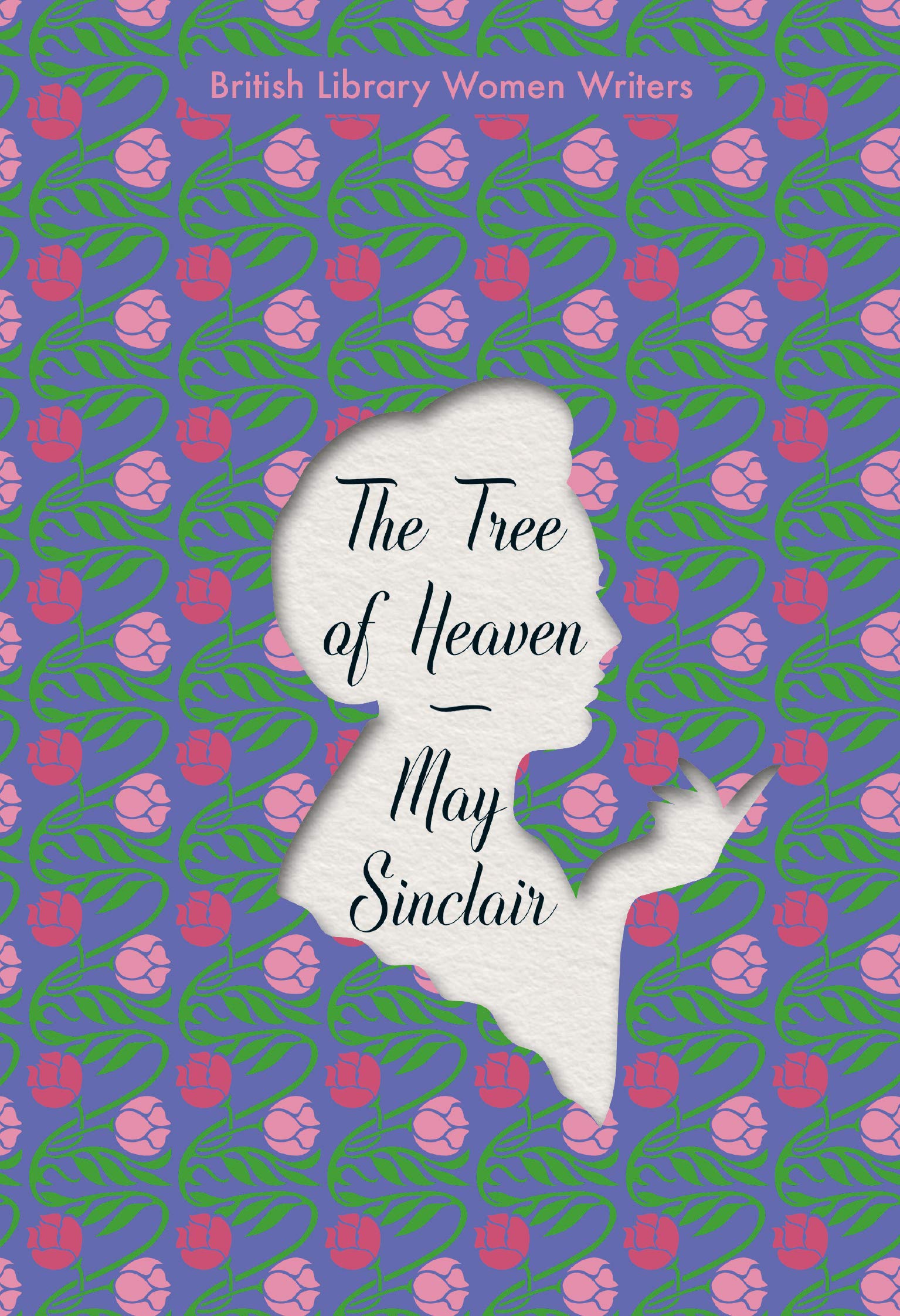
Review 2276: Classics Club Spin! The Tree of Heaven

Although the Preface states that the tree of heaven in this novel is stripped of its false identity in the end and shows itself as merely an ash—to symbolize the stripping away of Victorian sentimentality to realism—I have to say that depicting men’s deaths in World War I as glorious isn’t a bit realistic. But never mind. The book was written in 1917, so it pretty much had to.

The novel begins in the late 19th century when Anthony and Frances Harrison are young parents and have recently bought their house. One of the things Frances loves about it is the tree of heaven, which Anthony, a timber importer, states is nothing but an ash tree. The couple have four children, Dorothy, Michael, Nicky, and John. Frances is obsessed with her children, really the boys, to the point where Anthony feels left out.

This novel is about daily life in pre-war England through the microcosm of one family. Early on, as early as the first day depicted in the novel, when Michael refuses to go to a children’s birthday party, he demonstrates a fear of what he later calls the Vortex, which seems to be giving up his individuality because of the pressure of others’ excitements. As they grow, the children encounter situations which show and determine their personalities. The family takes in Veronica, the daughter of Anthony’s brother Barty and Frances’s best friend, Vera. Although Barty is family, he has become unbearable, and Vera leaves him for her long-time friend Ferdie Cameron. But Barty refuses to give her a divorce. Nicky, by then a schoolboy, becomes close to the lonely little Veronica, and it is thinking of her situation as a young man that makes him decide to marry a woman who is pregnant by another man, not for the woman but for the sake of the child.

As a young woman, Dorothy becomes involved in the suffrage movement, but doesn’t approve of some of their tactics. She too eventually backs off from the movement because of fear of the Vortex, while Michael joins a group of avant garde poets who renounce all previous poetry.

All of this leads up to World War I and the effect it has on the family and its friends. It is an interesting and well-written novel that provides a look at an ordinary (although well-off) family in the first couple of decades of the 20th century.

Related Posts

Family Roundabout

Some Do Not

They Were Counted

Classics Club Spin #35

It’s time for another Classics Club spin. For the spin, members select 20 titles from their Classics Club lists and post them in a numbered list on their blogs. On Sunday, October 15, the club selects a number, and that determines which book to read for the spin. The goal this time is to read that book by Sunday, December 3, and post your review.

So, with no further ado, here is my list of 20 books:

  1. The Book of Dede Korkut by Anonymous
  2. The Tree of Heaven by May Sinclair
  3. Hero and Leander by Christopher Marlowe
  4. The Tavern Knight by Rafael Sabatini
  5. Love’s Labour’s Lost by William Shakespeare
  6. Les Misérables by Victor Hugo
  7. Tis Pity She’s a Whore by John Ford
  8. The Deepening Stream by Dorothy Canfield Fisher
  9. The Princess of Cleves by Madame de Lafayette
  10. Weatherley Parade by Richmal Crompton
  11. Cecilia, Memoirs of an Heiress by Fanny Burney
  12. The Book of Lamentations by Rosario Castellanos
  13. Our Mutual Friend by Charles Dickens
  14. The Methods of Lady Waldhurst by Frances Hodgson Burnett
  15. The Three Musketeers by Alexandre Dumas
  16. The Passenger by Ulrich Alexander Boschwitz
  17. The Return of the Native by Thomas Hardy
  18. Merkland, A Story of Scottish Life by Margaret Oliphant
  19. Incidents in the Life of a Slave Girl by Harriet Jacobs
  20. The Prophet’s Mantle by E. Nesbit

Since I have exactly 20 books left on my list, this will be the last spin that I can participate in for a while that doesn’t require repeating some of my entries. I’m interested to see how it turns out.