The Classics Club has announced another spin. To participate, members post a numbered list of 20 of the books from their personal lists, to be posted by this Sunday, June 12. The club announces a number, and that determines which book to read by Sunday, August 7.
So, with no more further ado, here is my list:
The Castle of Otranto by Horace Walpole
Cecilia, Memoirs of an Heiress by Fanny Burney
The Moonspinners by Mary Stewart
The Aeneid by Virgil
Phineas Finn by Anthony Trollope
Miss Mole by E. H. Young
Weatherley Parade by Richmal Crompton
Sleeping Murder by Agatha Christie
Love’s Labours Lost by William Shakespeare
Sense and Sensibility by Jane Austen
Merkland, A Story of Scottish Life by Mrs. Oliphant
The latest Classics Club Spin ended up with The Dead Secret as the book I should read. It is Wilkie Collins’ first full-length novel but unfortunately not his best.
Mrs. Treverton is on her deathbed at Porthgenna Tower, but she has a secret. She wants to disclose it to her husband but can’t bring herself to do it. So, she forces her maid, Sarah Leeson, to write it down. She makes Sarah promise not to destroy the confession or remove it from the house, but she dies before she can make her promise to give it to her husband. So, Sarah hides it in a ruined wing of the house and then flees.
Fifteen or sixteen years later, Mrs. Treverton’s daughter Rosamond is a young wife. She and her blind husband, Leonard Frankland, are on their way to Cornwall to take up residence at Porthgenna Tower, where Rosamond has not lived since she was five. They intend to renovate the house, including the ruined north wing, but they have had to stop their journey because Rosamond has gone into premature labor.
The local doctor, in seeking a nurse for the new mother and son, consults a householder only to have her housekeeper, Mrs. Jazeph, unexpectedly volunteer to do it herself. However, Mrs. Jazeph’s odd behavior that evening causes her to be dismissed. Before leaving, she tells Rosamond to stay out of the Myrtle Room.
With a ruined old mansion on the coast of Cornwall that is possibly haunted and a secret too awful to tell, this novel promises to be all that a sensation novel should be. However, Collins is clearly learning here, for this novel is dripping with sentimentality and soppiness. Moreover, the behavior of the maid (it’s not hard to guess who she is) is so exaggerated that I could hardly stand to read about her at times. Collins took Dickens for his model, and Rosamond is a typical type for Dickens—sweet, a little foolish at times, loving, needing the guidance of her morally correct husband. Without having spent enough time with Sarah for us to care much for her—in fact, at times her behavior is extremely irritating—he spends too long a time with a supposedly heart-rending scene.
The secret isn’t very hard to guess, nor are the events of the plot difficult to predict. This isn’t a terrible novel, but Collins has written better ones.
Ann Laventie comes from an artistic and elegant family, all of whom are witty and have excellent taste. All, that is, except for Ann, who thinks they are wonderful but likes ordinary things and people. While her family disdains their solid Sussex neighbors and stays away from them, she likes them, especially the large and noisy Gayford family. Still, she feels she must be at fault.
A young film maker, Gilbert Croy, comes to stay and pays Ann a lot of attention. After Ann’s sister Elizabeth moves to London, Ann goes to visit her, convinced that she is in love with Croy and determined to come back engaged. But once in London, she begins to notice things. Her brother Dick’s sculptures, for example, all look alike. She absolutely adores a girl that everyone in her siblings’ group of friends shuns.
Rhododendron Pie is Margery Sharp’s first novel, and it’s quite funny as it explores the bohemian world of her upbringing versus the more mundane. Ann is an appealing heroine, and frankly I liked the Gayfords a lot better than the Laventies, especially in their reaction to Ann’s engagement. Her mother, though, an invalid who is mostly just a presence in the novel, gives a wonderful speech at the end. A fun one from Margery Sharp. I’m glad to have read it for my Classics Club list.
It looks like the Classics Club is having another spin. Members can participate by making a numbered list of 20 of the books on their Classics Club lists and posting it by Sunday. On March 20, the Classics Club will pick a number, and that determines which of the books on your list to read by Saturday, April 30.
So, here’s my list for the spin:
The Aenied by Virgil
The Castle of Otranto by Horace Walpole
The Mayor’s Wife by Anna Katherine Green
Much Dithering by Dorothy Lambert
Rhododendron Pie by Margery Sharp
Music in the Hills by D. E. Stevenson
We by Yevgeny Zemyatin
Sleeping Murder by Agatha Christie
Grand Hotel by Vicki Baum
Sense and Sensibility by Jane Austen
The Dead Secret by Wilkie Collins
The Return of the Native by Thomas Hardy
Merkland, A Story of Scottish Life by Margaret Oliphant
Go Tell It on the Mountain by James Baldwin
The Moorland Cottage by Elizabeth Gaskell
The Moonspinners by Mary Stewart
Isa’s Ballad by Magda Szabo
A Double Life by Karolina Pavlova
The Three Musketeers by Alexandre Dumas
The Saga of Gosta Berling by Selma Lagerlof
If you choose to participate, good look on getting a book you enjoy!
If you’re not familiar with the plot of The Bride of Lammermoor, you might be wondering why I picked it for the Classics Club Dare 2.0, Time to Get Your Goth On. It’s not a gothic horror story common for the time but one of Sir Walter Scott’s historical novels about a doomed love. However, the ending, which I’m not revealing, puts it in a more appropriate category as do the dark local legends and prophesies of withered old dames (perhaps witches), not to mention the ruined tower.
Edgar, Master of Ravenwood, is from a proud Scottish family of distinguished lineage. His profligate father, however, did his best to waste the family estate and finished things off by fighting on the wrong side of the revolution. With other parties in power, lawsuits filed against the estate by William Ashton, Keeper of the Great Seal of Scotland, have resulted in almost all of the Ravenwood property being turned over to Ashton and in an early grave for Ravenwood’s father. The impoverished Master has sworn vengeance against Ashton.
Ashton, however, is a politician, and he hears that the political situation is changing. Things may be looking up for the Marquis of A___ and thus for his relative, the Master. After the Master saves Ashton and his beautiful daughter Lucy from a wild bull, Ashton tries to befriend him, even encouraging him to spend time with Lucy and Ashton himself considering the benefits of a marriage between the two. Against the Master’s better judgment (and supernatural warnings), he begins to fall in love with Lucy. They become betrothed, but Lucy wants it kept secret from her family.
Some meddling from a neighbor who is not a friend of the Master’s leads Lady Ashton, staying with friends away from home, to hear the rumors that her daughter is engaged to him. She is his implacable enemy, so she swoops home to Ravenwood Castle just as the Marquis of A___ comes for a visit. The Master has been residing there at Ashton’s invitation, but Lady Ashton unceremoniously throws him out. He has already agreed with Lucy, however, that he will consider himself betrothed until she herself releases him. Then he goes off to make his fortune.
This novel was quite hard going for me at times, particularly in the sections and whole chapters that are in Scottish vernacular. These are the parts concerning the common people, and some of them are supposed to be funny, especially the ones about the machinations of Caleb Balderstone, the Master’s only servant, as he tries to hide what everyone already knows—that his master is destitute. I just felt they slowed down the action as well as being hard to understand and not that funny.
The action, however, eventually gets going and really picks up toward the end of the novel. I read the second half twice as quickly as the first.
The Classics Club has announced another spin. How do the spins work? I pick 20 books from my Classics Club list and number them. On October 17, the club picks a number, and that’s the book I will read before December 12, the deadline for this spin. So, here is my list for this spin. This time, I haven’t picked any of the difficult books on my list:
The Castle of Otranto by Horace Walpole
The Mayor’s Wife by Anna Katherine Green
The Black Arrow by Robert Louis Stevenson
Rhododendron Pie by Margery Sharp
The Grand Sophy by Georgette Heyer
Grand Hotel by Vicki Baum
Merkland, A Story of Scottish Life by Margaret Oliphant
I just posted a new Classics Club list last week, and coincidentally, now they have announced a spin. The way it works is, if you want to participate, you pick 20 books from your list and post that list. The spin picks a number, and that determines which book you read next. The deadline for reading the book this time is August 22.
Since I have a new list to work with, I decided to pick 20 of the books I want to read most. Here they are:
Sense and Sensibility by Jane Austen
The Bride of Lammermoor by Walter Scott
The Black Arrow by Robert Louis Stevenson
Grand Hotel by Vicki Baum
Weatherley Parade by Richmal Crompton
The Woods in Winter by Stella Gibbons
The Grand Sophy by Georgette Heyer
Much Dithering by Dorothy Lambert
A Town Like Alice by Nevil Shute
The Moon Spinners by Mary Stewart
Miss Plum and Miss Penny by Dorothy Evelyn Smith
Rhododendron Pie by Margery Sharp
Merkland, A Story of Scottish Life by Margaret Oliphant
The Dead Secret by Wilkie Collins
The Return of the Native by Thomas Hardy
Our Mutual Friend by Charles Dickens
The Methods of Lady Waldenhurst by Frances Hodgson Burnett
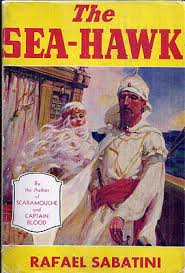
With The Sea Hawk I have finished my second Classics Club list. By some marathon reading, I finished posting my last reviews exactly a week later than my original deadline, owing to my neglect of the list for a couple of years. I was reading a lot of classics, just not the ones on my list, and I forgot to notice my deadline until six months ago.
In any case, it is time for a third list. Here it is. I am posting this list on July 7, 2021, and setting myself a deadline of July 6, 2026. As usual, I am attempting to read some classics from different centuries. I am also picking books from a few more countries than just England and the U. S. In some ways, this list seems more imposing than my previous ones.
BC
The Aeneid by Virgil (30 to 19 BCE)
15th Century
The Book of Dede Korkut by Anonymous (14th or 15th century)
16th Century
Hero and Leander by Christopher Marlowe (1598)
Love’s Labour’s Lost by William Shakespeare (1598)
17th Century
The Fair Jilt by Aphra Behn (1688)
Tis Pity She’s a Whore by John Ford (1633)
The Princess of Cleves by Madame de La Fayette (1678)
18th Century
Cecilia, Memoirs of an Heiress by Frances Burney (1782)
The Castle of Otranto by Horace Walpole (1764)
19th Century
Sense and Sensibility by Jane Austen (1811)
The Dead Secret by Wilkie Collins (1856)
Our Mutual Friend by Charles Dickens (1865)
The Three Musketeers by Alexandre Dumas (1844)
Belinda by Maria Edgeworth (1801)
The Return of the Native by Thomas Hardy (1878)
Incidents in the Life of a Slave Girl by Harriet Jacobs (1861)
The Saga of Gosta Berling by Selma Lagerloft (1891)
The Prophet’s Mantle by E. Nesbit (1885)
Merkland, A Story of Scottish Life by Margaret Oliphant (1851)
A Double Life by Karolina Pavlova (1848)
The Bride of Lammermoor by Walter Scott (1889)
The Black Arrow by Robert Louis Stevenson (1883)
Phineas Finn by Anthony Trollope (1867-1869)
20th Century
Go Tell It on the Mountain by James Baldwin (1953)
Grand Hotel by Vicki Baum (1929)
The Passenger by Ulrich Alexander Boschwitz (1938)
The Methods of Lady Walderhurst by Frances Hodgson Burnett (1901)
The Book of Lamentations by Rosario Castellanos (1962)
Sleeping Murder by Agatha Christie (1976)
Weatherley Parade by Richmal Crompton (1944)
The Ten Thousand Things by Maria Dermoût (1955)
The Deepening Stream by Dorothy Canfield Fisher (1933)
The Moorland Cottage by Elizabeth Gaskell (1950)
The Woods in Winter by Stella Gibbons (1970)
The Mayor’s Wife by Anna Katherine Green (1907)
The Grand Sophy by Georgette Heyer (1950)
Les Misérables by Victor Hugo (1862)
Dust Tracks on a Road by Zora Neale Hurston (1942)
Much Dithering by Dorothy Lambert (1938)
The Tavern Knight by Rafael Sabatini (1904)
Rhododendron Pie by Margery Sharp (1930)
A Town Like Alice by Nevil Shute (1950)
The Tree of Heaven by May Sinclair (1917)
Miss Plum and Miss Penny by Dorothy Evelyn Smith (1959)
Sir Oliver Tressilian is in a good place. As one of Elizabeth I’s privateers, he has made a fortune and gained the Queen’s favor. He is also engaged to marry the woman he loves, Rosamund Godolphin, or at least she has promised herself to him. When he calls on her brother Peter to ask for her hand, though, Peter refuses it, determined to keep up the feud begun between their parents. Indeed, he is insulting to the proud Sir Tressilian, so much so that Oliver would have killed him had he not promised Rosamund he would not.
Peter’s refusal seems of little moment to Oliver, because Rosamund will soon be of age. When Oliver’s brother Lionel returns home, however, he has fought with Peter without witnesses and killed him. Oliver promises to protect him but later learns that the wounded Lionel left a trail of blood to his door and everyone thinks Oliver murdered Peter. When Oliver tries to speak to Rosamund, she refuses to hear him. He is able to prove he is innocent to a magistrate and a minister because he has no wounds, but Rosamund will not listen.
Lionel becomes frightened that Oliver will tell the truth, so he arranges with a shady sea captain, Jasper Leigh, to kidnap Oliver and sell him into slavery. Jasper Leigh actually intends to let Oliver buy himself back, but their ship is taken by Spain and both Oliver and Jasper end up as galley slaves.
When next we meet him, Oliver is named Sakr El-Bahr, the Sea-Hawk, for his famous acts of piracy. He has adopted Islam and is a chief of Asad-ed-Din, Basha of Algiers. He learns that his brother and Sir John Killigrew have had him declared dead and Lionel has taken over his property and his former fiancée. Upon hearing this, Sir Oliver sends a messenger to Rosamund with the proof of his innocence in her brother’s death, but she throws it unread into the fire. Oliver is overcome with anger against both Lionel and Rosamund. How will it end?
I thought this was a very interesting swashbuckler, mainly because both the hero and heroine have more dimensions than in the usual adventure tale. There are times when both of them behave very badly, and I especially disliked Rosamund for much of the book because she was so quick to distrust Oliver. However she is also more brave and self-possessed than the majority of adventure story heroines. They get into some seriously exciting situations.
This is my last book from my second Classics Club list, which I have finished a couple of weeks late, so I’ll be publishing another list tomorrow.
I knew nothing about Titus Andronicus except that it is a blood bath. And it is, too, with rape, murder, dismemberment, and a woman being served her sons’ corpses in a pie.
The introduction to the play in my Riverside edition points out that the play was long poorly regarded and even by some thought not to be the work of Shakespeare. But more lately its reputation has been rehabilitated.
Titus Andronicus is a Roman general who has been fighting the Goths for years—having lost 20 sons in battle—when he returns to Rome. The emperor has recently died, and the citizens of Rome want to elect Titus, but he gives his support to the emperor’s brother Saturninus, who is duly elected but resents Titus for this.
In rapid succession and a confusing first scene, Saturninus says he will marry Titus’s daughter Lavinia while openly ogling Tamora, the captured queen of the Goths that Titus has brought back with him. Titus has just sacrificed her son to thank the gods for his triumph. Then Bassianus, the brother of Saturninus, comes in and claims Lavinia as his own, supported by some of Titus’s sons. Titus kills his own son Mutius for acting against the emperor. Although Saturninus rebukes Titus for slaughtering his own son, he still banishes Titus’s other sons for supporting Bassianus’s claim to Lavinia.
Saturninus marries Tamora, and she begins to plot her revenge against Titus for killing her son, aided by her lover, the villainous Moor Aaron. Aaron convinces Tamora’s sons Demetrius and Chiron to murder Bassianus and rape Lavinia during a hunt. They improve upon this plan by cutting off her tongue and hands, and then they frame Titus’s sons for Bassianus’s murder. More villainy follows, but once Titus has had enough, he gets his own revenge.
There aren’t very many striking passages in this play, but it is very tightly plotted. I could see some similarities to Coriolanus, another Roman revenge tragedy. I think the play might be quite horrifying and effective when performed. This play is one of the last books on my second Classics Club list.





 What? Me Read?