Review 2255: Introduction to Sally

Ever since Sally Pinner was very young, her parents have tried to keep her isolated. That’s because, although she is obedient and good, she is the most beautiful creature anyone has ever seen. Crowds gather when she goes out, and Mr. Pinner views the extra profit he makes when she helps him in his small grocery store as dishonest.

After his wife dies, Mr. Pinner is at his wit’s end trying to protect her in London, so he swaps stores with a man who lives in the middle of nowhere. This plan seems to work very well at first, most of their neighbors being widows and spinsters, but Mr. Pinner gets a shock after Christmas. He lives only ten miles from Cambridge. Term has been out, but as soon as it starts, the village fills up with young men.

Jocelyn Luke, a young man with a promising future in the sciences, spots Sally and immediately loses his head. He decides to marry her, throw up his university career, and go work in London as a writer. When Mr. Pinner hears the word “marry,” he hastily agrees, because other men have wanted something from her, but it wasn’t marriage. Soon poor Sally finds herself married to a stranger, who quickly realizes that her accent and her way of expressing herself are not going to impress his mother. So, he begins trying to get her to say her h’s. Everyone she meets has plans for Sally, but no one bothers to ask her what she wants.

This novel is played mostly for laughs, but it has some serious messages about the treatment of women and people’s view of women. A Pygmalion-like story where the girl to be transformed has no aptitude for change turns that idea on its head. Chaos ensues.

I received this book from the publisher in exchange for a free and fair review.

Related Posts

Expiation

Cluny Brown

Sally on the Rocks

Review 2254: #1962 Club! The Reivers

The Reivers is William Faulkner’s last novel, written in 1962, which I chose as my last selection for the 1962 Club. Unlike some of his more famous novels, it is told straightforwardly by its main character, Lucius Priest, as a grandfather telling a yarn about his childhood to his grandson. I believe Faulkner wrote this novel, which reminded me of Huck Finn, for pure fun.

Key to the story, which is set in 1904 when Lucius is 11, is Boon Hoggenbeck, an overgrown man-child who works for Lucius’s grandfather, referred to as Boss. Lucius’s grandparents and parents have no sooner departed for the funeral of Lucius’s other grandfather than Boon decides to take Boss’s brand new automobile and Lucius to Memphis, both sort of colluding in this misbehavior without actually discussing it. On the way there, they discover that Ned, Boss’s Black coachman, has hitched a ride with them by hiding under a tarpaulin.

In these early days of cars in Mississippi, the trip to Memphis is in itself an adventure, but things heat up when Boon delivers himself and Lucius to a whorehouse (although Lucius calls it a boarding house) where Boon has a favorite girl, Miss Corrie.

A bunch of colorful characters appear, including Otis, a boy described as having something wrong and who you don’t notice until it’s almost too late. But the story really kicks in when the miscreants learn that Ned has traded Boss’s automobile for a horse that he plans to race against another horse that already beat it twice.

I wasn’t sure this was going to be my kind of story, but mindful of the time (it is definitely not politically correct in so many ways), and I mean 1904 not 1962, it is funny and contains some philosophizing about right and wrong.

Related Posts

The Hamlet

The Town

The Mansion

Review 2253: #1962 Club! The Pumpkin Eater

I chose The Pumpkin Eater for the 1962 Club because the title seemed vaguely familiar (aside from its nursery rhyme connections) and because I don’t think I’ve read any Penelope Mortimer. I think the title is familiar because there was a reasonably popular movie of it in 1964 starring Anne Bancroft.

The unnamed narrator is a wife and mother of a large number of children, the number, names, and ages (except one) never specified. At a young age, she was already married three times, once a widow, and already had quite a few children, including three stepchildren whose father died. As the novel opens, she is recounting a discussion with her father to her psychiatrist, in which her father is trying to dissuade Jake from marrying her, basically saying she is too flaky and has too many children.

As she goes on to tell the story of her marriage, nothing improves. Her psychiatrist thinks her desire to have more children is a pathology (and also entirely her responsibility). Both her psychiatrist and her doctor are disdainful and condescending to her. Nothing seems to be thought of her husband having affairs (although she naïvely believes he is faithful for quite some time despite an early incident with a girl named Philpot).

The fact is, Jake, a screenwriter, is gone on set most of the time, most of their friends are his, the family is wealthy enough to have servants, and even the children are absorbed by nurses early and by schools later. So, she has little to occupy herself with except small children and cooking.

This book is billed as black humor. I didn’t find it funny, but I did sympathize with the narrator. Some horrendous things are done to her, and all of the men around her are manipulative. I thought the novel was bleak rather than funny.

Related Posts

The Women’s Room

The Transit of Venus

A Lady and Her Husband

Review 2251: #1962 Club! We Have Always Lived in the Castle

Twice a year, Simon of Stuck in a Book and Kaggsy of Kaggsy’s Bookish Ramblings sponsor a Read the Year club, for which they randomly pick a year in the first three-quarters of the 20th century, and participants select books published during that year to read. This time, the year is 1962, and We Have Always Lived in the Castle is my first selection for the club.

However, as usual, I have already posted reviews for three other books published in 1962:

We Have Always Lived in the Castle is a true modern gothic novel (or maybe novella—it’s very short), moving gradually but compellingly to reveal its secrets. Mary Catherine Blackwood lives with her sister Constance and their Uncle Julian in the family home, isolated from the rest of the village. We first meet Mary Catherine on one of her biweekly trips to the village for food, where she carefully plots her course to try to avoid people. However, she is mocked by the villagers, both young and old.

Slowly, we learn the first secret—that six years ago when Mary Catherine was twelve, most of her family was poisoned. Mary Catherine survived because she had been sent to bed without supper, Constance because she seldom used sugar, which had arsenic in it; Uncle Julian ate very little, so he survived but has since been feeble and muddled. Constance was tried for the crime but found not guilty. Ever since then, the girls have avoided other people.

Mary Catherine’s narrative hints that things are going to change. First, Helen Clarke arrives for tea, as she does once a week, but she brings along a friend, and Constance seems to be responding to her suggestion that she get out more. Mary Catherine worries about this, for she is very protective of Constance. Then Cousin Charles arrives. Naïve Constance accepts him, but Mary Catherine thinks he’s a bad one.

Mary Catherine is a dreamy girl who has strange compulsions and rituals, but one by one, Charles dismantles her protections around their property. We can see that the sisters are soon to be shaken from their oddly comfortable existence.

Jackson was a master at evoking an atmosphere. I think only her The Haunting of Hill House surpasses this one in power.

Related Posts

The Bird’s Nest

Hangsaman

Let Me Tell You

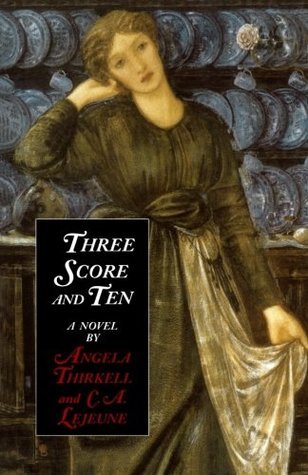
Reading Thirkell’s Barsetshire Series in Order: #29 Three Score and Ten + #28 Love at All Ages Wrap-Up

Thanks to everyone who is keeping up at least with comments for Love at All Ages. One more to go!

I see now why some of the lists of the Barsetshire series include Three Score and Ten, and some do not. It’s because Three Score and Ten was finished posthumously by a friend. It should be interesting to see what difference there is. I will be posting my review of this novel on Tuesday, October 31.

Review 2246: One Year’s Time

Liza, a “bachelor girl” in 1930s London, has a job as a secretary in an office where she likes all the people and a basic flat that she’s fixing up. It’s January 2 and she’s painting the floor and feeling lonely when she gets a call from Walter, a young man she met at a party. She invites him over and they quickly become lovers.

Everything is smooth at first, and she quickly falls in love, but she is always trying to match his mood and to appease him. When he disappoints her, she thinks it is her fault for being disappointed. She madly wants to marry him, but he doesn’t ask.

In April, he decides to spend the summer in the country. He asks her to go, and with very little planning, she quits her job and gives up her flat.

Liza is the type of person who’s either very happy or in the depths of despair. She has high expectations for this trip, but we already know it won’t go as planned.

I hope girls have gained more self-confidence, but I’ve known girls like this who spent a lot of time waiting by the phone (which you presumably don’t have to do anymore, because you carry it with you), and even when I was young, quite a few decades after this book is set, I knew girls who were focused only on marriage. It was interesting but sometimes excruciating to observe what’s going on in Liza’s mind. When will she realize she always puts Walter first and so does he, charming as he may be?

This is an unusual novel for the 30s, showing how things have opened up a little for women sexually but not too much, as her fretting over her fake wedding ring shows. I felt both impatient with and sympathetic to Liza for most of the book.

I received this book from the publishers in exchange for a free and fair review.
Related Posts

Grand Hotel

Which Way?

Sally on the Rocks

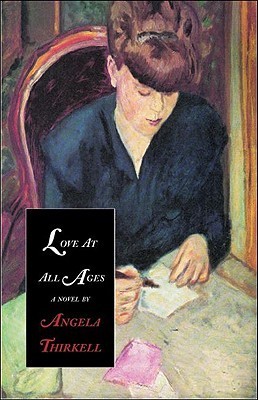
Review 2244: #ThirkellBar! Love at All Ages

If Love at All Ages can be said to have a plot, it’s the wedding of the vicar Mr. Oriel and Lady Gwendolyn, the sister of the Duke of Towers (not to be confused with the Earl of Pomfret Towers). If these names do not sound familiar, it’s because as far as I can remember, we have not met these characters before, or anyone else in that family, and we don’t really seem to get to know them now. However, other familiar characters help with or appear at the wedding.

The back of the novel also mentions the christening of the first child of Lady William Harcourt (previously Edith Graham, who monopolized at least three of the previous novels), but by the time we get done with the wedding, I’d forgotten it.

The title hints that the book includes another love affair, and since Lady Gwendolyn and her intended are well into middle age, the implication is that it involves younger people. This is just a hint that there may be a suitable mate for young Ludo, Lord Mellings, the heir of the Earl of Pomfret.

Otherwise, the book contains the usual plethora of literary allusions, tea parties, boating parties, and so on. The preoccupations that I complained about last time are still all there, too—including yet another mention of Mrs. Fewling’s lack of proper undergarments when she was still Margot Phelps—although not repeated as often. However, there is a scene where Lydia Merton remembers her husband’s old infatuation (with someone very much like Mrs. Brandon but not her, I can’t remember) and then two pages later, her husband thinks about it, and as if that weren’t enough, it’s mentioned again later in the book.

So, no improvement here and less interest, because so much of the book is about characters we don’t know and don’t get to know. However, there’s only one book left to go. (In fact, the cover of my book says this one is the last one, which if it were, would be quite a disappointment as the last in the series.)

Related Posts

Close Quarters

A Double Affair

Never Too Late

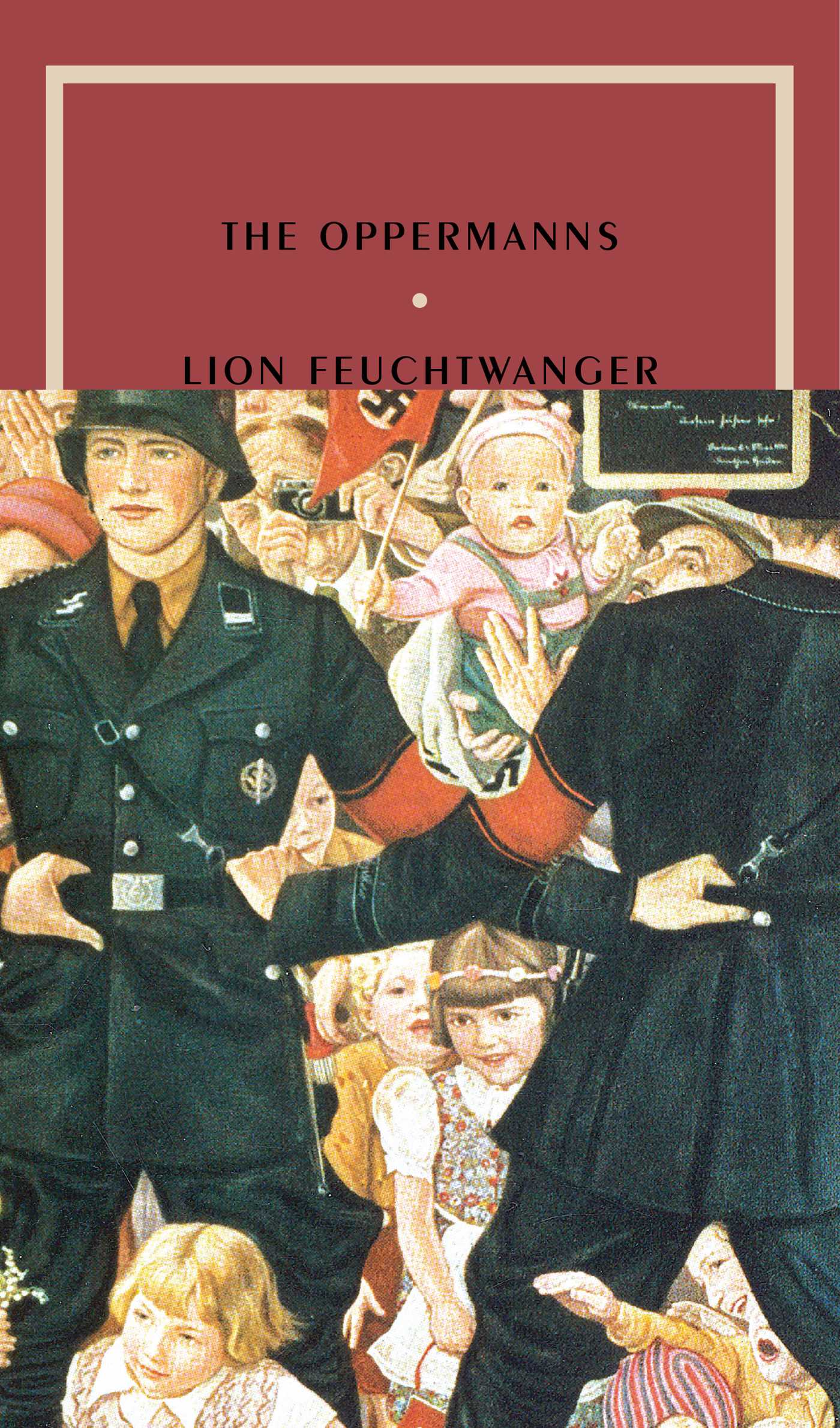
Review 2242: The Oppermanns

One of my brothers and I have gotten into the habit of buying each other books that we think are excellent. The Oppermanns was his Christmas present to me, and I just got around to reading it.

The novel is astounding because it was written concurrently with the events it describes, That is, it begins late in 1932 and ends in the summer of 1933 and was written during that time period. It tells the story of a wealthy German Jewish family. It’s considered the last masterpiece of the German-Jewish literary movement.

The Oppermanns are wealthy well-known residents of Berlin whose family owns a chain of furniture stores. Martin runs the stores. Gustav is an intellectual who spends most of his time enjoying art, literature, and music. Edgar is a world-famous scientist and surgeon. At the beginning of the novel, all three are happy with their lives, and although Martin has half-heartedly sought a merger with a competitor to mask the Jewish ownership of the family store, he has muffed it and doesn’t much care. The Nationalists, as the Nazis are referred to throughout the novel, seem to be on the wane.

However, within weeks the Leader (his name is never mentioned) has been made Chancellor because foolish landowners and big business, having drained the country dry, think they can use the Nationalists. Things begin to turn bad. One of Gustav’s friends emigrates to Palestine, but Gustav thinks he is being alarmist. After all, this kind of thing has happened before, and it always dies down.

This novel documents the slow horror of the Nationalist take-over (not so slow, really) and shows how easy it is to fool oneself and stay in one’s comfort zone even when it becomes uncomfortable.

The novel is all the more chilling because of how early it is written, because readers today know more about what will happen than Feuchtwanger did. It has a slightly optimistic ending, implying that the German people—whom he always differentiates from the Nazis—would not put up with brutality forever, but of course we know the German people didn’t stop anything.

Related Posts

The Postcard

The Invisible Bridge

Night

Review 2239: Love Comes Home

Jane Cranstoun is enjoying her stay in London with friends George and Kitty Mariner when she is summoned home by her mother because of the return from finishing school of her sister, Love. Jane is not really looking forward to going home, where she is expected to take charge of numerous commitments made by her mother, but also because she has begun to hope for a proposal of marriage from John Marsh, a young naval officer.

At her farewell party, Jane gets her proposal and accepts it but asks John to keep it a secret until her parents get to know him better. He has recently accepted a post that is nearer to her parents’ house in Scotland, so he agrees.

On the train north Jane meets Peregrine Gilbert, whom she takes to be shy and uninteresting, not realize he has become her neighbor. Then she meets him again the next morning and tries to send him off for trespassing.

When John appears, Love begins monopolizing him and throwing Jane together with Peregrine. In fact, there was a scene before he appears when I was certain Love already knew John. But that turns out not to be the case, even though it’s clear Love means to marry him before she even meets him. Silly misunderstandings lead to a broken engagement, and this situation was clumsily handled, I thought. In fact, although Love explains later that she thinks Jane and John are not well suited, she has decided this before she ever meets John.

I have enjoyed reading Clavering, but this one, I think, is the closest to a standard pattern romance than the others. I didn’t like Love, who takes over the story gradually until it is more about her. I also didn’t like John or later Kitty when she reappears. The only characters I liked were Jane and Peregrine and the girls’ brother, Meggie. Love is supposed to be 19, but she acts more like 14. I was a little disappointed in this one.

Related Posts

Susan Settles Down

Touch Not the Nettle

Yoked with a Lamb

Review 2238: Castle Rackrent

Castle Rackrent is a novel I picked for my Classics Club list. Published in 1800 although set before 1782, it is an early example of the use of an unreliable narrator.

That narrator is Thady Quirk, a servant to the ancient Irish Rackrent family, but the novel is also annotated by a scholarly character called the Editor. Thady informs us in the first paragraph that he’s known as “Honest Thady,” a phrase that puts us on the alert.

Thady quickly runs through the older history of the family and then tells in greater detail the story of the last three owners of the Castle, Sir Murtagh, Sir Kit, and Sir Condy. These are satirical tales of mismanagement either by penny pinching and bleeding the tenants or by wasteful consumption. Thady is vehement in his avowals of support for the family and in this role makes some astonishing assertions, such as, about Sir Kit who married a woman for her money and then locked her away for seven years because she refused to give him her jewels, “He was never cured of his gaming tricks, but that was the only fault he had, God bless him.”

This novel is a light commentary on the class system and its abuses, as the series of barons get up to all manner of hijinks while the servants (particularly Thady and his son) arrange to purchase assets at low prices. It is moderately funny but is considered by critics to be an astonishing first novel by a woman at this period.

Related Posts

Evelina

A Double Life

The Good People