Review 2232: Sing Me Who You Are

Harriet Cooper’s mother has died, and she is moving to a bus made into a caravan that she inherited from her aunt. She does not own the land it is on but is certain her cousin Magda won’t sell it.

Harriet is welcomed exuberantly by Magda’s husband Gregg and more reservedly by Magda, with whom she has a complex but caring relationship. As Harriet settles in, she and Gregg exchange memories of Scrubbs, a friend with whom she is still in love although he has been dead for years and preferred Magda, Harriet being younger and plain.

Although this novel was written in the 1960s, it still deals with issues from the war. Aside from Gregg and Scrubbs having been captives of the Japanese, the town council, which Magda is on, is dealing with issues of agriculture versus home development for a growing population.

I very much enjoyed this novel about a middle-aged woman trying to start a new life at the same time as trying to sort through old injuries. I found it interesting and touching.

I received this novel from the publishers in exchange for a free and fair review.

Related Posts

The Woods in Winter

Miss Mole

The Snow-Woman

Review 2230: #ThirkellBar! Close Quarters

Although it begins somewhere else, Close Quarters is mostly concerned with Margot Macfayden. Readers may remember that in Jutland Cottage, Margot was the daughter of impoverished and ailing Admiral and Mrs. Phelps. She worked hard, day in and out, maintaining their house and keeping the goats and chickens without much of a thought for herself until Rose Fairweather took her in hand. At the same time, others pitched in to alleviate her condition by visiting her parents so she could get away sometimes. Nevertheless, the wealthy, older Mr. Macfayden found her crying in the henhouse one day and proposed.

At the beginning of Close Quarters, Mr. Macfayden dies after only five years of marriage, and aside from her natural grief, Margot finds herself again at a crossroads. Her parents are now cared for, but she thinks perhaps she should live with them again. However, she doesn’t want to.

She knows the Luftons would like to reclaim the house she’s been leasing, so she starts looking for a house, but she can’t find anything suitable. No one but the readers know that Canon Fewling (Tubby to his friends) suffered a great disappointment when he learned she was engaged.

Although I found the ending of this book more touching than the last few, there were several occasions when Thirkell repeated conversations that she has not only had in other books but that had already appeared in this one, as if she couldn’t remember what she had written. The story of Mr. Wickham’s reluctant proposal to Margot is repeated three or four times, for example, while a snobby conversation about common mispronunciations occurs more than once. There is a stupid recurring joke about the Parkinsons’ last name that I don’t understand but suspect is more snobbery, and several different people opine that Mrs. Parkinson wears the pants in the family. Also, Margot’s lack of undergarments when Rose took her in hand is mentioned again.

Maybe I’m getting tired of Thirkell’s little conversational tidbits, but they seem also to occur more often. I liked the central theme of this book but disliked a lot of the chatter. And that’s disappointing, because often the chatter is amusing. Anyway, only two more books to go.

Related Posts

A Double Affair

Never Too Late

Jutland Cottage

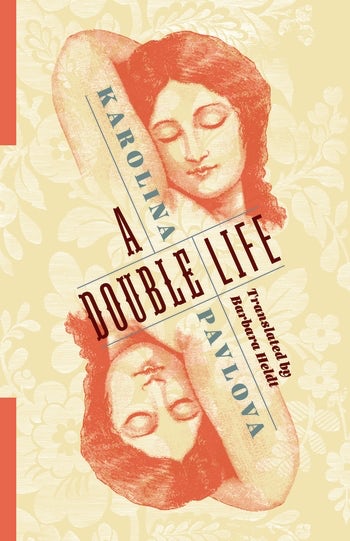
Review 2223: A Double Life

Published in 1848, A Double Life is the only novel written by the Russian poet Karolina Pavlova, who was well known in her time but forgotten by the time of her death. Almost more interesting to me than the novel was the biographical information about Pavlova, who was reviled as a Russian woman for daring to consider herself a poet. I read this novel for my Classics Club list.

Cecily is a young, innocent girl in the top levels of Russian society. Her mother, Vera Vladomirovna, has brought her up strictly to be submissive and ignorant of life. Vera Vladomirovna has noticed Prince Viktor’s interest in Cecily and hopes to marry her to him. But she doesn’t realize that her friend, Madame Volitskaia, intends him for her daughter Olga, Cecily’s best friend.

Upon hearing of the death of a man she never met, Cecily dreams about him that night. These dreams, related in poetry, end each chapter.

The prose narrative is full of satire against polite society, although Cecily doesn’t understand any of it. The poetry is more romantic and mystical, and I didn’t always get the point of it except the end result of it is to awaken Cecily to what life is really like.

The novel is very short, with a strong feminist message for the times. The dream sections are written with a romantic floridity that reminded me of the works of George Sand.

Related Posts

The Victorian Chaise-Longue

Strange Journey

A Footman for the Peacock

Review 2216: Classics Club Spin Result! Miss Mole

I don’t know what readers in 1930 would have thought of Miss Mole—maybe found it a little shocking—but I thought it was delightful. I read it for the latest Classics Club Spin.

Miss Mole is a forty-something spinster of little means. Of yeoman stock, she was well educated but left with little when her parents died. Since then, she’s been working in various genteel, poorly paid positions. When the novel opens, she’s a companion for Mrs. Widdows, but she has difficulty sometimes hiding her true nature under the submissive aspect her employers expect, and she’s fairly sure she’s going to lose her position soon. She goes to tea with Mrs. Spenser-Smith, a prominent citizen in town who is also her cousin. Lillia Spenser-Smith would like her relationship with shabby Miss Mole to remain a secret, so she helps her get a position as housekeeper with the chapel rector Mr. Corder, as she is worried about his two daughters and the incursions of Patsy Withers, who would like to be their stepmother.

Miss Mole finds the Corder household an unhappy one. Corder is an energetic pastor, but at home he expects his family to see no fault in him and he pays no attention to the state of his children. Everything must revolve around him. His oldest daughter Ethel is restless, horsy, and prone to bad temper. She has been supposed to have been running the household but has been paying more attention to her charities. Cousin Wilfred soon appreciates Miss Mole’s sense of humor, but young Ruth is at first mistrusting. Miss Mole decides to help Ruth even though she dislikes Mr. Corder.

Mr. Blankinsop, an acquaintance from Miss Mole’s former lodging, comes to tell Mr. Corder that he is changing churches because he disagrees with him. Although he seemed to want to avoid Miss Mole at the lodging, he begins to seek out her company. She thinks he is in love with a helpless married woman at his lodging.

Energetic Miss Mole does her work well and the Corders’ lives improve, but she has a secret that threatens when a minister of a neighboring chapel, Mr. Pilgrim, appears.

Miss Mole is a great character—intelligent, cynical, but with an ability to find joy in life, coupled with a tendency to lie but also to speak her mind.

Related Posts

Sally on the Rocks

Chatterton Square

Cluny Brown

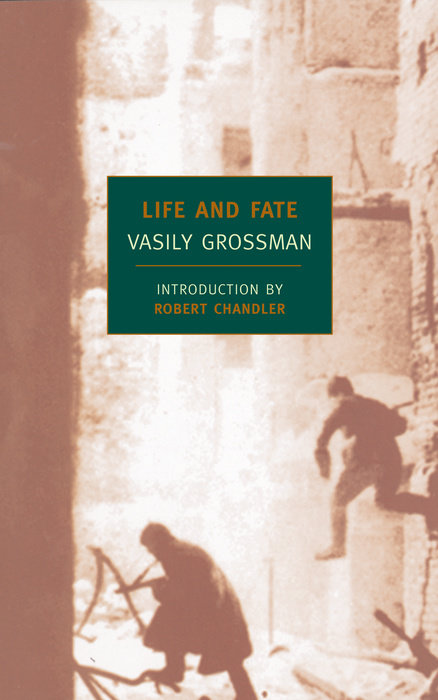
Review 2214: Life and Fate

Finished in 1960, Russian author Vassily Grossman’s Life and Fate was confiscated by the NKVD (predecessor of the KGB) and had to be smuggled out to be published in Europe. Taking War and Peace as its model, it is about the pressures of totalitarian governments during the siege of Stalingrad. It centers around one extended family, the Shaposhnikovs, but it also includes some of the German officers and others, visiting a variety of wartime settings: a besieged plant in Stalingrad, a German concentration camp, a scientific institute in Moscow, a Russian tank corps, and so on.

Because of its broad scope and length (more than 800 pages), it has a lot of characters, maybe a dozen of whom we visit and revisit, but others whom we see only once or twice. Some of the ones we revisit are Krymov, a commisar who is the ex-husband of Yevgenia Shaposhnikova; Viktor Shtrum, a famous physicist married to Lyudmila Shaposhnikova; Pyotr Novikov, a tank commander in love with Yevgenia; Yevgenia herself, who is worried about both Krymov and Novikov; Sofya Levinton, a doctor and friend of Yevgenia on her way to a German gas chamber. There is an appendix to the book listing hundreds of characters, but it doesn’t list most of the male characters’ first names or patronymics, so at times I wasn’t sure who the characters were talking about.

Although the Russian characters are uniformly patriotic, almost all of them live in fear, remembering the Terror of 1937 when many people were disappeared or deported to labor camps. Those times aren’t really over, as several characters run into trouble for minor infractions or no infraction at all, resulting in imprisonment and torture for some, demotions or exile for others. One character is labeled an enemy of the state for reporting that a soldier on his own side shot at him. In addition, bureaucracy gets in the way of people trying to do their war work.

This novel is powerful at times, but because of its structure, I didn’t really feel much connection to any of the characters except maybe Novikov, who spends hundreds of pages yearning for Yevgenia, not knowing she has returned to Krymov. It wasn’t until I was well into the book that I realized it was a sequel to Grossman’s Stalingrad, and it refers back to events that presumably occurred in that book, but it’s hard to know whether reading it first would have helped.

Also, Grossman occasionally takes a paragraph or two, sometimes a whole chapter, to philosophize on some subject. That’s a kind of polemic writing I don’t appreciate.

Related Posts

Sofia Petrovna

The Raven’s Children

Punishment of a Hunter

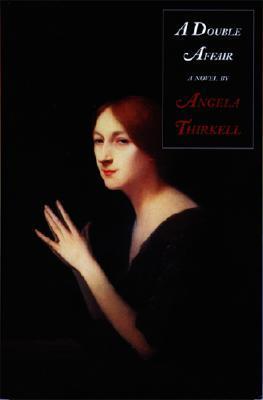
Review 2213: #ThirkellBar! A Double Affair

I have to start out with a spoiler for the book before this one, so if you haven’t read Never Too Late and plan to, skip now to the second paragraph. A Double Affair begins with the wedding of Miss Merriman, called Merry by her friends, to Mr. Choyce. Merry has appeared in many of the novels as the devoted secretary/companion to both Lord Pomfret and Lady Emily Leslie, and she deserves a happy ending. (Readers may recall that early in the series she had an unrequited love.) The wedding is described in much more detail than any of the others—if they are described at all—so Thirkell must have thought so, too.

Then we briefly return to the subject of Edith Graham, still eighteen after three books. And here, I think Thirkell has made a continuity error, for Edith is returning from a trip to America after having returned two books ago. I noticed this particularly because I read the beginning of this book out of order, so in my mind she had just returned and she was returning again. So, at the end of Never Too Late, I looked for an indication that she was going abroad again, but there was none—just her plan to go to agricultural school.

Thirkell gets over this, sort of, by saying she abandoned her studies to go to America with Uncle David and Aunt Rose, but never once is there a reference to two trips to America. Thirkell even has her say that she thinks her temperamental problems were caused by this trip, but she had those same problems two books ago when she returned the first time.

In any case, I’m a little tired of Edith and her temper. At the beginning of the book, she still has three admirers—George Halliday, the farmer; John Crosse, the banker and Lord Crosse’s son; and Lord Mellings, the young heir of Lord Pomfret. However, she seems to lose her temper if some man isn’t paying attention to her at all times.

This is a good time to look at the problems of George Halliday. His father died in the last book, and now his mother is feeling lonely. He is working hard and is sometimes irked because when he gets home, his mother wants attention, whereas he wants to work on the books or just relax. Finally, she goes for a visit to her daughter Sylvia at Rushwater, where Sylvia and Martin feel much the same. But Mrs. Halliday has a surprise for everyone.

This novel will finally dispose of the affections of George, John, and Edith, but in what combination?

Although I enjoyed keeping up with these characters, this is the first time I’ve felt that Thirkell lost track of her plotting a bit. Also, I don’t want to spoil any romantic surprises, but I’ll just say that she cheats a bit in this one.

Related Posts

Never Too Late

Enter Sir Robert

What Did It Mean?

Review 2210: It Ends with Revelations

It’s going to be hard to convey a sense of this book without revealing a side to it that doesn’t arise until well into the novel. I will say that for 1967 the novel deals with a key issue in a surprisingly enlightened way, even though it may make modern readers cringe a few times.

Jill Quentin is the wife of Miles Quentin, a distinguished actor. Miles is opening a new play in a spa town during a summer festival. This play was already produced on television, but adapting it for the stage is proving difficult. In particular, Cyril, the actor playing the boy in the play, is not doing well despite having played the part on television.

Smith’s descriptions of the details of the play production as well as Jill and Miles’s relationship are interesting. However, the plot gets going when she befriends two teenage girls, Robin and Kit Thornton, who are staying with their widowed father in the same hotel.

I don’t want to say more, really, except that the novel involves a choice for Jill between romantic love and the love of a deep friendship and asks how important loyalty is in marriage.

I generally liked this book, but there was a point before some revelations when I felt that if it was a more modern book, it could be going somewhere creepy. However, it was not.

Related Posts

Which Way?

Shadowplay

Nightingale Wood

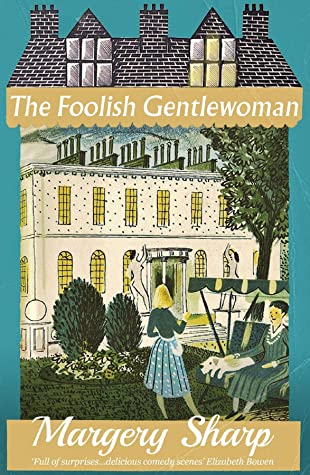
Review 2208: The Foolish Gentlewoman

When crusty, prim Simon Brocken goes to live with his widowed sister-in-law Isabel while his home is repaired from bomb damage shortly after World War II, he isn’t expecting to enjoy living so closely with other people. However, the household gets along comfortably together even though the four occupants don’t have much in common. Isabel is kind and generous, although Simon thinks she’s an idiot. Her Australian nephew Humphrey has come to stay, and he is slowly pursuing an understated courtship of Jackie, Isabel’s companion/secretary.

However, something is bothering Isabel, and eventually she tells them what it is. A preacher’s sermon about bad acts in the past being no less bad has made her consider an incident from when she was a girl, when her actions blighted the marital hopes of Tilly Cuff, a poor cousin her family treated a little like a servant. Tilly took a job as governess, and Isabel eventually married Simon’s brother.

Now Isabel thinks she must make amends to Tilly, so she has invited her to stay. But she also intends to give Tilly her entire fortune. Simon is appalled by this but can’t get her to change her mind. Then Tilly arrives, and everyone but Isabel soon realizes that she is actively malicious.

This novel is witty and sharply observant of human nature. It creates a situation that I couldn’t imagine being resolved neatly and that made me want to see what happens.

Related Posts

Harlequin House

Rhododendron Pie

Cluny Brown

Review 2206: The Ten Thousand Things

I picked out The Ten Thousand Things from a list of the New York Review of Books publications for my Classics Club list without knowing anything about it. It is an unusual book, but beautiful.

It begins with an extended vivid description of an island in the Moluccas, referring along the way to the island’s stories and myths. It does this for so long that you begin to wonder where it is going, but finally it comes to the story of Felicia. Felicia spends her childhood on the island, visiting her grandmother in the Small Garden, hearing stories about objects and ghosts on the property, and examining her grandmother’s box of treasures, many of them stones with properties or unusual or valuable shells. However, eventually there is a dispute between her grandmother and her mother, so her mother insists her immediate family move to Holland. Felicia’s grandmother gives her some valuable jewelry so she can afford to come back.

She returns a young mother, her husband, who married her for money, having taken all her money and jewels and disappeared when he learned she was pregnant. She has had to take out a loan to return.

Most of the bulk of the novel is the story of her life on the island raising her son Himpies. Although this is not a novel in the magical realism genre, the island, with its tales of ghosts and monsters and its extreme beauty, seems magical. Dermoût spent her childhood on such an island and clearly loved it.

About 2/3 of the way through the novel, which is only about 200 pages long, it abruptly moves to some other characters on the island, then does it again. This is at first surprising, but Dermoût returns to the Small Garden and wraps everything up beautifully.

I think I can fairly describe this novel as haunting—sad and just lovely.

Related Posts

My Family and Other Animals

The Signature of All Things

Enchanted Islands

Review 2204: The Summer Book

The event that informs The Summer Book has already occurred before the novel starts—six-year-old Sophie’s mother has lately died. Sophie, her father, and grandmother travel early to an island on the Gulf of Finland where they spend their summers.

There isn’t much plot to his novel, which is mostly centered on Sophie and her grandmother. Sophie is changeable and sometimes anxious. Her grandmother, who is not in good health, is usually wise and responsive but can be irritable. In between tales of a visiting neighbor, the construction of a new road and a large, intrusive house, a haunted bathrobe, an unfriendly cat, the construction of a miniature Venice, and some massive storms, Jansson minutely describes the world of the island—the terrain, the insects and birds, the plants.

This is a lyrical novel that implies—most of them are unstated—some truths about life, death, and love.

Jansson spent most of her summers on such an island. She wrote this novel shortly after the death of her mother.

Related Posts

Moominsummer Madness

The True Deceiver

Abigail