Review 2004: Classics Club Spin Result! Phineas Finn

When I put Phineas Finn on my Classics Club list, I was just looking for a book by Trollope that I hadn’t read. I didn’t realize it was the second of the Palliser novels, so now I’m going to have to go back and read the first.

Against the advice of his father and his mentor, Mr. Low, Phineas Finn has been persuaded by friends to run for Parliament even though he has just recently finished his law studies. The difficulty is that he has no money and Parliamentary representatives aren’t paid, so his father, who is a country doctor, will have to continue to support him unless he can get a paid government position.

Nevertheless, he goes ahead and gets “elected” as member for an Irish pocket borough, where the lord who awards it has feuded with his son, the incumbent. So, Phineas begins his career.

One of his friends who has encouraged him in politics is Lady Laura Standish, a young woman who takes a great interest in politics. Although she had some fortune, she gave it away to her brother, Lord Chiltern, to pay off his debts in the hopes he can reconcile with his father, the Earl of Brentford. Both the Earl and Lady Laura are encouraging about Phineas’s career, and Phineas finds himself in love with Lady Laura. However, he has a rival, Mr. Kennedy, who is stiff and formal but very rich.

The novel details Phineas’s Parliamentary career as well as his friendships with several young ladies as he looks for a wife. It is thoughtful about the choices for women at this time and deals with the consequences when Lady Laura makes the wrong choice of husband. Another character, Laura’s best friend Violet Effingham, is wealthy in her own right and wants to remain single and run her own household but finds she is not allowed to. Finally, there is Marie Max Goesler, an intriguing character. She is a wealthy widow who is known for her select parties. She is an admitted social climber, but she takes a great interest in Phineas’s career.

Phineas himself is a likable fellow who sometimes seems a little suggestible but by and large works hard and leads an ethical life. I enjoyed this book very much. The only thing I found disappointing was that of the four women he considers marrying, he ends up with the least interesting and most insipid.

Related Posts

Barchester Towers

Doctor Thorne

Framley Parsonage

Review 2000: #ThirkellBar! Miss Bunting

Miss Bunting is another re-read for me. I’ve looked over my original review, which seems fine, so use the link for the plot synopsis. One thing I notice is that because of reading the books in order and thereby getting to know the characters better, I found the ending of this novel more affecting than I did the first time.

So, here are my observations from this time through. First, I noticed the subtleties of the class distinctions. Although I mentioned in my first review that Thirkell’s usual upper-class characters are flustered at having the wealthy and vulgar Mr. Hill thrust his way in amongst them (and thrust he does, appearing several times uninvited), Jane Gresham is shocked when he implies that he considers himself better than his landlady Mrs. Merivale, who is educated and middle class and whose daughters have better marriage prospects than Heather Hill does. Of course, Heather’s ambitions are different than Mrs. Merivale’s. I myself was surprised to find the Middletons, who seemed fully accepted in Before Lunch, being considered socially inferior (mostly by Lady Fielding, who’s a real snob). Toward the end of the novel, Lady Fielding reflects that men like Mr. Hill have taken over, and there won’t be room for people like them. Lord Fielding reassures her, but she’s not far wrong.

This novel is sad in more ways than one, but particularly affecting is Jane’s situation, not knowing whether her husband is dead or alive. I won’t give the other reason away.

Related Posts

Marling Hall

The Headmistress

Before Lunch

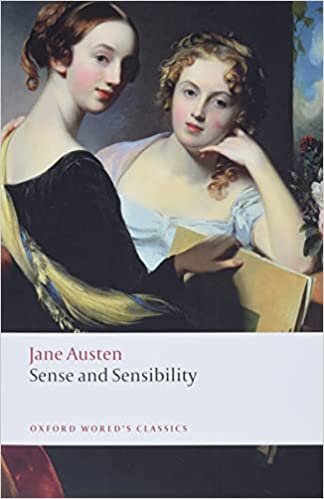
Review 1896: Sense and Sensibility

When I was making up my current Classics Club list, I realized I hadn’t reread any Austen for a while. So, I picked Sense and Sensibility.

When Mr. Dashwood was dying, he made his son John promise to take care of his second wife and daughters, since he was unable to leave them anything due to an entail. John makes this promise with good intentions and tells his wife he will give each of them £1000, but she talks him out of each of his suggestions until he gives them nothing.

On a very small budget, then, Mrs. Dashwood must find a new home for herself and her three daughters, Elinor, Marianne, and Margaret. Just as things are getting unbearable at the shared home, a relative of Mrs. Dashwood, Sir John Middleton, offers the women a cottage in Devonshire at a low rate.

Elinor regrets leaving her home all the more because she has developed what she believes is a shared attachment with her brother-in-law, Edward Ferrars. But Mrs. John Dashwood wants her brother as far away from Elinor as possible. Both she and her mother plan for him to marry well.

Relocated to their new home, the Dashwoods find their neighbors, the Middletons, and Mrs. Jennings, Mrs. Middleton’s mother, to be almost overly friendly.

One day Marianne and Margaret are caught out in a rainstorm and Marianne sprains her ankle skidding down a grassy hill. A gentleman rescues her, and he, Mr. Willoughby, becomes a frequent visitor. It is clear he is attracted to Marianne, and she, having fully adopted the ideals of Romanticism, shows plainly that she’s in love with him. Meanwhile, Elinor wonders why she isn’t hearing from Edward.

This novel is about two sisters who deal with unhappy love affairs in opposite ways and the result. It has vividly believable characters, some funny, and in its own way constitutes a sharp social satire. This novel is one of my favorites by Austen.

Related Posts

Persuasion

Mansfield Park

Sense & Sensibility

Review 1891: Keeping Up Appearances

I’m not sure if it was because I was on vacation while reading Keeping Up Appearances, but it took me much longer to read it than usual for a novel its size. I did notice I occasionally had a hard time paying attention to it while at other times felt I was reading a script for I Love Lucy.

Daphne and Daisy are opposites in personality, but they’re constantly together. Daphne is confident, witty, and brave, perhaps a higher class than Daisy, while Daisy is shy, unsure, and not always swift on the uptake. Daisy is ashamed of her class origins and the circumstances of her birth, even though she has been raised by higher class family members. Daphne could care less about all that.

At the opening of the novel, both young women are vacationing with the Folyot family on an island in the Mediterranean. Mrs. Folyot works against tyranny and reminds me of Mrs. Jellyby. She is obsessed by her causes and so later has a hilarious scene of talking at cross-purposes with Daisy’s mother.

Both girls care for Raymond, the Folyot’s oldest son, a biologist. Although Daisy doesn’t like to look at the little animals Raymond shows her as much as Daphne does, Daisy fears she cares for Raymond more than Daphne does, but he likes Daphne more than her. Unfortunately, an incident with a wild boar makes Daisy too embarrassed to stay, and Daphne goes, too.

Daisy doesn’t think the Folyots would approve of her profession. Not only is she a successful author of middlebrow novels, but she takes assignments from a newspaper to write silly articles about women that the paper assigns her. Daisy is a snob, and she is proud of neither activity even though we suspect she is a better novelist than she thinks.

Macaulay obviously had fun skewering the newspapers, because the ideas for articles are ridiculous and sexist, as is clearly the attitude toward Daisy’s novels.

Although this novel satirizes the publishing industry, it is really about identity and self-image. Most of the characters are not quite likable except Daisy’s mother, who is a hoot.

I received this novel from the publisher in exchange for a free and fair review.

Related Posts

Dangerous Ages

The World My Wilderness

The Towers of Trebizond

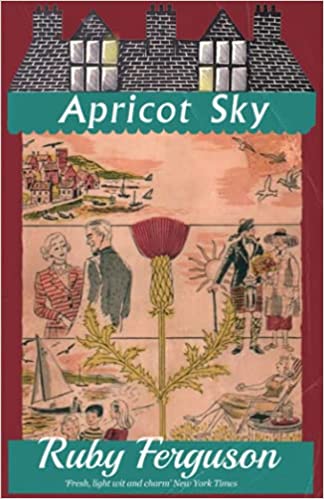
Review 1889: Apricot Sky

Mrs. MacAlvey is looking forward to a happy summer in her home in the Scottish Highlands. Her three grandchildren who live there are home from school. Her daughter Raine is getting married to Ian Garvine, the younger brother of the local laird, and her daughter Cleo is returning from eight years in the United States. Mrs. MacAlvey also expects guests, and she loves entertaining.

Primrose, one of the grandchildren, thinks Scotland is heaven. She is ready to run wild with her brothers all summer.

Cleo seems to have left home because she was hopelessly in love with Larrich, Neil Garvine, and at first sight of him she realizes she’s not over it. However, she was too homesick to remain in the States. Neil seems more interested, though, in Inga, a young widow whom everyone but Cleo seems to love.

I really loved this novel, and its descriptions made me want to visit the Highlands even more than I already did. It’s about an eventful summer in the life of an attractive, easy-going family in 1948. The characters are likable, it is funny and has a romance, and it’s a lot of fun.

Related Posts

Lady Rose and Mrs. Memmary

Beneath the Visiting Moon

Music in the Hills

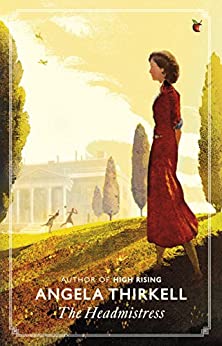
Review 1883: #ThirkellBar! The Headmistress

Owing to financial difficulties, the Beltons have had to lease the house their family has lived in for 150 years, Harefield Park. It has been leased by the Hosiers’ Girls School, which, having been evacuated from London, had shared space with Barsetshire High School.

Mr. and Mrs. Belton have moved into Arcot House, recently inherited by Captain Hornby at his aunt’s death, which is in the village of Harefield. Although it seems odd not to live in their own house, the person who seems to mind most is their daughter, Elsa, who is away most of the time doing something secret.

Miss Sparling, the headmistress of Hosiers’ Girls School, has not only been sharing the school, she has been living with Barchester High School’s dread headmistress, Miss Pettinger, so she is happy to have her own quarters. The community of Harefield is very welcoming, so Miss Sparling quickly gets to know the village families. She is delighted to find out that the vicar, Mr. Oriel, once studied with her grandfather, a noted scholar.

One of her new acquaintances is Mr. Carton, an Oxford don, who goes around making disparaging remarks about female academics. Little does he know that Miss Sparling’s grandfather was an expert on an obscure poet that Mr. Carton is writing a book about. Further, one of Carton’s few sources is an article published by Miss Sparling herself.

At the Belton’s, Captain Hornby begins discreetly courting Elsa, and an unattractive schoolgirl at Hosiers falls madly in love with Commander Belton, the Belton’s oldest son.

As this series continues, the books become more full of incident, new characters, and references to characters already encountered and thus more difficult to describe. In this one, there is a hilarious description of a working party and a new awareness that the young men may die, although we haven’t heard of any war deaths among our favorite characters (except Lettice Watson’s husband, whom we never met), just of the natural passing of older characters such as the original Lord and Lady Pomfret.

A new character who proves entertaining is the pleasant Mrs. Updike, such a clumsy woman that she is constantly injuring herself. And key to the events of the plot is Mr. Adams, who I fear will become one of Thirkell’s types—a vulgar, wealthy manufacturer who is the father of the aforementioned schoolgirl.

Sometimes Thirkell’s prejudices bother me, such as her overt snobbishness and her disparagement of Dr. Morgan on the grounds she is a woman doctor rather than because she is a nitwit. However, although Thirkell has her tropes and stock characters, I feel that somehow her series is gaining a little substance.

On another note, I will have my usual wrap-up topic for this book with its announcement of the next book next Wednesday, but since that is well into July, let me just say now that the next book is Peace Breaks Out, and that my review will appear one day earlier than usual, on Thursday, July 28.

Related Posts

Growing Up

Marling Hall

Northbridge Rectory

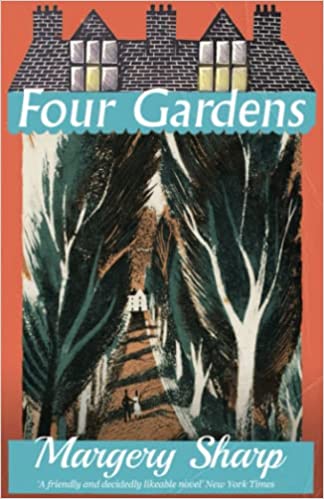
Review 1871: Four Gardens

Furrowed Middlebrow calls Four Gardens one of Margery Sharp’s most beloved books. At first, I thought the novel was just okay, but gradually it won me over. It’s essentially a character study of Caroline, a woman born into the Victorian era who has to learn to adapt to more modern times.

The novel begins with Caroline as a teenage girl, still in the 19th century. She comes from an ordinary middle-class family and recognizes a big divide between herself and the people she knows and the others from the Common, the area where the wealthier people live. She and her family, for example, work on the annual festival, but they are not invited to it.

In the neighborhood is a deserted house with extensive gardens. Although it is trespassing, Caroline sneaks in there and meets Vincent, an upper-class boy. During the summer, she runs off to meet him in the garden. But once he sees her with her family, he stops coming.

Beginning with this disappointing first romance, Four Gardens follows Caroline as she marries, has children, meets with a change of fortune, gets through World War I, and continues into middle age and older. She is an endearing heroine, realistically experiencing the changes of the times. It’s an affectionate and lovely novel.

Related Posts

Harlequin House

Rhododendron Pie

Cluny Brown

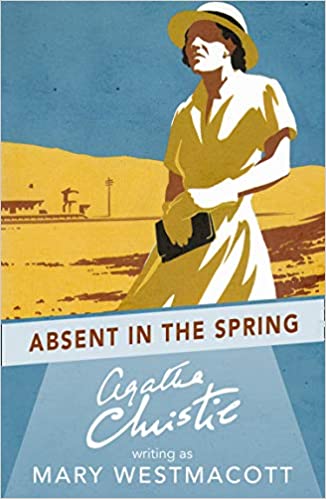
Review 1870: Absent in the Spring

For some reason, I always thought that the novels Agatha Christie wrote as Mary Westmacott were romance novels. Absent in the Spring, however, is a character study with an edge, reminding me more of some of the novels of Elizabeth Taylor.

Middle-aged Joan Scudamore gets stranded for several days at a guest house on her way from Baghdad to London. Before this happens, there is a revealing encounter between her and an old school friend, Blanche Haggard. Joan is judgmental toward Blanche, thinks she looks old and untidy and blames her appearance on the unfortunate choices she has made in life. Blanche cheerfully admits her bad choices but says she has enjoyed her life. She also hints at something about Joan’s daughter Barbara. We realize we like Blanche more than Joan.

During the five days Joan is stranded, she begins reconsidering her self-satisfied attitude, realizing some truths about herself and her family that she has hidden from herself. It is clear to the reader that she has bullied her husband and children, but she sees her behavior as doing her best for them. She thinks she has helped them to happy lives, but she has tried to make them all do what she thinks is right.

The big question is whether Joan can change her attitude. Let’s just say the novel is much more in the Realism school than Christie’s mysteries.

And by the way, let me just state my objection to this book being relabeled under Christie’s name. On the cover of my edition, the Christie name is more noticeable than Westmacott. Although I see no harm in acknowledging somewhere that they’re the same person, this is a marketing ploy that I don’t agree with. She wrote the book under the name Westmacott, so that should be the predominant name.

Related Posts

Appointment with Death

A View of the Harbor

Tales from the Queen of the Desert

Review 1868: The Swiss Summer

When Lucy Cottrell’s friend takes her to visit an elderly friend, Lady Dagleish, she has no idea how her immediate plans will be affected. Lady Dagleish is sending her companion, Freda Blandish, to spend the summer at her chalet in Switzerland to inventory its contents, and Lady Dagleish tells Lucy she must go along and spend the summer in the chalet, inviting any friends she wishes.

All during her marriage, Lucy has fallen in with her husband’s ideas for a holiday, he preferring to stay in England or Scotland and near convivial friends. But Lucy has yearned for the alpine meadows of her honeymoon, for quiet and beautiful scenery, so she is surprised but delighted by Lady Dagleish’s invitation.

Lucy is thrilled to arrive at a beautiful, large chalet high up in the mountains. Although she was not impressed by Mrs. Blandish when she met her, Lucy herself is an amenable person, and at first things go well. Then Mrs. Blandish’s teenage daughter Astra arrives and makes it clear that Lady Dagleish doesn’t like her and wouldn’t want her there. Mrs. Blandish asks Lucy not to tell her, and Lucy reluctantly agrees.

Lucy finds she likes Astra but is dismayed to learn that Mrs. Blandish expects more guests—paying guests—her friend Mrs. Price-Wharton and her family, and she expects Lucy to keep quiet about it. Utta, the Swiss housekeeper, is certain these people should not be there, but she doesn’t know what to do about it.

Finally, Lucy’s own guests arrive, her godson and a friend who are mountain-climbing in the area. The two young men begin to make friends with Astra and snobbish friend Kay Price-Wharton. Lucy does not quite have the quiet holiday she desired.

This novel has some likable characters and some not so likable. It is full of the beauties of Switzerland in the 50s, and like another novel, The Enchanted April, made me want to go to its setting immediately. I had to laugh at all the references to the characters’ healthy red (or tanned) faces, though. This novel is charming, with just a hint of the sardonic.

Related Posts

The Weather at Tregulla

A Pink Front Door

The Woods in Winter

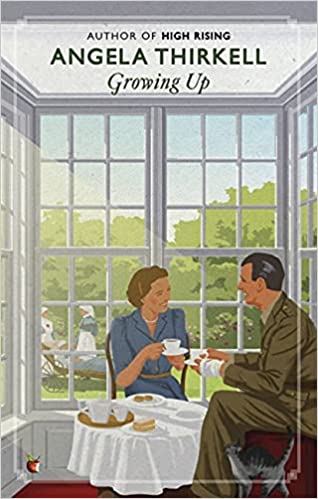
Review 1864: #ThirkellBar! Growing Up

Growing Up takes us to Beliera Priory, the home of Sir Harry and Lady Waring. The Warings have moved to the servants’ quarters, because the Priory has been taken over as a convalescent hospital. Nearby is a secret base, and the Warings receive a request to house an officer who is stationed there along with his wife. Although they are expecting their niece Leslie on a convalescent leave, they agree to billet the couple in their larger extra room.

To our delight, the couple turns out to be Noel and Lydia Merton, and in their exchanges of news with the Warings, we get to hear about almost everyone from the previous books. The Warings have been busy during the war, but the Mertons bring a little extra interest to their lives.

Leslie’s arrival is marked by a stranger carrying her case from the station. In the dark, she can barely see him, but he turns out to be Philip White, now a Colonel, whose disastrous romance with Rose Birkett was a feature of Summer Half. Leslie finds herself immediately interested in Philip.

In this novel, we are treated to the courtship of Selina, the Warings’ maid, by three men (a private young enough to be her son, a sergeant with eye trouble who is a greengrocer by trade, and Jasper, the Warings’s mysterious half-gypsy gamekeeper); the return of Tommy Needham, the fiancé of Lydia’s best friend Octavia Birkett, missing an arm; the goings-on at the Winter Overcotes (which you will be delighted to know is near Summer Underclose) railway station; as well as, of course, the progress of Leslie’s romance. Tony and Mrs. Morland make a brief appearance as do other old friends. Another delightful novel by Thirkell.

Related Posts

Summer Half

Cheerfulness Breaks In

High Rising