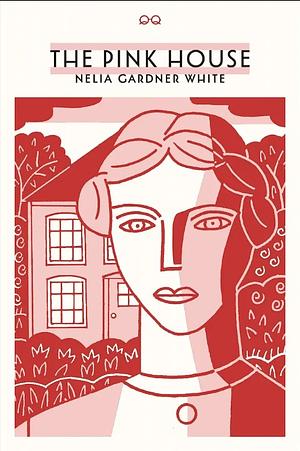
Review 2633: The Pink House

Some of the best stories of my life begin with an orphaned child. Here is another one.

Norah is a crippled girl, probably from polio, but at seven she is loved and taken care of. Then her mother dies, and her father, who soon will be traveling to South America for business, gets Aunt Rose to take her home. Norah, who doesn’t even understand that her mother is dead, thinks she is going for a visit. And it’s clear right away that no one wants her at her aunt’s home in central New York State.

Aunt Rose is beautiful, but she is cold and aloof. Nevertheless, she makes people love her. She lives a life of barely hidden dislike with Uncle John, yet he loves her. The children are Paul, who tries to please Rose but never does; Mary Anne, who is so beautiful that Norah can’t help staring at her; Jed, who calls Norah “Toad”; and Dosie, who comes right out and tells Norah she doesn’t like her. The children make it clear they aren’t interested in her, and only Paul is kind but removed. Aunt Poll, John’s sister, is so direct that Norah at first hates her, but it is Poll who will help her become strong, independent, and brave. At first, though, she spends most of her time alone crying.

This is a story about how a lonely, neglected orphan slowly becomes an integral and valued member of the family. But it is also about a cold, selfish, beautiful woman who attracts love without effort and without deserving it and does her best to destroy that family. It is about self-determination and growth but also about family secrets.

I absolutely loved this novel and thank the brand new imprint, Quite Literally Books, for sending me the book in exchange for a free and fair review. The first thing I did after I finished this book was look for another one by Nelia Gardner White, a new name to me.

Related Posts

Anne of Green Gables

Mansfield Park

David Copperfield

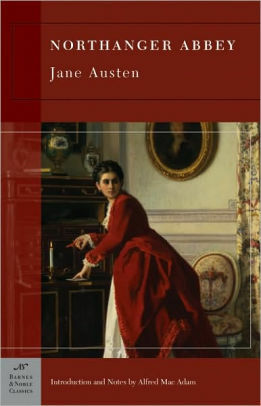
Review 2632: #ReadingAusten25! Northanger Abbey

Northanger Abbey is, of course, partially Jane Austen’s spoof of Gothic novels, and her heroine, Catherine Morland, is definitely a fan of them. But before that story line kicks in, Catherine gets to visit Bath in the company of family friends, Mr. and Mrs. Allen.

Catherine is not a well-informed girl and tends to be naïve and to take people as they present themselves. The first few days at Bath go slowly, because the Allens don’t know anyone. Catherine, however, has a dance with Henry Tilney and is inclined to like him. Then Mrs. Allen meets an old school friend, Mrs. Thorpe, and Catherine immediately becomes bosom pals with Isabella Thorpe.

It seems that Catherine’s brother James is friends with Isabella’s brother John, and Isabella has set her sights on James. Despite the vaunted friendship, Isabella and John (who is obnoxious enough that even Catherine notices it) do a great deal to disrupt Catherine’s growing acquaintance with Henry Tilney and his sister Eleanor in favor of foursomes with them.

Finally, Catherine is invited to stay with Eleanor and delighted to learn the Tilneys own an old abbey. Unfortunately, Catherine lets her taste for Gothic literature carry her away.

Catherine is one of Austen’s most serious heroines, trying to navigate society and do what is right but fallen in with people whose intentions aren’t as honorable. But she is adorable, and her naïve reactions are amusing. Henry is genuinely witty and just the man to teach her to examine her assumptions a little more thoroughly. All in all, this is one of the lightest and most fun of Austen’s works.

Related Posts

Pride and Prejudice

Mansfield Park

Sense and Sensibility

Review 2631: Instead of the Thorn

I’m on my second of three recently discovered (by me, anyway) Georgette Heyer books, and I’m beginning to think there’s a reason they’re not well known. Although the print-on-demand book I purchased has astonishingly few errors, it also contains absolutely no publication information, not even the name of the POD company. But I see that Instead of the Thorn was published in 1924. It is one of Heyer’s few contemporary novels that aren’t mysteries.

Elizabeth Arden is brought up by her Aunt Anne, a Victorian spinster who disapproves of everything modern and has taught Elizabeth to bury her own feelings and always be agreeable. Her father doesn’t pay attention to her, and when his old friend Mr. Hengist warns him that Anne may not be the best person to raise his daughter, he thinks that’s ridiculous.

When Elizabeth reaches her older teens, she is old-fashioned but beautiful (and probably doesn’t dress like the girl on the cover above). Her father begins to take an interest, and soon she is attending parties and dances.

She meets Stephen Ramsey, a famous author who is about 10 years older, and he falls in love with her. She likes him and finally agrees to marry him, hoping for a long engagement. But it is not to be, and three months later, knowing absolutely nothing about what to expect, she marries him.

Elizabeth is young for her age, and she has been raised to be a prig. She is shocked by what marriage entails, and so she begins finding fault with Stephen’s habits and so on. Eventually, they split.

Interestingly, but perhaps not surprisingly, their problems are all Elizabeth’s fault (except for how their marriage got its start, which is blamed on Aunt Anne). Aside from being messy, unpunctual, and intellectual, Stephen is perfect. Elizabeth has a long, perhaps unlikely way to go.

There are some hints of a sense of humor here, but not many. One scene between Elizabeth’s father and his sister is quite funny, and Stephen’s mother is a fun but lovable character. I guess I should give this book points for showing the harm that can occur by not telling girls the facts of life—but that problem was probably much more prevalent at that time.

Stephen’s family and friends are so much more interesting than her own that you’d think Elizabeth would go over to them immediately, but she is too much of a prig. She becomes quite unlikable for a while.

It’s clear that Heyer was still finding her feet as a novelist as well as her genre. This is not it. I will give Heyer some credit, because she does seem to be trying to capture the clash between the Victorian and Edwardian generations in both this book and Helen.

Related Posts

Helen

Arabella

Behold, Here’s Poison

Review 2613: The Bloater

I was so taken by Rosemary Tonks’ The Halt During the Chase that I looked for more by her. I found The Bloater.

Min is a married sound engineer whose husband is seldom home. She occupies herself with witty, frivolous conversations with her girlfriends and flirtations with her admirers. She has one admirer she finds disturbing, though, a large opera singer whom she finds disgusting and attractive at the same time. She talks endlessly with her other friends about whether she wants an affair with him, whom she refers to as the Bloater.

This novella is crammed with witty, sometimes cruel dialogue. It moves along very quickly and is beautifully written. At times, I wondered if Min really wanted to have an affair with anyone—or maybe she does.

When I was reading about this book, I learned that Tonks gave up a successful career and retreated into isolation. You would hardly believe this of the creator of such witty, vibrant characters.

Related Posts

The Halt During the Chase

Sing Me Who You Are

Sally on the Rocks

Review 2612: Across the Common

Louise has left her husband Max for reasons that are not clear to her and gone to stay at The Hollies with her elderly aunts. Part of the problem is that she still considers The Hollies home and bears some guilt for how she left it. Maybe she resents some of the attention Max gives to his students or maybe that he realized his limitations as an artist but is happy as a teacher. (When we finally meet Max, he seems perfect, so it must be for some other reason.) In any case, she eventually realizes, she needs to grow up.

At first, she is happy to be home with her formidable Aunt Rosa and her fey-like Aunt Seraphina, although not so pleased to hear that Aunt Cissie, who has broken her hip, is coming to recuperate. And then there’s Gibby, the cook and housekeeper, who is more like family. But very soon, she learns something disturbing—that her grandfather committed suicide years ago. No one will talk about it, so she doesn’t know why.

As she listens to her aunts talk about their past, Louise begins considering what happened to all the men in the family—they all left or died. Her own father was a sort of invalid, and both he and her mother died there from the flu. Neither of her sisters ever married.

Soon, Louise begins to discover secrets in her family history and instead of retreating to her childhood, as she does at first, learns to become her own person.

I liked this book very much. The writing is gorgeous, and Berridge manages to tell the story without falling into clichés. Rooms, scenes, and emotions are minutely observed, as are perceptions about human relationships.

Related Posts

Old Filth

Heat Lightning

Family Ties

Review 2607: Girls in Their Married Bliss

Girls in Their Married Bliss is the third book in O’Brien’s Country Girls trilogy. It is unusual in that the book is narrated partially by Baba instead of only by Kate (once Caithleen). Baba is much more cynical, and she lets us know right away that neither of them is happy.

At the end of the last book, Kate seemed to give up on her older married boyfriend Eugene and moved to England with Baba. However, she was pregnant, so, in the interim between the last book and this one, she and Eugene eventually married. But Kate felt ignored in their marriage except for Eugene’s myriad of rules, so she began a romantic relationship with another man. They have just broken up at the beginning of this novel when Eugene discovers his love letters. He turns cruel and nasty and threatens to take away Kate’s little boy.

Baba has married a rich, crude builder for his money. After she has an unsatisfying encounter with a drummer, she becomes pregnant. Despite her knowing attitude, neither she nor Kate have any idea what to do, and they must do something, as Baba’s husband is not big on sex.

This is an affecting trilogy, but I thought this book was the most affecting. I don’t want to say any more about what happens, though.

Related Posts

The Country Girls

The Lonely Girl

Wild Decembers

Review 2601: #ReadingAusten25! Emma

After rereading Emma, I can understand in a way why Austen called her her favorite heroine. She has a long way to go in self-awareness, and I think that’s something novelists enjoy.

Although Emma has been played as a sparkling beauty by such actresses as Gwyneth Paltrow, when I began this reread, I found a lot to dislike in her. Fortunately, she is also easy to come to like. Rich, charming, somewhat spoiled, and managing, she is also bored, because her beloved friend and ex-governess, Miss Taylor, has recently married Mr. Weston. Since she prides herself on having made the match and has recently befriended Harriet Smith, she decides to make a match for her.

Now, Emma’s biggest fault—besides trying to arrange the lives of other people—is that she decides something and then sees nothing that doesn’t support that decision (despite hints by her brother-in-law, Mr. Knightly). Harriet is a beautiful girl, but she is the illegitimate daughter of who-knows-who. Emma, based on no evidence, decides she is the daughter of someone important, and the first harm she does to the suggestible Harriet is convince her she’d be throwing herself away by marrying Robert Martin, a farmer who has proposed to her. Emma intends her for the vicar, Mr. Elton, ignoring Mr. Knightly’s warning that Elton is looking for a marriage that will advance him. In fact, Emma, having decided for the match, takes his attentions to point at Harriet when in fact he is courting Emma herself. Harriet would never consider Mr. Elton without Emma’s management, so she develops affections where there will be no return.

Then there is Jane Fairfax, a lovely young woman who has recently returned from years of living with friends to the home of her impoverished aunt and grandmother. Jane Fairfax’s friend being recently married, Jane has returned home for a few months before seeking a position as governess. Although Jane is the only young woman of Emma’s age and birth in the neighborhood, Emma says she finds her too reserved to like. Emma is jealous of Jane’s accomplishments but doesn’t know it.

Mr. Weston has a son who was adopted by his wife’s family after she died. Although Frank Churchill is now a young man, he has never visited his father, having many times promised to come. He finally arrives, and Emma, who has not taken a hint about his character from his continual nonarrivals, finds she likes him very much.

As usual with Austen, there are lots of comic characters who echo people we know in real life. Mr. Woodhouse, Emma’s father, worries continually about his and everyone else’s health, and if Emma isn’t around when they entertain, he’ll have guests eating gruel instead of their dinners. Mr. Weston is so open and sanguine that if he knows something is a secret, he’ll only tell five or six particular friends. Mrs. Elton, once there is one, is full of self-importance, despite coming from an inferior background, and tries to patronize people, especially poor Jane Fairfax.

Of course, class difference is important in this novel, maybe more so than in much of Austen (except maybe Persuasion). So, some of the problems may not be obvious to modern readers.

Even if you don’t like Emma’s managing at first, she is such a sparkling and witty creation, fond and gentle with her silly father, and she is truly repentant of her faults once she comes to see them. This is a great book.

Related Posts

Pride and Prejudice

Mansfield Park

Sense and Sensibility

Review 2600: Helen

I thought I had read all of Georgette Heyer’s books, but when I looked up something recently, Amazon showed me that there were several I’d never heard of. So, I got a Conservatory Press print-on-demand copy of this one. It is one of her very few contemporary novels that are not mysteries, published in 1928.

Helen’s mother dies in childbirth, and although her aunt offers to take her, her father insists on keeping her. She is brought up in wealth on a country estate enjoying riding, hunting, and sports. She has old-fashioned values when she becomes an attractive young woman. Then everything is upended with World War I.

This novel spends a lot of time with the bright young things that emerged after the war. Helen is drawn into the set by some friendships, but her older friends are dismayed. She also attracts a young artist who may be a dangerous type.

There are long conversations in this novel meant to show how the younger generation is changing its attitudes from their Edwardian parents. It seemed to me that both sides had intolerant viewpoints, but the younger people, meant to be witty, seemed silly. In any case, I hate to say it, but I found this focus as well as Helen’s relationships to be a little tedious after a while. I didn’t think that this more serious romantic novel was Heyer’s forte. And both generations expressed attitudes about women that we find objectionable now.

As with most machine-read books, I found lots of wrong words. Not typos, but the wrong word replacing a correct one. I thought perhaps no human had read the book between machine-reading and publishing, but maybe someone read the beginning. I say this because the errors increased so much in the last third of the novel that sometimes it was difficult to guess what was meant. Helen is fairly consistently called “he” instead of “she,” and at one point, she is called “Heaven” instead of “Helen.” So, you can imagine how several errors could mount up to make the text unintelligible at times.

Related Posts

The Unfinished Clue

They Found Him Dead

Death in the Stocks

Review 2599: The Lonely Girl

The Lonely Girl is the second novel in Edna O’Brien’s The Country Girls trilogy. The trilogy is quite autobiographical without matching the details of O’Brien’s life exactly. I did a little reading about O’Brien lately and was interested to learn that her books were originally banned in Ireland because of their frankness about sex and other women’s issues.

If you haven’t read the first volume, you may not always understand what’s going on at first. It is very short, so I recommend it.

Caithleen and her friend Baba are still living in a rooming house in Dublin at the beginning of the novel. I was happy to learn that Caithleen has broken with Mr. Gentleman. However, the girls are living a giddy life, crashing parties, trying to find men to buy their drinks, and hanging out with people Caithleen disapproves of. They are happy to be thought fast but still very innocent and silly.

We saw in the first novel that Caithleen is attracted to older men, and early in the novel, she meets Eugene Gaillard, a documentary film maker, who is older. He is obviously attracted to her, but it is she who takes the initiative to see him. Although he is attracted by her freshness and innocence, he doesn’t understand how innocent she is. Eventually, she finds out that he has been married, and although they are separated, they are not divorced. Caithleen is still very Catholic, so there would be a problem even if he were divorced.

Some ill-wisher gets involved and sends anonymous letters around, including to her father, which makes a difficult situation even worse. I was struck by how everyone assumes these letters are true (they are not) without asking her.

Although I think Caithleen is very silly at times, she is struggling with a lot considering her total ignorance of sex, her uncertainty with Eugene, her jealousy of Eugene’s wife, and so on. She is kind of a wet noodle in this one, always in tears, but I still want to find out what’s next.

Related Posts

The Country Girls

Wild Decembers

A Girl Is a Half-Formed Thing

Review 2598: A Place to Stand

The first novel I read by Ann Bridge was contemplative. This one becomes much more action oriented. But both are about women developing new conceptions of themselves. This one is about a young woman becoming an adult.

A Place to Stand was published in 1951, but it is set ten years earlier. Hope Kirkland is a little bit spoiled, a nineteen-year-old American whose wealthy father is an oil executive living in Budapest for the last eight years. Although she and her mother have lived there that long, neither of them seems to understand much about what’s going on around them politically.

Hope is engaged to Sam Harrison, a young journalist who has just been transferred to Istanbul. At his departure, he gives Hope a large box of chocolates, which she thinks is an odd goodbye gift. However, when she opens it, she finds it contains two passports for young men and money with a note of where to take them. So, she does. In a less desirable neighborhood, she finds a group of Polish refugees, an old woman, her two sons Jurek and Stefan, and Jurek’s fiancée Litka.

Hungary is neutral, but Poland is fighting the Nazis. Some Hungarian politicians are pushing the country toward Germany, so Polish refugees are in potential danger. Stefan and Jurek are almost ready to leave the country, but they are waiting for something to arrive from Poland first.

Hope is immediately drawn into the affairs of the Polish group. She is struck by what was clearly once a wealthy family having no home and no possessions. Then the Nazis arrive in Budapest and immediately begin looking for Poles. At the same time, the Americans are asked to leave the country.

I had to get over my initial reaction to Hope and her general obliviousness, which was made worse for me by Bridge’s continual use of the word “little” to describe just about everything about her, her little hand, her little figure, etc. However, this novel turns into an adventure that results in self-discovery for her. I enjoyed it quite a bit, acknowledging that probably many rich American girls at the time were silly and clueless (although ones living right there in Budapest? I’m not so sure).

Related Posts

Illyrian Spring

The Flight Portfolio

The Invisible Bridge