Review 1562: #1956 Club! The Fall

I’ve never read any Camus before, so I decided to read The Fall for the 1956 Club. This I can say: after reading The Kreutzer Sonata, The Prague Cemetery, The King Without a Kingdom, and The Fall, I’ve decided I hate novels that are monologues.

An unnamed person meets Clamence, an ex-Parisian lawyer, in an Amsterdam bar. Clamence begins his monologue explaining how his life changed. He began as a successful lawyer for the defense—handsome, genial, charitable, always doing good—and a womanizer. As he talks, we see that his charitable impulses are rooted in self-regard. His discourse becomes more and more cynical until . . . .

Well, I don’t know, because 50 pages before the end, I realized I was struggling to pay attention, and I stopped reading. His “witty” discourse may have been ground-breaking in 1956, but in 2020, it just seems banal.

Related Posts

The Kreutzer Sonata Variations

The Prague Cemetery

The King Without a Kingdom

Review 1560: #1956 Club! The Towers of Trebizond

Best of Ten!
The Towers of Trebizond, which I read for the 1956 Club, is said to be Rose Macaulay’s masterpiece. When I first began reading it, I was surprised at this, for it seemed to be a light comedy about eccentric people traveling in Turkey. To be sure, the narrator, Laurie, is erudite but relates the story in gushes of information, whimsy, and wit. But oh, when Laurie describes the wonders of past civilizations or her love of the rituals of the Anglican (high) church (I’m picking “her,” to discuss later), you see that there is more to this novel than humor.

Laurie and her Aunt Dot are on a trip to Turkey, accompanied by Father Chantry-Pigg. Laurie and Aunt Dot are writing a book about Turkey, Aunt Dot hopes to enlighten Moslem women by converting them to the Anglican church, and Father Chantry-Pigg, whose inappropriate last name becomes a running joke, wants converts. On the way, they pick up Aunt Dot’s friend Dr. Halide, who is also interesting in the liberation of women. Oh, and Aunt Dot brings her camel.

This may not sound funny, but all of the characters except Laurie are so obsessed with their hobby horses that the conversations are delightful. Later, we meet David, who has taken advantage of his ex-lover Charles’s death to steal the material Charles has written about Turkey and publish it under his own name—only Laurie has found Charles’s notebook in his old hotel room.

The central conflict for Laurie is that she is a believer in her church, but she has left it because of a long-lasting affair with Vere, a married man. Her heart yearns for the church, but she feels unable to break with Vere, whom she loves deeply.

This novel is beautifully written, witty, and finally bittersweet. I was unable to follow some of the detail about the church, and being American, I don’t have the classical background to understand all the references Laurie throws in about ancient civilizations. However, I greatly enjoyed this novel, which goes much deeper than it initially seems it will.

I wasn’t aware of this at first, but apparently there is an issue about Laurie’s sex—is she male or female? Perhaps this didn’t occur to me because my illustrated Folio Society edition makes the decision that she’s female. But what does occur to me is this: doesn’t the question imply sexism? That is, I can only imagine this question was raised because Laurie thinks nothing of, say, riding a camel across Syria by herself. But then, neither does Aunt Dot have any problem with walking across the Iron Curtain just to see what it’s like on the other side. I got no sense at all of a masculine personality in Laurie. Finally, Laurie’s bar to returning to the church is adultery, not adultery and homosexuality, and although Macaulay teases us for a while by not revealing Vere’s sex until the end, she finally does so. I think this whole sex issue is just caused by some people’s assumptions that a woman couldn’t be this adventurous in 1956.

Related Posts

A God in Every Stone

Guard Your Daughters

The Forty Days of Musa Dagh

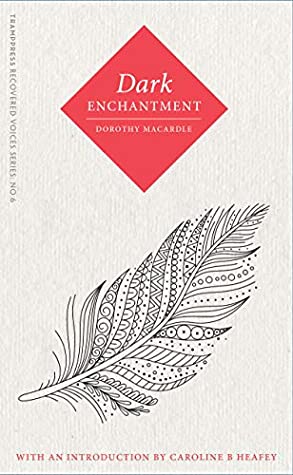
Review 1556: Dark Enchantment

I was delighted to receive a review copy of Dark Enchantment from Tramp Press from their Recovered Voices series and decided to time my review for the season. This is especially felicitous because the movie from another Dorothy Macardle book, The Uninvited, has been my family’s go-to Halloween movie for years. This is another entry for RIPXV.

After three years of teaching, an occupation that Juliet Frith likens to drudgery, she is exhausted and unwell. Her employers, eager for her to leave because of newspaper stories about her mother, have summoned her father to take her away. Frith is an actor who can’t afford to support Juliet and doesn’t know what to do with her, but for now they are vacationing on the Côte d’Azur.

On a day trip to visit villages in the Alps Maritimes, Juliet is taken ill at an inn, so Frith makes arrangements for them to stay the entire week. Juliet improves rapidly and befriends the pregnant wife of the innkeeper, Martine, so Frith arranges for Juliet to stay there when he has to leave for a job. Juliet will be working half-time at the inn for the length of Martine’s pregnancy. It helps that Juliet has met Michael, studying trees in the nearby forest.

The lives of all the villagers are soon wrapped up in drama because of Terka, a beautiful Romany woman who is missing an eye. She has a reputation as a sorceress, and the villagers are terrified of her. Although Juliet thinks Terka is being treated unfairly, Martine’s husband René is foremost at trying to drive her out of the area, so she has turned her attentions to poor Martine as well as others. Things begin to get ugly.

This novel develops slowly at first, but it has appealing characters and kept my interest. Although the threat foretold for Juliet doesn’t really pan out, she becomes deeply involved in the fortunes of Martine and René. I enjoyed this light read very much.

Related Posts

The Uninhabited House

The Good People

House of Glass


Review 1545: They Were Found Wanting

They Were Found Wanting is the second book of Bánffy’s Transylvanian Trilogy. It again follows the fortunes of cousins Balint Abady and Laszlo Gyeroffy, Hungarian/Transylvanian noblemen, although it spends much more time with Balint.

In the first book, Balint began an affair with Adrienne Uzdy, married to a cruel and unstable neighbor of Balint’s Transylvanian estate. They resolved to part in that book but come together early in the second book. Balint wants Adrienne to divorce Uzdy, but Adrienne fears Uzdy will become violent. Moreover, she will likely lose custody of her daughter.

Laszlo started on the path of destruction in the first book after his cousin Klara rejected him because of his gambling. He has been cheated out of most of the profits from his estate by Azbej, a crooked lawyer, and he is drinking what little money he has. Early in the book, Dodo Gyalakuthy, who is so wealthy that no one will propose to her, asks him to marry her. Laszlo is stung by this and refuses, not realizing that Dodo loves him.

Balint is a member of the Hungarian Parliament, and much of this book is devoted to the machinations of the political parties, who manage to accomplish nothing because of their efforts to prevent the work of the other party. All the while, Balint is conscious of disquieting events in the outer world as it heads to World War I.

I struggled with this book a bit and actually read three other books while I was trying to finish it, something I seldom do. For one thing, there was a much stronger emphasis on Hungarian politics, but I didn’t understand all the ins and outs or sometimes who was whom. The first book came with about 100 pages of explanatory material, but I seldom read things like that and would hope a novel would be understandable without it.

For another thing, the major emphasis was on the affair between Balint and Adrienne, and I wasn’t much interested in it. Although Bánffy certainly can depict vivid characters, Adrienne isn’t one of them. She is almost there only to be the object of Balint’s yearning. You never get much of a sense of what she is like.

Finally, in some ways, Balint began this affair in a reprehensible way, and when he decides they should marry, he is merciless with the emotional blackmail. Otherwise likeable, he is not a nice lover in this book.

Throughout, the most interesting thing to me are Bánffy’s descriptions of customs and life in Transylvania. I am interested in how the third book will come out. Thank goodness it’s not nearly as long as either of the others.

Related Posts

They Were Counted

Between the Woods and the Water: On Foot to Constantinople: From the Middle Danube to the Iron Gates

The Great Fortune

Review 1543: The Bookshop

I decided to read The Bookshop after seeing the movie of the same name. The two are very similar, but the movie doesn’t convey the subtlety of the book, which is a little more remorseless.

Post World War I, the widow Florence Green decides to open a bookshop in her East Sussex village of Hardborough, which does not have one. For the premises, she purchases the Old House, which has been vacant for seven years and is in need of a lot of work. It is also rumored to be haunted.

Her aims seem worthy and harmless, but no sooner does she purchase the Old House than a local worthy, Mrs. Gamart, invites her to a party only to inform her that she, Mrs. Gamart, intended the Old House for an arts center. Florence has no idea who she’s dealing with when she asks Mrs. Gamart why then she didn’t buy the house any time in the past seven years and refuses to let it go.

This novel seems to be light fare, but it has some cynical observations about small-town gentry and betrayal. It is short, fully engaging, sparely and beautifully written, and sad.

Related Posts

Sofia Petrovna

Expiation

Fidelity

Review 1540: The Uninhabited House

Miss Blake is an eccentric figure whose arrival is looked forward to by the clerks in Mr. Craven’s office, including Harry Patterson, the narrator. She only arrives when the tenants have unexpectedly left her niece’s house, which is all too often. For the house has a reputation.

Miss Blake and her ward Helena have been a charge on poor, kind-hearted Mr. Craven since the death of Robert Elmsdale, Helena’s father. Thought to be wealthy, he was found to be in considerable debt when he died. Now, the house in which he died is supposedly haunted. Mr. Craven doesn’t believe in ghosts and supposes someone is trying to keep the house from being occupied.

After a disastrous lawsuit resulting from the early vacancy of the house by a tenant, Miss Blake declares she will pay £50 to anyone who can solve the mystery of the house. Although Miss Blake has never paid any of Mr. Craven’s bills, Mr. Craven is so desperate to relinquish Miss Blake’s account that he vows to pay the money to anyone who can solve the mystery.

Patterson finds himself in need of money, because he has fallen in love with Helena Elmsdale. So, he volunteers to stay in the house and try to discover its secrets.

This is a joyful little novel despite its theme. Patterson tells the story with plenty of gentle, good-natured humor, and his affection for Mr. Craven is very clear. The mystery is perhaps not too confounding, but the book itself is a pleasure to read, with eccentric characters and lots of atmosphere. Is it a ghost story as well as a mystery? I’ll never tell.

Related Posts

The Uninvited Guests

Lincoln in the Bardo

All Done by Kindness

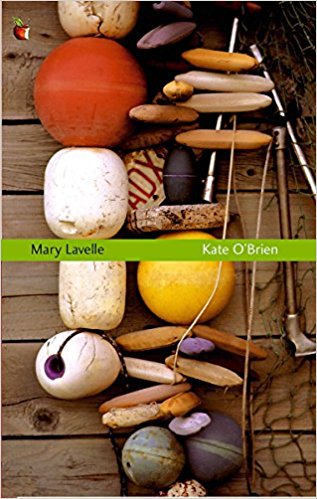
Review 1539: Mary Lavelle

It was interesting to me to learn that Mary Lavelle had been banned in Ireland as an immoral book, for in its own way, it’s very moral. Still, I guess it was shocking for 1936.

Mary is a young Irish woman who is engaged to be married to a kind and worthy young man who must wait to marry her until he can earn enough. His prospects are good, but he is paid a niggardly wage by his miser father.

Almost on a whim and despite her fiancé’s objections, Mary decides to take a governess job for a year in Spain, and the beginning of the novel finds her on the way there by train. Spain is not as she imagined it, but from the first she likes it. The Areavaga family are gracious and kind, and their three daughters soon like Mary very much. She makes some friends within a group of British governesses she meets at the local café, although she is sometimes shocked at their behavior and their airs of superiority toward the Spanish.

Mary is unconsciously beautiful and innocent. She is immediately attractive to Pablo Areavaga, her charges’ father, but he is too principled to show it. Trouble comes, though, with the arrival of Juanito, Areavaga’s married son, for Juanito falls in love with her at first sight.

I have read two books now by O’Brien, and both gave me a sense of a ferocious intelligence. Both are set in Spain, and in both, she examines the conflict between religion, principle, and emotional drives. The descriptions of the scenery and people of Spain are vivid and sometimes lyrical. This is another good book from my Classics Club list.

One comment on my new edition of Virago Modern Classics. Almost as soon as I began reading the book, the last six or eight pages fell out. Thereafter, I was constantly tucking them back in, afraid I was going to lose them.

Related Posts

That Lady

Hot Milk

Alas, Poor Lady

Review 1530: The Last of Chéri

The Last of Chéri is the second novella by Colette about Chéri and Léa. I try to avoid spoilers, but in this case I can’t avoid one, although it is actually about the previous novella, Chéri.

At the end of Chéri, Léa, Chéri’s middle-aged lover, made a sacrifice of her own love by separating from the young Chéri so that he could grow up. Now, it’s six years later. World War I has intervened, during which Chéri received a medal he didn’t exactly earn. His wife, Edmeé, is heavily involved in running a hospital and is in love with its lead physician. During the war, Edmeé and Charlotte, his mother, took over managing his fortune, a task that he was good at, and he doesn’t know how to ask for it back. His friends have been killed or have gone to work. In short, Chéri feels no purpose in life. The old ways of living for pleasure are dead, and in any case, he finds them boring.

Chéri hasn’t thought of Léa for years, but with her he was loved. He wonders if he can return to her.

I frankly didn’t much like the Chéri of the first novella, but I have more sympathy with thirty-year-old Chéri, even though I regret the solution he finds for his problem. Ultimately, this book is an indictment of how he was raised, and I eventually found it touching.

Related Posts

Chéri

Red Pottage

The Collector’s Apprentice

Review 1527: They Were Counted

They Were Counted is the first volume in Miklós Bánffy’s Transylvanian Trilogy, about the decline of Hungary leading up to World War I. This book follows the events in the lives of two cousins, Balint Abady and Laszlo Gyeroffy. Both are noblemen who feel like outsiders in Hungarian society, Balint because he is Transylvanian and Laszlo because his prospects are not so good.

Balint has been working in the diplomatic service, but he decides to run for Parliament, never suspecting after he wins that votes have been bought on his behalf. He is dismayed to find that the Hungarian Parliament’s two parties are more concerned with scoring off each other than with getting anything done. Early on, too, there are hints that Parliament’s independence is threatened by the Austrian King Franz Joseph.

Likewise, when Balint decides to take more interest in running his estate, he has no idea that the lawyer Azbej, who has been helping his mother run the estate, has been making so much money off it. When he goes to Translyvania for forest management and with ideas about improvements for the peasant villages, he is unable to make much progress as he is seen as a Hungarian interloper.

Finally, Balint has discovered that he is in love with his old friend, Adrienne. Unfortunately, she has married since he was working abroad. Moreover, she has been sexually mistreated by her husband.

Lazslo is a musician who has withdrawn from law school and devoted himself to catching up on his musical studies. He is also in love with his cousin Klara but has no idea that her stepmother will not accept him as Klara’s suitor. Laszlo’s plans to become a composer are derailed when he gets involved with gambling.

This novel paints a picture of Transylvanian and Hungarian society of the time, with descriptions so vivid that I felt as if Bánffy was describing people, rooms, and landscapes that he knew, as he probably was. There are lots of characters, and it is sometimes difficult to remember who all of them are. I also found it a little difficult to understand the politics. Still, I found the novel very interesting.

Related Posts

The Spoilt City

Between the Woods and the Water: On Foot to Constantinople: From the Middle Danube to the Iron Gates

Dracula

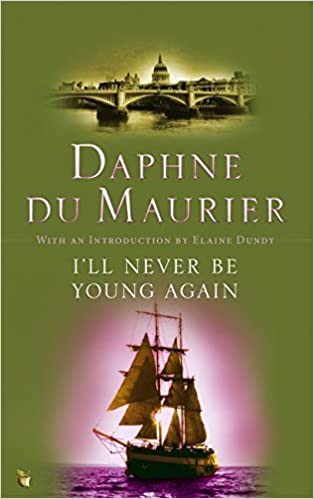
Review 1520: I’ll Never Be Young Again

Richard is a young man who has always felt his famous poet father disdained him. He is about to throw himself into the Thames when he is stopped by an older man named Jake. With Jake, he sets out as a common seaman on a Norwegian barque.

Richard is a very changeable, touchy, and selfish young man, but Jake says he will be all right, he’s just young. The pair go off traveling among the fjords and see Stockholm, with Richard changing how he feels about their experiences almost minute by minute. Ultimately, an accident sends Richard on alone to Paris, where he begins writing and meets a girl, Hesta.

I thought I had read just about everything by du Maurier, but I hadn’t come across this novel before. It is her second, and it certainly shows immaturity. Although du Maurier is good at description, this novel depends upon it too much, so that it is slow moving. In addition, the dialogue is quite crude. Du Maurier believed she had a male side that eventually led to an ability to write effectively from a male point of view, but I don’t think she’s quite there yet. She overdoes it.

Finally, Richard is so self-centered that its hard to find any sympathy for him, which made it difficult for me to finish the book. When he meets Hesta, for example, she is an independent young woman studying music. He manages to strip everything away from her so that she is totally dependent upon him. Then he takes her for granted.

So, I didn’t really enjoy this novel, although the ending lessened my dislike of it. I have to say, though, that Richard as a character is all too believable.

Related Posts

Castle Dor

Rebecca

Daphne du Maurier: The Secret Life of a Renowned Storyteller